
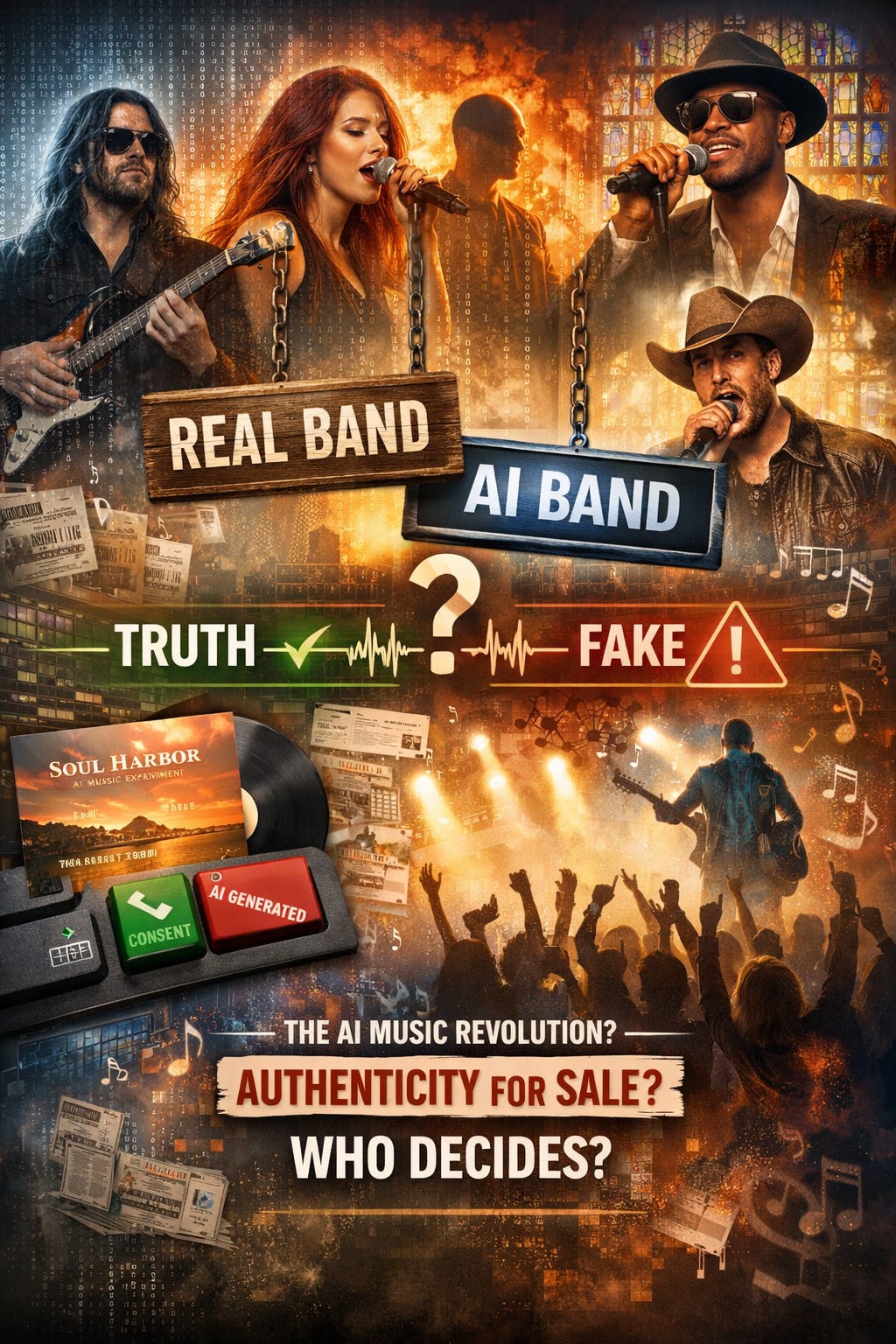
AI Music Revolution is a reader-supported publication. To receive new posts and support my work, become a free or paid subscriber.
If you missed last summer’s weirdest “band breakthrough,” Berklee’s breakdown of The Velvet Sundown reads like a cautionary tale for the streaming era: a rock act appears out of nowhere, racks up massive Spotify attention, and has almost no real-world footprint.
Sound familiar? It’s becoming increasingly the case.
It gets even messier when a fake spokesperson account helps mislead journalists, until the project ultimately confirms it’s a “synthetic music project” built with AI support and framed as an “artistic provocation.”
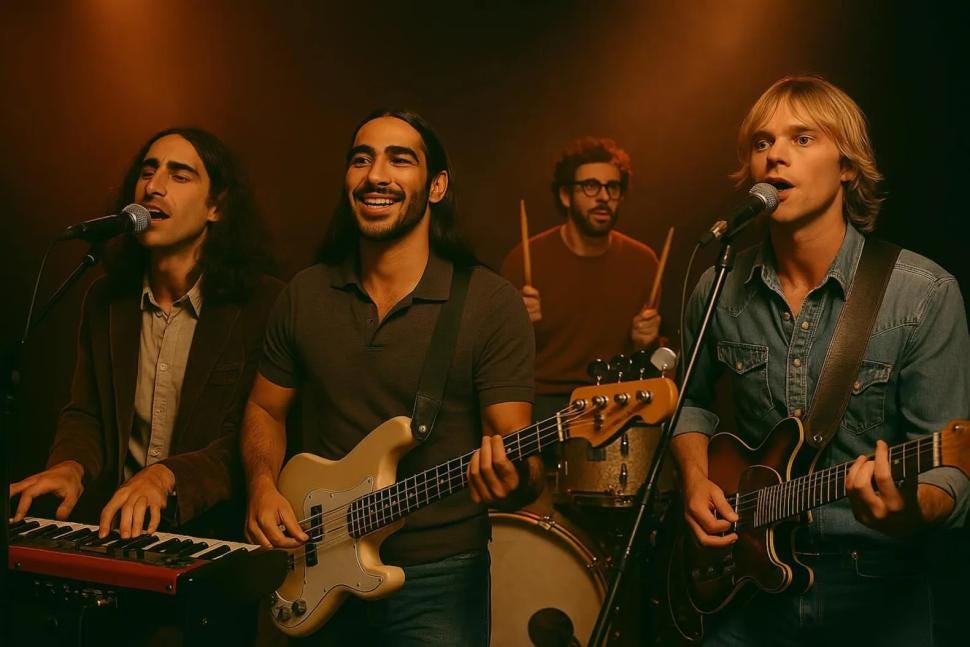
That may seem like old news, but the real story isn’t “AI band tricks people.” The real story is that the entire system is primed for this because the modern music economy rewards outputs (streams, saves, virality) faster than it can verify origins (identity, authorship, consent, attribution).
Stated simply, streaming platforms have yet to figure out how to effectively determine whether something is human-generated, AI-generated, or AI-assisted.
Berklee puts it bluntly:
“Ghost artists have been part of music culture for generations,” and AI is simply the newest tool in that lineage.
That’s the thread I want to pull because Velvet Sundown isn’t an anomaly anymore. It’s part of a pattern that now includes Breaking Rust (the AI country-chart controversy) and Solomon Ray (an AI gospel/soul avatar that has sparked intense debate).
And it directly overlaps with what we’ve been doing at Gumtree Collective, especially with Soul Harbor, and my decision to shift from presenting it as a “real band” to naming it authentically as an AI construct + experiment.
This isn’t just about whether AI can write a catchy hook. It’s about how synthetic identity is now a competitive advantage and how limited our infrastructure is for provenance, disclosure, and consent.
The Velvet Sundown wasn’t ‘AI music.’ It was AI music marketing.
Velvet Sundown didn’t just release songs; it released a narrative—band members, mystique, bios, aesthetics—and then used that ambiguity as fuel. As Euronews noted, the act leaned hard into a poetic Spotify bio and a “not quite human, not quite machine” posture once suspicion grew.
Berklee’s account highlights how the hoax (including a fake spokesperson) exploited weaknesses in media verification, and how the project later claimed the whole thing was a “mirror” held up to authorship and identity.
Whether you call that performance art, trolling, or growth hacking, the takeaway is the same:
In 2026, the “artist” is increasingly a product layer that can be assembled separately from the music.
That’s not new. What’s new is how cheaply, quickly, and convincingly the layer can be produced thanks to AI.
Breaking Rust and Solomon Ray prove the next era isn’t about ‘songs’; it’s about ‘synthetic artists.’
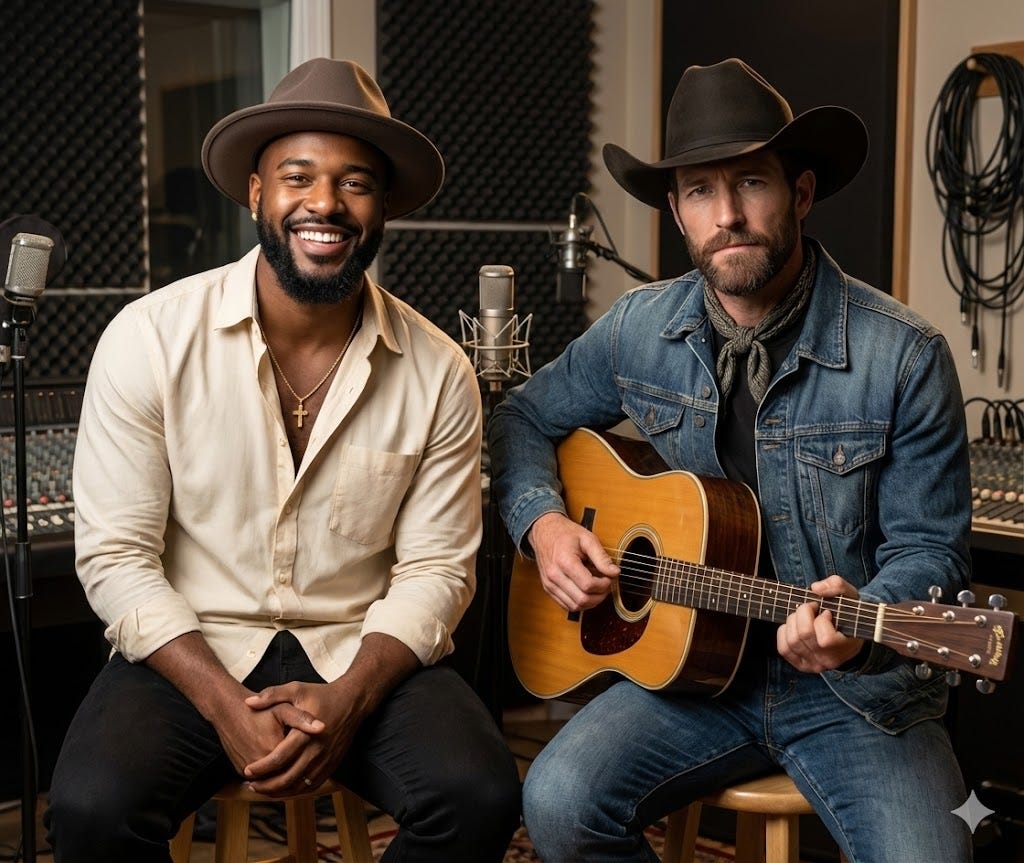
Breaking Rust hit #1 on Billboard’s Country Digital Song Sales chart with “Walk My Walk,” prompting a wave of headlines—and backlash—about what that chart placement really means, how easily digital sales can be manipulated, and what happens when synthetic acts compete in the same attention marketplace as humans.
But the controversy sharpened when AP reported a deeper ethical problem: voice/style emulation without consent, and the cultural weight of a fictional white avatar fronting a vocal approach that the affected artist says echoes him.
Then there’s Solomon Ray, an AI-created gospel/soul persona that climbed Christian charts and ignited debates about authenticity, testimony, race, and “witness”. Even church-world commentary asks what it means to hear spiritual music from a performer who was never born, never lived, never suffered, never believed.
So here’s the uncomfortable synthesis:
Velvet Sundown = identity-as-provocation
Breaking Rust = identity-as-scalable hit machine (plus the ethical landmines of emulation)
Solomon Ray = identity-as-cultural flashpoint (where “voice” and “meaning” collide)
This isn’t just about whether AI can write a catchy hook. It’s about how synthetic identity is now a competitive advantage and how limited our infrastructure is for provenance, disclosure, and consent.
‘Faking it’ didn’t start with AI — AI just made it frictionless.
Let’s name the elephant without romanticizing the past: popular music has always played with authenticity.
We’ve had:
studio constructions and manufactured acts
ghostwriters, ghost producers, and anonymous session players
stage personas that are closer to characters than “real life”
photo-heavy branding that sells a myth more than a human
even famous scandals where the “artist” presented to the public wasn’t the performer you heard
Berklee’s point about “ghost artists” matters because it keeps us honest: the industry has long separated the product from the person.
AI doesn’t introduce deception; it introduces scale, speed, and the ability to create an entire artist stack (face, voice, catalog, content, storyline) without the usual constraints of time, money, or bodies.
Where Soul Harbor fits: the moment transparency became the art
Here’s where I bring it home.
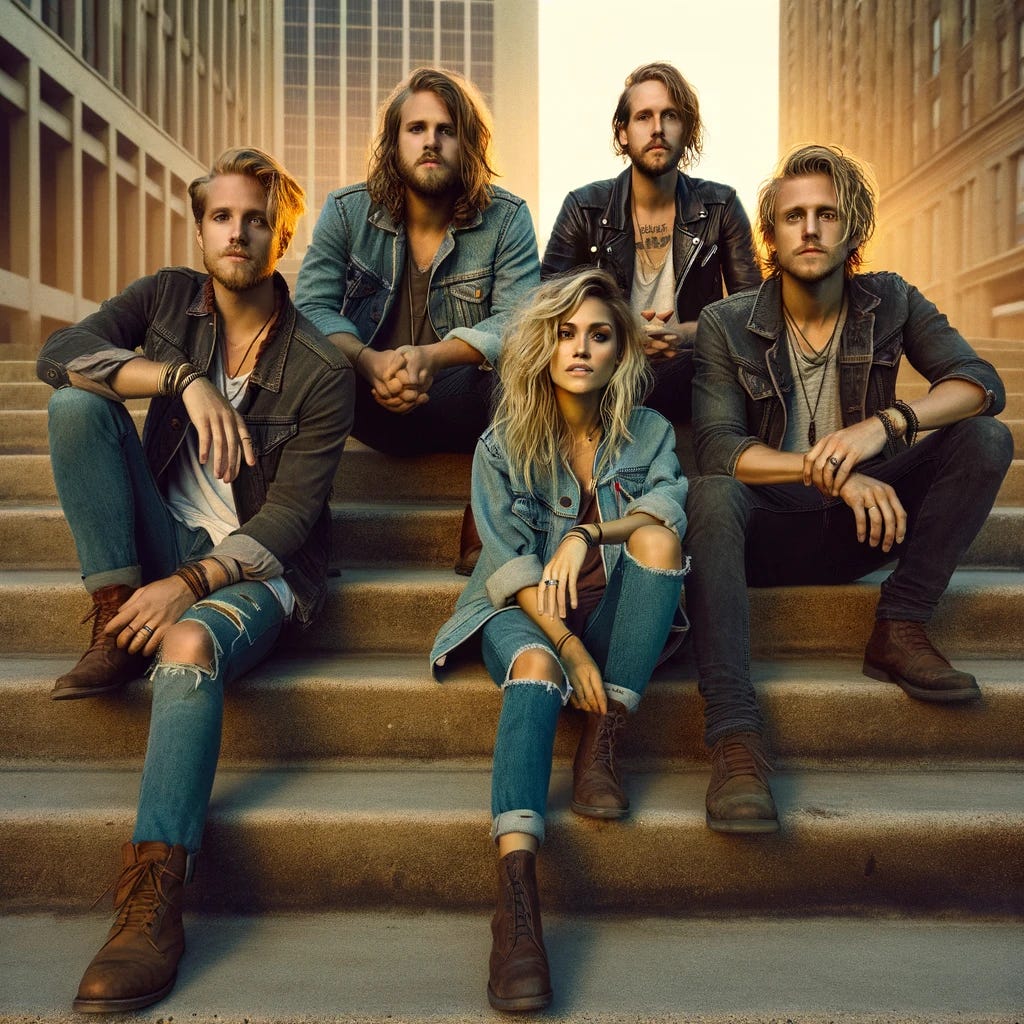
With Soul Harbor, I originally leaned into the familiar language of “band,” because that’s how music is packaged and understood. But over time, something felt off, not because the music wasn’t meaningful, but because the framing wasn’t aligned with the experiment.
So I pivoted: not to apologize for using AI, but to tell the truth about what it is.
That shift matters more now than ever, because the Velvet Sundown cycle shows what happens when synthetic identity is used as camouflage. The minute audiences feel tricked, the conversation stops being about music and becomes about betrayal.
Gumtree Collective’s position is simple:
AI-assisted music isn’t the problem. Hidden authorship is.
The Gumtree Collective philosophy
Here’s what Velvet Sundown + Breaking Rust + Solomon Ray collectively signal for AI music and how we should respond.
The new premium is provenance
In a flooded market, listeners will increasingly value:
clear disclosure (human, AI-assisted, fully synthetic)
credits that mean something (who wrote what, used what, trained on what)
proof of consent where emulation is involved
The irony: AI will make “real” more valuable, but only if real artists learn to document and signal their humanity.
Platforms will be forced to label
The market can’t self-regulate at scale.
When even trained ears struggle, and the catalog volume explodes, discovery systems become credibility systems by default. That’s why transparency calls keep coming up in the Breaking Rust coverage and in broader reporting on synthetic music flooding platforms.
The ethical line is not ‘AI vs human.’ It’s consent vs extraction.
The AP reporting on “Walk My Walk” underscores the real danger: style/voice appropriation without permission and the cultural distortions that can happen when identity is synthetically remapped for profit.
Gumtree Collective is pro-tool, pro-experiment, pro-democratization—but anti-extraction.
The audience will be split into two cultures
“I don’t care how it was made; it slaps.”
“I need to know who made this, and whether it’s ethical.”
Both camps will grow. The winners will be the creators who choose a lane and communicate it clearly.
So what do we do now?
My observations, in one line:
The best model won’t decide the future of AI music, the clearest ethics will.
For AI Music Revolution (and Gumtree Collective), the ask is not “ban the machines.” The ask is:
Label the synthetic identity clearly
Credit human direction honestly
Build consent-forward creative pipelines
Make the experiment part of the art, not the trick
Velvet Sundown showed what happens when ambiguity becomes a marketing strategy. Soul Harbor is my counter-proposal: if we’re going to explore synthetic artistry, let’s do it with the lights on.
Because the real revolution isn’t that AI can make songs. It’s that anyone can now manufacture an artist.
And in a world where artists can be manufactured, integrity becomes the differentiator.
Let me know what you think. Leave a comment to share your thoughts.
AI Music Revolution is a reader-supported publication. To receive new posts and support my work, become a free or paid subscriber.
Comments
Nothing yet. Say the first thing.
Sign in to join the conversation.