
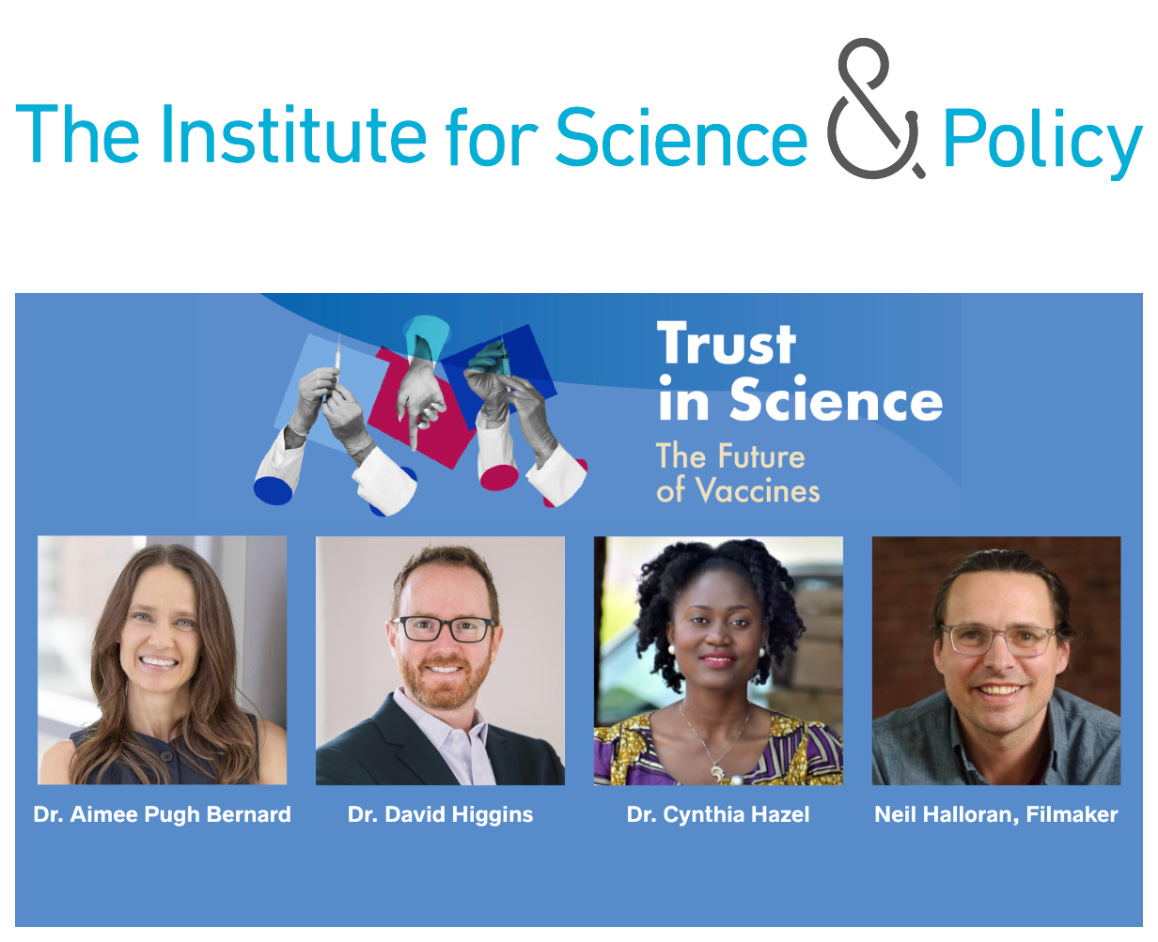
In a time when health information is abundant yet often conflicting, and medical decisions feel increasingly complex, the Denver Museum of Nature and Science invited community members to join together for an evening focused on inspiration, curiosity, and open dialogue. Hosted by the Institute for Science and Policy, the event centered around the premiere of The Plea, a new short documentary by filmmaker Neil Halloran. The film chronicles one of humanity’s greatest public health triumphs: the eradication of smallpox—the only human disease ever eliminated through science and global cooperation.
Following the screening, I had the honor of joining a town-hall style panel discussion alongside Neil Halloran, the documentary film maker, Dr. David Higgins, a pediatrician, and Dr. Cynthia Hazel, a public health expert. Together, we explored the themes of trust in science, the power of storytelling in science, the controversy surrounding vaccines, and the role of public health in shaping our collective future.
As an immunologist, mother of two, and educator, I was deeply moved by The Plea. The story of smallpox eradication is not just a scientific milestone—it’s a testament to what humanity can achieve when we trust science and work together across borders, cultures, and ideologies. It’s easy to forget that just a few generations ago, smallpox claimed millions of lives. Today, thanks to rigorous research, coordinated global efforts, and widespread vaccination, it exists only in history books.
Moments like these remind us of the incredible power of science—not just to understand the world, but to change it for the better.
Our panel discussion touched on many pressing issues, including the erosion of public trust in science and expertise. The COVID-19 pandemic laid bare the challenges of communicating complex scientific information in a rapidly evolving landscape. Misinformation spread faster than viruses, and many communities were left feeling confused, skeptical, or even betrayed.
I shared my perspective on how far we’ve come in terms of medical progress—from the development of mRNA vaccines to the near-elimination of diseases like polio—and how far we’ve fallen in terms of public trust. As an educator and science communicator, I see firsthand how critical it is to listen to and engage with the public, answer questions honestly and with empathy, and foster curiosity rather than fear.
Science is not static. It evolves. And that evolution requires humility, transparency, and dialogue.
One of the most powerful aspects of the event was its format: a town-hall style conversation that invited audience members to ask questions, share concerns, and engage directly with experts. This kind of open, respectful dialogue is exactly what we need to rebuild trust in science.
I emphasized the importance of science communication—not just in classrooms and journals, but out in the community in museums and libraries as well as online spaces like social media and websites. When we make science accessible and human, we empower people to make informed decisions and become active participants in their own health and well-being.
To further this mission, I’m proposing to launch a dedicated science communication program at the medical campus where I teach. This initiative—if given the green light—will provide formal training to both emerging scientists and healthcare providers, as well as those already established in their careers. Despite its critical role in public engagement and trust-building, science communication remains an underdeveloped skill in many academic and professional settings.
I firmly believe that effective science communication is no longer optional—it is a responsibility we must embrace. Scientists need to get out in the community… move our science beyond the walls of academia and the paywalls of journals, and publish our research in plain language, jargon-free summaries on open access websites where people can interact and ask questions. As scientists and healthcare professionals, I believe we have a responsibility to communicate science with clarity, compassion, and confidence—especially when our communities need answers most.
The eradication of smallpox was not just a medical achievement—it was a global collaboration. And if we hope to tackle future challenges—from emerging diseases to food safety to climate-related health threats—we must embrace that same spirit of cooperation.
Trust in science doesn’t happen overnight. It’s built through relationships, transparency, and shared goals. Events like this are a step in the right direction.
I left the museum last evening feeling hopeful. Despite the challenges ahead, the passion and curiosity in the room were palpable. People want to understand. They want to engage. And they want to be part of the solution.
Science has the tools to solve our greatest problems. But it’s up to all of us—scientists, educators, filmmakers, physicians, and community members—to ensure those tools are used wisely, ethically, and inclusively.
One final note, if you haven’t watched it already, please consider watching the powerful documentary The Plea, available on YouTube. Your perspective on the triumph of science and global collaboration will likely be expanded in ways you didn’t expect.
Comments
Nothing yet. Say the first thing.
Sign in to join the conversation.