
Last week, I had the incredible honor of returning to the University of Rochester, the place where I spent 4.5 years of my life while earning my PhD in Immunology. While walking through the familiar and tangled maze of hallways brought back a flood of memories, this visit wasn’t just about nostalgia, I was invited back to lead a myHub Career Development retreat focused on one of my greatest passions: science communication.
Titled “From Data to Dialogue: Science Communication for the Real World,” the retreat offered PhD candidates and postdoctoral scholars the opportunity to explore how to make their science more accessible, engaging, and impactful. By emphasizing the importance of building authentic connections with the community, participants learned how to communicate their research in ways that resonate with diverse audiences and contribute meaningfully to public understanding and trust in science.
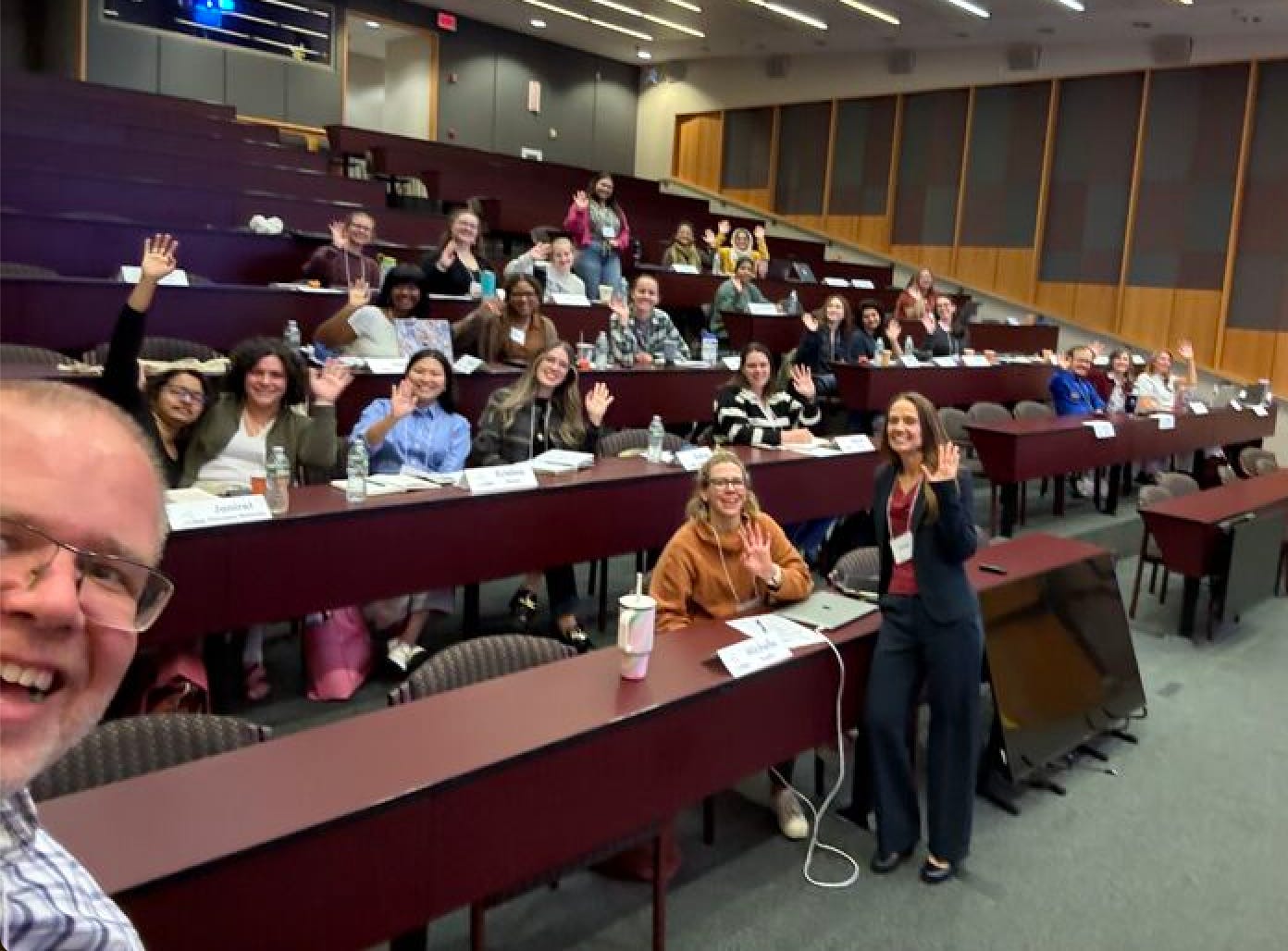
The day was structured around several interactive sessions, each designed to equip participants with practical tools and strategies to elevate their communication skills:
The Art of Making Science Interesting and Relatable to the General Public
I started the retreat by sharing my top 10 tips for how to make complex science relatable and compelling. From knowing your audience to removing jargon to using analogies, we discussed ways to distill dense data and complex science into digestible narratives. Participants were also given the opportunity to craft and share their own elevator pitches—concise, engaging summaries of their research designed for non-expert audiences.
From Conflict to Connection: Navigating Mis- and Disinformation with Clarity and Compassion
The ability to address misinformation and disinformation has become increasingly important as the digital landscape is changing how everyone accesses and receives information. In today’s new world, scientists are increasingly called upon to address mis- and disinformation, whether or not they are willing and prepared to do so. Throughout this session we explored how to engage in respectful, empathetic conversations that prioritize connection over correction. I aimed to empower the next generation of scientists to become trusted voices in their communities capable of fostering understanding, dispelling myths, and building bridges between science and society through clarity and connection.
The Power of Storytelling and Crafting a Compelling Research Narrative
Every research project has a story that is capable – if thoughtfully crafted - to captivate, educate, and inspire its audience. During this session, we worked on identifying the “why” behind each participant’s work and practiced weaving it into narratives that resonate with broader audiences. By framing their research through the lens of the hero’s journey—complete with challenges, discoveries, and transformation—participants learned how to craft compelling stories that not only inform but inspire.
Expanding Your Reach Beyond the Walls of Academia and Paywalls of Journals
Finally, we discussed how to share science beyond the confines of academic journals and conferences. From podcasts and in-person public talks to platforms like Substack and local news outlets, we explored the many avenues available for scientists to amplify their voices and connect with diverse communities. Additionally, I emphasized the importance of leveraging social media platforms to significantly expand our reach. It is up to the next generation of scientists to meet the public where they are to communicate science. At this moment in time most people 30 and under get their “news” from social media. To reach and connect with the general public, scientists must embrace social media to foster dialogue and build communities around science.
Throughout the day, I was struck by the thoughtful questions and genuine desire to grow as communicators. It reminded me why I do this work and why it matters so much. It was truly inspiring to see the next generation of scientists so invested in building bridges between the lab and the public.
Returning to Rochester as a facilitator rather than a student was a full-circle moment. It was a privilege to contribute to the professional development of the next generation of scientists and to witness firsthand the momentum building around science communication in academia.
I left the retreat energized and hopeful. If these trainees are any indication, the future of science and science communication is in excellent hands.
Comments
Nothing yet. Say the first thing.
Sign in to join the conversation.