
In Part 1 of this guide, I break down how I apply these mental models in my writing workflow — with real prompts and examples.
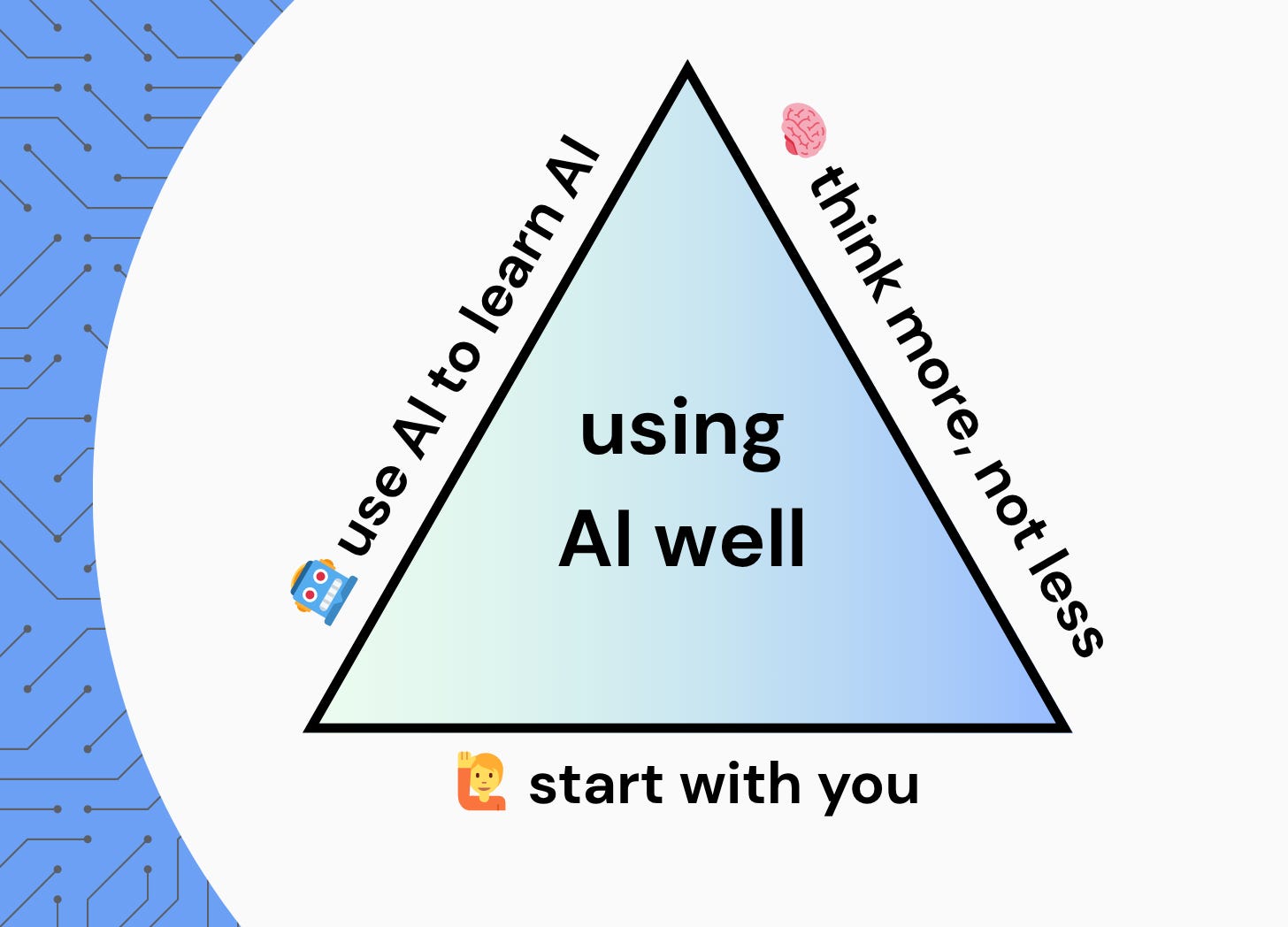
Whenever I create something with AI, I use 3 mental models to make sure I’m using AI “the good way”.
That I’m not slipping into it just doing the work for me, and putting out something generic.
This is especially helpful for doing new tasks, where I don’t have an established workflow yet.
Keeping these mental models in mind gives me guardrails to work with, and lets me course-correct quickly when I veer into harmful AI territory.
It’s true that there are no definitive “best practices” for how to use AI well.
But for the first time in human history, we’re using a tool that’s actually intelligent. A tool that can talk to us, and tell us how to use it.
Whenever I get stuck with AI, or find I’m not getting the results I want, I just ask:
I want to do X. How should I prompt you to do that?
This basically gets the AI to prompt engineer for me. And to bring out any specific instructions it looks for that I might have missed.
Over time, this also gives me a sense of how AI works under the hood, and why it behaves the way it does.
Teaching me how to write more nuanced prompts, and unlock more things I can do with AI.
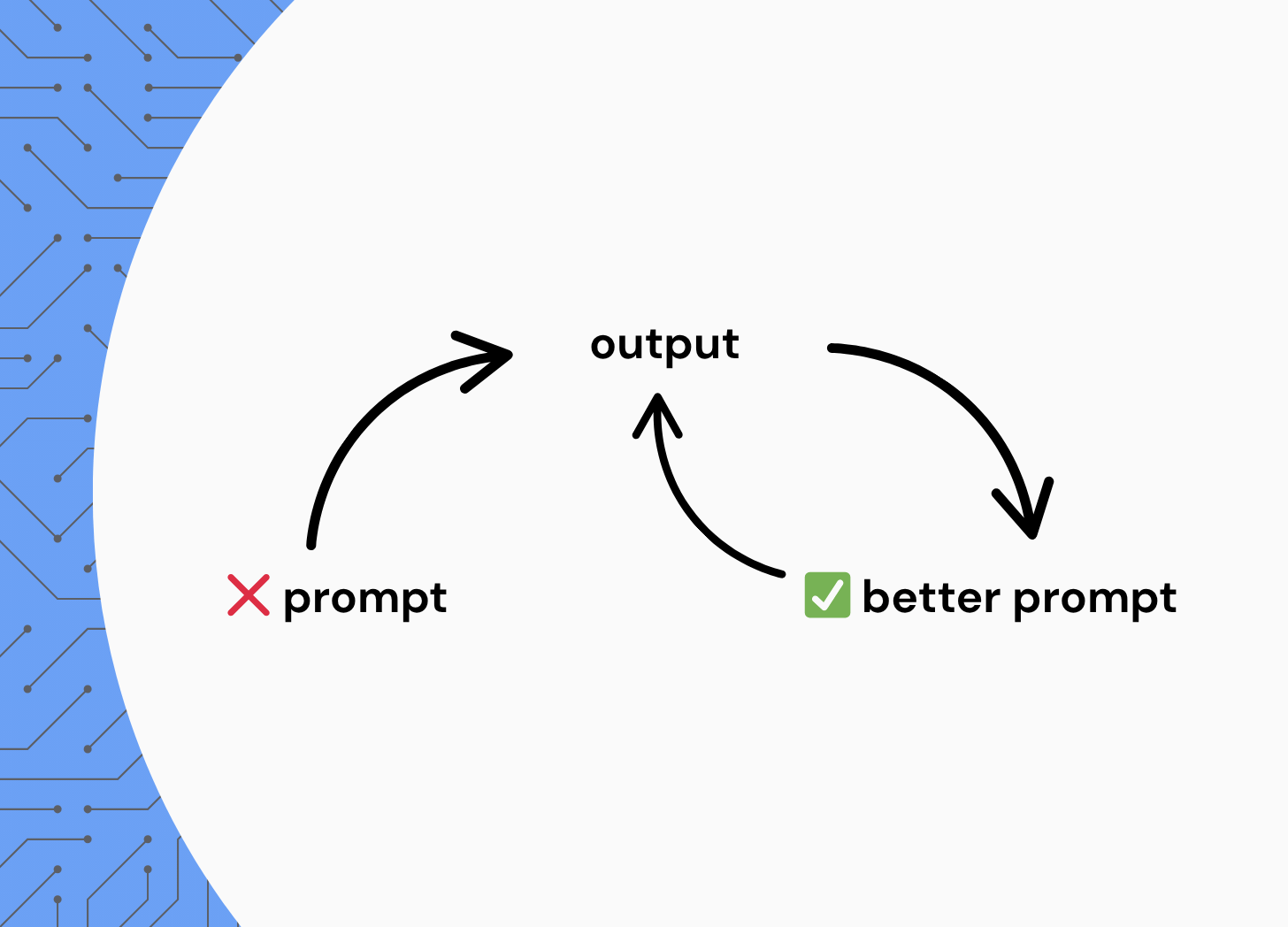
This is a great check to see if I’m using AI “the good way”.
At different points during a project, I will ask myself:
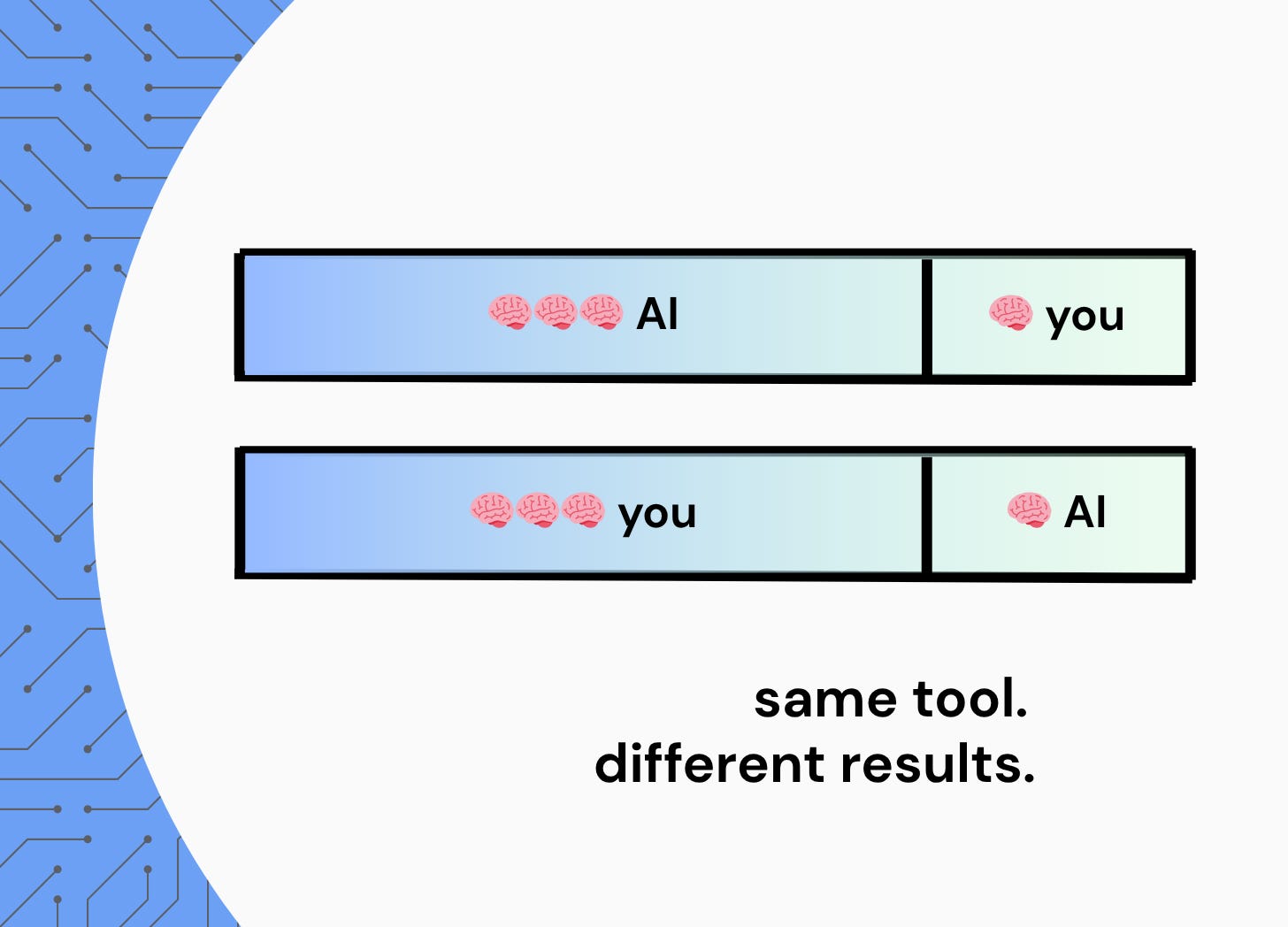
Am I thinking more or less than I would without AI right now?
If the answer is “less”, I pause and course-correct — either by stepping away from AI, or getting it to ask me questions that probe my thinking.
AI is great at getting you to think more because it can get you to reflect in ways that would be difficult to do by yourself.
But it can also make you think way less if you’re not careful, because it’s primed to do the work for you.
As humans, we instinctively want the path of least resistance. So even with the best of intentions, we can drift into thinking less with AI very easily.
This mental model helps catch and prevent that.
Most AI influencers say, “Generate something with AI, and then edit it to make it sound like you”.
I’ve found doing the opposite is better in every way.
Not only do you generate higher quality work when you do the first draft yourself, but you keep your brain and skills sharp.
The difference between those who use AI well and those who don’t is how engaged they are in the creative process.
The best AI writers and graphic designers are the ones who know how to write and design well without AI.
They can give specific, nuanced prompts, because they have the skill and taste to know what good looks like.
That’s why they can create things with AI that others can’t.
If you want to create something with substance that doesn’t look like AI slop, you need to always start with you.
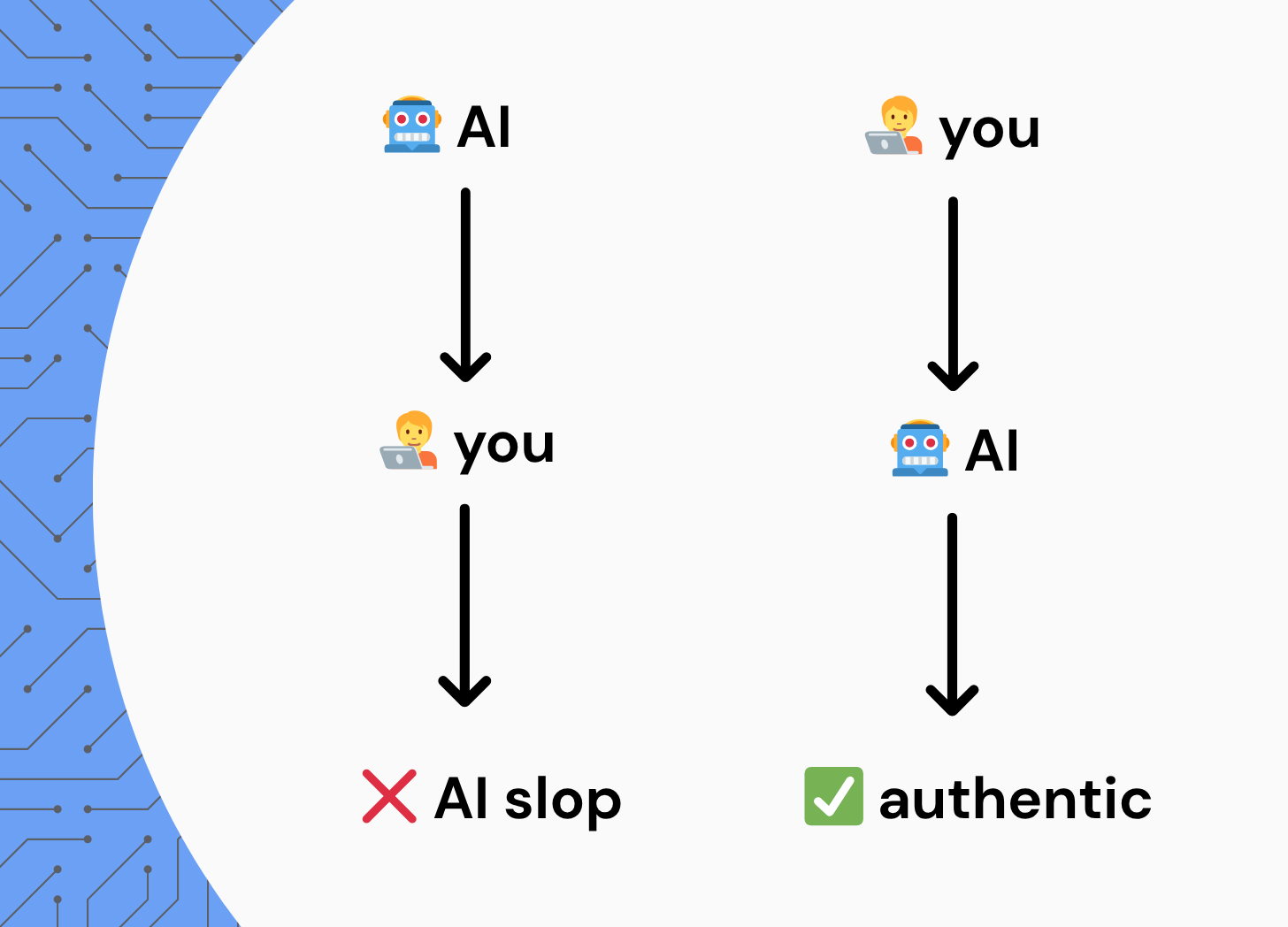
Your ideas. Your thought process. Your voice.
This guide is part of a talk I gave called How to write with AI without losing your soul for The AI Collective.
Subscribe below for more guides like this.
If you’d like to bring this talk to your event, team, or community, shoot me a message on LinkedIn.
Comments
Nothing yet. Say the first thing.
Sign in to join the conversation.