
Welcome to the 53rd issue of AI Agents Simplified 🍻
This issue is brought to you by Piere

I spent a good chunk of last week trying to debug an AI agent that was supposed to handle a fairly standard customer support workflow. I gave it a detailed system prompt, hooked up a few basic tools to query an internal database, and let it run.
During local testing, it ran fine. It answered basic questions, fetched the right account details, and seemed perfectly stable. But the moment I pushed it to a staging environment with real-world, messy user queries, the whole thing broke down. The agent started hallucinating arguments for tool calls. It got stuck in infinite loops trying to correct a minor API timeout. When a user asked a multi-part question, it completely forgot the initial constraints halfway through generating the response.
The problem I ran into was not an issue with the underlying language model. The problem was that I was falling into the trap of asking one single agent to handle every step of the process at once.
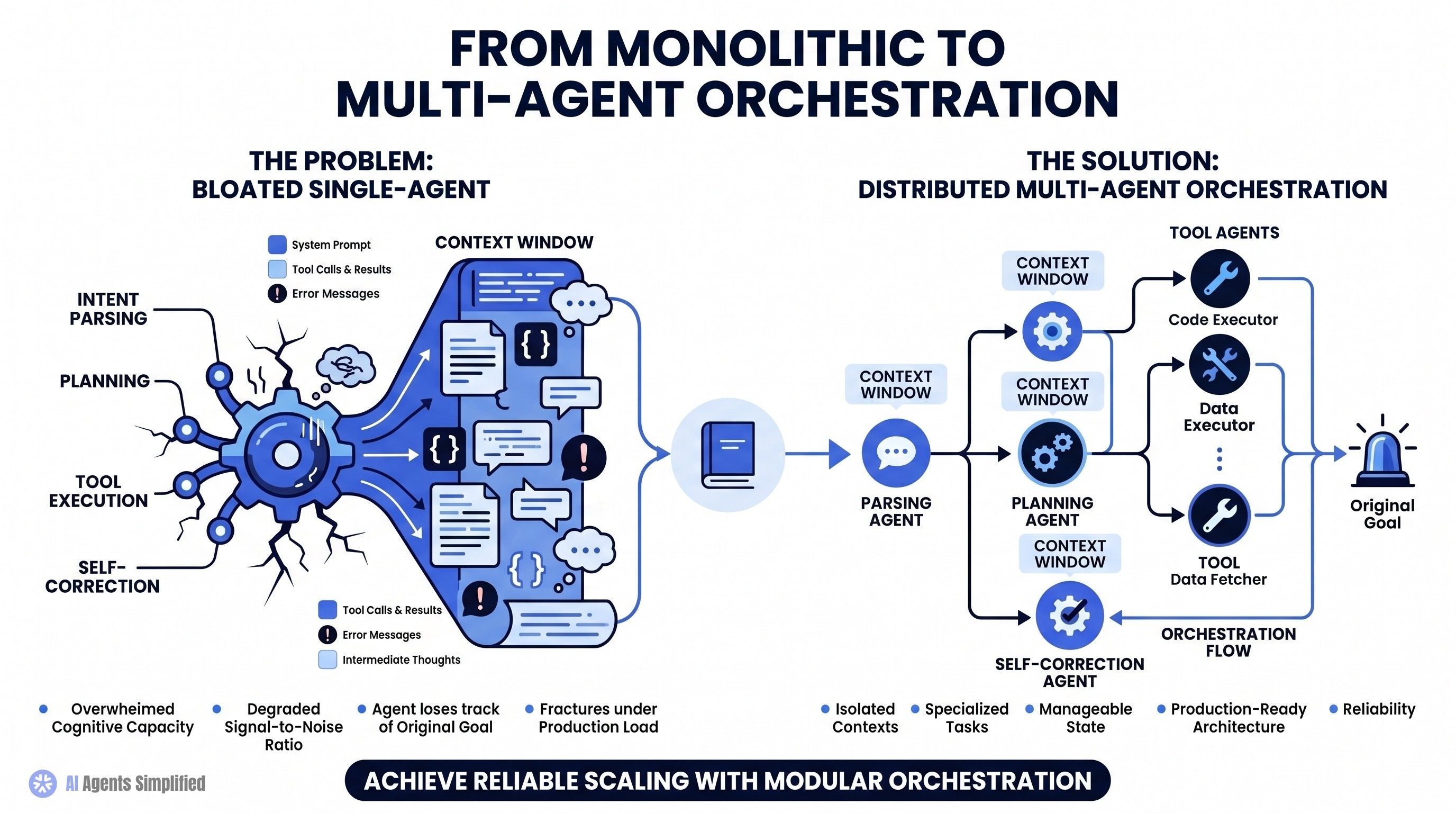
Building your first agent is deceptively easy, which is exactly why it is so dangerous. We tend to write a massive system prompt, attach half a dozen tools, and ask a single agent to execute a highly complex task.
When you force a single agent to handle intent parsing, planning, tool execution, and self-correction all at once, you overwhelm its cognitive capacity. Every time the agent makes a tool call, the result gets appended to its context window. After a few turns, that window is bloated with JSON responses, error messages, and intermediate thoughts. The agent loses track of the original goal because the signal-to-noise ratio has completely degraded.
I was reading 30 Agents Every AI Engineer Must Build by Imran Ahmad recently, and he hits the nail on the head regarding this exact bottleneck. He breaks down why these overloaded, single-agent loops inevitably fracture under production loads. What makes his explanation so useful is that he doesn’t just point out the flaw; he maps out the exact architectural shift required to fix it.
The path to production reliability requires abandoning this do-it-all approach and adopting distributed, multi-agent orchestration.
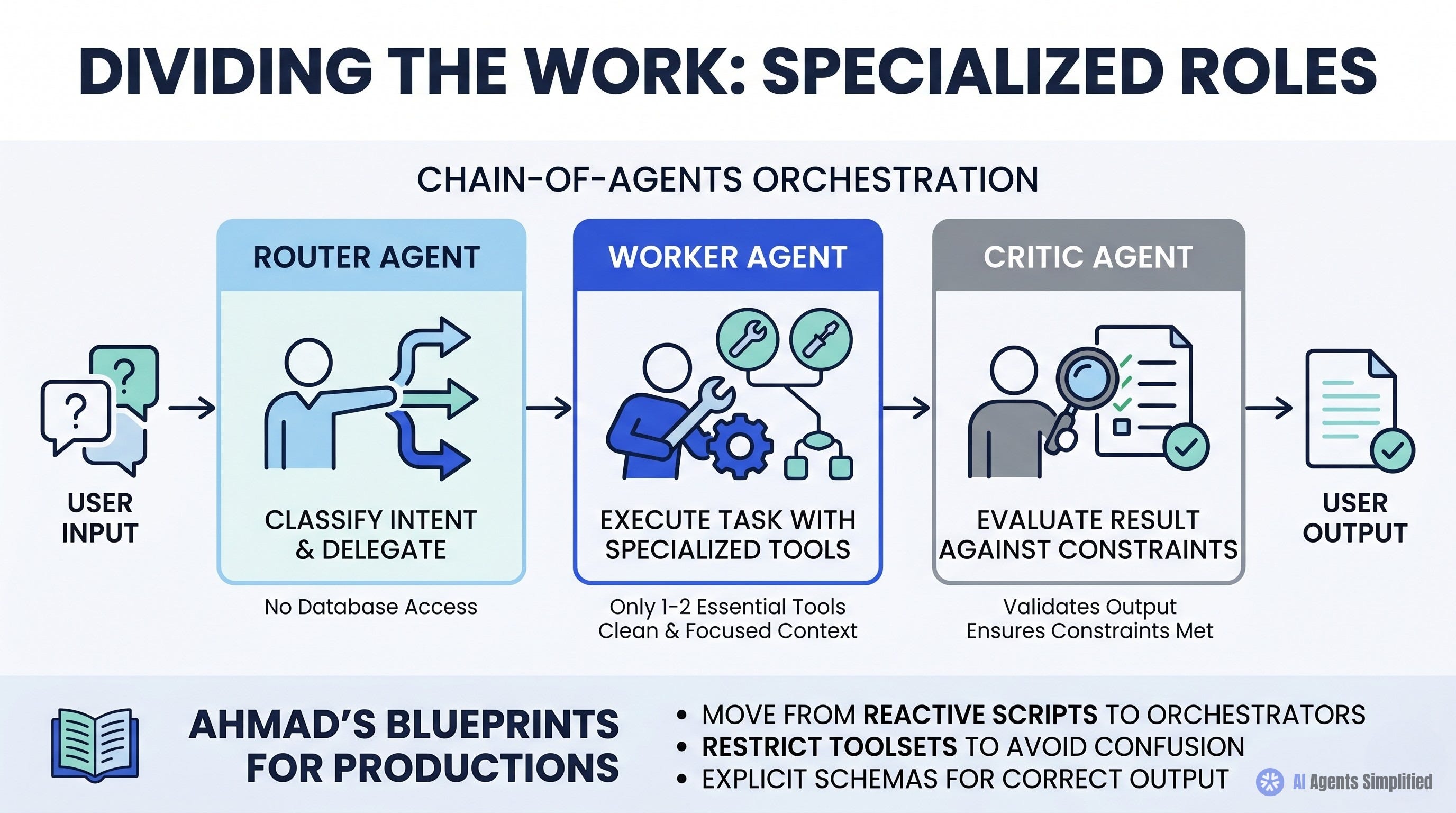
Instead of one agent trying to do everything, you have to separate the cognitive load into specialized roles.
In a multi-agent architecture, you might introduce a “Router” agent whose only job is to look at the user’s initial input and classify the intent. That router doesn’t have access to any external databases. It just delegates the task to a specific “Worker” agent. That worker is equipped with only the one or two tools necessary for that exact job, keeping its context clean and focused. Finally, the worker passes its output to a “Critic” agent, which evaluates the result against the initial constraints before anything is ever returned to the user.
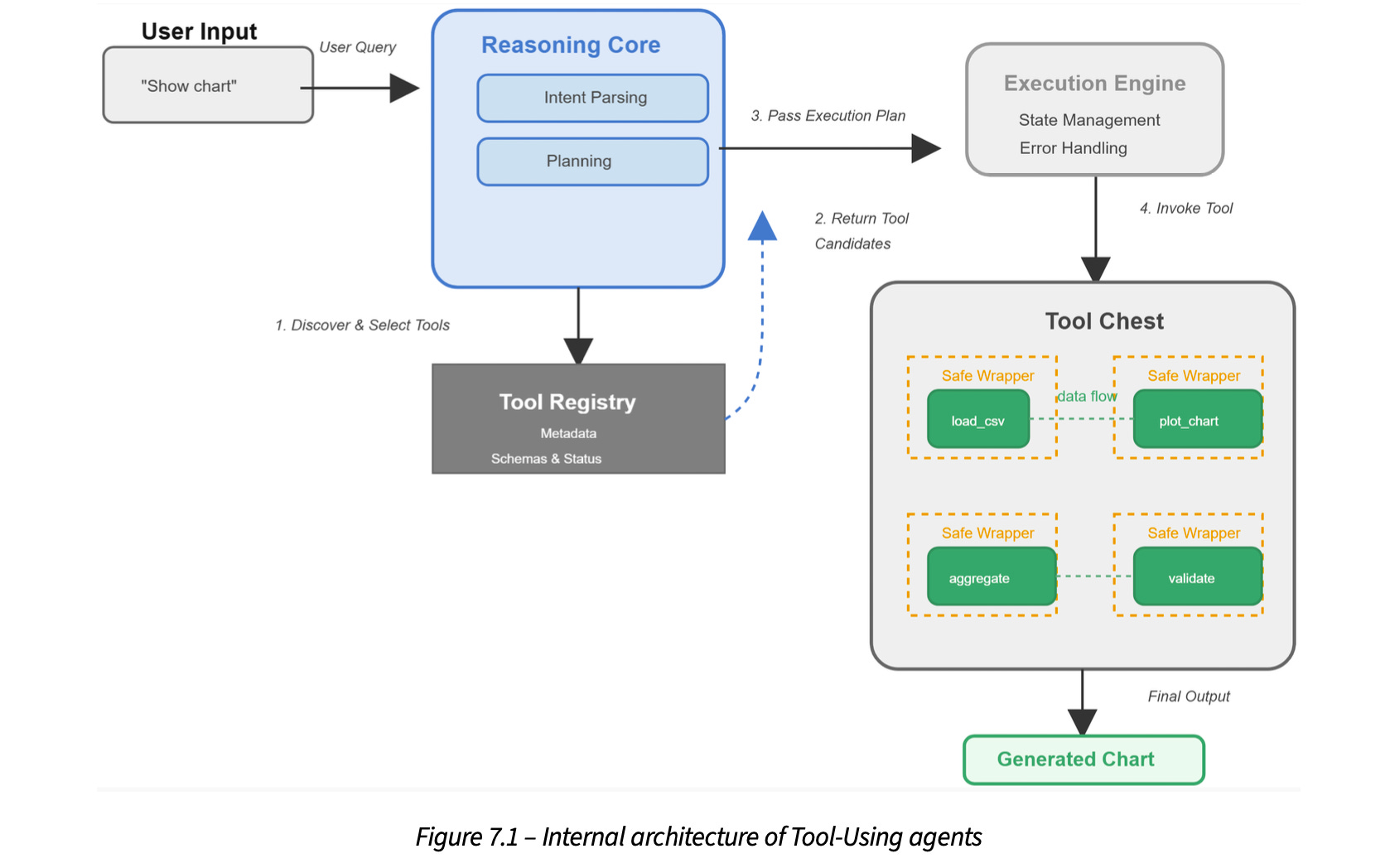
Ahmad dedicates a massive section of his book to this progression. He provides the actual blueprints for moving from simple reactive scripts to what he calls chain-of-agents orchestrators. I found his breakdown of tool invocation patterns particularly helpful. He shows exactly how to restrict an agent’s toolset so it doesn’t get confused, and how to write explicit schemas that force the agent to format its output correctly before passing it down the chain.
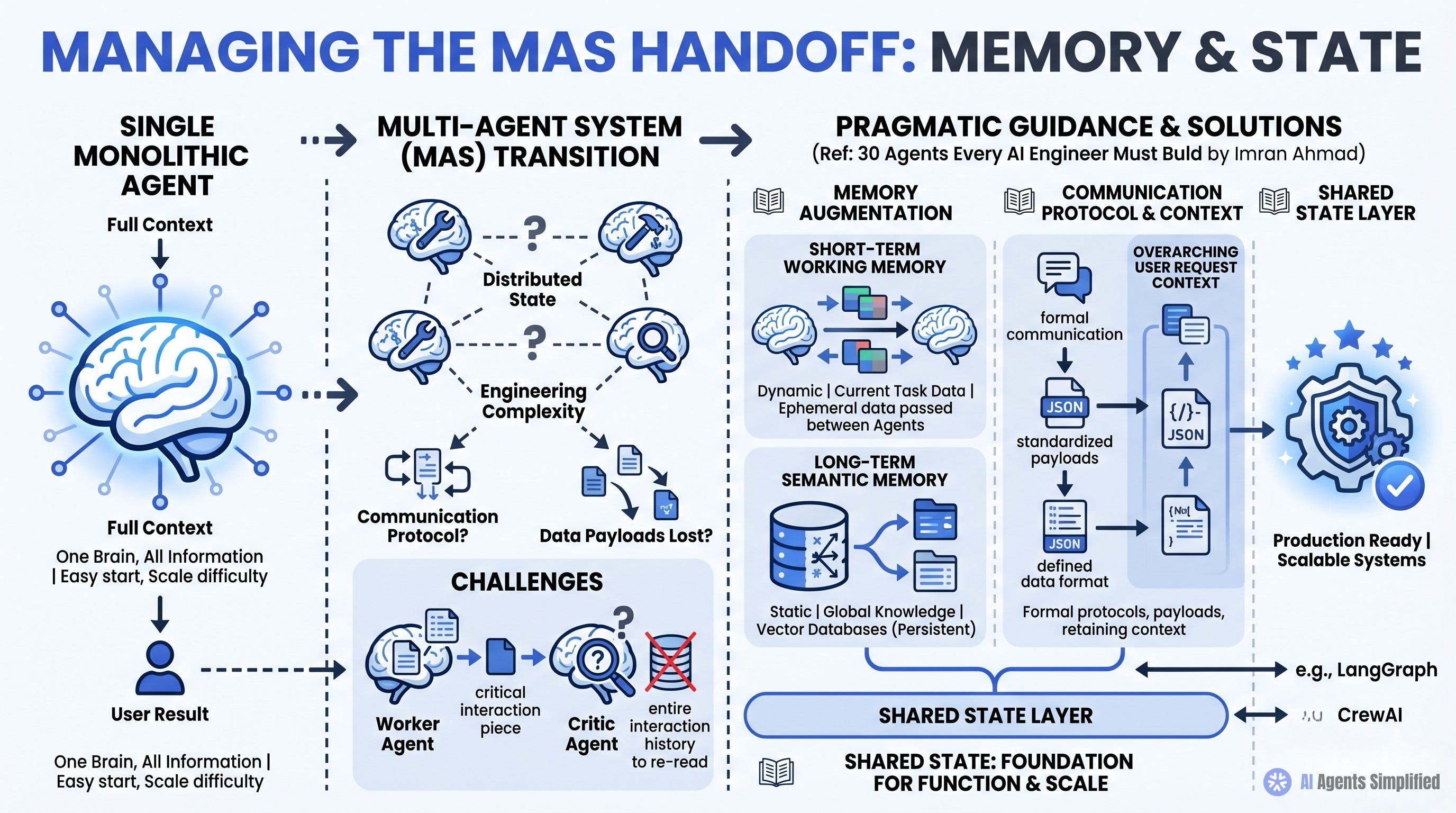
Moving from a single agent to a team of specialized agents makes logical sense, but it introduces a completely new set of hard engineering challenges. You no longer have one brain holding all the information; you have to manage distributed state.
If your worker agent finds a crucial piece of data, how does the critic agent know about it without having to re-read the entire interaction history? You need a formal communication protocol. Agents have to pass payloads to one another without losing the overarching context of the user’s request.
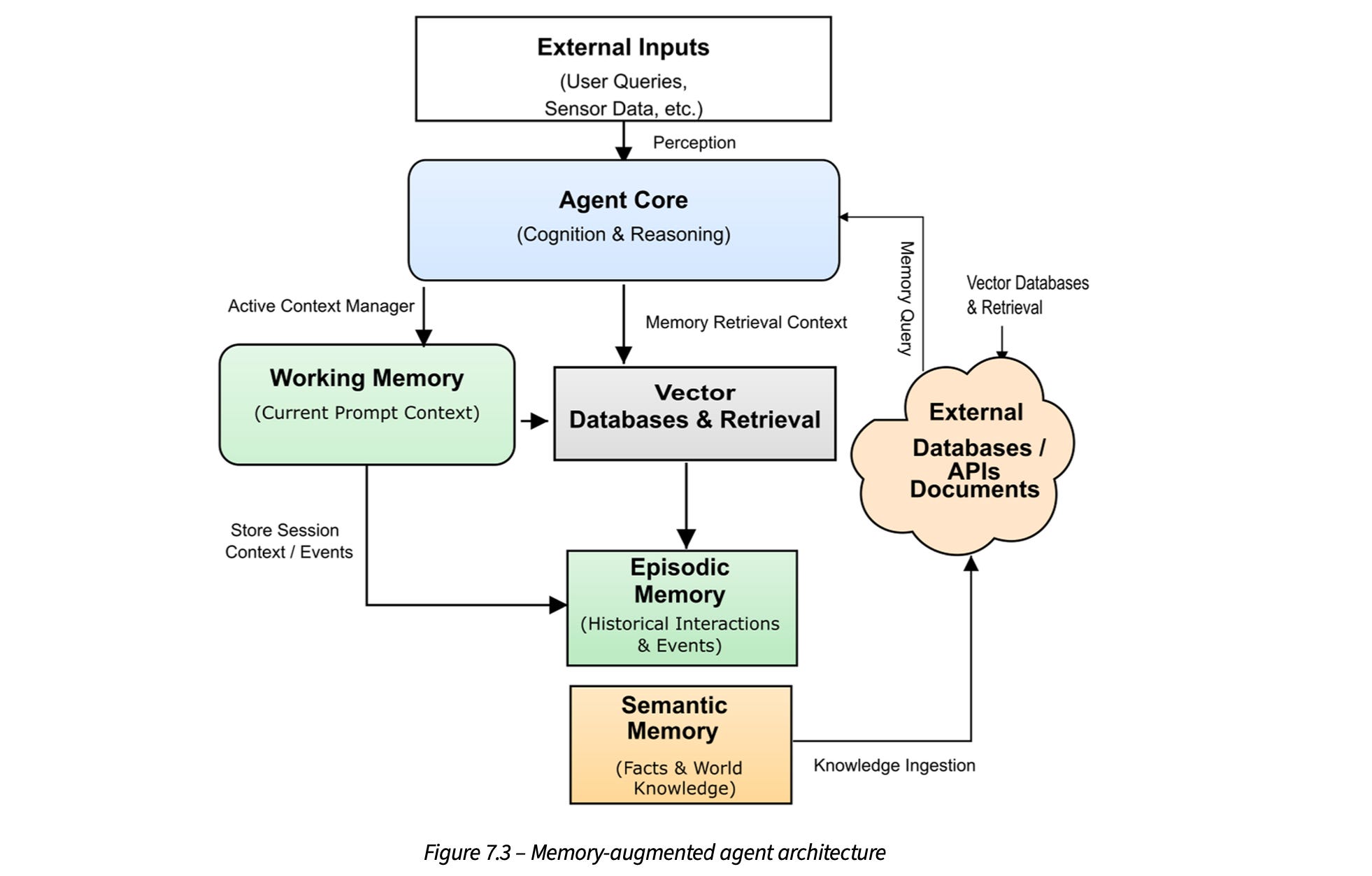
This is another area where Ahmad’s book serves as a phenomenal desk reference. He goes deep into the mechanics of memory-augmented multi-agent systems. He explains how to separate short-term working memory, the stuff the agents are currently passing back and forth, from long-term semantic memory stored in vector databases. It is a highly pragmatic guide to building out the shared state required for frameworks like LangGraph and CrewAI to actually function at scale.
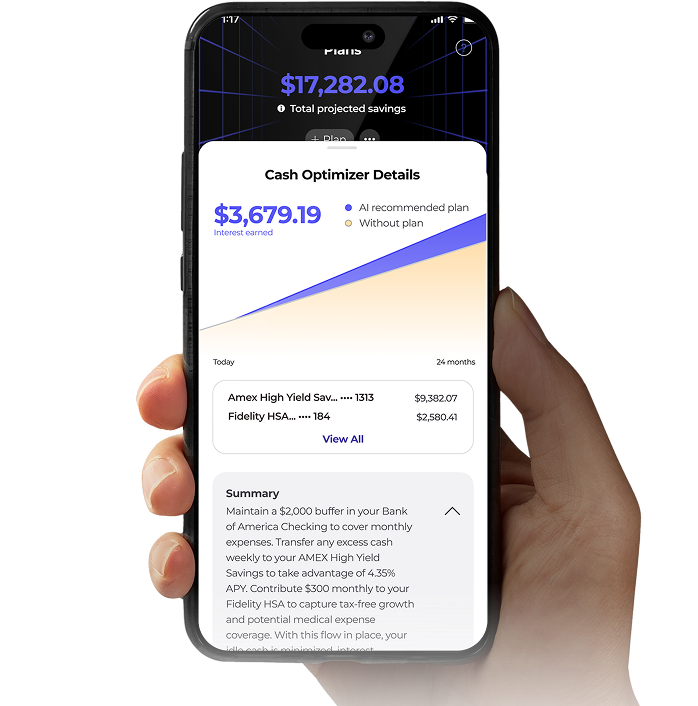
Any bank, any account, Piere makes it possible. In seconds, Piere analyzes your spending, income, wants, and goals, then creates fully automated plans for your money to follow.
Save money automatically when you get paid, your money moves itself to the right account at the right interest rate
Repay debt and stay debt free - Piere smartly determines which accounts to pay and when for the biggest impact
Spend smarter, Piere keeps only the money you need for monthly expenses in your checking, moving the rest to high-yield accounts for safekeeping (and less temptation)
Get started in just seconds, and if you don’t grow by at least $120 in your first year, we’ll give you back the difference.
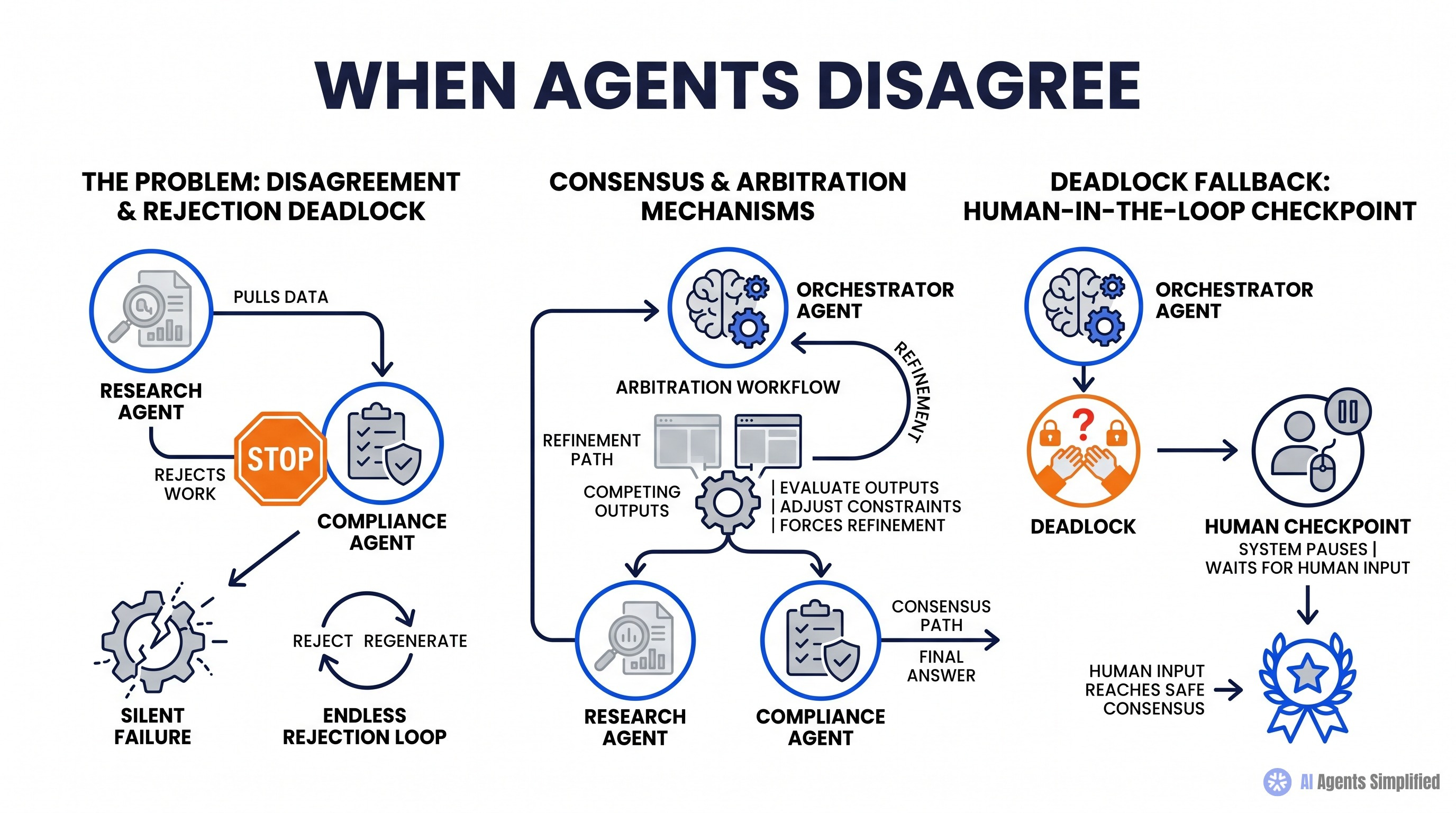
The hardest part of orchestrating multiple agents isn’t getting them to talk to each other; it is figuring out what to do when they disagree.
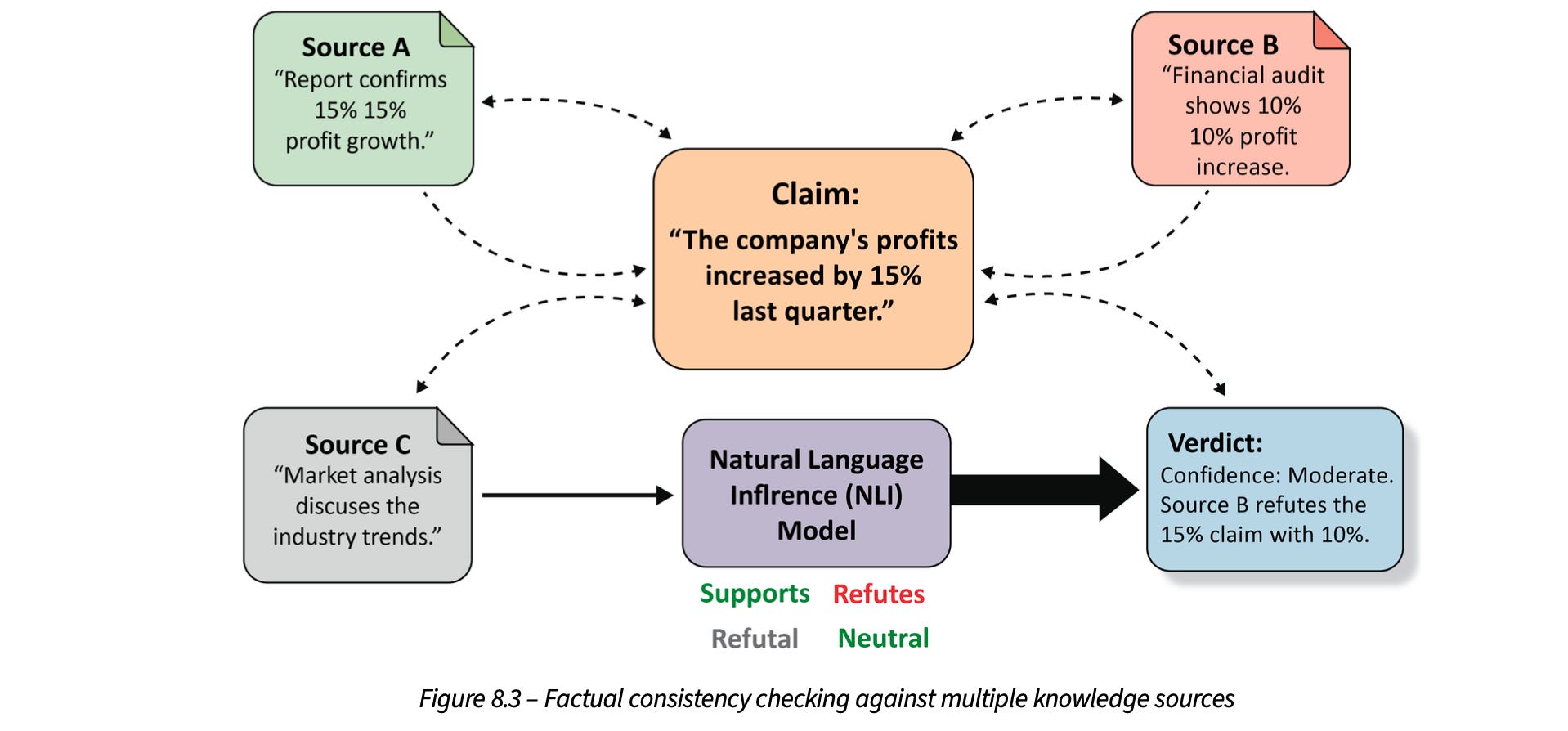
If you build a workflow where a research agent pulls data and a compliance agent reviews it, you will eventually hit a wall where the compliance agent rejects the work. If you haven’t engineered a fallback path, the system will either fail silently or get trapped in an endless loop of rejection and regeneration.
You have to build consensus mechanisms. 30 Agents Every AI Engineer Must Build does an excellent job of outlining how to handle these conflicts. It walks through building arbitration workflows where an orchestrator agent evaluates the competing outputs, adjusts the constraints, and forces the system to refine the answer rather than crashing. It shows you how to design these systems with human-in-the-loop checkpoints, ensuring that when the agents genuinely cannot reach a safe consensus, the process pauses and waits for your input.
If this added value, share it with others who might benefit.
If you are currently struggling to transition brittle, single-agent prototypes into stable workflows that you can actually trust in production, you need to understand these multi-agent architectures.
Ahmad’s book is dense, practical, and heavily focused on structural engineering over vague AI theory. It maps out the exact progression you need to take to build resilient systems.
I highly recommend keeping a copy on hand as you build. You can grab your copy through the link below.
P.S. To save you time, I’ve also put together a short reading roadmap for the text. It breaks down exactly which chapters you should focus on depending on what you are actively building right now.
If you want a copy, drop a comment below and I’ll send it directly to you.
No posts
Comments
Nothing yet. Say the first thing.
Sign in to join the conversation.