
It’s a bit past the middle of 2026 and several of the well known RAW photo editing apps have been updated, with the usual fanfare of paid cheerleaders announcing the launches. And I can’t be the only one thinking, “Is that it?”
Most of these companies typically roll out their press-launched updates a few months before Christmas and it made me wonder if the era of the big update, the bombastic point release, is behind us. Instead of some impressive new release with amazing new features, we’ve been getting little updates and incremental tweaks, whether it’s in a subscription or a single-purchase app.
Is there nothing left to do? Have we reached peak photo editor?
RAW & Unfiltered - Photography in the Real World is a reader-supported publication. To receive new posts and support my work, consider becoming a free or paid subscriber.
The Golden Years
It’s sometimes easy to forget just how new digital photography is. Those of us who’ve done a few laps around the sun, the boomers, GenX, and the millennials, will remember how over the course of the ‘90s, digital blew up.
And hot on the heels of digital photography came the RAW revolution, when camera manufacturers took the shackles off our photographs and let us develop them the way we wanted, rather than the way a built-in pre-coded algorithm decided. Getting good results from those RAWs was a frontier skill back then, and before long advanced RAW editors started appearing, many of which are still with us today.
As the popularity of digital cameras exploded, so the popularity of RAW editing apps grew too and it turned into a highly competitive niche, with each developer trying to one-up the next. We went from a core suite of sliders, the usual suspects, highlights, shadows, vibrance, saturation and curves, to advanced tools such as colour mixers, dehaze and spot removal. Then the first wave of machine learning tools appeared: smart auto-editing, then denoise, upscaling and sharpening and more recently AI masking.
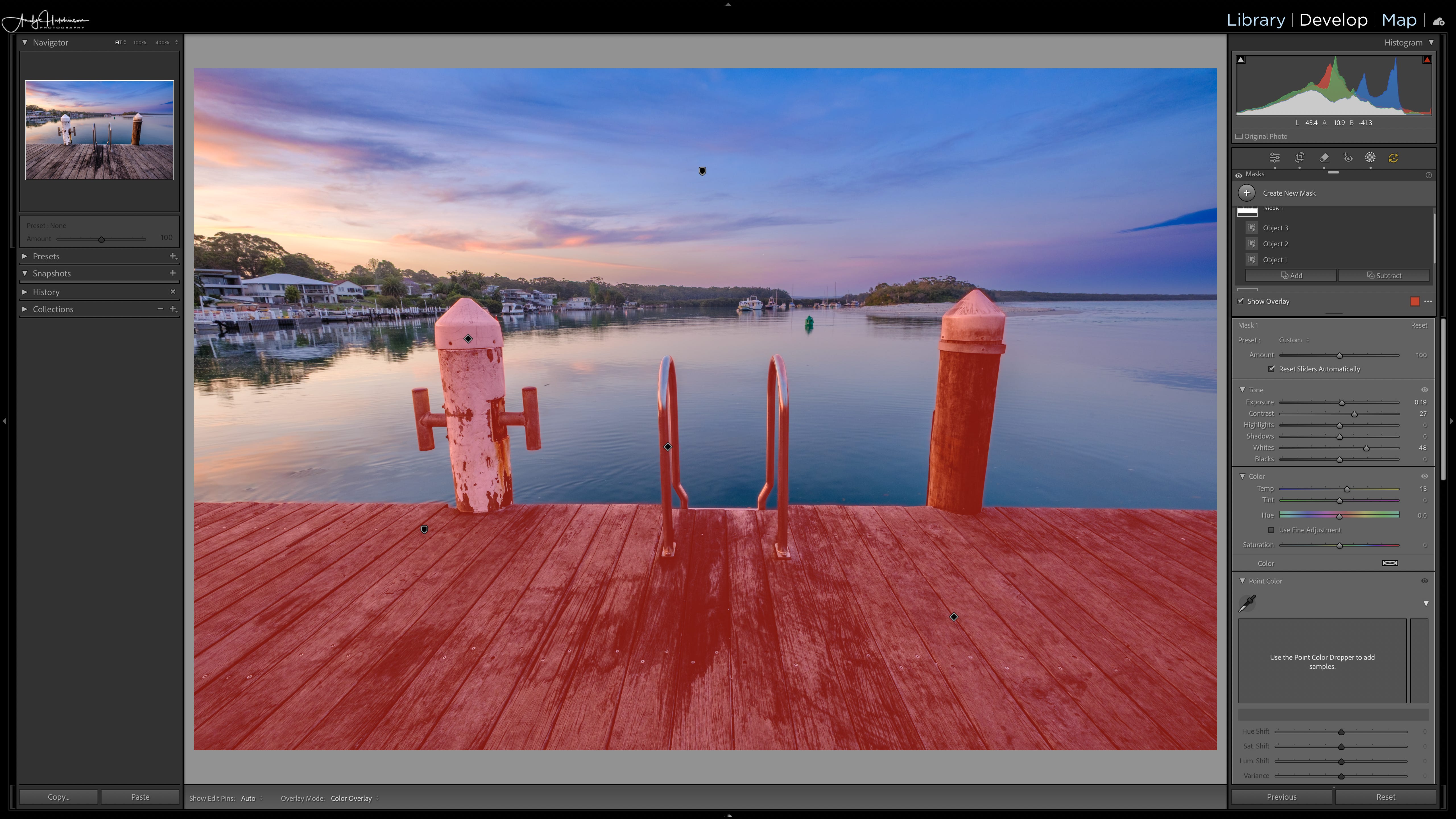
But lately the introduction of new tools, as opposed to the refinement, automation or AI equivalent of existing ones, has slowed to a crawl. And it strikes me that companies like Adobe are casting around for ever more pointless enhancements in order to attract new customers, to retain existing ones and to tempt photographers to switch teams.
The Micro-Feature Era
Over the last two amazing decades we’ve seen the arrival of automatic lens profiles and corrections, graduated masking, healing brush, HDR blending, range masks, dehaze, smart adjustments, denoise (AI and otherwise), lens blur, perspective correction, generative fill, AI masking, AI upscaling, adaptive presets and multi-pipeline demosaicing, starting in the top tier editors and then filtering down to the cheaper competitors.
These were all highly significant additions to the photographer’s toolbox and each one opened up new possibilities for extracting every bit of goodness from our RAW photos. But over the last two years, things have got a lot quieter and instead of new features, what we have seen instead is the constant refinement of the existing ones.
So we get marginally better AI denoise, a new twist on contrast adjustments, slightly improved colour grading, smart cropping and AI toenail masking. OK yes, that last one’s not here yet, but I’m betting Adobe are thinking about it.
My point being, as per the title of this article, I strongly believe we hit peak photo editor about two years ago, and henceforth new versions of the apps we know and love will improve not by leaps forward, but by small steps.
So What’s Next?
Now of course we are all familiar with the way goods and services function in a market economy in non-communist states. The manufacturer or developer constantly rolls out new or enhanced products firstly to attract new customers and secondly to convince existing customers to upgrade.
But the developers of photo editors find themselves in a tricky position now because there isn’t a corner of the post-processing workflow which hasn’t been addressed. So instead they either resort to gimmicks or they use the full might of their marketing teams to try and convince us that something exceptionally ordinary is an amazing new feature.
I was struck by the impact of that latter scenario when my photography YouTube feed was full of videos about, of all things, the ‘Render to DNG’ tool in Adobe Lightroom. If you somehow missed the 47 videos on this subject, then let me fill you in: Adobe have added an option called ‘render to DNG’ which converts your image to DNG and adds it into your catalogue. The reasoning behind this tool is that you can bake in all of your current edits and then continue tweaking your photo from a new baseline.
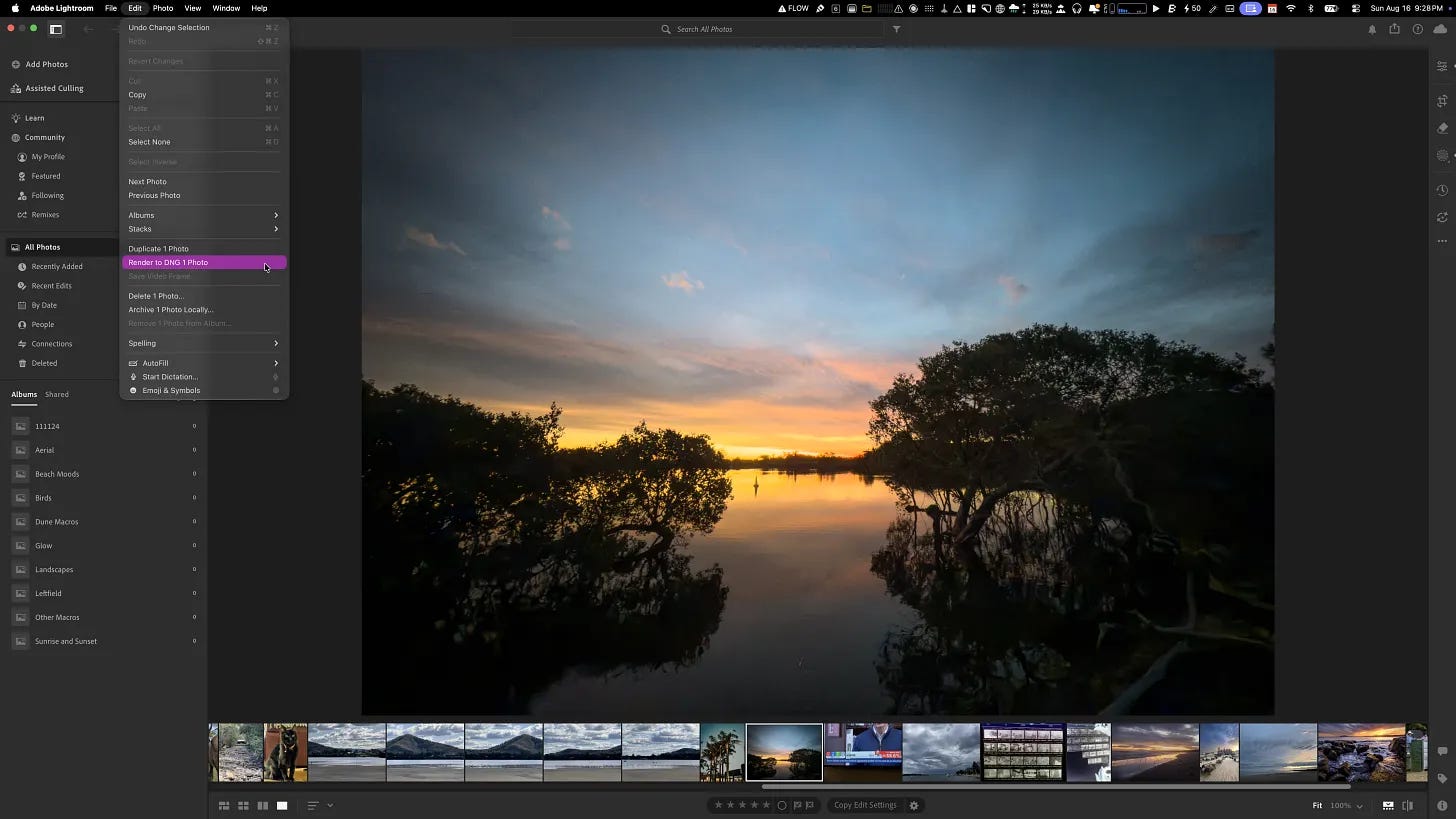
Like me, you might have had several thoughts when you saw this feature which, according to one photography YouTuber, ‘changes everything’, such as:
Can’t I just, you know, export to DNG from the export menu?
Or can’t I just create a virtual copy and use that as my new baseline?
Or can’t I just use the snapshot feature to record a new baseline?
And the answer to all of those questions is yes, yes you can. Or at least you will be able to when they add to Lightroom Classic. Literally the only advantage of using render to DNG instead of exporting yourself, is that Lightroom re-imports the DNG to your library for you, in much the same way that it used to when you used the prior version of AI denoise, before Adobe removed that particular feature because everybody hated having extra DNG files knocking about.
Now I know I’ve been sticking the boot into Adobe thus far, but they are most definitely not the only ones clutching at straws in an attempt to dazzle and delight photographers. To much hype from the shills in Skylum’s affiliate scheme, they rolled out a rebranded version of their flagship photo editor referred to henceforth not as Luminar Neo, but as Luminar Morpheus ... no wait, it’s just plain old Luminar now.
I downloaded the new update to see what constitutes what the shills were calling a major feature upgrade and discovered that they’d basically re-arranged the furniture and ‘improved’ their fog effect. Admittedly, Skylum’s definition of innovation has always been shoe-horning more god awful TikTok-grade effects into AI workflows, but this is pretty thin gruel even for them.
Meanwhile DxO have managed to stay ahead of the feature curve, largely by being several years behind it. So when they rolled out AI masks in PhotoLab version 9 last year, it really was a major upgrade, but only because it took them four years to get within striking distance of Adobe.
Special Needs
It seems pretty clear to me, based on how each of the developers are tackling the upgrades to their photo editors, that the future lies in specialisation.
To their credit, Capture One realised what was going on some time ago and they made it their mission to ruthlessly target whatever’s left of the studio-based professional photography community. They have doubled-down on all the stuff the studio crowd love the most, things like tethered shooting, culling, colour science and having very strong opinions about grey cards and octaboxes.
When they added AI masking in 2023, you could almost feel the reluctance in its design, just subject and background for their customers, because they’re only photographing people and products under studio conditions and have no fucking need whatsoever for anything as bourgeois as an AI sky mask.
DxO meanwhile have decided to take the high ground, to focus on the photographic purist, the kind of die-hards who regard generative AI as heresy and would sooner rectally impale themselves on a monopod than leave some chromatic aberration unattended to.
And as for the rest of the developers? On1’s niche audience appears to be people with cripplingly poor eyesight and a penchant for puzzles. Luminar are chasing people on TikTok who think that every photograph could be improved by having a bigger moon in it. Adobe are going for the “I’m okay with any kind of AI as long as we continue pretending this is photography” crowd. And ACDSee are catering to people who bought their first digital camera in 2003 and see absolutely no reason to change anything.
Friends, in any kind of product cycle, there is a point at which development plateaus out and marketing transforms into an exercise in branding, rather than innovation. We have reached that point in photography, not just in terms of software such as RAW photo editors, but in terms of hardware too.
And the reasons we prefer one product over another are now more likely to come down to personal taste and pricing than the addition of a generative pimple remover. Photo editors will, of course, continue getting better. I’m just not convinced there’s that much for them to get better at.
Comments
Nothing yet. Say the first thing.
Sign in to join the conversation.