
Foraging. What a concept. To take a walk in nature and stumble onto food--how crazy is that? It’s growing wild, right there for the taking of anyone--human or animal--who wants it. It truly is a gift for anyone willing to harvest it.
I found a beautiful essay written in 1915 that perfectly describes foraging.
It is all your own, from twig to table. For wild grapes are every man’s harvest, choosing their own trellis of boundary fences and stone walls along the roadsides. They yield their riches to those who know them best and who most desire them. If you have found them, then it is you only for whom they have ripened, a free gift of nature’s bounty.
There’s something to be said for finding food grown in the wild and putting it to use. It feels thrifty and satisfying and just plain responsible.
Abundant Opportunities
Wild-grown food is likely all around and you may likely not be aware of it—herbs, fruits, vegetables, edible flowers, mushrooms, nuts, and so-called weeds like dandelion and nettle.
Much of what you find foraging isn’t grown commercially, which makes it even more of a special treat. You’ve probably never seen mustang grapes, purslane, dewberries, black raspberries, morels, or wild plums in the produce department at your grocery store. But they add variety to your diet and pantry.
Obviously, foraging options are more plentiful in the country. But don’t think you have to trek out into the wilderness in search of it; it’s all over.
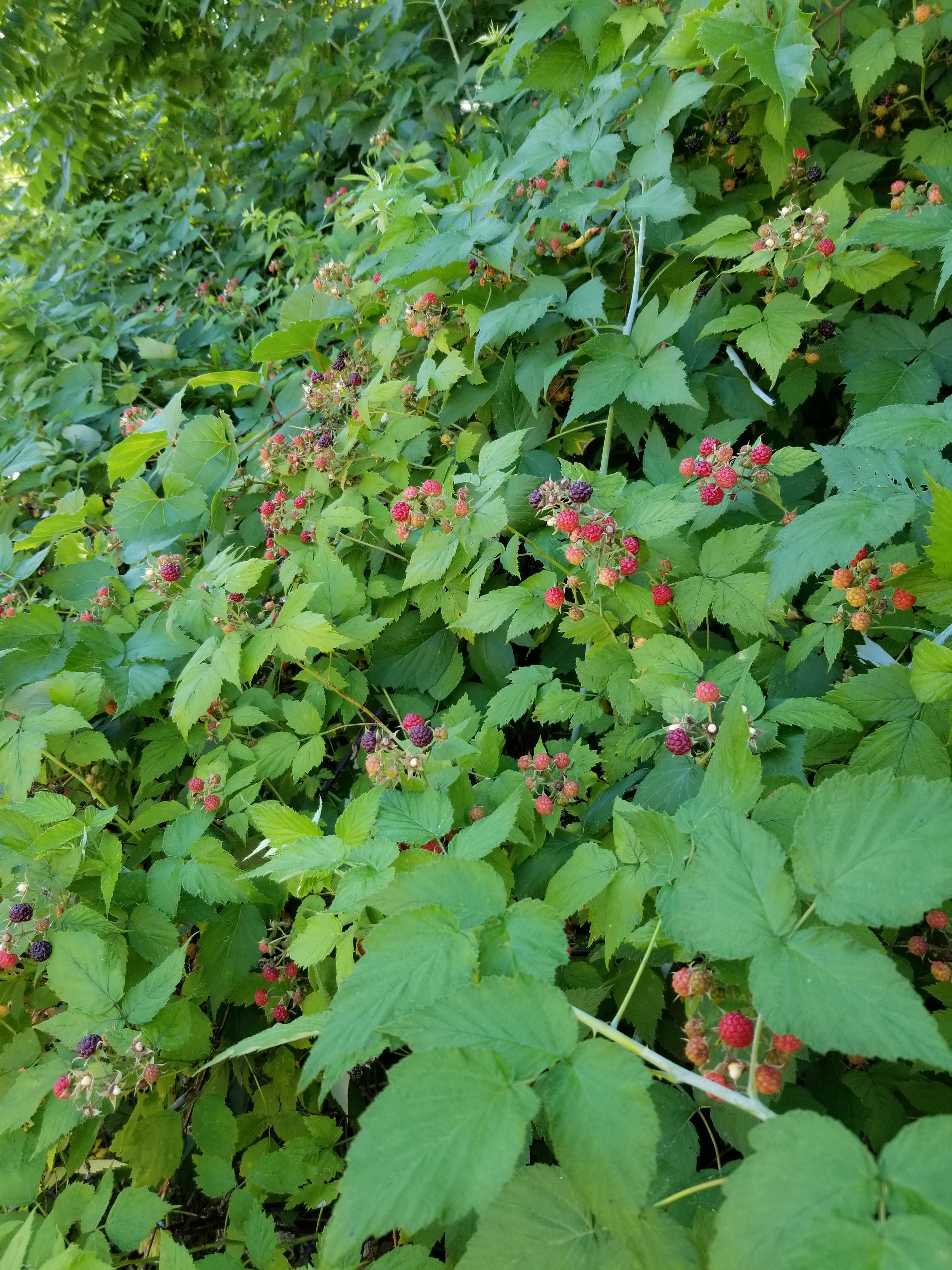
The small town where I used to live offered an array of foraging options, all within the city limits. There were elderberries galore behind the skateboard park and wild grapes along the bike path. Black raspberries grew along the railroad, gooseberries in an overgrown vacant lot down the street. There were also wild grapes that grew on the fence at Burger King. I never asked to forage there, however. I didn’t want to wind up awkwardly chatting to customers waiting in the drive-through lane.
My neighbors offered me as many black walnuts as I was willing to collect off their lawns--a great deal for both of us. All over town, people let the black walnuts from their trees roll onto the sidewalks and streets throughout the fall. Anyone could have collected bags of them. We took advantage of a couple of maple trees in our neighborhood yard to provide us with enough sap for maple syrup and had enough dandelions and greens for salads.
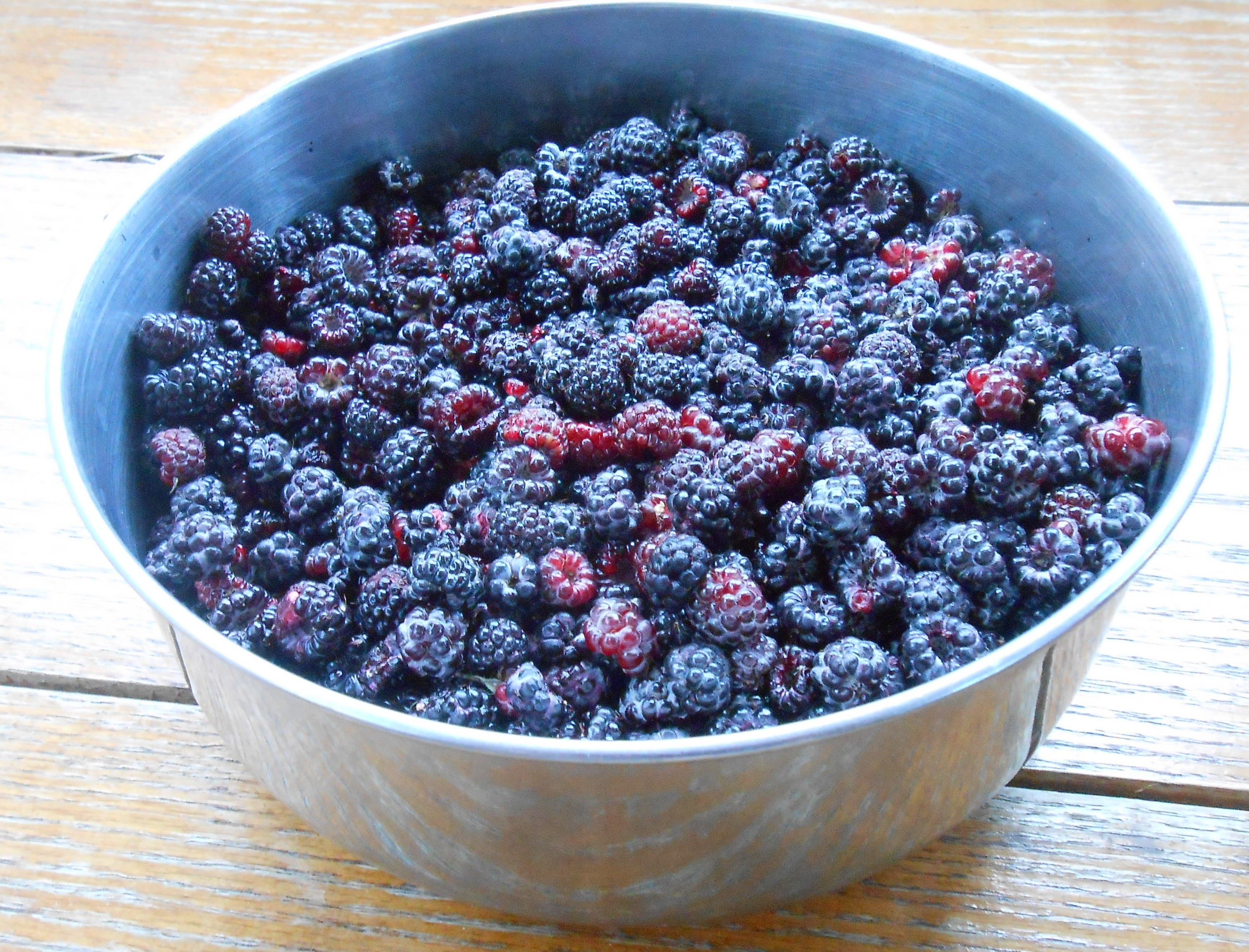
For a couple of weeks every July, I picked a bowlful of black raspberries every other day, just two blocks from my house:
Wild plums were the biggest treasure of all. They grew along the creek between Piggly Wiggly and Dollar General. Talk about conspicuous—the whole town shopped at those two stores. As it turned out, I’m brave, (or have very little dignity) because wild plum jam won out over the embarrassment of being caught.
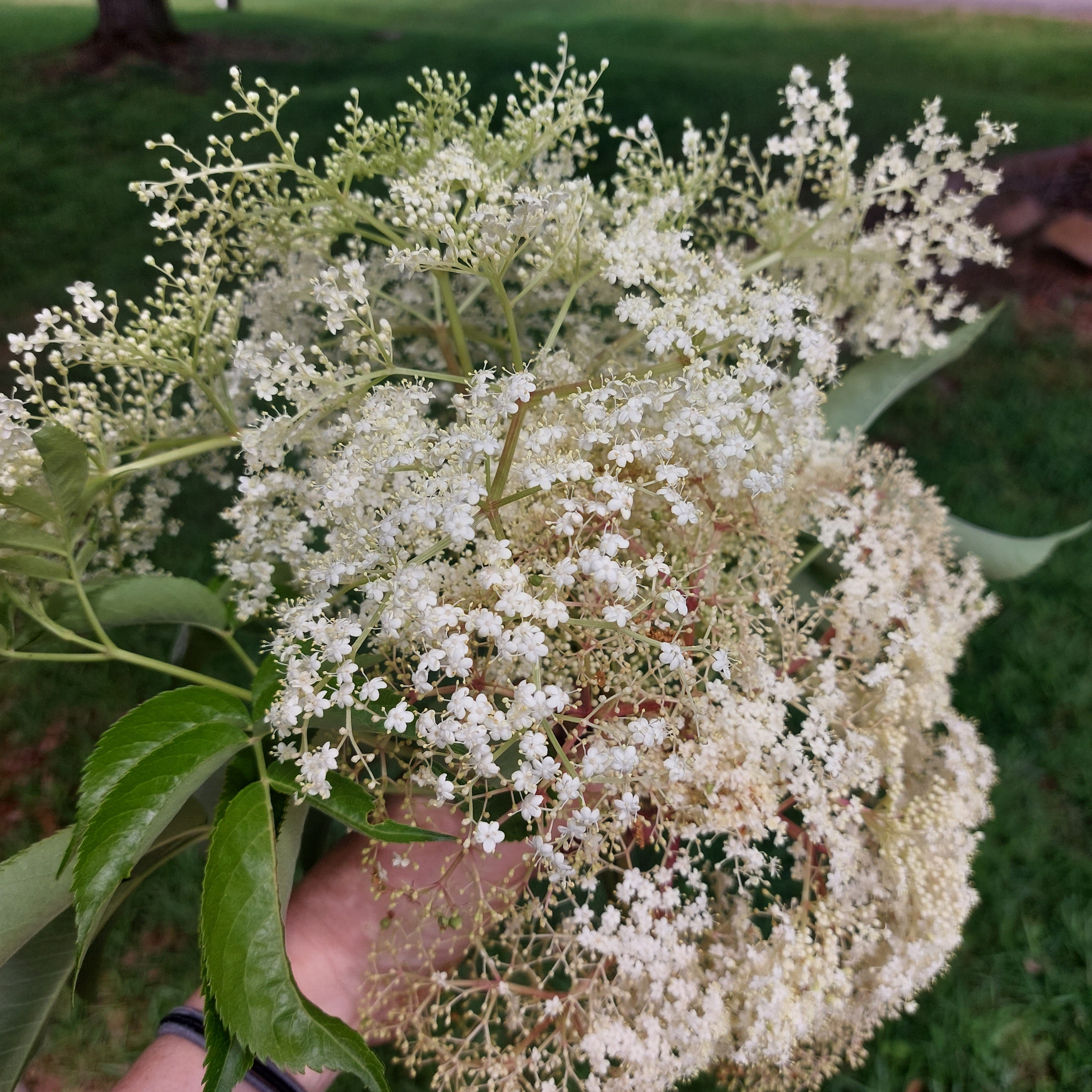
I’m still learning the plants and seasons where I’m living now. But just this weekend I noticed an elderberry bush blooming along a country roadside. The area isn’t manicured and clearly no one is taking care of it or spraying so I felt safe picking a handful of blossoms for a batch of my favorite early summer treat--elderberry “champagne.” (I’ll check back later this year for ripe elderberries.)
Foraging Economics
From a strictly economic angle, maybe foraging isn’t the absolute best use of time. But in my case, what else would I do in those couple of hours I spent picking? Maybe I could be productive, but maybe I wouldn’t have. In the end it just meant that I have to be more focused on all my daily tasks, leaving me fewer hours in the day to scroll or get distracted by non-essentials. Foraging means spending time outside in the sunshine getting exercise and for my effort, I get fresh food, free for the picking.
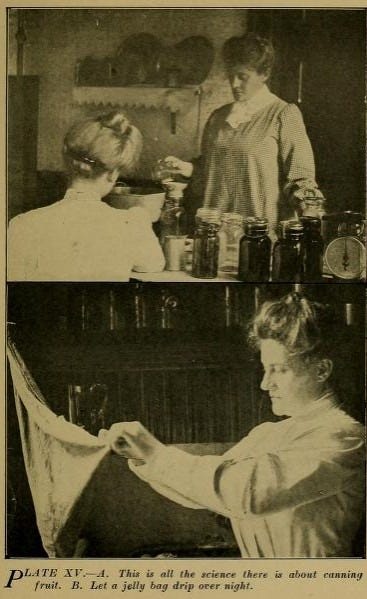
Modernism scarcely approves of all this labor. We cannot suppress a doubt as to the economy of expending so much time and care to catch and imprison a few dozen jars of sunshine. In theory, we acknowledge the wastefulness of our effort. But in practice, a great many of us go on preserving, year after year. In fact, we really love the close boundaries of home, and prefer the work that is direct and personal to a bigger work and a possible posthumous appreciation.
I can’t agree that it’s “wastefulness” but I’ll concede that it’s usually a lot of effort for a typically small reward. Still, I consider it one of those situations where quality wins over efficiency. Last year over the course of several days I picked a few gallon bags of wild blackberries on a relative’s property. I froze some of them for smoothies and pancakes, and made the rest into jam and blackberry syrup. It was the most satisfying feeling to see those jars on the pantry shelf.
Foraging isn’t a significant part of my grocery strategy, but if I happen to see a bonanza, I’ll take advantage of the opportunity. It is a happy bonus to the pantry.
Getting “Caught”
It goes without saying that you can’t just walk onto someone else’s property and start picking fruit. Ask for permission if you want to forage on private land. Many people are happy to have someone use the produce they can’t or don’t care about. There are a lot of public options, too. In Wisconsin, for example, roadsides are fair game, and it’s legal to forage in state and county parks, as long as you aren’t digging anything up. Berries, fruit, and nuts are essentially perennials, so picking them won’t upset the balance of the ecosystem.
I’ve never once encountered competition (i.e., another forager) during my hunts, although I’ve seen the tamped down grass and picking patterns and knew that I wasn’t the only one interested in a particular patch of berries.
Several times people have sauntered by on a walk, though. I always instinctively strike a casual pose as if I’m just admiring nature. Y’know, because people routinely stand in a patch of thorny berry bushes with a shopping bag. I realize that I am fooling absolutely no one. However, people rarely give me a second look so I must do a good impression of a local harmless kook.
In other words, don’t be weirded out by other people and let it stop you. They really don’t care.
Foraging in the City
When I moved to a big city, I didn’t think foraging was feasible. If there even were opportunities, I expected competition to be fierce. As it turned out, there were opportunities and I had no competition. (If you live in Austin, TX, check out the Mopac underpass next to the Domain. Jackpot.) As I was picking dewberries one morning, an older man told me about a nearby spot around the corner (also on public land) and said to watch for a mother lode of mustang grapes. He was right and I only picked a fraction of the abundance. For my one day of effort, I canned 11 pints of mustang grape jam.
As you’d expect, passersby “caught” me every time I foraged in the city. But the result of each encounter was a pleasant conversation with someone about their own childhood foraging and jam-making adventures.
A Few Tips for Foraging
I do have a few pieces of advice, however. First of all, dress appropriately. That likely means wearing shoes (not sandals) and long pants and long sleeve shirts. It’s miserable in the summer but the alternative is worse--wild fruit is not a tame sport. The thorns are real and big and the mosquitoes are fierce, not to mention other stinging insects.
Secondly, for heaven’s sake, watch out for poison ivy. I’d never encountered it before, but I can confirm that it’s most definitely abundant in Texas. Days after picking, when little blisters started to appear on my ankles, I mistook them for strange insect bites and treated my rash completely wrong. Instead of nursing a patch of blisters on my ankles, I had rashes the entire length of both my legs for weeks.
And it kind of goes without saying, but don’t be dumb. Know your plants and what’s edible as well as their non-edible look-alikes. Local Facebook groups always have people willing to identify plants based on a snapshot but instead rely on people you know and trust to give you the most accurate advice.
The Foraging Tradition
If you’re looking to do a little foraging beyond simply keeping an eye out in your immediate area, check out the map on fallingfruit.org. The site is by no means exhaustive, but you may find a treasure nearby.
The beautiful thing about wild food is that it will continue to grow and produce even if no one picks it, so you might as well take advantage of all the work those plants have done.
After all, we but take our place in the long line of women who, since cooking was invented, have gathered the fruits of the earth and stored them up for use and comfort. Every year with the ripening of the fruit has this ritual been accomplished, through ages of unwritten history.
I’ve joined that long line of women and every year I add one more year to that long history.
Subscribe to my newsletter— it costs the same as foraged fruit!
I’m the co-author of A Housewife Writes and author of Two Years as an Amish Schoolteacher, available on Amazon. (affiliate link) I love history and learning about the lives of our grandmothers who loved their families and managed their households. I share their stories and wisdom that are still meaningful as well as ways of keeping a modern home in the spirit of past times.
Comments
Nothing yet. Say the first thing.
Sign in to join the conversation.