
One recurring thought I have is “How did they used to do it?” The “they” meaning people of the past—any time before my lifetime, really. I ask this question about many situations because I’m not always sure that the accepted modern way is really the best.
I could talk about dozens of things (and will. You know it.) but today my topic of choice is the paper products that we buy along with our groceries every week.
It’s only been a fraction of time that humanity has had disposable paper products. I mean, Pa Ingalls never once took the wagon to town to stock up on paper towels. Napoleon wasn’t tucking a package of wet wipes into his jacket. Yet, civilization has made it up to this point, albeit less conveniently.
Paper products are renewable, which is great. And they’re very convenient. But they’re also expensive. How much of our household budgets go toward something meant to be thrown away almost immediately?
I’ll spare you up front. I’m not trying to convince you to switch to reusable toilet paper. Call me a phony tightwad, but so be it. I’ve never even tried it. If life comes to that, we’ll use it and survive, but let’s not face that until we must.
These are my favorite frugal alternatives to paper products like paper napkins and paper towels. I don’t understand why they’re not more popular. They’re so versatile! I use them every day.
Here are ways I use them besides at the table:
Cover food. They keep bugs and dust out of my milk kefir, kombucha, and rising dough.
Wrap food in them when I’m on the go, as in, my muffin on Sunday morning because I didn’t have a chance to sit down for breakfast. They become a little tablecloth and inevitably, a napkin.
In a pinch, I’ve used them as a hand towel or washcloth on the road, to clean up a spill in the car or wash my hands.
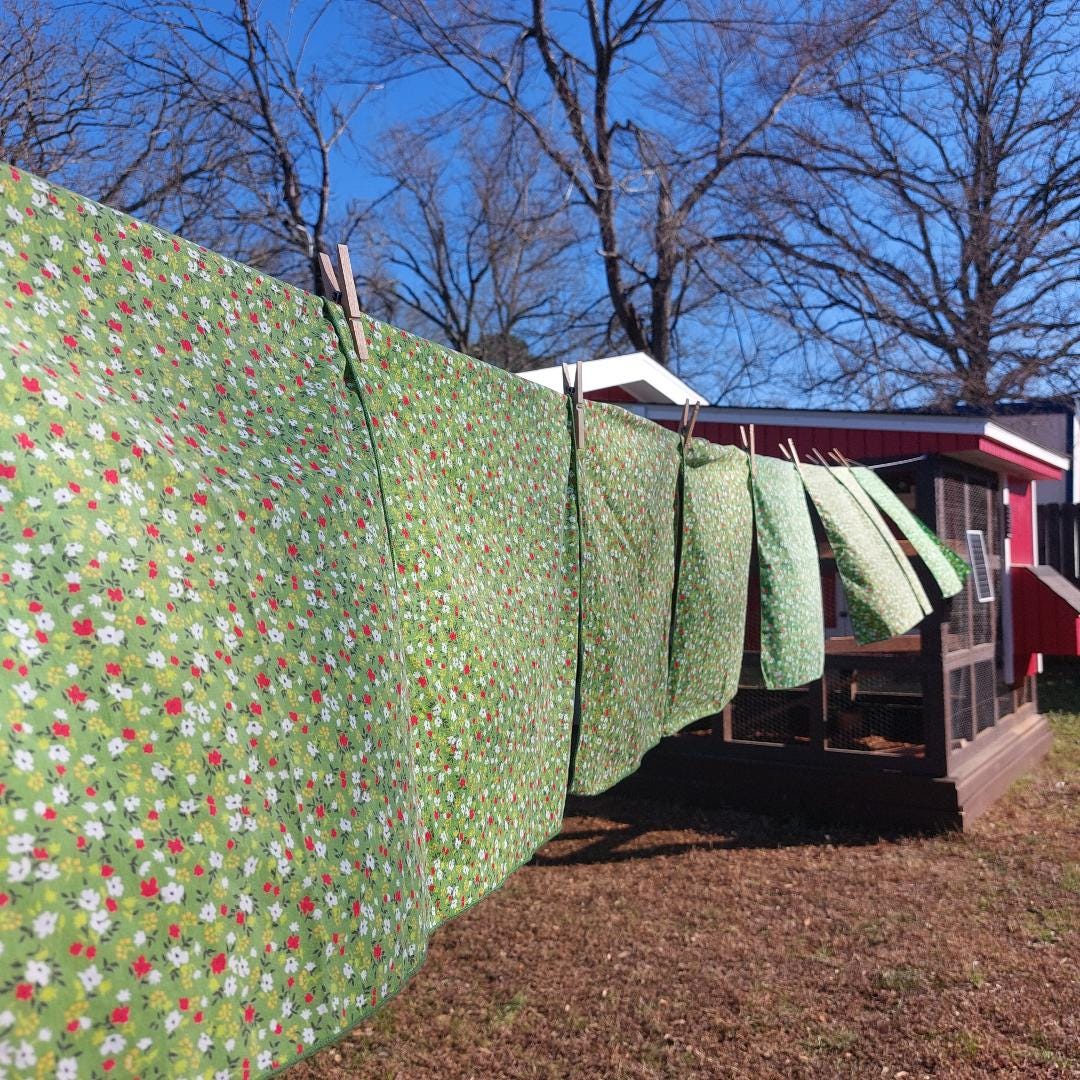
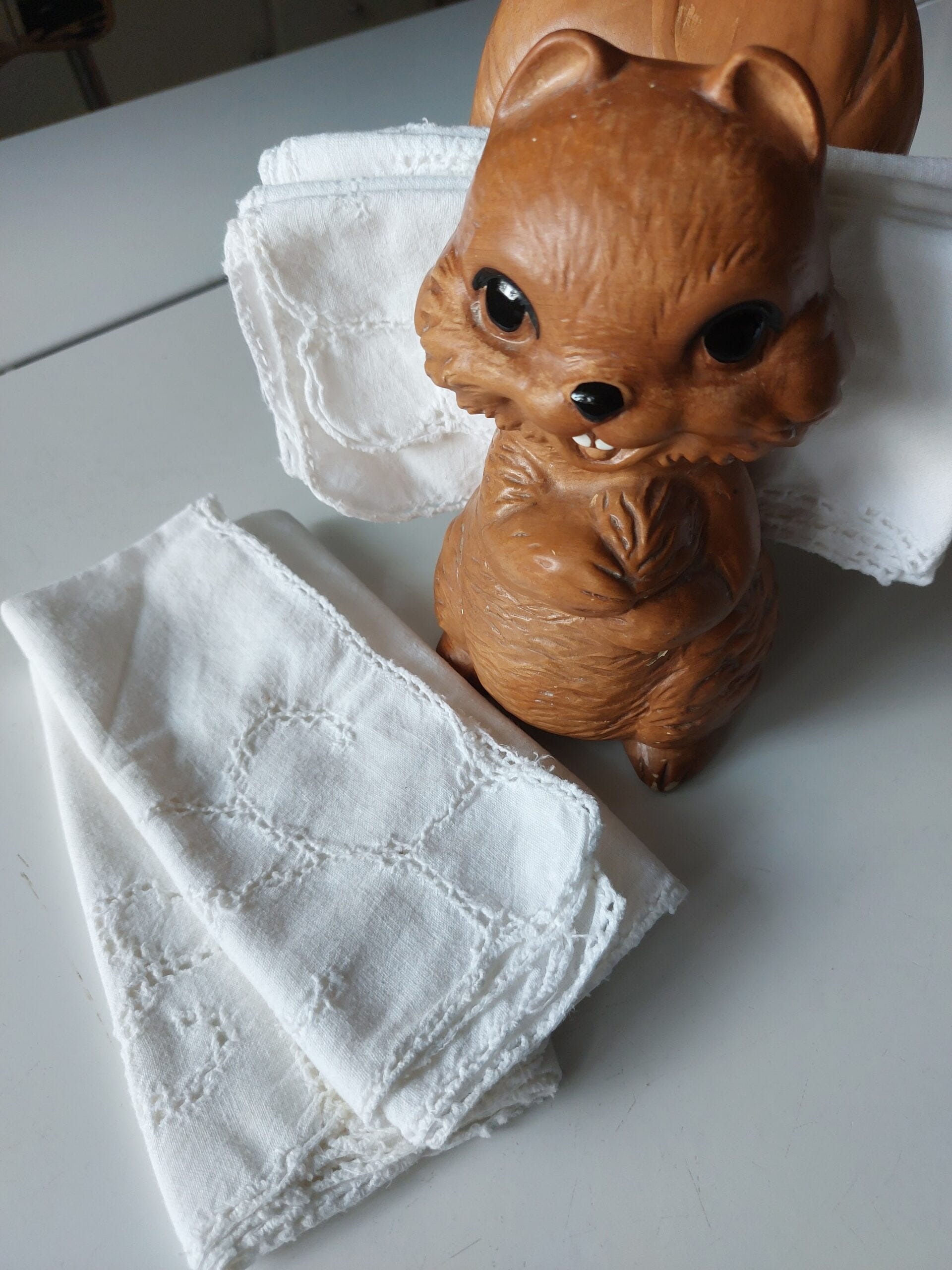
I have a handful of one-offs, but I have one set of 12 I found at a thrift store for $1 last year and a simple white cotton set that I “picked” for free while cleaning out the former home of an elderly lady. I plan to tea-dye the white set eventually when they start looking a little stained.
You can find fabric napkins in just about any thrift store and they’re typically cheap. Look for everyday cotton napkins and if you can find some with prints, even better. They’ll hide many eventual stains. You can even make your own easily with scrap cotton fabric.
Avoid buying the fancy heavy cloth napkins like you’d find in an expensive restaurant for everyday use. They don’t absorb liquids well and they’re always pure white--impractical on two levels.
Don’t feel you have to keep them pristine--that’s not the point of a napkin! Treat them as reusable but not a lifelong investment. Toss them or designate them as rags when they start to wear or get too stained.
Guests in my home always hesitate to use cloth napkins for fear of making extra laundry for me. I can assure you it’s not a big deal, even on a large scale. I grew up in a family of 13 and we used cloth napkins daily. If you think about it, if there are a lot of people in the household using cloth napkins, then there will inevitably be someone who can fold them. 1
But I consulted ye olde The Tightwad Gazette on this topic. The author ran the numbers (although the exact numbers have changed) and expected, confirms that it’s cheaper to use and launder fabric napkins than to buy paper ones. And as a fun fact, she estimates it would take about 200 napkins to fill a single load of laundry, so adding even a dozen to a load would have a negligible effect.
The cost of paper towels is ridiculous. And equally ridiculous is the family member who pulls off what feels like half a roll to wipe up a simple spill.
Use cloth rags. But for heaven’s sake, don’t buy them unless you’re just starting a household and everything is brand-new! Use old bath and kitchen towels and bathroom washcloths. Cut them into squares if they’re too big. They’ll fray a little, but it’s not even necessary to hem them. For dusting, use old cut-up t-shirts.
For the really messy jobs, it’s better to have sturdy material, like towels. Just because it’s reusable, though, doesn’t mean you have to keep reusing it forever. One of the best parts is that when you have a really messy job, you can just throw the rag away afterwards.
If you use cloth diapers, you can designate a stack of soft washcloths to be your reusable wipes—no concerns of perfumes or skin reactions. On a related note, last summer I sat across from an Amish family at Chicago’s Union Station. The children passed around an ice cream bucket with homemade caramel corn (a little lesson in economical travel right there) and when they were done, they wiped their hands on a damp washcloth the mother handed them, who then put it in a plastic bag she carried.
For draining bacon or anything deep-fried, our grandmothers used newspapers and brown paper bags instead of paper towels; the Amish still do. (Does anyone get a newspaper anymore?) If you don’t, use the non-glossy grocery ads that come in the mail. One woman I know uses the inside of a pizza box lid.
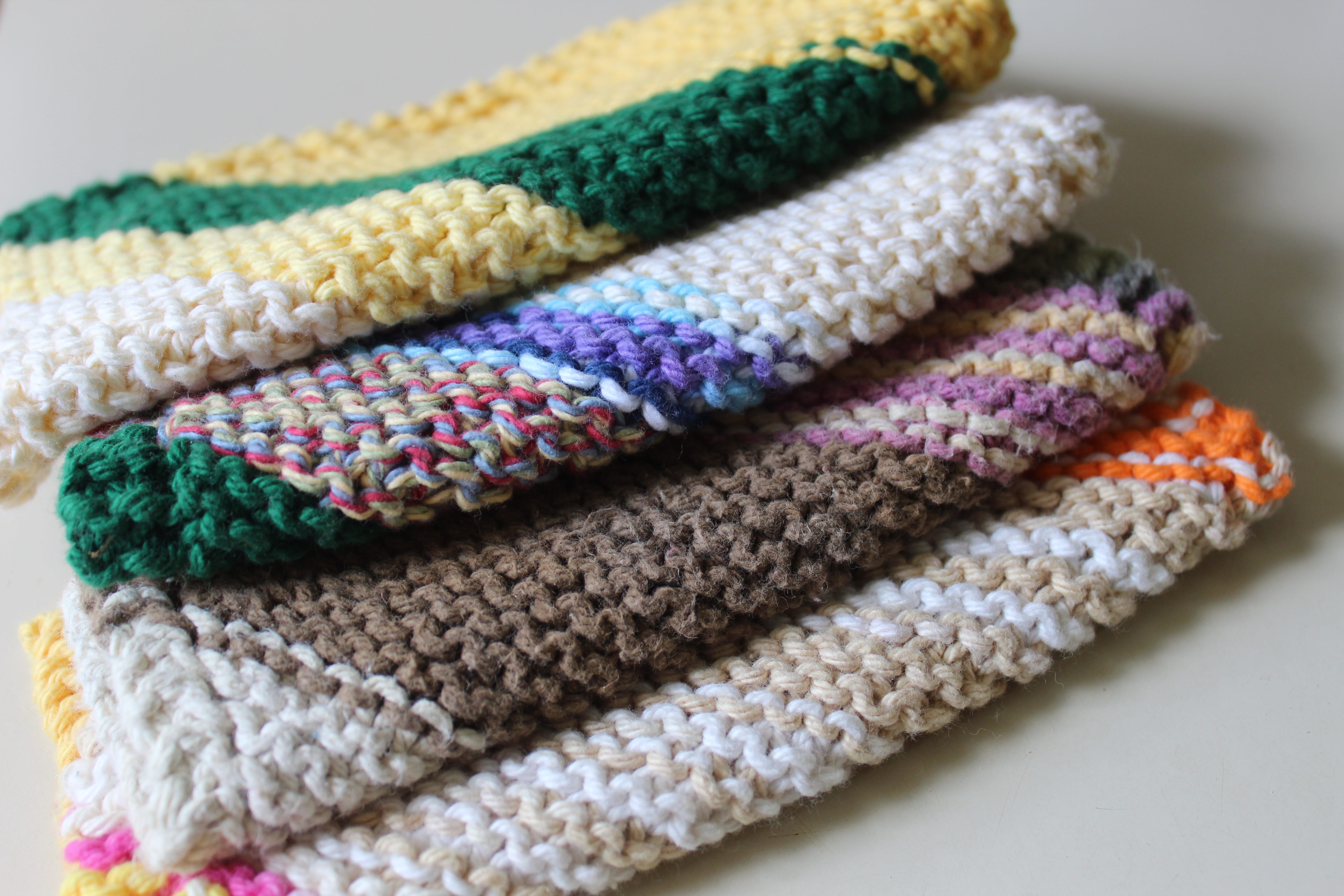
Or dishrags, as my Iowa grandma called them. Washcloths are not having their day right now and I don’t know why. People are using sponges, bamboo-handled scrubbers and paper towels to clean their dishes and kitchens. I’ve noticed paper towel ads boasting about their durability, claiming they’re nearly as strong as washcloths. Why not just use washcloths, then? With a nice supply, you can change them out every day (or more often!).
I make nearly all our meals from scratch so I’m in the kitchen wiping counters and cutting boards a lot. I can’t imagine how many paper towels I would use. You can make up the money you would have spent on paper towels in a short time.
If you leave washcloths soaking wet for a period of time, they’ll probably develop an odor. Always wring them out and let them hang where the air can dry them out, even partially, between uses. As with all laundry, they’d benefit from time in the sunshine to sanitize them naturally. If smelly washcloths are an ongoing issue, boil them in a pot of water with a handful of washing soda and a splash of vinegar. You can do it more than once if the water looks scummy.
When they’re looking faded and not pretty and you feel like they’re not doing their best work for you anymore, add it to the rag basket. It will have a new life for awhile as a cleaning rag until someone uses it to clean up paint or whatever it was that didn’t agree with the dog’s digestion and then you can toss it.
I know I’m getting into squeamish territory with this one, but hear me out.
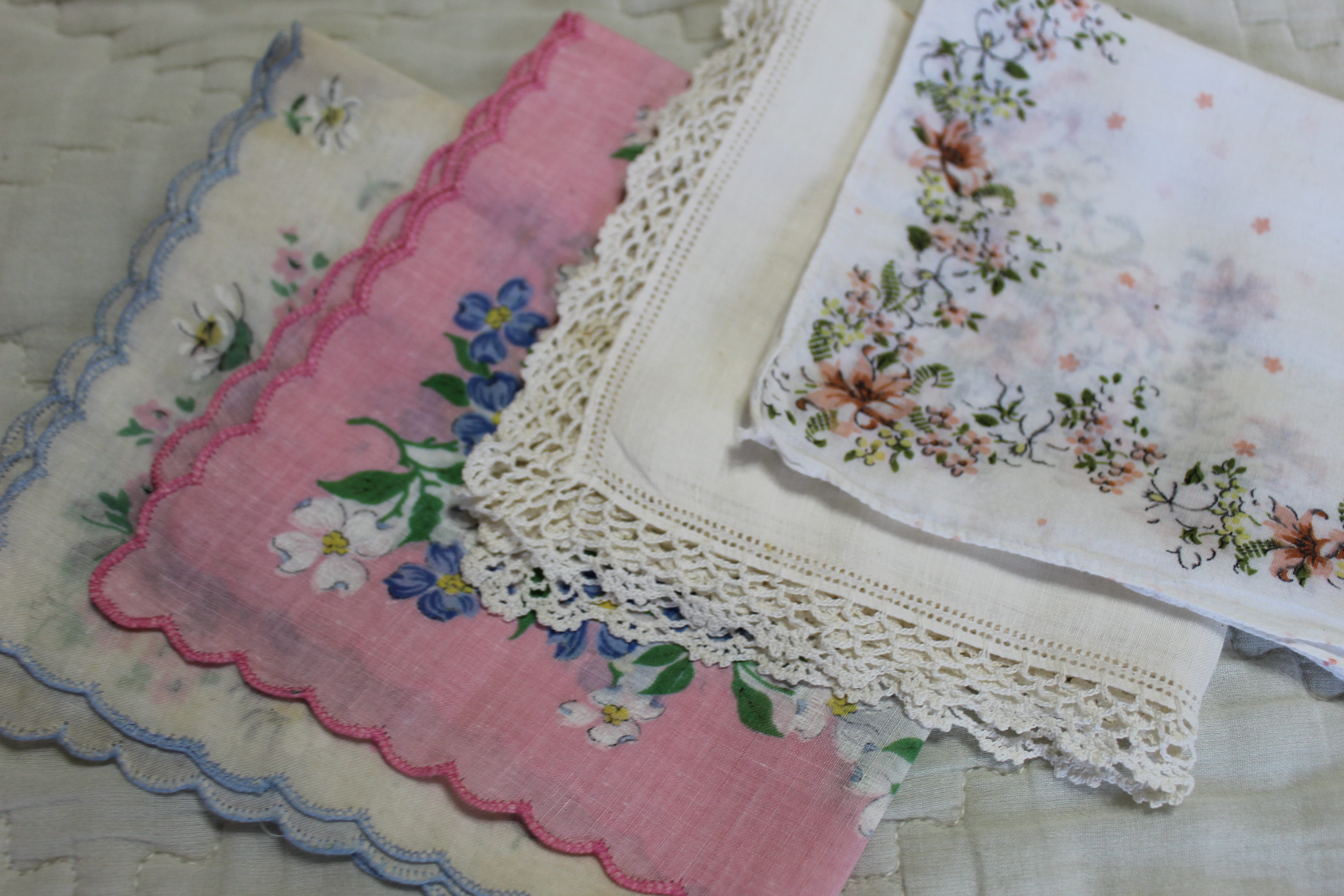
Back in the day, people carried handkerchiefs all the time. Women kept them in their purses and apron pockets,2 men in a back pants pocket as part of their daily outfit. I remember my grandpa pulling his out to wipe the sweat off his forehead, or maybe wipe his nose. Even my dad carried one when I was young. I learned how to iron on his handkerchiefs.
When I taught in an Amish schoolhouse, every day I’d see little hands reaching into pockets for a handkerchief and a quick wipe of the nose or an occasional tear. Our school didn’t even have a box of tissues.
I don’t care how much so-called “lotion” they put in a Kleenex or how soft the toilet paper is, it doesn’t compare to the gentleness of a worn cotton handkerchief or even a bandana. It’s a game-changer when your nose is raw from wiping it so much.
Like fabric napkins, you can use a whole stack of them without adding much to your laundry loads.
Thanks for reading A Housewife Writes! This post is public so feel free to share it.
Sometimes you have company and you don’t have enough plates for everyone. Or your water got shut off in an emergency. In situations like that, paper plates are a lifesaver.
But otherwise? It’s a plate. The easiest thing in the world to wash. Paper plates really don’t save much time or hassle if you have other dishes to wash or better yet, you have a dishwasher. If you’re cooking a meal at home, you’ll have other dishes you’ll need to wash anyway, unless you’re using only disposable utensils and throw-away aluminum pans. In that case, pull up a chair. We have a lot more to talk about.
Besides the cost, which isn’t insignificant, only the most expensive plates hold up well. I think there’s a psychological element to eating from nice dishes at a table compared to paper plates on a coffee table. A meal you’ve worked hard to make deserves the dignity of a nice dish.
If breakable plates aren’t the best option for your stage of life, get some of those printed melamine ones. It’s one less thing you have to add to a grocery list every month and you’ll never run out of them.
Parchment paper is handy, I can’t deny it. Maybe it’s always been common, but for whatever reason, I didn’t grow up with it in our home, so I’ve never relied on it. Instead of sliding the paper into the trash can after baking cookies or roasting vegetables, we just… washed the sheet pan. I don’t remember it being that agonizing of a chore and that was before I had a dishwasher.
I don’t actually have a problem with any of the products I’ve mentioned. I don’t think it’s wrong to buy them; actually, I have most of them in my house right now. They’re absolutely invaluable in an emergency situation and in many health and traveling circumstances. But I seldom use them in everyday life.
I haven’t even touched on everything; these are just a few products that I’ve noticed recently. But it’s a starting point if you’ve never tried alternatives to what most people would consider essentials.
If you’re looking for more ways to make cuts to your budget, eliminating one or two of these products, or at least reducing your use, could have a noticeable effect. How many loaves of bread could you buy or make with, say, $10 that you’d spend on paper products this week?
I’m the co-author of A Housewife Writes and author of Two Years as an Amish Schoolteacher, available on Amazon. (affiliate link) I love history and learning about the lives of our grandmothers who loved their families and managed their households. I share their stories and wisdom that are still meaningful as well as ways of keeping a modern home in the spirit of past times.
It’s an ideal job for a little one, just entering the household chore work force.
And women embroidered them to be so gosh-darn pretty—a work of art, just to wipe your miserable drippy nose.
Comments
Nothing yet. Say the first thing.
Sign in to join the conversation.