
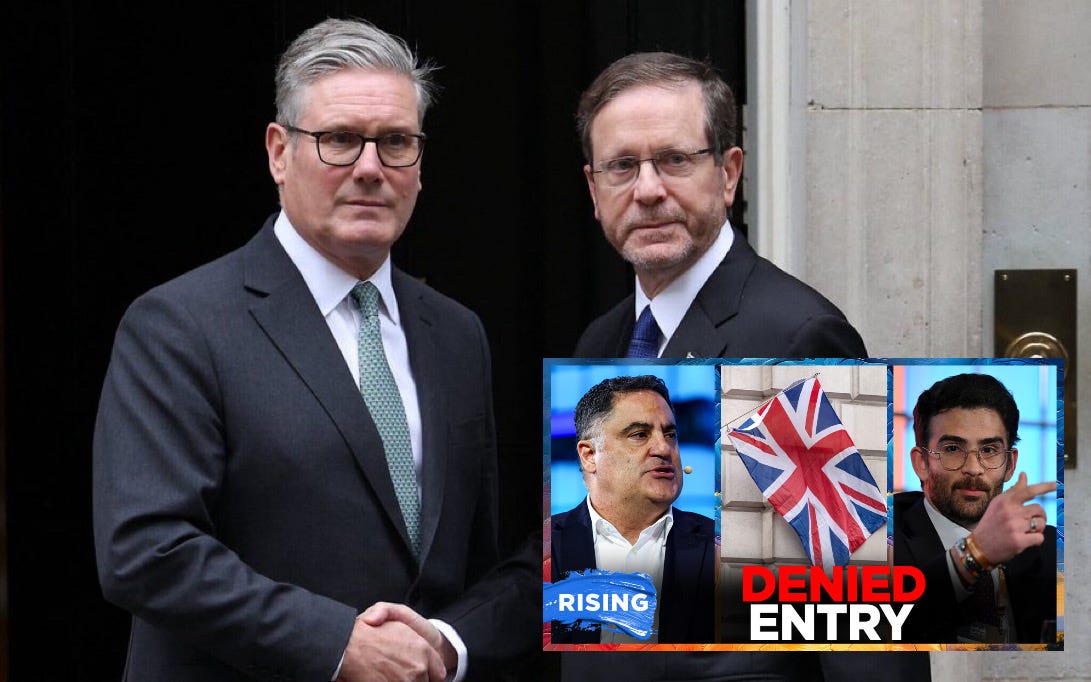
The story is not about SXSW London, Cenk Uygur, or even Hasan Piker. The story is that the British government is increasingly committed to protecting the political legitimacy of Israel as it continues its genocide in Gaza, while restricting, criminalizing, and policing the people speaking out against it.
Everything else is theater orbiting that fact.
Across much of the West, governments that arm, defend, and normalize Israel’s mass violence against Palestinians are simultaneously narrowing the space in which ordinary people are allowed to object to it.
The same British state that welcomed Israeli President Isaac Herzog onto the steps of Downing Street — despite his statements being cited as evidence in South Africa’s genocide case at the International Court of Justice — has apparently concluded that Hasan Piker and Cenk Uygur pose a greater threat to the public than the government flattening refugee camps, starving civilians, bombing hospitals, and burying entire families beneath rubble.
That is the story: criticism of genocide is increasingly being treated as more dangerous than genocide itself.
British officials insist these decisions are about “public good” and “extremism,” but those words have become elastic enough to mean almost anything when the conversation is about Palestine. Extremism no longer seems to describe government officials proudly discussing ethnic cleansing on television or soldiers posting videos from destroyed Palestinian homes. It increasingly describes the people documenting, condemning, or protesting these realities.
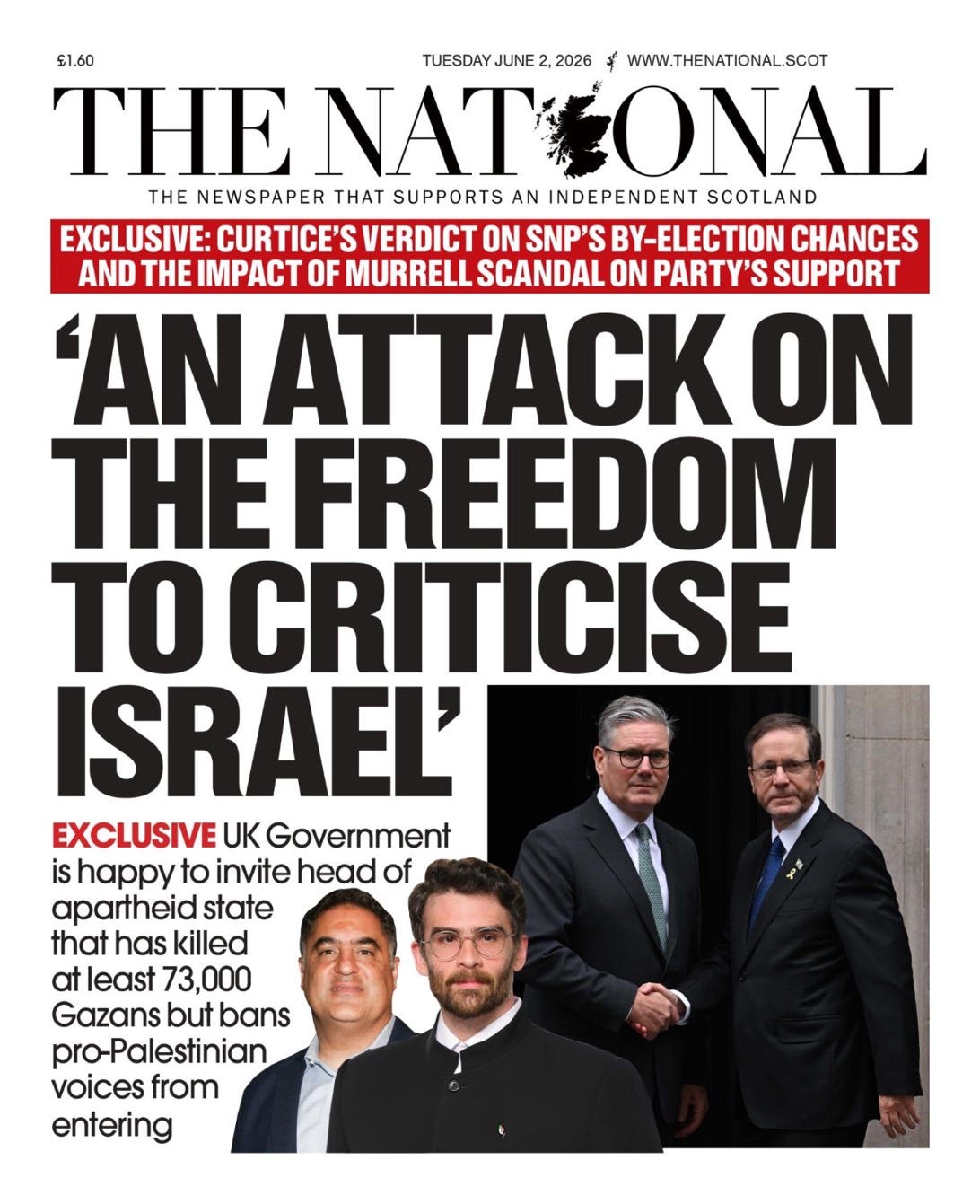
That is why this story matters far beyond Hasan and Cenk. If even globally recognizable media personalities with massive public platforms can be treated as politically dangerous over criticism of Israel, then the message being sent to everyone else is unmistakable.
Last year at the Oxford Union, Hasan Piker explicitly warned about the rise of antisemitism, fascism, and the dangerous conflation between criticism of Israel and hatred of Jewish people.
The irony is difficult to ignore: a speaker publicly arguing against collective blame is now being framed as politically dangerous because of his criticism of Israel itself. Increasingly across the West, criticism of a state engaged in occupation, apartheid, and mass violence is deliberately collapsed into hostility toward an entire people — protecting not Jewish communities, but a government from scrutiny.
The Oxford Union has refused to cancel its June 6 event with Hasan Piker and Cenk Uygur despite the UK Home Office revoking both of their travel authorizations on the grounds that their presence would not be “conducive to the public good.”
That said, Susan Abulhawa, who herself was censored by the Oxford Union, has something to say about what may be motivating their statement.
Jeremy Corbyn described the move as “an attack on the freedom to criticize Israel.”
The Labour Muslim Network warned that support for Palestinian rights and criticism of the Israeli government “must never be grounds for exclusion from public debate in the United Kingdom.”
Whether you are a streamer, a UN special rapporteur, a journalist, a student, or a doctor, the message is the same: when it comes to Israel, do not say the quiet part out loud. Or at the very least, lower your voice.
Palestine Action activists have faced terrorism-related accusations despite the absence of terrorism convictions. Thousands of people in Britain have been arrested, questioned, surveilled, or investigated for speaking out in solidarity with Palestinians since the start of Israel’s assault on Gaza.
In fact, the group Defend Our Juries warns that four young people in Britain could soon face “terrorist connection” sentencing despite not being convicted of terrorism offenses.
The distinction matters enormously. In practice, it means the state can begin attaching the political stigma and punitive logic of terrorism to activists without securing terrorism convictions themselves.
Because once governments begin redefining direct action, protest, or political disruption around genocide as adjacent to terrorism, the boundaries of democratic dissent begin collapsing altogether.
This is a global struggle.
While much of media and human rights organizations focus on the Gulf, where authorities arrested more than a thousand people over online speech during the recent Iran war after people shared news and commentary related to US and Israeli military strikes and Iranian retaliation.
It is happening everywhere.
Take the story of Umer Khalid, a twenty-two-year-old British prisoner with muscular dystrophy. A young man whose body is already in slow battle with itself, now reportedly forced to drag himself across the floor of his prison cell because authorities denied him access to a wheelchair.
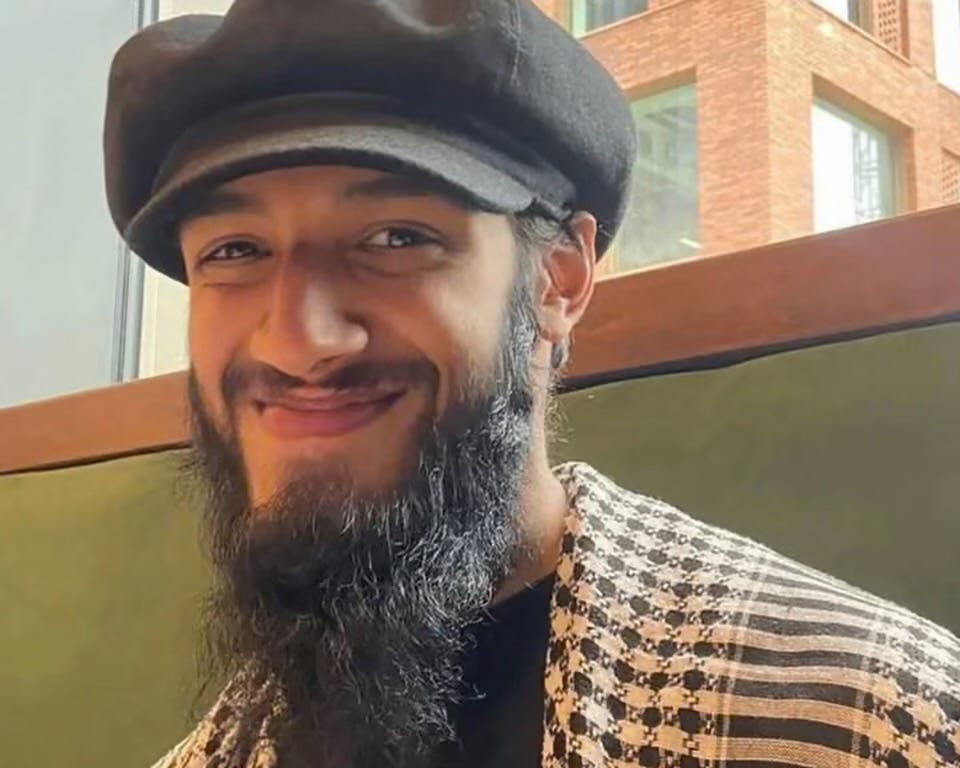
Khalid has reportedly gone more than twenty weeks without access to a proper shower. He has waited months for a neurology appointment while suffering chest pain and breathlessness.
Comments
Nothing yet. Say the first thing.
Sign in to join the conversation.