
I’ve lived in London and California, spent summers in New York, travelled from Cape Town to Amsterdam via Marrakesh, Barcelona and Paris, and there is no place on earth more beautiful, more perfectly idyllic, than the English countryside on a sunny summer’s day.
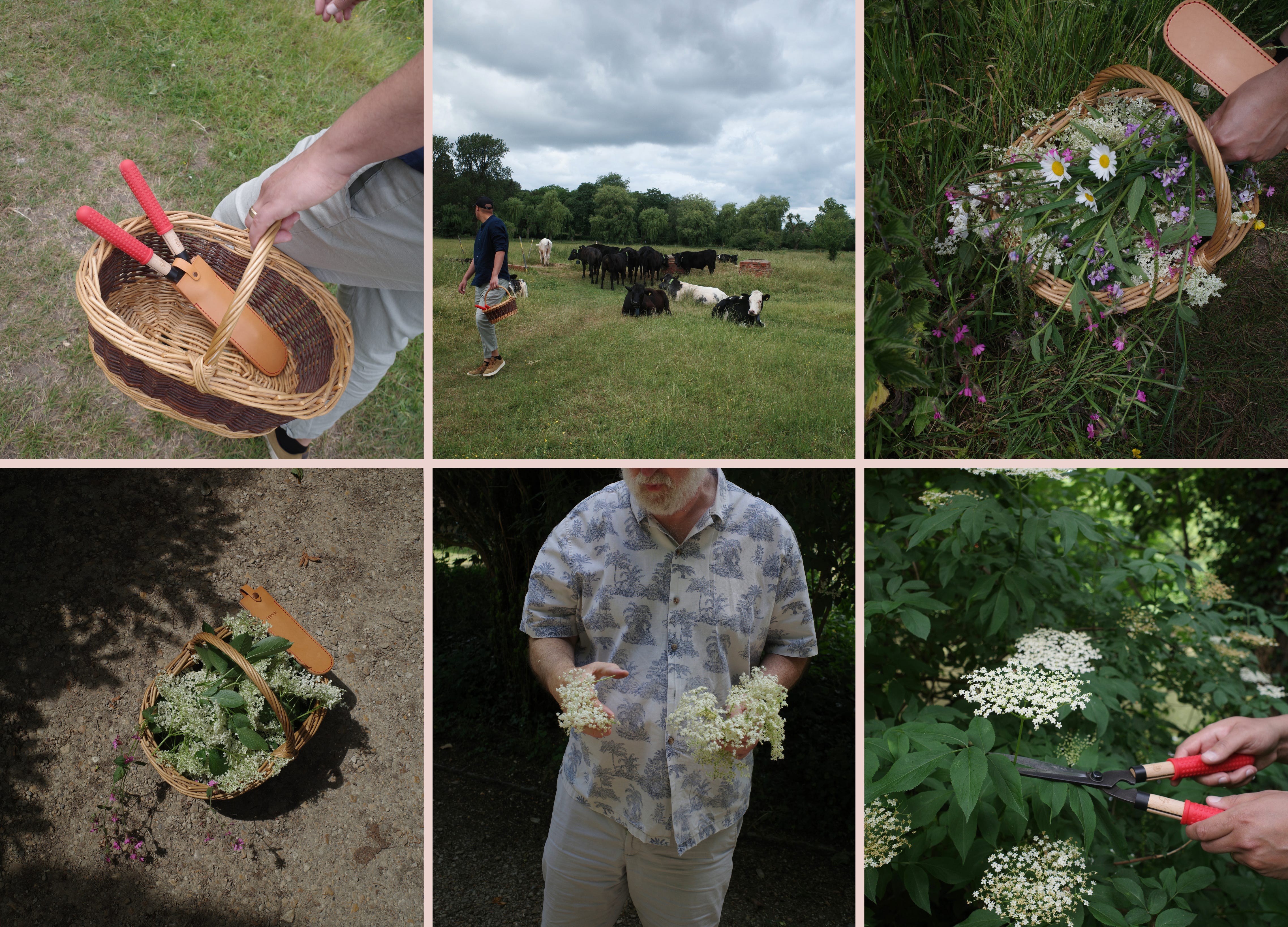
I was walking through a field at Fowlescombe Farm in rural Devon last week when a stray honey bee crossed my path and, with it, came the intoxicating scent of elderflower. A few moments later, I bumped into head gardener, Shelley, who appeared carrying a basket full to the brim with elderflowers. Accompanied by her gorgeous black lab, Basil, she was foraging for that evening’s dessert - strawberry and elderflower meringue.
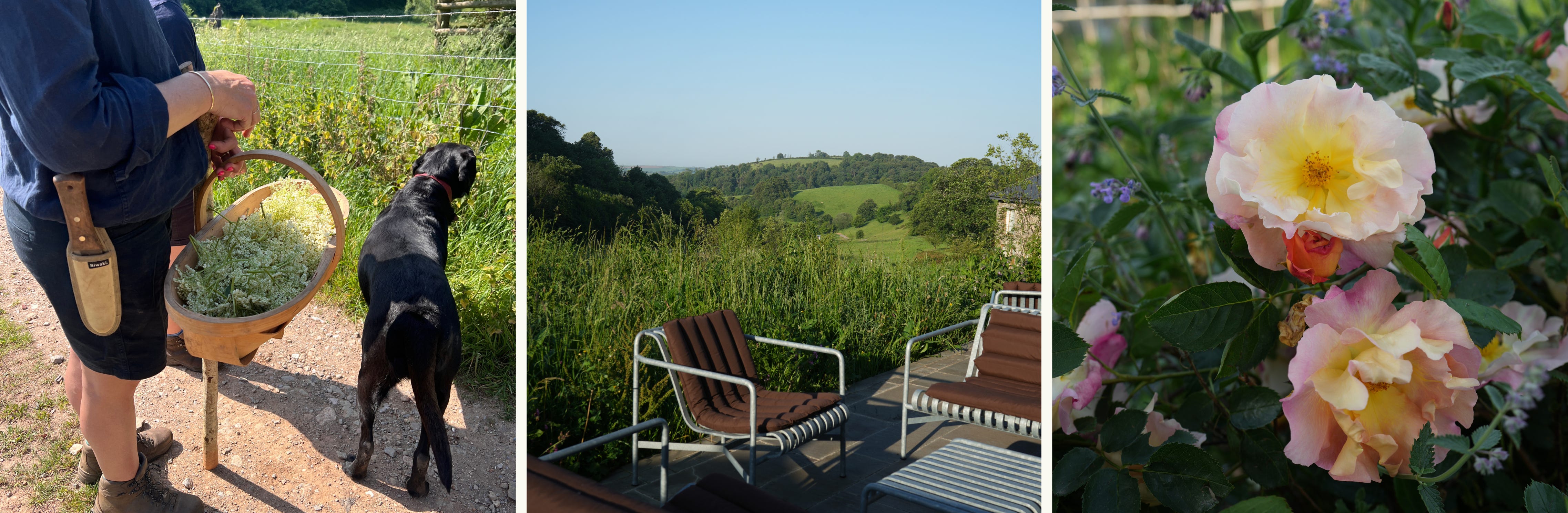
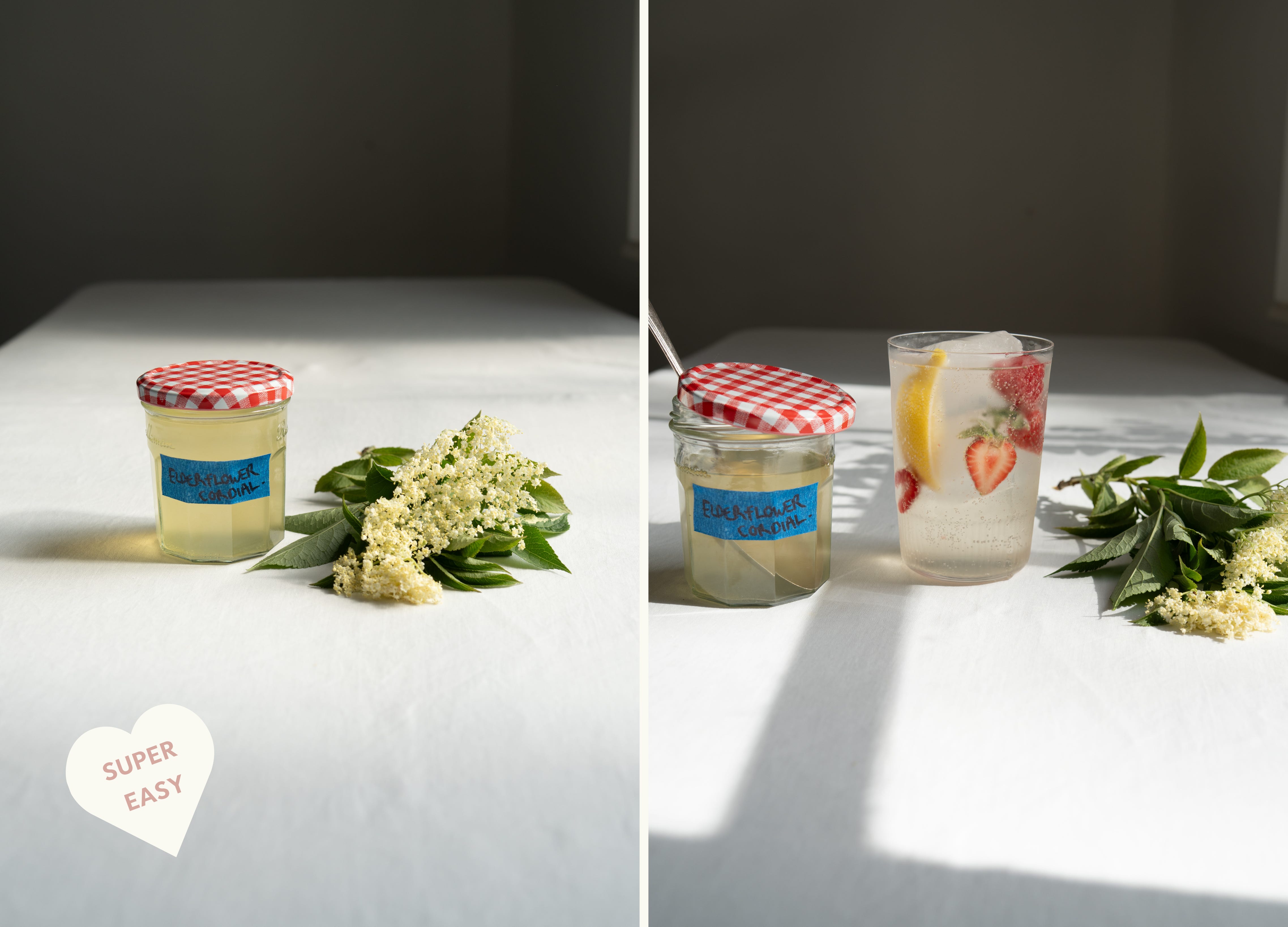
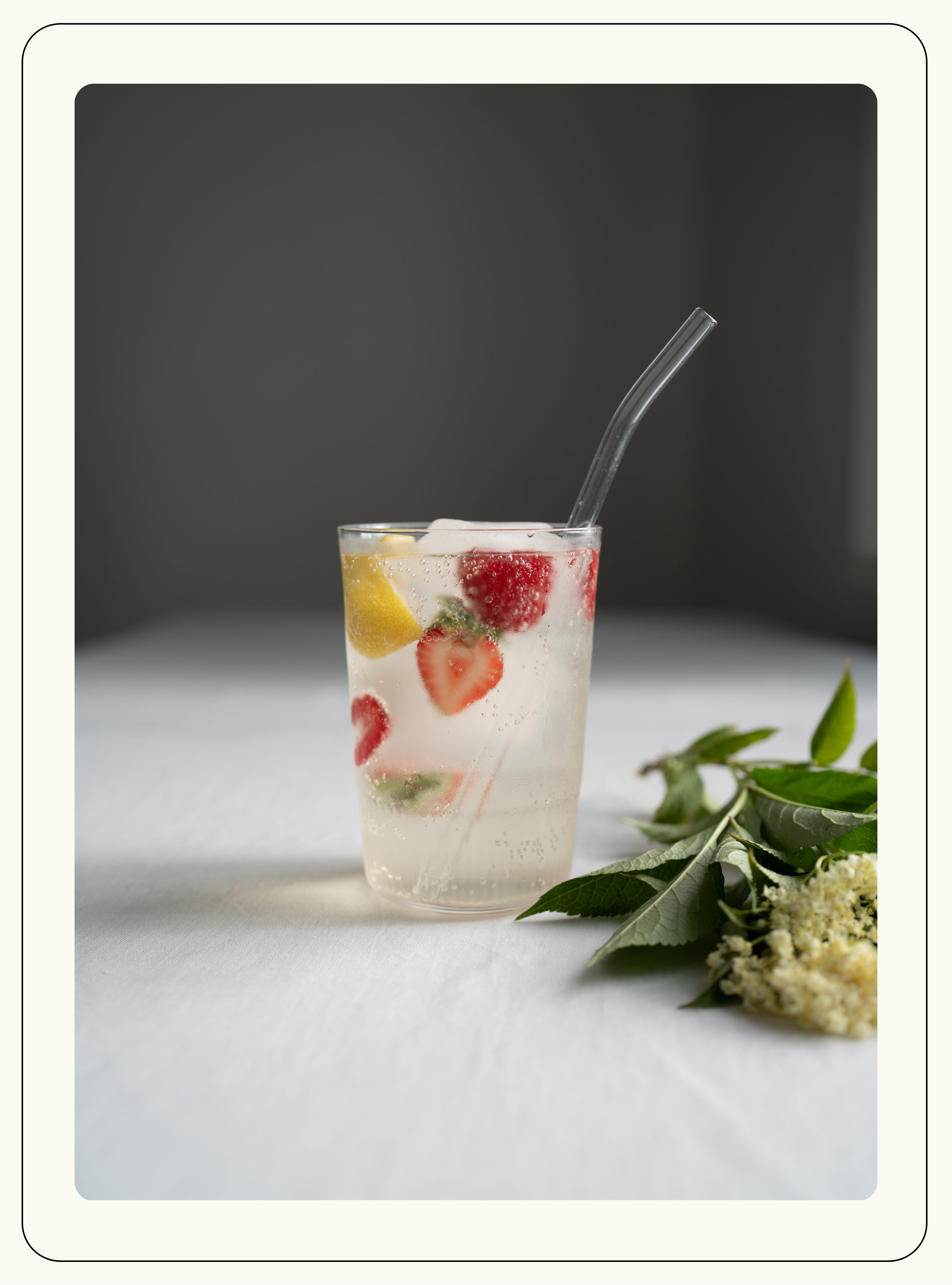
Having spent the past six years in California at this time of year, I’d almost forgotten about the existence of elderflowers. Now, walking the English country lanes, admiring swathes of lacy elderflower heads bobbing in the breeze, I’m reminded that there is no aroma or flavor quite like it. We English love the stuff, especially in a very popular elderflower cordial that we drink with fizzy water (or something a little stronger).
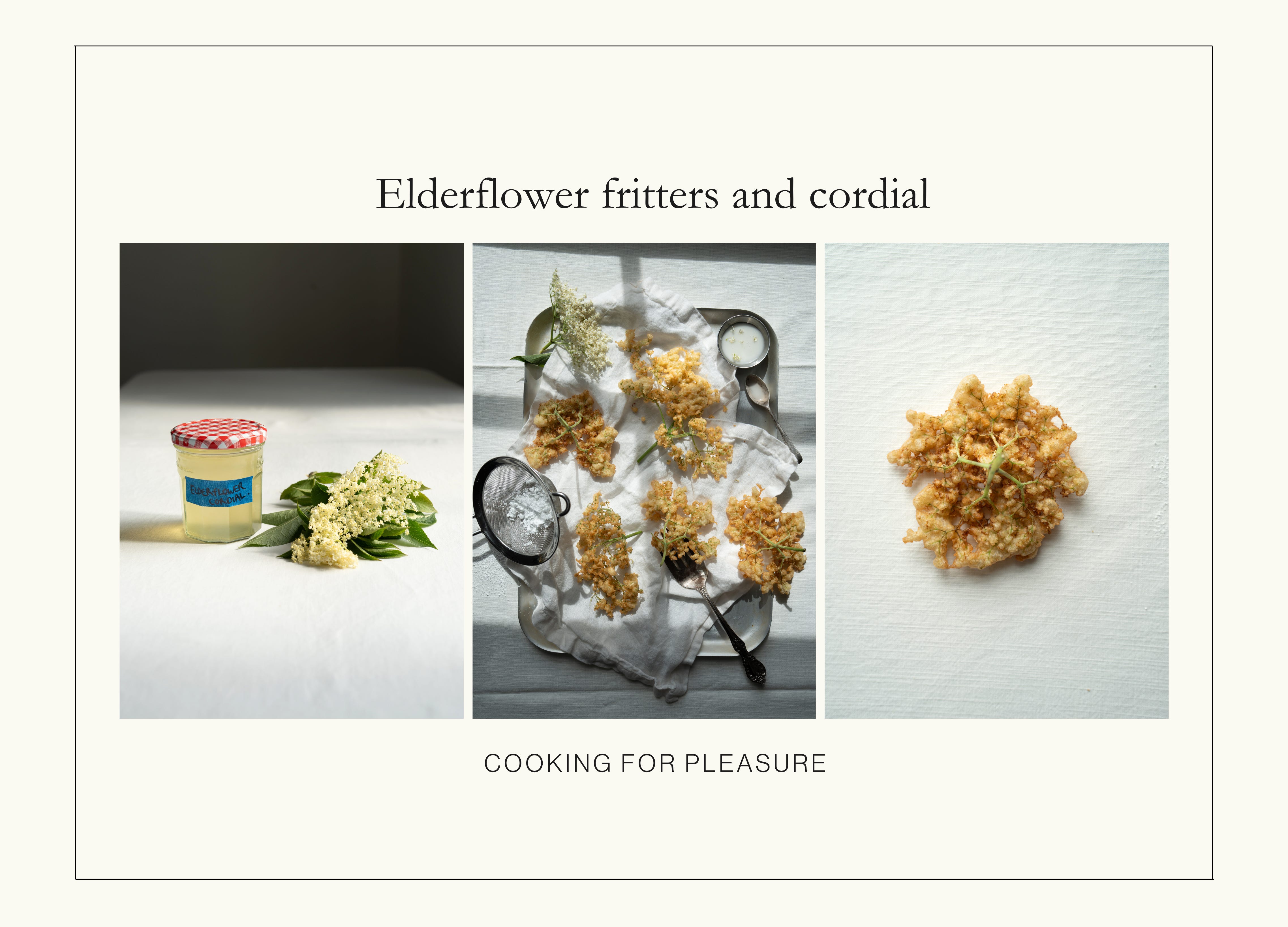
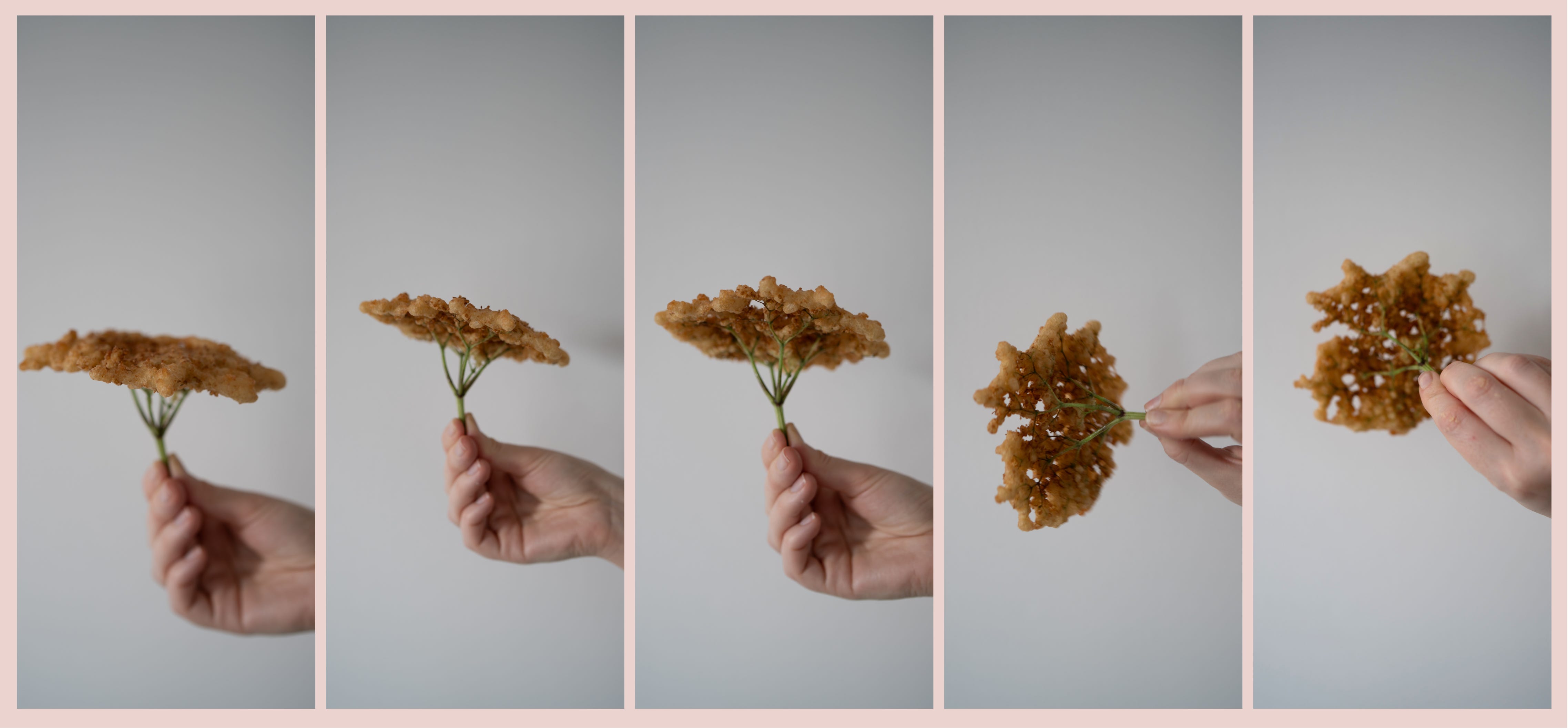
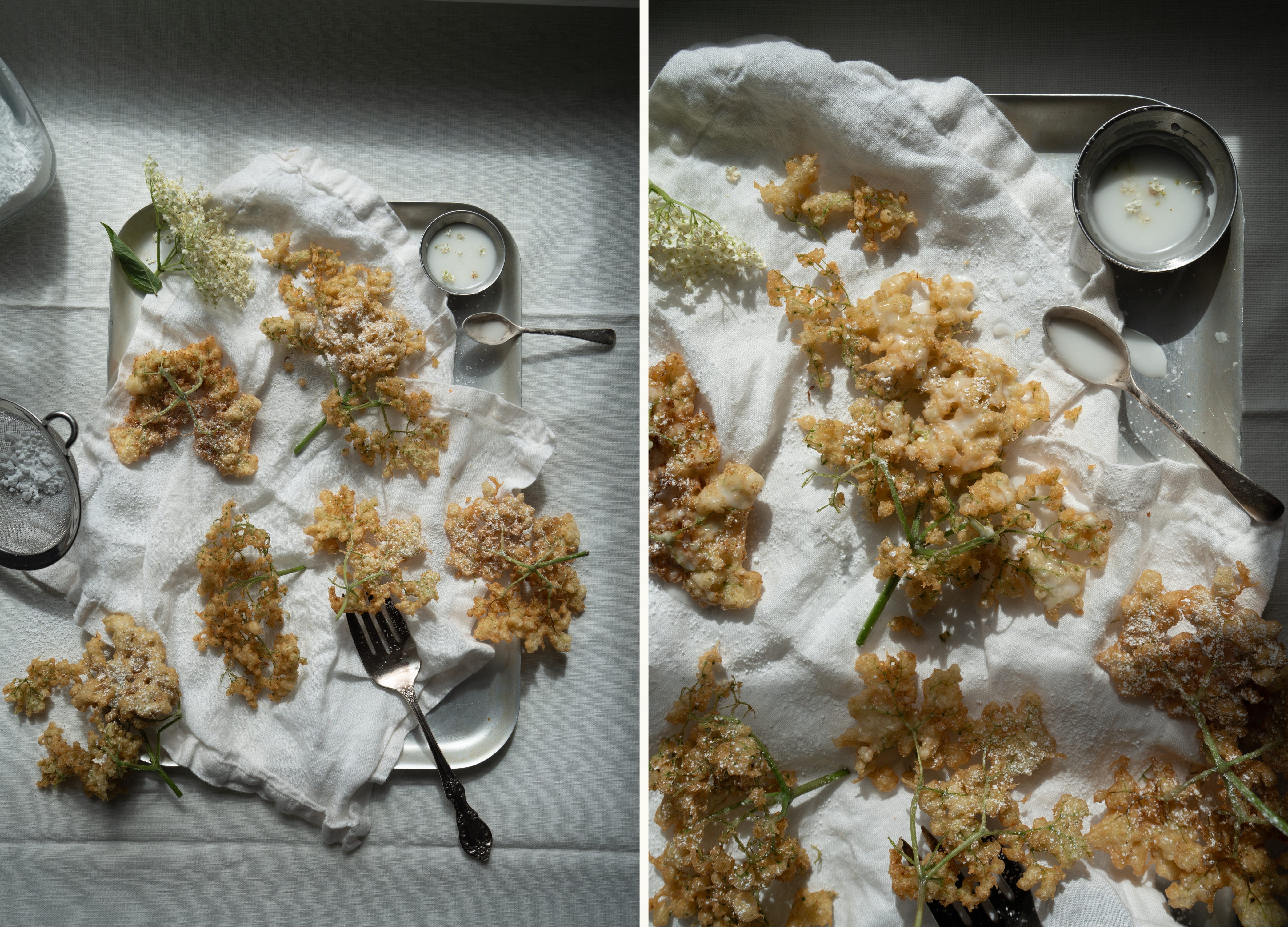
Drinks aside, there are so many ways to use elderflowers. Why not start with elderflower fritters? Just imagine - whole flower heads dipped in a light tempura batter, deep-fried and dusted with sugar. Frankly, in my opinion, you could deep-fry a piece of cardboard and cover it in icing sugar and it would still taste heavenly. I digress. There’s something about the way the elderflowers unfurl in the hot oil that makes them look as though they’ve leapt straight from the pages of a storybook. This is the sort of food that magical woodland creatures might gather to feast on at the stroke of midnight. They’re quite enchanting.
If you’re a paid subscriber, thank you! If you’ve not yet subscribed — we are about to enter into a really exciting season, so this is the moment to join.
Paid subscribers receive brand new recipes weekly, full menus complete with considered grocery list, prep videos, thoughtful alternatives, and access to the entire archive of recipes and newsletters.
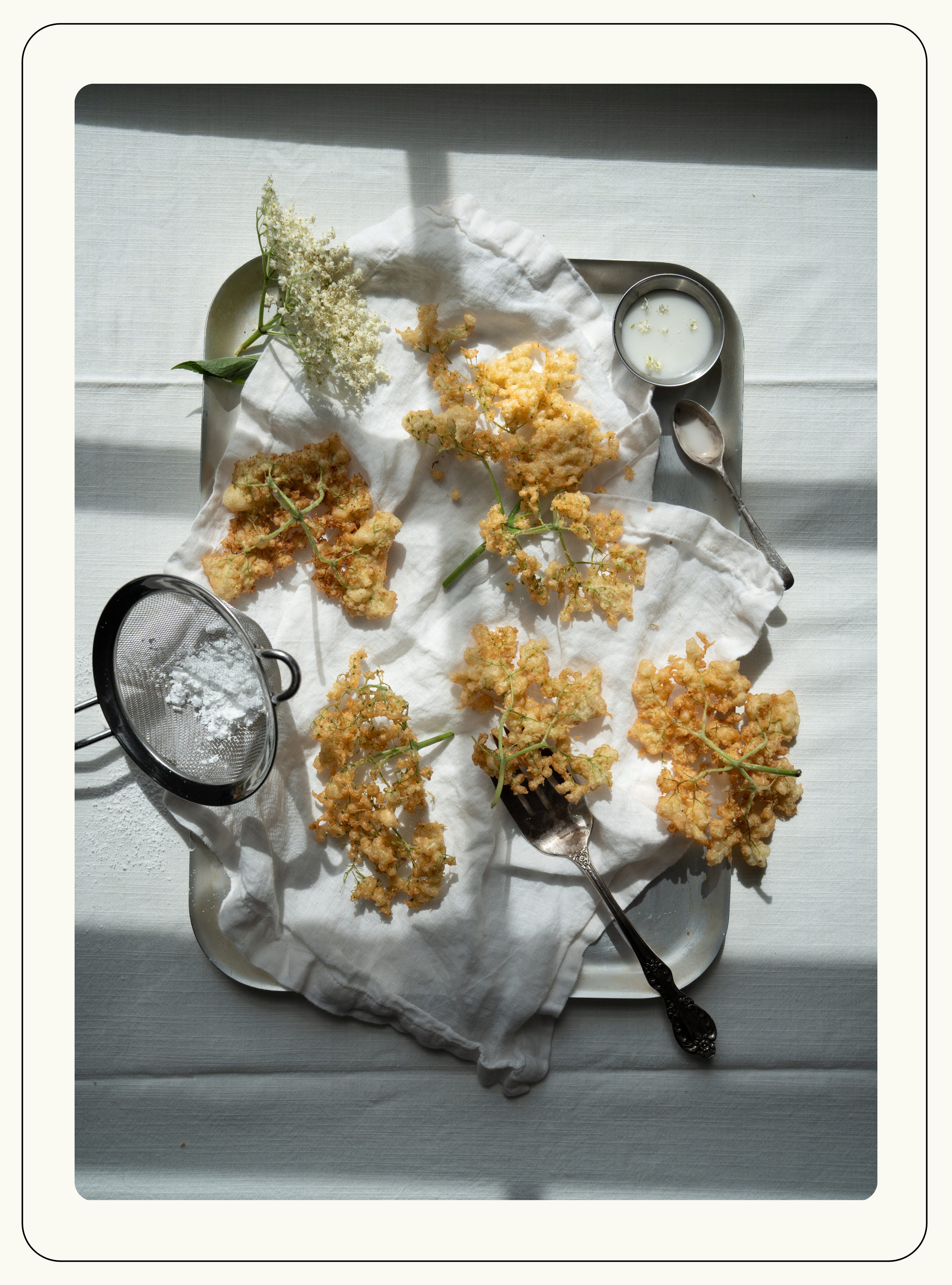

Today, I’m sharing recipes for both elderflower cordial and fritters. The cordial is wonderful in drinks, but also for soaking cakes, stirring into yoghurt, folding through whipped cream, or adding to just about anything that could use a little taste of summer. Admittedly, the fritters are totally impractical and a little fiddly to make, but this makes them all the more fun to devour. Anyway, I think there should be more pleasure in the process of cooking, rather than rushing through it as though it’s something to be endured - but, that’s another newsletter!
No elderflowers?
Don’t worry if you can’t find elderflowers. The tempura batter for the fritters is worth having in your repertoire, regardless. It’s equally good for zucchini fritti, slices of peach, or almost any fruit, edible flower or vegetable you happen to have to hand. There’s not much that isn’t improved by being deep-fried in batter.
As for the cordial? While there’s really nothing quite like elderflower, the same method can be used to make other seasonal cordials. White peaches, nectarines, strawberries and rhubarb are all wonderful alternatives. Simply chop the fruit, add it to the warm syrup and leave to infuse before straining. White peaches are particularly lovely, lending the cordial a delicate floral fragrance that feels right at home in a summer drink.
Where to source elderflower
For my lovely American readers wondering whether elderflower is one of those maddeningly British ingredients that only appear in Beatrix Potter illustrations, the good news is that it grows across much of the United States. You’ll find elder trees throughout the Northeast, Midwest and Pacific Northwest, often along woodland edges, riverbanks, old fields and quiet country roads. In California, keep an eye out for blue elderberry, a native relative that produces the same frothy clusters of fragrant cream-colored flowers beloved by foragers (just don’t eat it raw).
Start by looking for broad sprays of tiny ivory flowers that smell faintly of honey and pear drops. Once you know what you’re looking for, you’ll begin noticing them everywhere. Just be sure you’re confident in your identification, steer clear of busy roads, and leave plenty of blooms behind for the birds, bees and the next lucky passer-by.
A quick note for novice foragers: with elder, it’s the flowers and ripe berries that are traditionally used in the kitchen. If you’re ever unsure, consult a local field guide or join a foraging walk before harvesting. There’s also Google - a quick image search can be helpful. I don’t want you ending up in the ER!
Ewww, bugs!
Don’t fear the bugs. When you bring elderflowers home, you’ll often find a few tiny black insects nestled among the blossoms. These are usually aphids, sometimes called blackfly. They’re harmless. Rather than washing the flowers, give each flower head a gentle shake to encourage most of the insects to move on. Try not to rinse the blooms unless absolutely necessary, as much of elderflower’s fragrance lives in its pollen, and washing can dilute some of that wonderful flavor. Any stragglers will be caught when you strain the cordial through muslin, so there’s no need to panic. Consider it part of the authentic foraging experience.
A note on foraging
Only forage plants you can identify with complete confidence. Avoid picking from busy roadsides or areas that may have been sprayed with pesticides. If you’re gathering flowers or fruit from a garden, it’s worth checking that they haven’t been treated with chemicals. Remember this phrase: when in doubt, leave it out. Happy days.
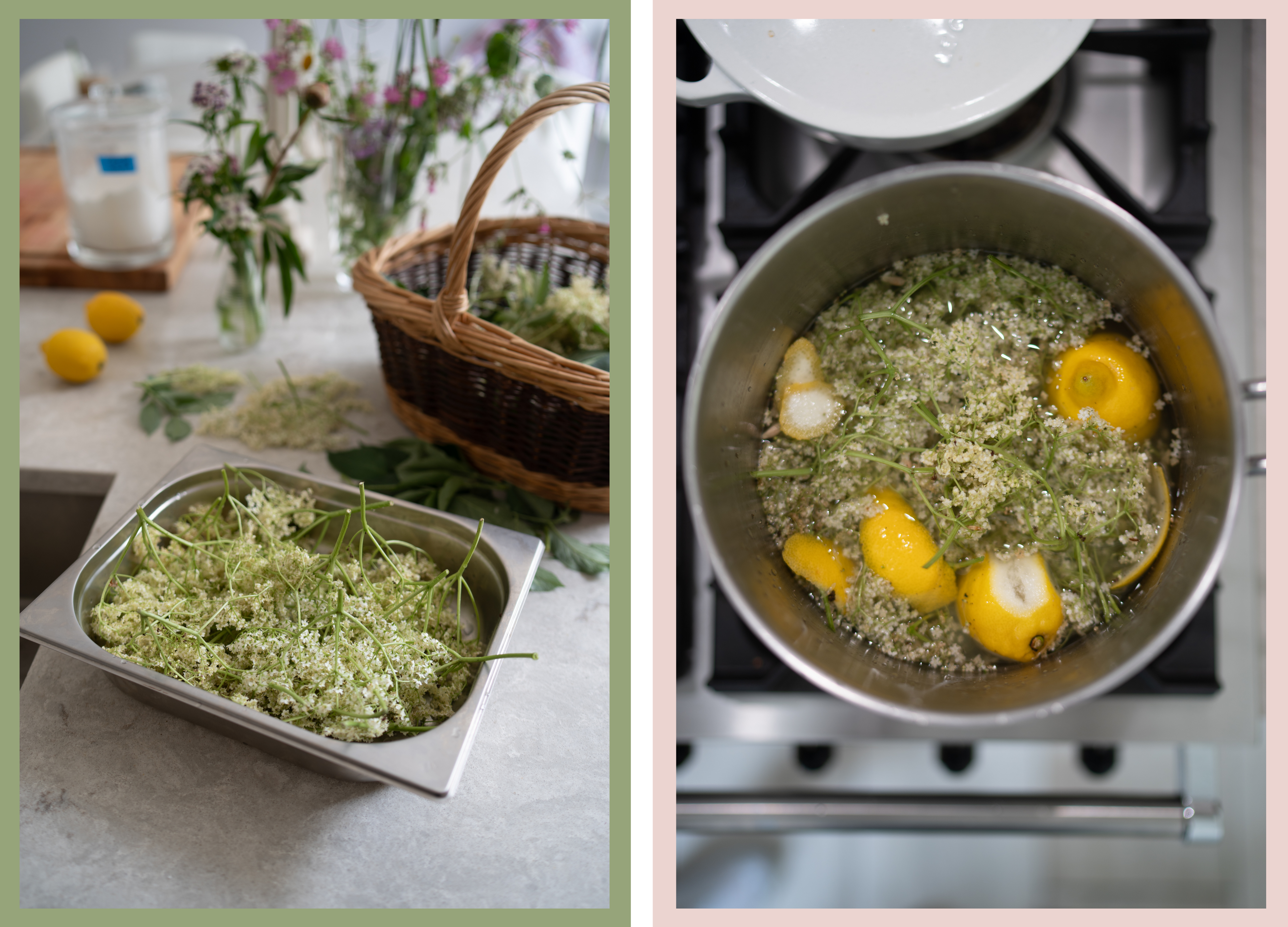

The full detailed recipes are below + downloadable PDFs, and prep video.
Comments
Nothing yet. Say the first thing.
Sign in to join the conversation.