
Many Product Owners (POs) fall into a dangerous trap: they believe their value is measured by the length of their Product Backlog or the speed at which they can document requirements. This “Feature Factory” mentality leads to a critical disconnect where high-level company strategy fails to translate into the daily work performed by Developers.
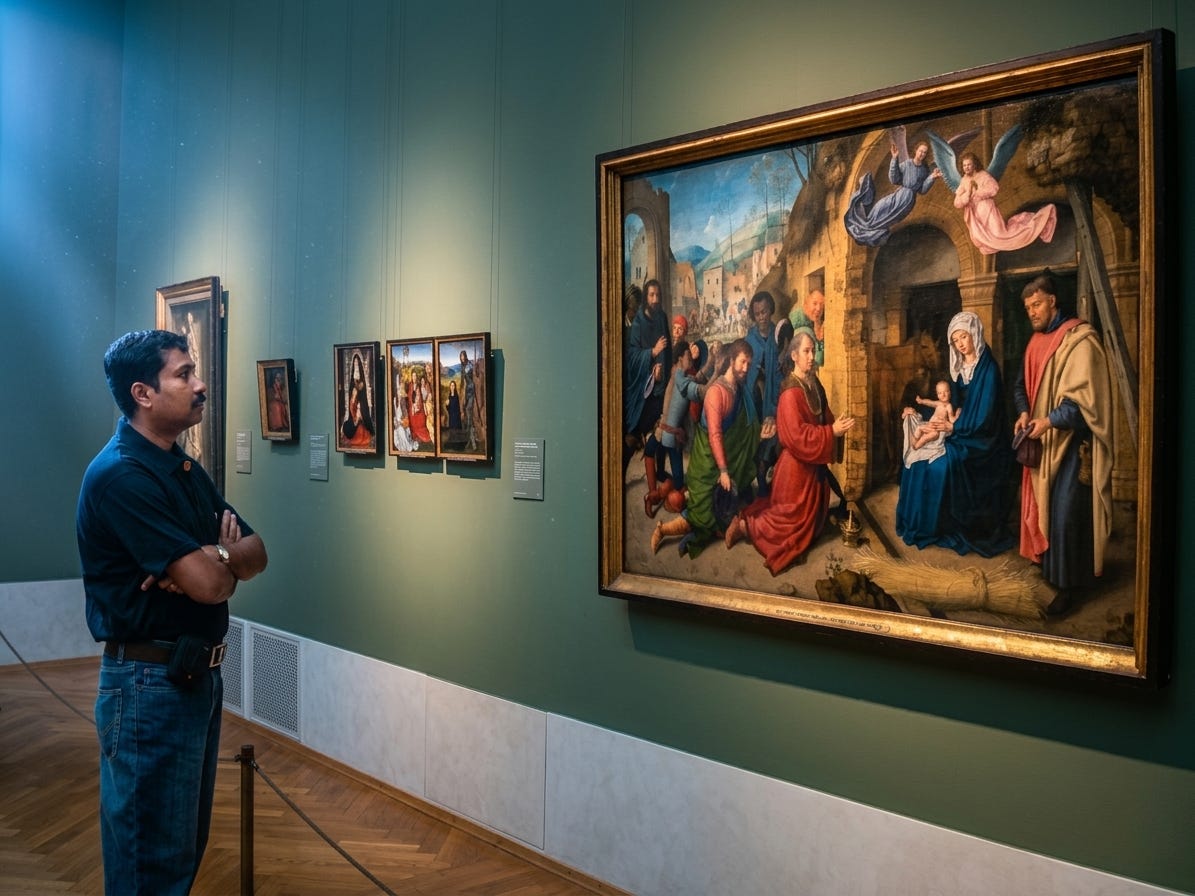
To bridge this gap, a professional Product Owner, I believe, must move beyond the administrative role of a “Story Writer” and adopt the strategic mindset of a Museum Curator.
Basements and Galleries: A Model for Selection
Think of your product’s potential features as artifacts in a vast museum. In the museum’s basement, you might have thousands of items that represent the endless stream of requests, vague ideas, and stakeholder “wants” that accumulate in the Product Management Vacuum. If a curator tried to display every single item at once, the museum would become a cluttered, unintelligible warehouse. Visitors would leave confused and unimpressed, unable to understand the story the museum was trying to tell.
A Product Owner’s responsibility is identical. You have limited “gallery space”, which, in Scrum, is represented by your team’s capacity and the current Sprint. Your job is not just to “add items” to a list, but to engage in active selection and rejection. You must curate a specific set of Product Backlog Items that tell a coherent story: the Product Goal.
The “Art of No” and the Entrepreneurial Stance
Adopting this mindset requires a fundamental shift in stance. Too often, POs act as “The Clerk”, who simply takes orders from stakeholders like a waiter and adds them to the bottom of the list to avoid conflict. The Curator, however, is a true Value Maximiser. They understand that every item added to the “gallery” without clear value is a distraction that erodes transparency and focus.
This is where the “Art of Saying No” becomes a core professional skill. An effective PO uses the Product Vision as a “Diplomat” would use their home country’s interests: it is the primary loyalty that guides every negotiation. By saying “no” to low-value requests, you aren’t being difficult; you are acting as a strategic protector of the product’s sovereign goal.
As I noted in my recent book, Scrum Product Owner Certification Study Guide, the most effective POs treat the product budget as personal capital, behaving like a Venture Capitalist who only invests in the “artifacts” that will move the needle on Current Value or Unrealized Value.
The Curator’s Toolkit: DEEP and INVEST
To maintain a “gallery-ready” backlog, the Curator relies on proven frameworks to ensure health and quality. The DEEP model describes the qualities of a healthy backlog as a whole:
Detailed Appropriately: Items at the top are fine-grained and “Ready” for the gallery, while items at the bottom remain coarse-grained “basement” ideas.
Emergent: The backlog is never a fixed contract; it evolves as the “Curator” learns more about the market.
Estimated: Developers provide relative size estimates, giving the PO the data needed to understand the “cost” of displaying an item.
Prioritised (Ordered): The backlog is ordered based on value, risk, and learning.
Furthermore, individual items must meet the INVEST criteria. A curated PBI should be Independent to allow for flexible ordering and Small enough to be completed within a single Sprint. Most importantly, it must be Valuable, ensuring that every item on display serves the audience (the customer).
Telling a Story with Evidence
Just as a curator uses evidence to authenticate an artifact, a PO uses Evidence-Based Management and user-centric metrics like Google’s HEART framework to validate their choices. Rather than ordering a backlog based on stakeholder opinion, the Curator looks for PBIs hypothesised to improve outcomes like Adoption or Task Success. This makes the Sprint Review a substantive working session where the PO brings evidence of whether the latest “exhibit” (the Increment) actually delivered value to the users.
Mastering this “Museum Curator” mindset is one of the toughest hurdles for aspiring professionals. It is exactly why certificatios, like Scrum.Org’s PSPO-I, which my above mentioned book can help you prepare for, test your ability to favour answers that respect self-management and prioritise long-term value over mere output.
If you can master the art of curation i.e. selecting only the most valuable work while having the courage to leave the rest in the basement, as a PO you will be able to lead your team to create products that genuinely matter.
***
Comments
Nothing yet. Say the first thing.
Sign in to join the conversation.