
Epidemiologist. Security engineer. Former Q-cleared scientist, Sandia National Laboratories. Ph.D. in Environmental Health Science, Emerging Infectious Disease and Epidemiology, DHS Center of Excellence Research Fellow. Former U.S. Army infantryman.
Bottom Line Up Front. Seven judgments, scored 0 to 100 on confidence, with evidence graded known, assessed, or unknown throughout.
1. The order broke its own promise. Executive Order 14292 says twice, in its own text, that America must stay the world leader in biotechnology. Then it did the opposite. Judge it by the standard its authors chose, not mine (confidence 95; it is a public document and I quote it).
2. It ordered two things. Only the harmful one happened. One half told the government to stop risky research. That took weeks. The other half told the government to guard the place where dangerous DNA is actually bought and sold. That deadline passed 385 days ago and nothing has been issued. The guard post is still empty (confidence 95; confirmed on a live federal web page).
3. It froze the wrong scientists. In July 2025, NIH suspended forty research projects. At least twenty-two were tuberculosis studies, work on a disease that kills more people than any other infection on earth. Those projects are still frozen (confidence 95; confirmed in NIH’s own July 2026 notice).
4. It also missed the work it was written to stop. The scientist who spent years pushing for exactly this kind of crackdown, and who praised the order when it was signed, says officials quietly left the obvious high-risk virus projects off the list. Too broad and too narrow at the same time. That is not strictness. That is bad aim (confidence 80; one expert’s public account, not an audit).
5. Nobody abroad lost a thing. Name one capability, held by China or Russia or anyone else, that shrank because an American tuberculosis grant was cancelled. There is none. The order could only reach scientists the United States pays. Everyone else kept working (confidence 90; my analysis, and I own it).
6. There is a line worth drawing, and it is simple. Requiring DNA companies to screen their orders binds every supplier who wants to sell here, including foreign ones, and tells no scientist what to study. Freezing research binds only Americans. The first is worth doing alone. The second is not (confidence 85; my framework, stated plainly so it can be attacked).
7. Get strong first, then get agreement. Limits on dangerous research are worth accepting when everyone is bound by them and someone can actually check. Until then, tying our own hands is not caution. It is handing capability to countries that tied nothing (confidence 80; argument, not finding).
Read Executive Order 14292 the way an engineer reads a specification and something jumps out that almost no coverage mentioned.
Section 2 states the policy: the administration “will balance the prevention of catastrophic consequences with maintaining readiness against biological threats and driving global leadership in biotechnology, biological countermeasures, biosecurity, and health research” [1]. Section 4(a)(i) repeats it as a binding design constraint on the policy the order commands, requiring that it “clearly define the scope of covered research while ensuring the United States remains the global leader in biotechnology, biological countermeasures, and health research” [1].
That is the standard the order set for itself. Not a critic’s standard. Its own. Everything that follows in this article measures the result against that sentence, which is the fairest test available and the one its authors chose.
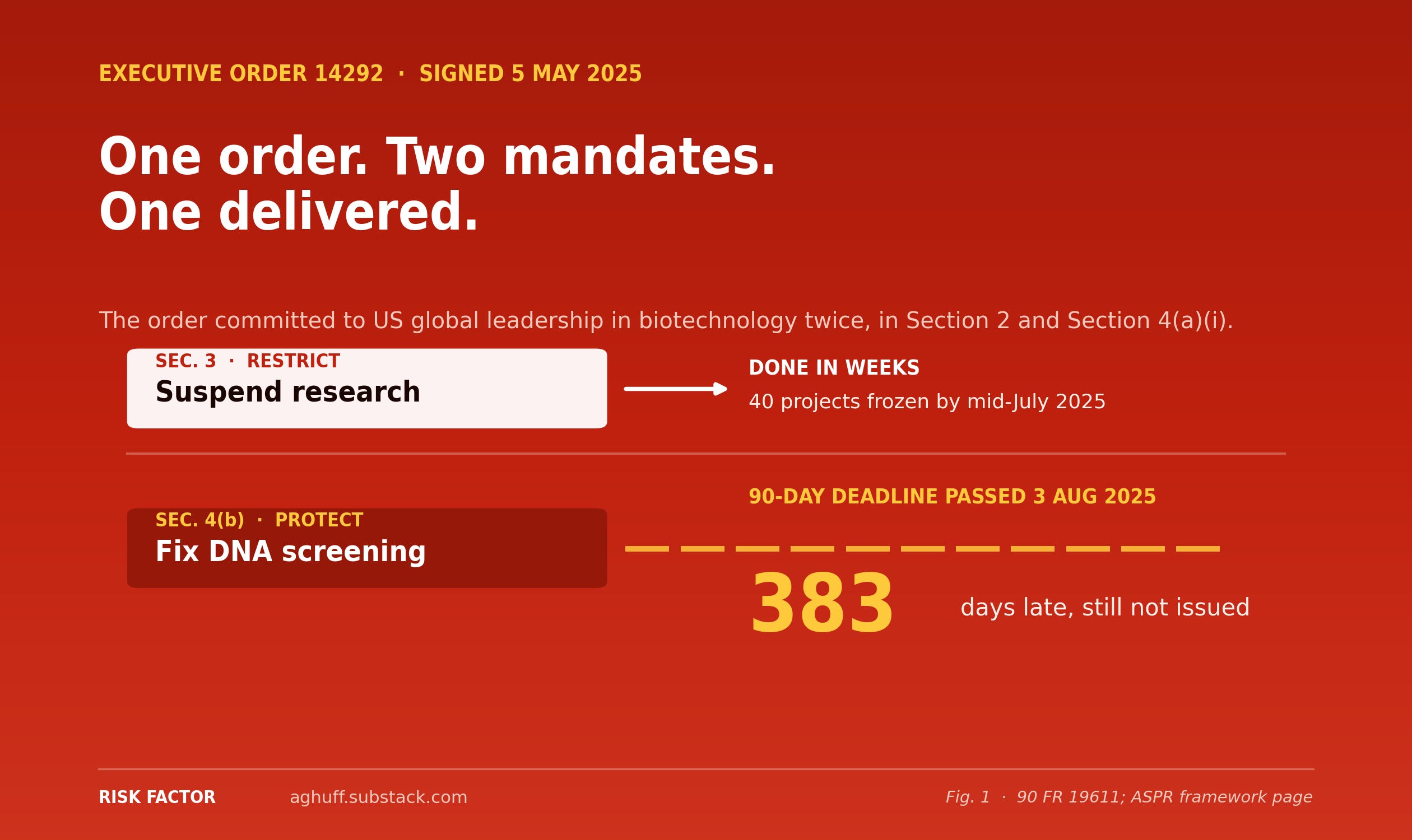
Fig. 1. One order, two mandates. Only the restrictive half was delivered.
Now the structure. The order contained two separate projects with two separate clocks.
The first was restriction. Section 3 directed the Office of Science and Technology Policy to establish guidance for agency heads to immediately end federal funding of dangerous gain-of-function research conducted by foreign entities in countries of concern, or in countries without adequate oversight, and to suspend federally funded dangerous gain-of-function work at least until the new policy required by Section 4(a) was complete [1].
The second was protection. Section 4(b) gave OSTP 90 days to revise or replace the 2024 Framework for Nucleic Acid Synthesis Screening, the rules governing the commercial step at which a dangerous sequence becomes physical DNA [1]. That framework, issued April 29, 2024, had made screening a condition of federal life sciences funding and covered bench-top synthesis devices as well as ordered DNA [2].
The first project executed. The second never did.
NIH announced its intent to suspend in a May 2025 guide notice, which also barred new applications, and then terminated and suspended awards in a June 2025 notice [3]. By mid-July, forty projects were suspended [4]. The 90-day screening deadline expired August 3, 2025.
As I write, the federal page that would host the replacement carries this notice: “In compliance with the Executive Order... federal departments and agencies will revise or replace the 2024 Framework for Nucleic Acid Synthesis Screening. This page will be updated once the new framework is available” [2]. That is 385 days past deadline, more than four times the window the order itself set.
Note also what the order did not do: it did not rescind the 2024 framework. It ordered a revision that never came. So the old framework is simultaneously operative and superseded depending on whom you ask, with NIH telling grantees to keep following it while some institutions paused implementation pending guidance that has not arrived [5]. A rule in that condition is not a rule. It is a liability trap.
I wrote about that unguarded gate in July, in a piece called The Chokepoint, and I will not re-litigate it here [6]. Readers who want the full screening argument should go read it. This article is about the other half of the same order, because that half landed, and it landed on people who were not the problem.
In 2024, the most recent year the World Health Organization has counted, tuberculosis killed 1.23 million people, more than any other single infectious agent [4]. Studying it requires working with it. That is the sentence this policy could not accommodate.
Of the forty projects NIH suspended in July 2025, at least twenty-two were tuberculosis research [4]. Not enhanced-transmissibility experiments. Basic science on antibiotic resistance, bacterial persistence, and immune evasion, which is to say the science that produces new drugs against a pathogen that has been outrunning our drugs for decades. Mark Harrington, executive director of Treatment Action Group, put it plainly: the policy is “a poison arrow directed at infectious disease more broadly,” and “Studying a pathogen like TB involves working on the pathogen. Not all work on pathogens involves making them stronger or changing them in ways that pose a credible danger” [4].
That distinction, between working on a pathogen and enhancing one, is the entire technical content of a competent oversight regime. This implementation did not draw it.
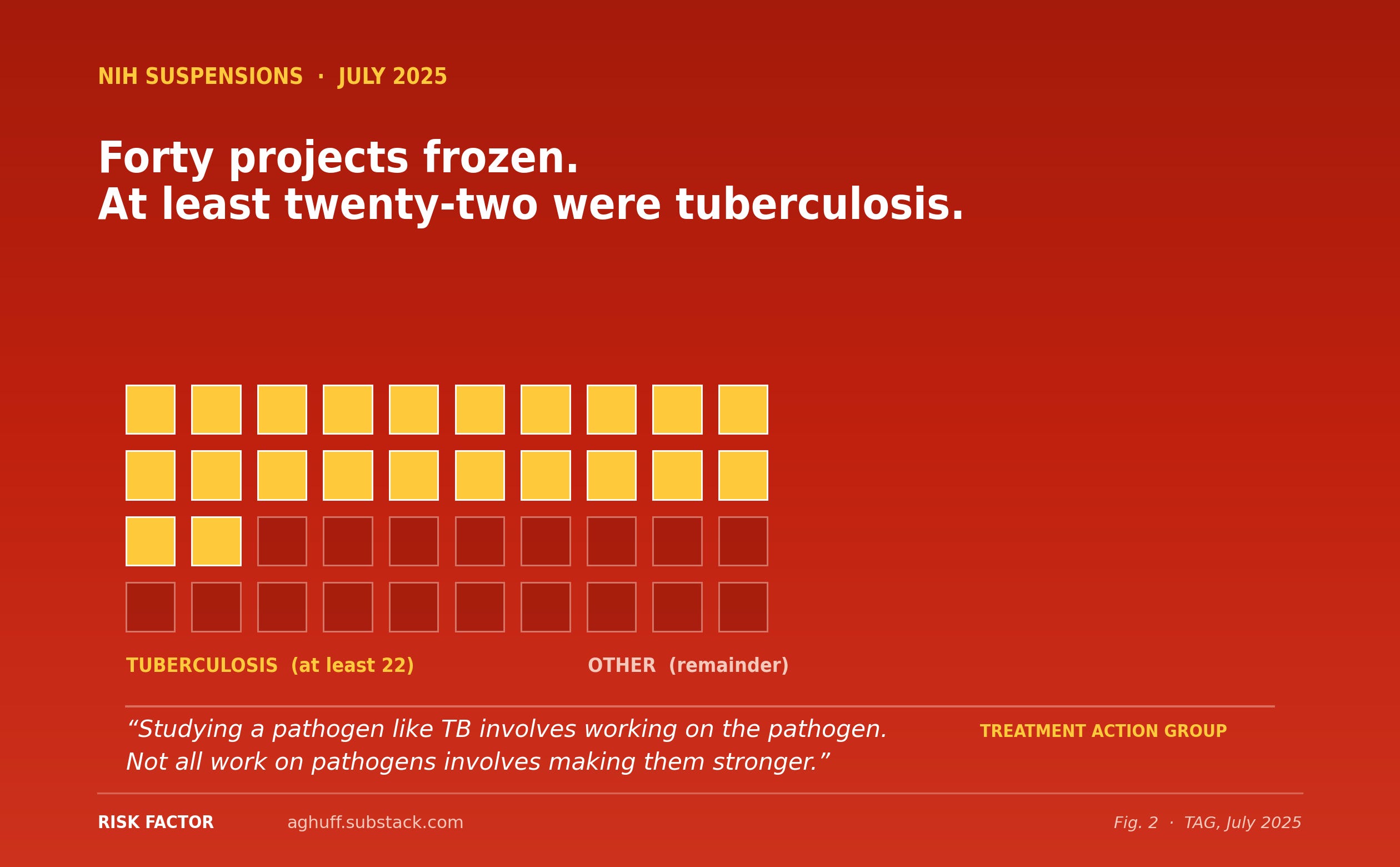
Fig. 2. Forty projects suspended; at least twenty-two were tuberculosis research.
Then consider what a suspended researcher could do about it. The executive order itself contemplated exceptions: Section 3(b) provides that “Heads of agencies shall report any exception to a suspension to the Director of OSTP for review in consultation with the APNSA and the heads of relevant agencies” [1]. So the order envisioned a route. NIH closed it. The June 2025 notice stated that NIH “will not be accepting requests for exceptions to terminations or suspensions if deemed to meet the Executive Order’s definition of dangerous gain-of-function research” [3].
That gap between the order and its implementation is worth sitting with. The White House wrote a process. The agency declined to run one.
That condition has now held for more than a year, and it has not ended. The government-wide policy released July 28, 2026, and dated July 20, finally set clocks: 120 days for agencies to publish implementation guidance and 90 days to establish a single independent third-party review body, with suspensions lifted and flagged projects processed only after both exist [7]. Measured from the issue date, those deadlines fall on November 17 and October 18, 2026. The body that could hear an appeal therefore will not exist until roughly sixteen months after the suspensions began, and only if the deadline holds. The policy does not say who appoints its members or what standards they will apply. A researcher whose program was frozen in July 2025 still has no forum in which to argue the case.
I have been on the wrong end of an institutional process with no appeal route. It is not a paperwork inconvenience. It ends careers, disperses trained teams that took a decade to assemble, and teaches every graduate student watching to choose a safer field.
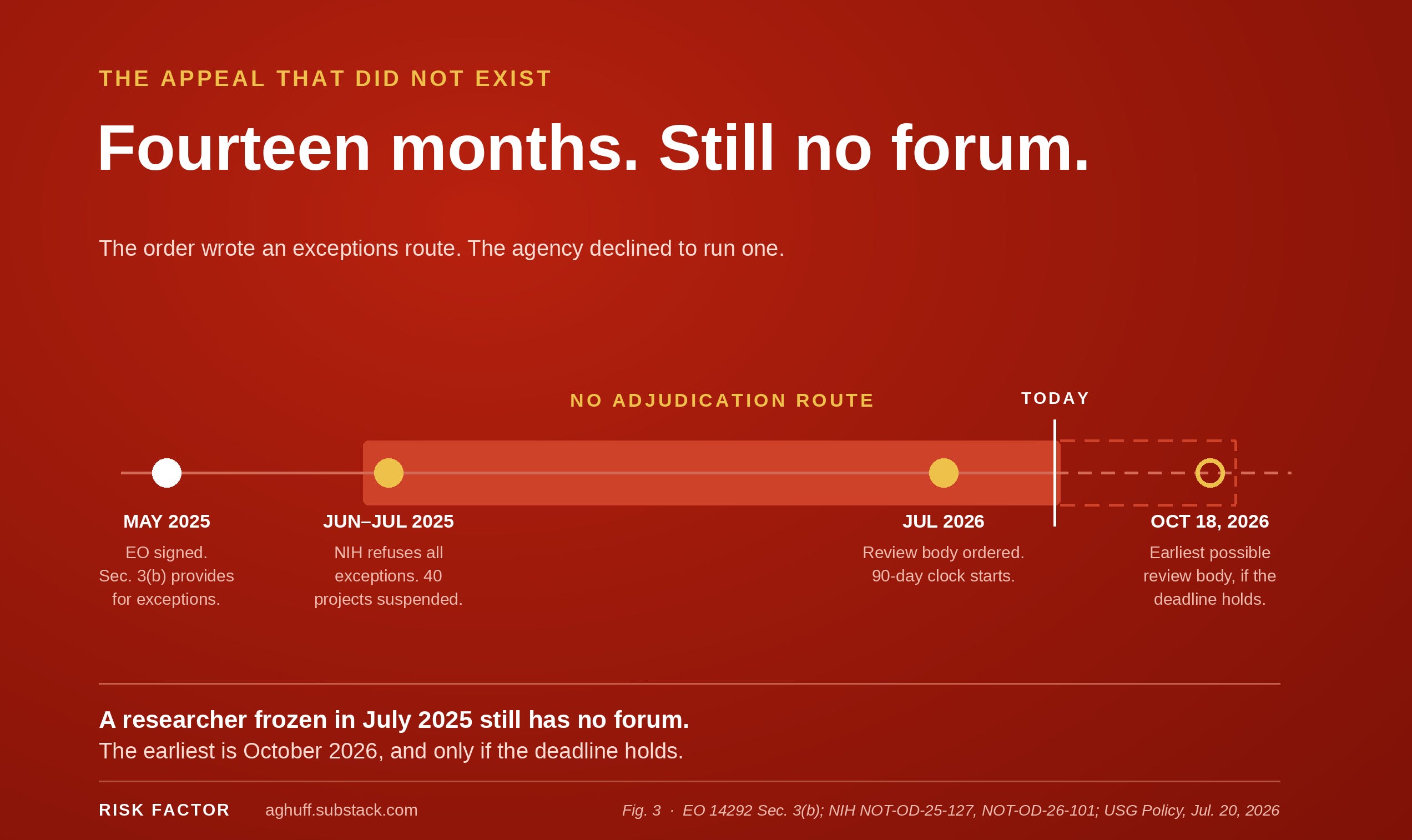
Fig. 3. Fourteen months and counting with no forum, and no review body before October 2026 at the earliest. The order provided for exceptions; the agency accepted none.
And the enforcement architecture extends the chill far past the forty. Section 7 makes compliance “material to the Government’s payment decisions for purposes of 31 U.S.C. 3729(b)(4)” [1], which converts a policy violation into potential False Claims Act liability with treble damages. It adds institutional attribution, so an individual’s violation “may be considered a violation of such term by the recipient’s employer or institution” [1]. And it authorizes “up to a 5-year period of ineligibility” for federal life sciences funding [1].
Put those three together and no rational university counsel advises a researcher to approach the boundary. When the American Society for Microbiology objected that the differentiation between dangerous gain-of-function and merely potential dangerous gain-of-function is “ambiguous as written,” and separately that “the penalty for violation is high” [8], that was not a drafting quibble. It is the mechanism by which forty suspensions become a discipline-wide retreat.
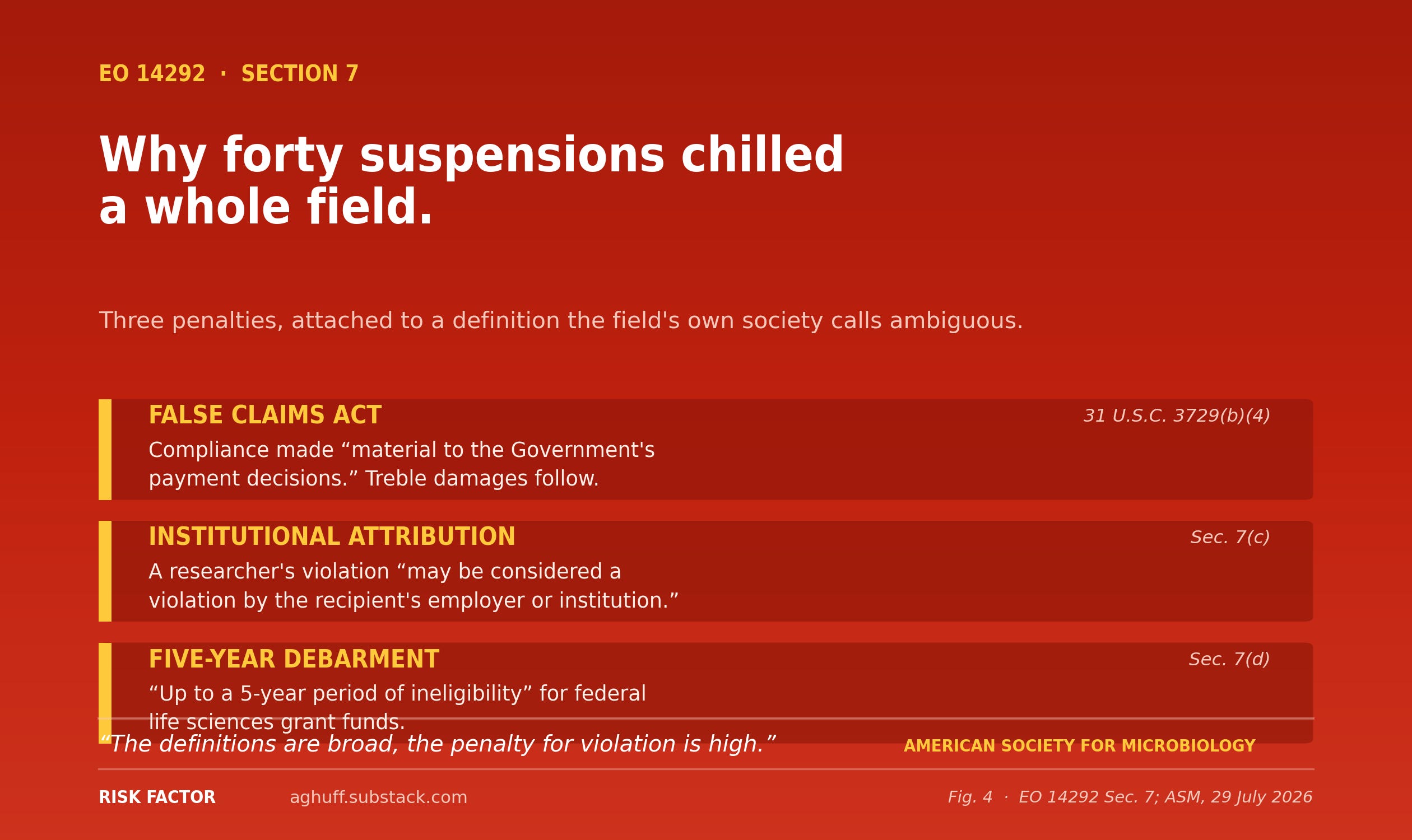
Fig. 4. Three penalties attached to a definition scientists call ambiguous.
Now the part that should settle it for anyone who supported this order on the merits. Richard Ebright of Rutgers spent years as the most prominent scientific advocate for restricting gain-of-function research. He praised this order when it was signed, calling it a major step. He then described its implementation this way: “[W]hat clearly happened was that the program officers assigned to virology simply nullified the executive order... Even the most glaringly obvious projects were not included on the list” [9].
Take that at face value and the policy achieved the worst available outcome: it froze bacteriology that posed little risk, missed the virology it was written to catch, and imposed career-ending liability on the entire field for the privilege. Over-broad and under-inclusive at once is not strictness or laxity. It is inaccuracy, and inaccurate enforcement is not a lesser failure than inaction. It is a different failure with the same result, plus collateral damage.
I need to draw a line here, because I have argued for a domestic mandate before and a careful reader will notice.
In July I argued that DNA synthesis screening should be universal and mandatory rather than voluntary, as a condition of federal funding and market access [6]. Here I argue that the United States should stop imposing unilateral restrictions on its own researchers. Those look like opposite positions. They are not, and the distinction is the load-bearing joint of the whole doctrine.
A screening requirement is a rule about commerce. It attaches to the sale of synthesized DNA. It binds every vendor that wants access to the American market, foreign vendors included, which is precisely why it is not unilateral in effect. Structurally it is an export control or a know-your-customer rule: a condition on a transaction. It tells no scientist what to study. It tells a company what to verify before shipping.
A research suspension is a rule about inquiry. It binds American scientists working with American funding, and by construction binds no one else. A tuberculosis project frozen at NIH is not frozen in Wuhan or Delhi or Moscow. The knowledge is not prevented. Its location is changed.
The test that separates them, which I apply to my own past positions as readily as anyone’s: does the rule reach the adversary, or only us? Screening reaches any supplier who wants to sell here. Suspension reaches only the people we pay. One is a fence around a market. The other is a fence around ourselves.
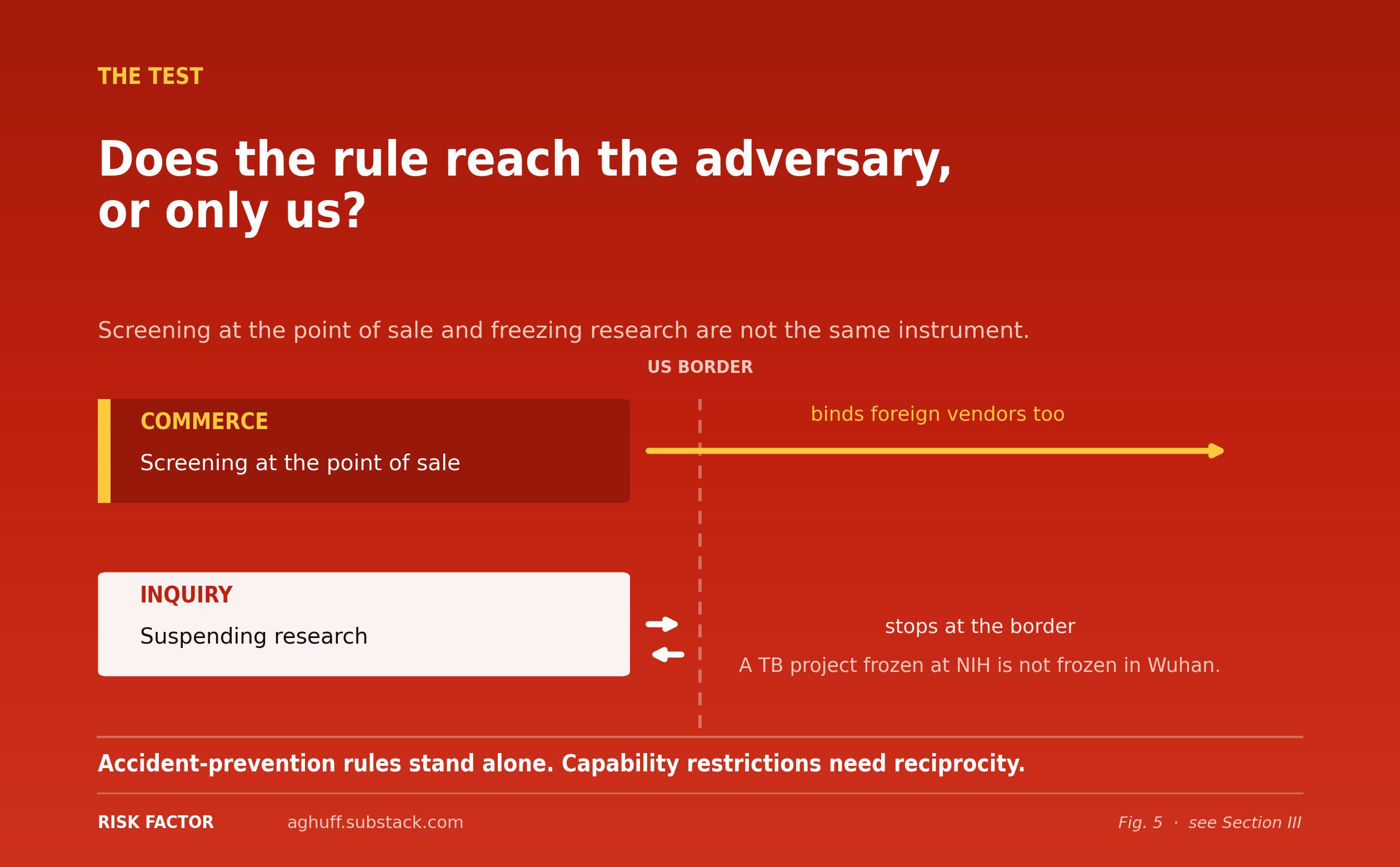
Fig. 5. A rule on commerce crosses the border. A rule on inquiry stops at it.
A second boundary, because the doctrine proves too much without it. I am not arguing that domestic biological rules are illegitimate as a class. Biosafety levels, containment engineering, select-agent inventory controls, and incident reporting exist to prevent accidents, and accidents do not require an adversary’s cooperation. Those rules are justified unilaterally, they protect the people in the building, and I would strengthen several of them.
The argument is narrower: rules that reduce accident risk stand on their own; rules that reduce only American capability require reciprocity before they are worth their cost. Anyone who says I am arguing against laboratory safety has either not read this paragraph or is hoping you did not.
Here is the question I would ask any official defending the suspensions, and I would ask it in a hearing.
Name one capability, held by any state or non-state actor of concern, that is smaller today than in July 2025 because forty American research projects were suspended.
There is none. There cannot be, because none of those actors were funded by NIH, subject to its notices, or exposed to False Claims Act liability. The order reached exactly the population that was already the most regulated, most inspected, and most transparent in the global life sciences: American federally funded academic researchers, in registered facilities, under institutional biosafety committees, publishing their protocols.
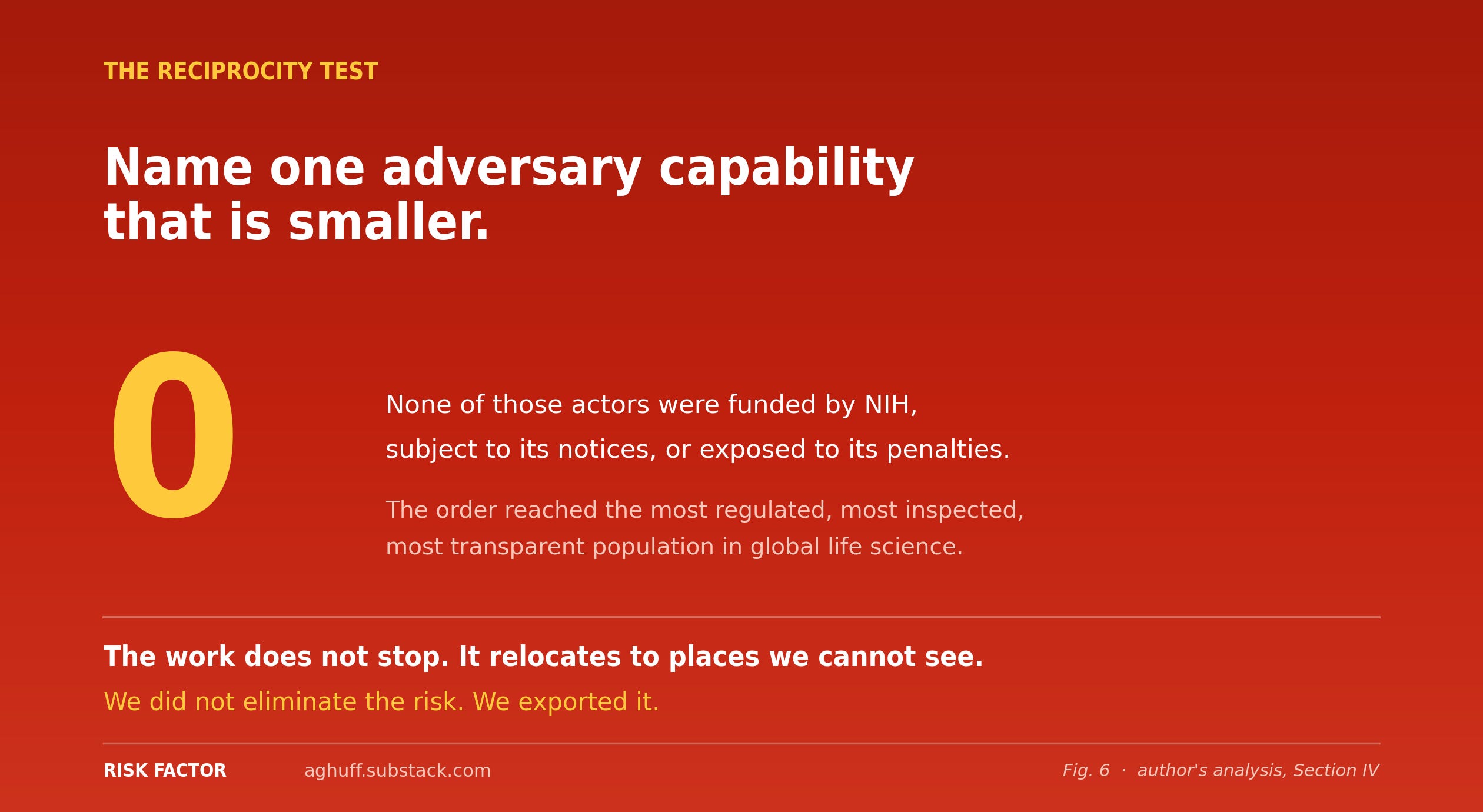
Fig. 6. The reciprocity test applied to sixteen months of suspensions.
Meanwhile the work does not stop. It relocates. This is the part a national security audience should find most troubling and the part least discussed. Research capability is portable. It follows funding, permissive regulation, and career opportunity. When the United States freezes a line of inquiry and attaches five-year debarment to ambiguity, the science does not vanish. It migrates to jurisdictions with weaker oversight, less transparency, and no obligation to publish. We do not eliminate the risk. We export it, and we lose the ability to see it.
A country that cannot see the work cannot assess it, cannot verify it, and cannot lead the standards conversation about it. That is the same failure this series has now documented four times: choosing the target we can reach over the one we can measure.
Against that, what the principal competitor is doing. China’s 15th Five-Year Plan, approved March 12, 2026 and covering 2026 through 2030, names biotechnology among the core areas where Beijing demands “decisive breakthroughs,” and calls for “extraordinary measures” to cut Chinese reliance on foreign science and technology [10]. Chinese state media report that more than twenty provincial-level jurisdictions have launched their own biomanufacturing support measures, including research funding and specialized industrial parks; that is Beijing’s account of its own effort, not an independent count, and should be read as such [10]. The National Security Commission on Emerging Biotechnology, chartered by Congress, delivered its final report April 8, 2025, twenty-seven days before this order was signed. It recommended “a minimum of $15 billion over the next five years to unleash more private capital into our national biotechnology sector” and found the United States “dangerously close to falling behind” China [11].
Twenty-seven days after that warning, the federal response was to suspend forty domestic research projects while missing the deadline on the screening framework.
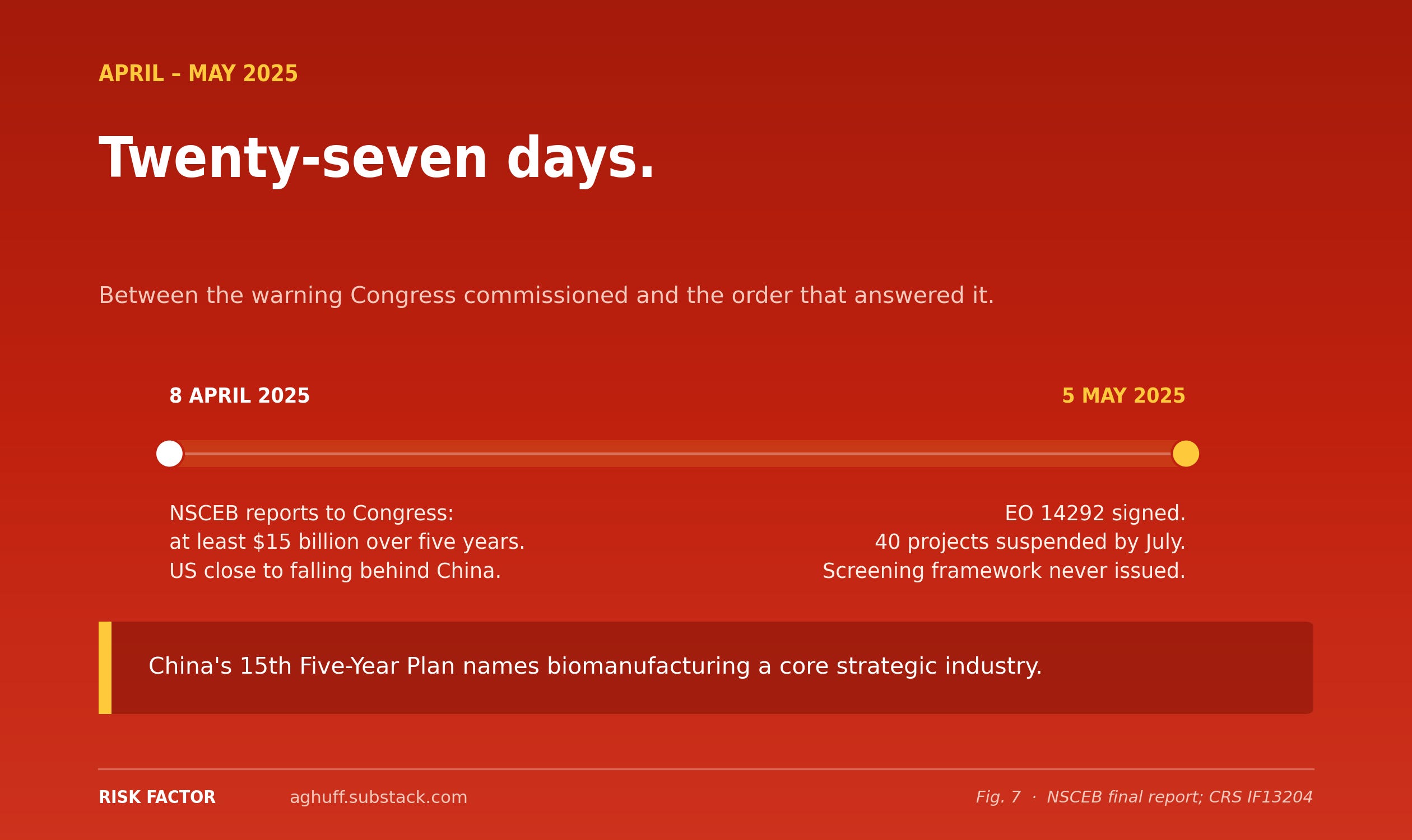
Fig. 7. Twenty-seven days between the commission’s warning and the order that answered it.
Be careful here, because the honest version is more useful than the alarming one.
The claim that American biotechnology is collapsing is not supported. Public markets reopened in 2026. By early August, BioPharma Dive counted fourteen US biotech IPOs raising $250 million or more, a tally it describes as “equal to the last four years combined,” against roughly $6 billion in total 2026 IPO proceeds, more than had been raised by the same point in any of the four preceding years [12]. Anyone telling you the sector is in free-fall is selling something. Anyone telling you it has fully recovered is also selling something: by count, 2026 is merely on pace with 2023 and 2024, against more than a hundred offerings in 2021.
The defensible claim is bifurcation. Capital concentrates in de-risked late-stage assets while the discovery layer goes hungry, and federal research capacity is where the damage sits. Between February and August 2025, NIH terminated 2,291 active research grants, withdrawing $2.45 billion [13]. The figure I trust most, because it comes from NIH’s own reporting rather than a secondary account, is the early-stage investigator funding rate on Type 1 R01-equivalent applications: 29.8 percent in FY2023, 18.9 percent in FY2025 [14]. That number describes whether a young scientist can build a career in this country, and it fell by more than a third in two years.
I hold at 75 that this policy is a meaningful contributor rather than the sole cause. The funding environment moved for several reasons at once and I will not claim a clean attribution I cannot support. But the direction is unambiguous and the mechanism is not mysterious. You cannot tell a generation of infectious disease researchers that their field carries five-year debarment risk and expect them to stay in it.
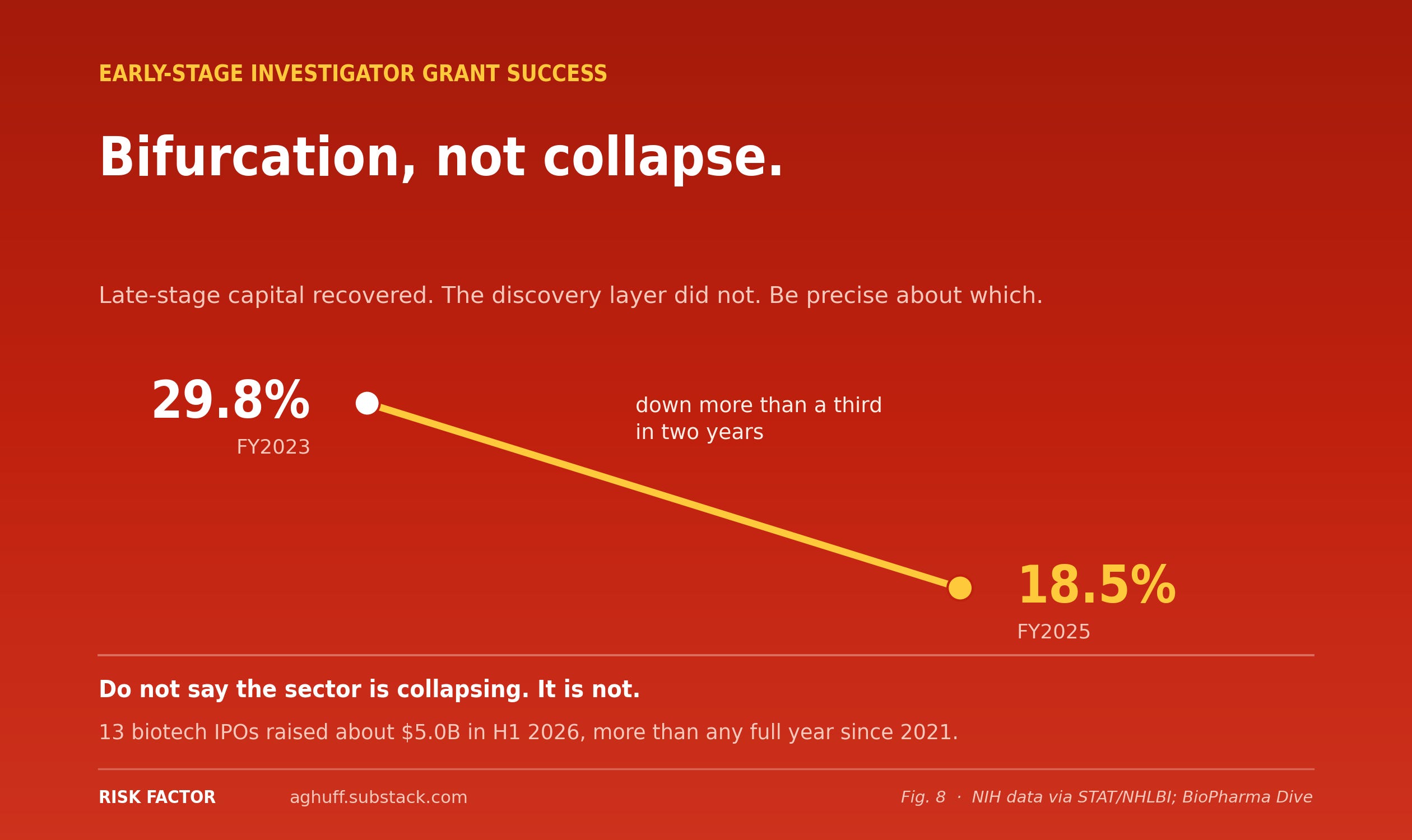
Fig. 8. Early-stage investigator grant success, FY2023 to FY2025. Bifurcation, not collapse.
There is a compounding effect budget tables miss. Forty suspended projects represent trained teams, maintained cell lines, longitudinal cohorts, and institutional knowledge that does not resume on command sixteen months later. Postdocs left. Technicians took industry jobs. Some programs will not restart, and the tuberculosis drugs that would have come from them arrive later or not at all, against a disease that kills over a million people a year worldwide.
That cost is real, denominated in lives, and appears in no assessment of this policy, because nobody was assigned to measure it. Which is, once again, the pattern.
The doctrine is two words in order: lead, then bind. It is also, word for word, what the executive order promised.
Lead. The United States should be the world’s strongest performer in the dual-use life sciences, and I mean that precisely. Dual-use research is not a euphemism for weapons work, which the Biological Weapons Convention prohibits, to which the United States is a party, and which I oppose without qualification. It is the ordinary condition of this field: the same knowledge that reveals how a pathogen defeats an immune system produces the vaccine, the therapeutic, and the diagnostic.
There is no version of biodefense that does not require deep understanding of offense.
A country that will not study how pathogens cause disease cannot build countermeasures, and it certainly cannot verify anyone else’s treaty compliance, because verification requires the technical capacity to know what you are looking at.
Leading means restoring the suspended work with a real adjudication route on a statutory clock, exactly as Section 3(b) of the order contemplated and the implementation refused. It means replacing career-ending ambiguity with proportionate, appealable penalties and definitions precise enough that a competent researcher can tell which side of the line they are on. It means funding at the scale the congressional commission recommended rather than a fraction of it. And it means onshoring capability rather than exporting it, the same argument this series made about medicines in Part II and surveillance in Part I.
Bind. Then, and only then, accept constraints, on two conditions: universal and verifiable.
Universal means every state with meaningful capability sits inside the instrument under the same obligations. An agreement binding the careful while exempting the capable is worse than none, because it manufactures the appearance of safety while redistributing capability toward whoever declined to sign.
Here a common assumption needs correcting. The Biological Weapons Convention already has near-universal membership, with 189 states parties, four signatories that have not ratified, and four states outside it entirely [15]. Membership was never the problem. The problem is that the treaty has no verification mechanism, no inspections, and no implementing organization. What it has is a four-person support unit inside the UN Office for Disarmament Affairs, with no inspection or investigative authority [16]. Signing is not compliance. Compliance is something you can check.
Verifiable means the instrument can detect violation, and that capacity is a precondition rather than a promise. The technology to do it exists now in ways it did not when the United States walked away from a verification protocol in 2001. That is where this series goes next.
One thing I will not do is pretend the sequencing is costless. Lead-then-bind can be abused. Every state that ever ran an offensive program claimed it was maintaining defensive capability, and the line between characterizing a threat and enhancing one is genuinely hard in some experiments. That is exactly why oversight must be precise rather than broad: precision makes the distinction enforceable. The current policy replaced precision with a dragnet and then failed to catch the fish it was aimed at. I would rather defend a narrow rule that works than a wide one that freezes tuberculosis research and misses virology.
“You are arguing against oversight because you were on the wrong end of it.” State the conflict plainly: I was Vice President at EcoHealth Alliance from 2014 to 2016, I became a whistleblower about what I saw, and the organization’s later debarment is part of the record any reader should weigh. That history cuts both ways, and the direction it actually cuts is toward more oversight, not less. My objection is not that this order oversees. It is that it does not work: it suspended tuberculosis bacteriology, missed the virology its own advocate says should have been caught, and has provided no appeal route for fourteen months and counting. If I wanted to protect the kind of work I once helped oversee, I would defend a vague policy with unpredictable enforcement, not demand a precise one.
“Unilateral restraint has value as norm-setting even without reciprocity.” The strongest good-faith objection, and not empty; norms do sometimes propagate by example. But norm-setting requires the example to be visible and attributable, and none of this was. There was no international announcement, no verification of what was suspended, no mechanism by which another state could confirm American restraint even if it wanted to reciprocate. An unverifiable unilateral gesture cannot function as a norm because nobody else can see it. That is not an argument against norms. It is an argument for building the verification layer first.
“You want America to lead in bioweapons research.” No, and the phrasing matters enough to answer directly. The Biological Weapons Convention prohibits developing, producing, and stockpiling biological weapons; the United States is a party; I support that prohibition without qualification. The argument is that the dual-use life sciences, the study of how pathogens work and how to defeat them, is the foundation of every countermeasure this country has fielded, and that ceding leadership in it does not make the world safer. It makes American biodefense weaker and moves the frontier somewhere we cannot observe.
“Forty suspensions is a small number. This is an anecdote inflated into a crisis.” Forty is small and I have not claimed otherwise. The argument does not rest on the count; it rests on the enforcement structure around it. False Claims Act exposure, institutional attribution, and five-year debarment attached to a definition the relevant scientific society calls ambiguous do not affect forty laboratories. They affect every laboratory deciding what to propose next. The suspensions are the visible sample of a larger and mostly invisible retreat, and the invisible part is, characteristically, the part nobody is measuring.
“You cannot have it both ways: mandatory screening but no research restrictions.” Section III is the answer, and the test is whether a rule reaches the adversary or only us. If a critic can show that synthesis screening as a market-access condition restricts American inquiry in a way I have not accounted for, I will revise the position in print. That is the standard I have asked of everyone else in this series.
“Ebright’s account is one person’s version.” Correct, which is why I scored it 80 rather than 95. It is a public, specific, on-the-record claim by the policy’s most prominent scientific supporter, which makes it unusually credible as adverse testimony, but it is testimony rather than an audit. The auditable version would be the list of projects reviewed against the list that met the definition. That the government has not published it is itself worth noting, particularly since Section 6 of the order requires a publicly available reporting mechanism for exactly this.
If restraint only counts when it binds everyone, then everything in this article turns on whether the treaty that is supposed to bind everyone can bind anyone.
It cannot. The Biological Weapons Convention has no verification mechanism, no inspections, and no implementing organization. Its entire secretariat is four people, inside a treaty whose total annual budget, staff and meetings together, runs about $2.2 million [16]. The chemical weapons equivalent runs on about €83 million, roughly $95 million, with about 500 staff [17]. The complaint mechanism written into the treaty went unused for forty-seven years. It has been invoked exactly once, by Russia in 2022, against the United States and Ukraine, and the Security Council voted it down: two in favor, three against, ten abstentions [18]. That is the entire operational history of Article VI.
There is a reason, and Americans should sit with it. In July 2001, after six years of negotiation, the United States rejected the draft verification protocol and then moved to terminate the negotiating mandate outright, a move that collapsed the Fifth Review Conference rather than carrying it [18]. We built the condition we are now trapped inside: a world where our restraint cannot be seen and nobody else’s can be checked.
This month, in Geneva, the working group charged with fixing it held its second-to-last session. Its proposed deliverable on verification, still in draft, is another working group, meeting twenty days a year until 2031 and reporting not to next year’s review conference but to the one after it [19].
Dr. Andrew G. Huff is an epidemiologist, security engineer, and former combat infantryman. He served as Vice President at EcoHealth Alliance from 2014 to 2016 and later became a whistleblower. He is the author of The Truth About Wuhan and lead author of the 2017 systematic review of global biosurveillance systems.
Competing interests: none. Funding: none. Risk Factor is funded entirely by its readers.
Corrections policy: if I have a material fact wrong, bring evidence and I will correct it in this post, visibly.
A note on scope: this article describes where controls are misaimed. It does not describe how to defeat any control and contains no operational detail of use to anyone seeking to misuse biology.
Research verification and document production were AI-assisted under the author’s direction; all claims and citations were verified against primary sources on August 23, 2026.
1. Executive Order 14292, “Improving the Safety and Security of Biological Research,” signed May 5, 2025, published 90 FR 19611, May 8, 2025 (https://www.federalregister.gov/documents/2025/05/08/2025-08266/improving-the-safety-and-security-of-biological-research; official text at https://www.govinfo.gov/content/pkg/FR-2025-05-08/html/2025-08266.htm). Verified verbatim against the GovInfo text. Section 2 commits to “driving global leadership in biotechnology, biological countermeasures, biosecurity, and health research.” Section 3(a) directs OSTP to establish guidance for agency heads to end federal funding of dangerous gain-of-function research by foreign entities in countries of concern and in countries lacking adequate oversight; Section 3(b) directs suspension of federally funded dangerous gain-of-function research at least until completion of the Section 4(a) policy, and provides that “Heads of agencies shall report any exception to a suspension to the Director of OSTP for review in consultation with the APNSA and the heads of relevant agencies.” Section 4(a) gives 120 days (to September 2, 2025) to revise or replace the 2024 DURC/PEPP policy and requires “ensuring the United States remains the global leader in biotechnology, biological countermeasures, and health research.” Section 4(b) gives 90 days (to August 3, 2025) to revise or replace the 2024 Framework for Nucleic Acid Synthesis Screening. Section 5 requires, within 180 days (to November 1, 2025), a strategy for non-federally funded research and a legislative proposal. Section 6 requires a publicly available reporting mechanism. Section 7(a) makes compliance material for purposes of 31 U.S.C. 3729(b)(4); 7(c) provides institutional attribution; 7(d) authorizes up to a 5-year period of ineligibility. The order contains no rescission clause.
2. HHS ASPR, “2024 OSTP Framework for Nucleic Acid Synthesis Screening” (https://www.aspr.gov/readiness-response/medical-countermeasures-biodefense/s3/synthetic-nucleic-acid-screening/ostp-framework-nucleic-acid-synthesis-screening). Page verified August 23, 2026 and still carrying the notice that agencies “will revise or replace” the framework and that the page “will be updated once the new framework is available.” The 2024 Framework was released April 29, 2024 and conditioned federal life sciences funding on procurement from compliant providers, including benchtop device manufacturers. Elapsed time from the August 3, 2025 deadline is 385 days as of August 23, 2026.
3. NIH Guide Notices NOT-OD-25-112 (May 7, 2025) (https://grants.nih.gov/grants/guide/notice-files/NOT-OD-25-112.html) and NOT-OD-25-127 (June 18, 2025) (https://grants.nih.gov/grants/guide/notice-files/NOT-OD-25-127.html). The May notice rescinded NOT-OD-25-061, barred competitive applications for due dates after May 7, 2025, and stated NIH’s intent to suspend ongoing funding under Section 3(b). The June notice performed the terminations and suspensions and states that NIH “will not be accepting requests for exceptions to terminations or suspensions if deemed to meet the Executive Order’s definition of dangerous gain-of-function research.”
4. Approximately 40 NIH awards suspended by mid-July 2025, a figure originating in NIH Deputy Director Matthew Memoli’s letter to the White House reported by Science and the Washington Post in July 2025. Treatment Action Group statement, New York City, July 24, 2025, opposing “the suspension of at least 22 TB research awards” and carrying Mark Harrington’s quotations in full (https://www.treatmentactiongroup.org/statement/treatment-action-group-statement-on-suspension-of-tb-funding-over-white-house-gain-of-function-fictions/); CIDRAP coverage (https://www.cidrap.umn.edu/tuberculosis/group-criticizes-nih-over-suspended-funding-tb-research). Science reported in 2026 that “nearly half” of the forty involve tuberculosis, a lower share than TAG’s count; TAG noted its tally exceeded contemporaneous media reports. Tuberculosis mortality: WHO, Global Tuberculosis Report 2025, reporting 1.23 million TB deaths in 2024, including 150,000 among people with HIV, and describing TB as “the world’s leading cause of death from a single infectious agent” (https://www.who.int/teams/global-programme-on-tuberculosis-and-lung-health/tb-reports/global-tuberculosis-report-2025).
5. Arms Control Association, “Regulatory Gaps in Benchtop Nucleic Acid Synthesis Create Biosecurity Vulnerabilities,” November 24, 2025 (https://www.armscontrol.org/blog/2025-11-24/regulatory-gaps-benchtop-nucleic-acid-synthesis-create-biosecurity-vulnerabilities), noting the expired deadline and resulting lack of clarity, with NIH continuing to reference the 2024 framework while some institutions paused implementation.
6. Huff AG, “The Chokepoint,” Risk Factor, July 21, 2026 (https://aghuff.substack.com/p/the-chokepoint). Full treatment of synthesis screening, the four coverage gaps, and the policy sequence from EO 14110 through EO 14292.
7. United States Government Policy for Stopping High-Risk Life Sciences Research, dated July 20, 2026 and released July 28, 2026 (https://www.whitehouse.gov/wp-content/uploads/2026/07/USG-Policy-for-Stopping-High-Risk-Life-Sciences-Research_July-2026.pdf), and NIH Guide Notice NOT-OD-26-101, released July 28, 2026 (https://grants.nih.gov/grants/guide/notice-files/NOT-OD-26-101.html), which states that “All research activities identified as potential dangerous gain-of-function research per NOT-OD-25-127 and NOT-OD-25-112 remain paused until NIH specific implementation requirements are established,” and that agencies “have 120 days to develop and publish implementation guidance consistent with this Policy... and 90 days to establish a single independent third party review body.” Deadlines run from the July 20 issue date: October 18, 2026 for the review body and November 17, 2026 for agency guidance, with a further 180-day institutional clock to January 16, 2027. As of August 23, 2026 the review body has not been established.
8. American Society for Microbiology, “ASM Statement on USG High-Risk Life Sciences Research Policy,” July 29, 2026 (https://asm.org/press-releases/2026/july/asm-statement-on-usg-high-risk-life-sciences-resea): “The differentiation between DGOF and Potential DGOF is ambiguous as written,” and, separately, “The definitions are broad, the penalty for violation is high, and the resulting ban on swaths of research will inhibit national preparedness to combat infectious disease threats.”
9. Richard Ebright, quoted in Christian Britschgi, Reason, September 18, 2025 (https://reason.com/2025/09/18/the-trump-administration-misses-key-deadlines-for-imposing-restrictions-on-gain-of-function-research/): “What clearly happened was that the program officers assigned to virology simply nullified the executive order, nullified the NIH notification by failing to report the dangerous gain-of-function projects in their portfolio. Even the most glaringly obvious projects were not included on the list.” The same article reports that Ebright praised the order at signing as a “major step.” One expert’s public account, not an audit.
10. Congressional Research Service, “China’s 15th Five-Year Plan: S&T and Economic Priorities,” IF13204, April 16, 2026 (https://www.congress.gov/crs-product/IF13204; full text at https://www.everycrsreport.com/reports/IF13204.html): the plan was approved March 12, 2026; it calls for “decisive breakthroughs” in core areas including biotechnology, and for “extraordinary measures” to reduce reliance on foreign science and technology. CRS lists biomanufacturing within its medical priorities table. The provincial figure is not from CRS: Xinhua, republished by China Daily, February 11, 2026 (https://regional.chinadaily.com.cn/Qiushi/2026-02/11/c_1160500.htm), states that “more than 20 provincial-level regions have launched their own support measures, including research funding and the creation of specialized industrial parks.” That is Chinese state media reporting on Chinese policy and is cited here as Beijing’s own account, not as independent verification.
11. National Security Commission on Emerging Biotechnology, “Charting the Future of Biotechnology: An action plan for American security and prosperity,” delivered to Congress April 8, 2025 (https://www.biotech.senate.gov/final-report; executive summary at https://www.biotech.senate.gov/final-report/chapters/executive-summary). Verbatim: “the U.S. government should dedicate a minimum of $15 billion over the next five years to unleash more private capital into our national biotechnology sector.” The commission’s release states the United States is “dangerously close to falling behind” China; the report’s chair message goes further, stating that the country “is falling behind in key areas of emerging biotechnology as China surges ahead.”
12. BioPharma Dive, “Latigo shares climb in Nasdaq debut,” August 7, 2026 (https://www.biopharmadive.com/news/latigo-ipo-public-biotech-pain-drug-nasdaq/827300/): Latigo was “the 14th to secure $250 million or more. That tally is equal to the last four years combined.” BioPharma Dive IPO tracker, updated August 7, 2026 (https://www.biopharmadive.com/news/biotech-ipo-performance-tracker/587604/): “Drug startups have banked $6 billion in IPOs so far in 2026, more than the combined amount raised by this point in the previous four years,” and, on the downturn, “last year, only 11 drugmakers priced initial share sales” against “more than 100” in 2021. Count comparison from BioPharma Dive, August 5, 2026 (https://www.biopharmadive.com/news/braveheart-cardiac-drugs-ipo-pricing/826973/): 2026 “surpasses last year’s and is on pace [to] meet the totals seen in 2023 and 2024.” On the funding gap: BioPharma Dive, “Biotech startup funding gap widens despite rebound in VC investment,” July 13, 2026 (https://www.biopharmadive.com/news/biotech-venture-capital-funding-2026-first-half/824881/), reporting at least 68 biotechs raising more than $9.1 billion in the first half of 2026, roughly 76 percent of it in rounds of $100 million or more, two-thirds of rounds going to companies already in human testing, and no preclinical company going public since 2024. Figures as of August 7, 2026.
13. Oliveira DFM, Huang Q, Woodruff T.K., Uzzi B, “How the 2025 NIH grant terminations varied by researchers’ demographic groups,” PNAS 2026;123(13):e2527755123 (https://www.pnas.org/doi/10.1073/pnas.2527755123): “In early 2025, the NIH unexpectedly terminated 2,291 active research grants, withdrawing $2.45 billion and disrupting thousands of projects.” The termination window analyzed runs February through August 2025; the paper separately identifies 1,534 grants frozen mid-project in the same period.
14. NIH Extramural Nexus, “NIH Support for Early Stage Investigators in FYs 2024 and 2025,” February 10, 2026 (https://grants.nih.gov/news-events/nih-extramural-nexus-news/2026/02/nih-support-for-early-stage-investigators-in-fys-2024-and-2025): the early-stage investigator funding rate on Type 1 R01-equivalent applications fell from 29.8 percent in FY2023 to 18.9 percent in FY2025, with ESI awardees falling from 1,587 to 1,144. A preliminary FY2025 figure of 18.5 percent, presented at an NHLBI advisory council meeting, was reported by STAT on December 18, 2025 (https://www.statnews.com/2025/12/18/nih-early-career-researchers-grant-success-rate-falls/); NIH’s own final figure is used here.
15. UN Office for Disarmament Affairs, Biological Weapons Convention universality (https://disarmament.unoda.org/en/our-work/weapons-mass-destruction/biological-weapons/universality): 189 States Parties, 4 signatory states that have not ratified, and 4 states that have neither signed nor acceded. Comoros acceded February 14, 2025 and Kiribati May 20, 2025.
16. BWC Implementation Support Unit, established at the Sixth Review Conference (2006) and housed in the UNODA Geneva Branch, with no verification, inspection, or investigative authority (https://disarmament.unoda.org/en/our-work/weapons-mass-destruction/biological-weapons/implementation-support-unit). Since 2023 the ISU has four fixed-term posts (one P-5, two P-4, one P-3), at an annual cost of roughly $1.28 million. The ISU’s overall cost estimates paper of August 20, 2025 lists the Convention’s “Average Current Budget,” covering the ISU and all BWC meetings, as $2,170,200 (https://docs-library.unoda.org/Biological_Weapons_Convention_-Working_Group_on_the_strengthening_of_the_ConventionSixth_session_(2025)/2025-0820_Overall_Cost_Estimates.pdf).
17. OPCW decision C-30/DEC.6, November 25, 2025 (https://www.opcw.org/sites/default/files/documents/2025/11/c30dec06%28e%29.pdf), appropriating EUR 82,935,524 for 2026. OPCW states its Technical Secretariat comprises “about 500 staff members recruited from over 80 OPCW Member States” (https://www.opcw.org/about/technical-secretariat). The dollar figure in the text is a conversion, not an OPCW figure.
18. UN Security Council, 9180th meeting, November 2, 2022, press release SC/15095 (https://reliefweb.int/report/ukraine/security-council-rejects-text-investigate-complaint-concerning-non-compliance-biological-weapons-convention-ukraine-united-states): the Russian Federation’s draft resolution to establish a commission of inquiry under BWC Article VI, arising from its complaint against the United States and Ukraine circulated October 24, 2022, failed with 2 votes in favour (China, Russian Federation), 3 against (France, United Kingdom, United States), and 10 abstentions. This is the only invocation of Article VI since the Convention entered into force March 26, 1975. The 1997 Cuban Thrips palmi allegation proceeded under Article V as a Formal Consultative Meeting (Geneva, August 25-27, 1997), which reported on December 15, 1997 that “it has not proved possible to reach a definitive conclusion”; Cuba did not escalate to Article VI. On 2001: the Ad Hoc Group negotiated from January 1995 to July 2001, when the United States rejected the composite draft protocol; at the Fifth Review Conference (November 19 to December 7, 2001) the United States proposed terminating the Ad Hoc Group’s mandate, which suspended the conference for a year rather than succeeding. The mandate was never terminated and is expressly preserved in the current draft text at BWC/WG/8/CRP.1/Rev.1, paragraph 20.
19. Ninth Session of the Working Group on the Strengthening of the Biological Weapons Convention, Palais des Nations, Geneva, August 17-21, 2026, chaired by Ambassador Frederico S. Duque Estrada Meyer of Brazil (https://indico.un.org/event/1018822/); a tenth and final four-day session is scheduled for December 2026 ahead of the Tenth Review Conference in 2027. Draft text BWC/WG/8/CRP.1/Rev.1, Section D (https://docs-library.unoda.org/Biological_Weapons_Convention_-Working_Group_on_the_strengthening_of_the_ConventionEighth_session_(2026)/BWC_WG_8_CRP1_Rev1_2.pdf): paragraph 15, “States Parties will establish an Open-Ended Working Group on Compliance and Verification”; paragraph 22, allocating “20 days to the Open-Ended Working Group on Compliance and Verification for its substantive meetings, every year [from 2026/2027/2028] until 2031”; paragraph 26, reporting to the Eleventh Review Conference. The start year remains bracketed and unagreed; 2031 is not bracketed. This is a draft conference room paper, not an adopted outcome, and verification remains among the unresolved areas.
No posts
Comments
Nothing yet. Say the first thing.
Sign in to join the conversation.