
In his Ecclesiastical History of the English People, the Northumbrian monk Bede records that the English were descended from three peoples: the Angles, the Saxons and the Jutes. Led initially by the brothers Hengist and Horsa, the Jutes settled in Kent, Hampshire and the Isle of Wight, and the English spoken in Kent came to form a separate dialect from those that developed elsewhere in Anglo-Saxon Britain. But it has long been unclear why the Jutes received their name. The peninsula in Denmark that is called Jutland today was known as the Cimbrian Peninsula in Roman times. It is first recorded being called Jutland in English translations of Bede’s Ecclesiastical History and the peninsula may only have received its modern name because of the deeds of Jutish leaders such as Hengist and Horsa.
In Roman times, the peninsula was named after the Cimbri, a Germanic people most remembered for having ravaged southern Europe from 113-101 BC. After terrorising Gaul and ancient Spain, the Cimbri were defeated by a Roman army near what is now Vercelli in northern Italy, between Turin and Milan. It is not terribly surprising, then, that the Romans called the peninsula that the Cimbri came from after the northern barbarians who had so famously threatened the emerging Roman empire at the time.
The name of the king of the Cimbri defeated at Vercelli is recorded to have been Boiorix. His name literally means ‘king of the Boii’ as if the Cimbrian leader had adopted it to indicate that he had overcome the Boii, the leading Central European Celtic tribe whose name is remembered in that of Bohemia (Latin Boiohaemum). Many Roman generals were given the names of peoples they had defeated, perhaps most famously among them Drusus, the stepson of the emperor Augustus. Drusus was given the name Germanicus as an honorific after his death while on a campaign that had seen him lead Roman forces as far into Germany as the River Elbe. A monument built to honour Drusus can still be seen in Mainz today, and his title was inherited by both of his sons, the emperor Claudius and the general Germanicus.
Roman accounts record that the Cimbri later apologised for the deeds of their ancestors, sending the emperor Augustus an elaborate drinking vessel or cauldron as a token of their friendship. The Cimbri are still commemorated in Denmark by the name Himmerland in northern Jutland (formerly Himbersysel) and they seem to have remained an independent people until the kingdom of Denmark was founded at the end of the fifth century. The founder of the Danish kingdom is called Scyld Sceafing in the English poem Beowulf which is largely set in Denmark. Scyld is called Skjǫldr or Skioldus in later Scandinavian accounts and he seems very likely to have been a real person.
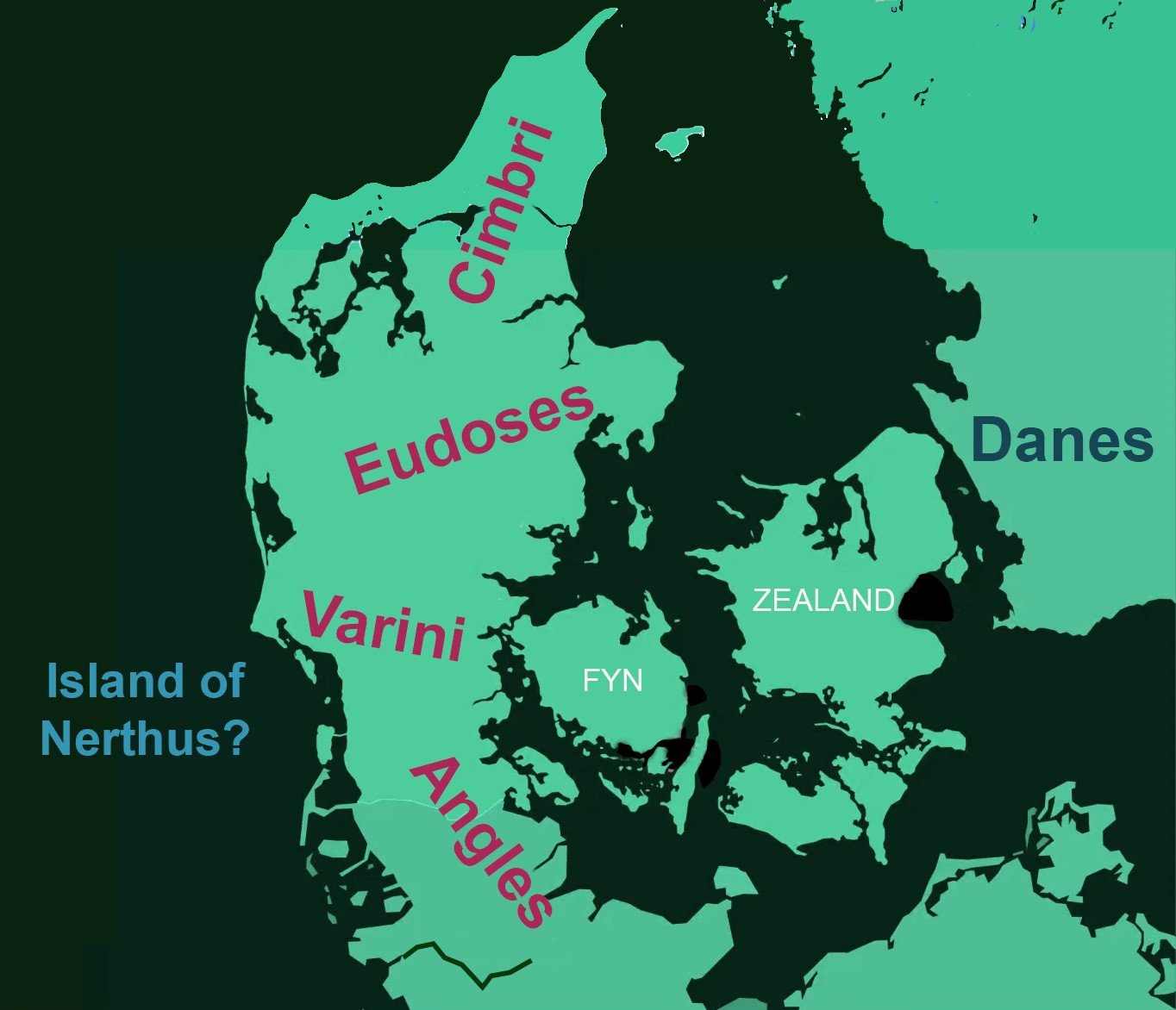
But the Jutes are not mentioned in Roman sources. The closest they come is a reference by Tacitus to a tribe called the Eudoses – and another people called the Juthungi are recorded in Roman accounts as a tribe of the Alemanni or Swebians. Danish archaeologists associate the Jutes with archaeological remains from central Jutland, but it has never been clear whether the Jutes are the same people as the Eudoses or were related to the Juthungi somehow. Even the linguistic origin of the term Jute has long been obscure.
The closest word to the name Jute recorded otherwise in a Germanic language is the Old Norse term jóð ‘baby’. A Gothic prince from Spain called Eutharic is known from a history of the Goths written by the Byzantine writer Jordanes, and Eutharic’s name seems literally to mean ‘Jute-king’. Eutharic served as a Roman consul at the time of the reign of Justin the Thracian, a Byzantine emperor who ruled from 518-527. But why would the name of the Jutes appear in that of a Gothic leader?
There is no record of the Goths ever defeating the Jutes, so the most likely answer appears to be that the name of the Jutes meant something in Gothic. The term also appears to be recorded in the name of the Eudoses and the Juthungi. But what did it literally mean? It can scarcely have meant ‘baby’ as its apparent cognate jóð means in Old Norse. And the Jutes are called the Jótar in Old Norse, and Jutland is called Jótland – with a t, not a ð.
The Old Norse term jóð ‘baby’ seems to be related to the Sanskrit participle ūta ‘favoured, protected, helped’ and its like-meaning Latin cognate iūtus ‘helped, aided’. Babies evidently need a lot of help – infants can’t be expected to fend for themselves. But the semantic connection of jóð ‘baby’ with ūta ‘favoured’ and iūtus ‘helped’ appears more likely to reflect the idea that children are a blessing. It seems likely that the tribal name Eudoses means ‘the favoured, the helped, the blessed’ and that the name of the Jutes originally had a similar literal meaning. It also makes sense to interpret the Gothic name Eutharic as literally meaning ‘blessed king’ rather than ‘Jute-king’. But how might the Jutes have been considered ‘favoured’ or ‘blessed’?
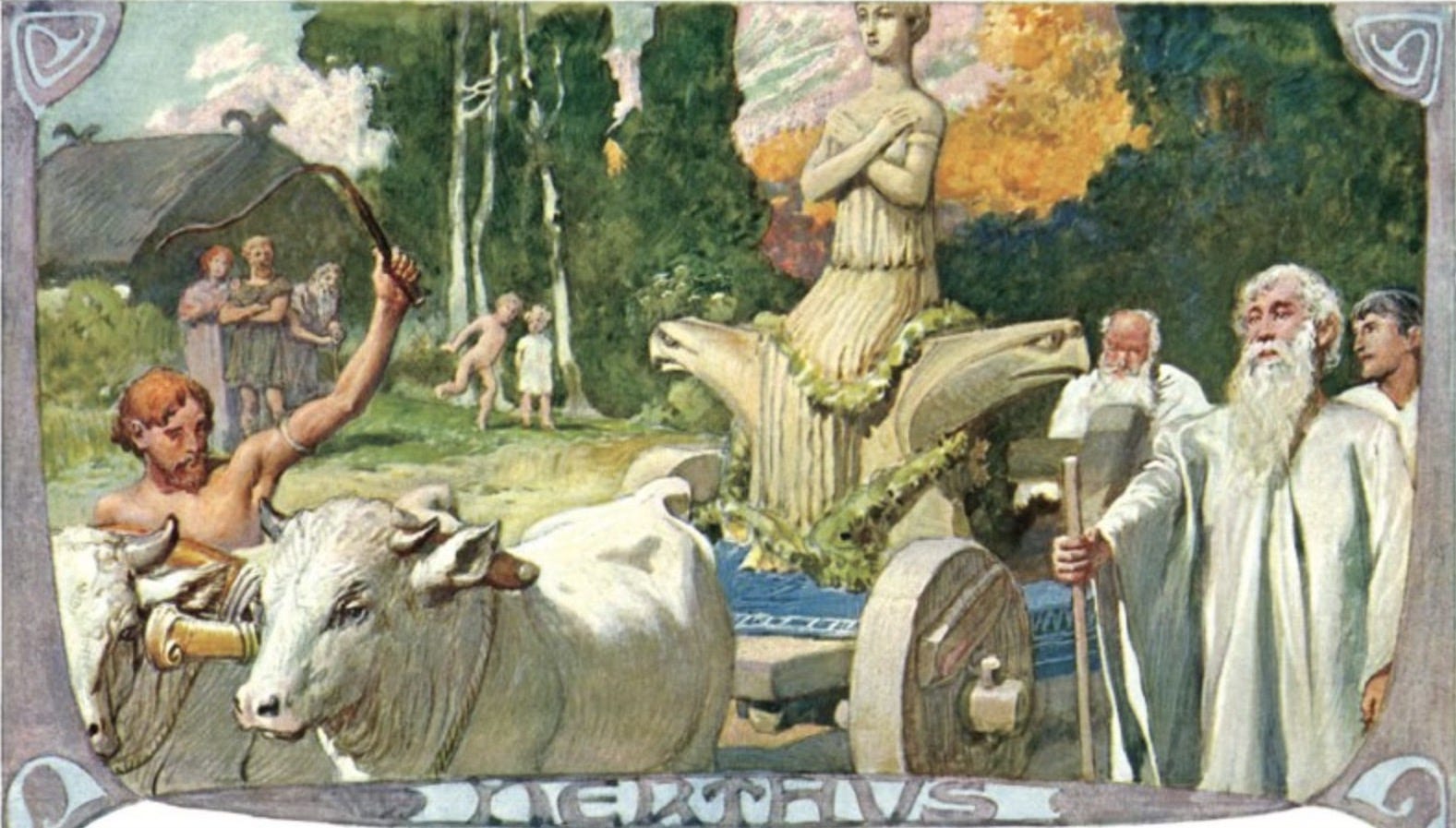
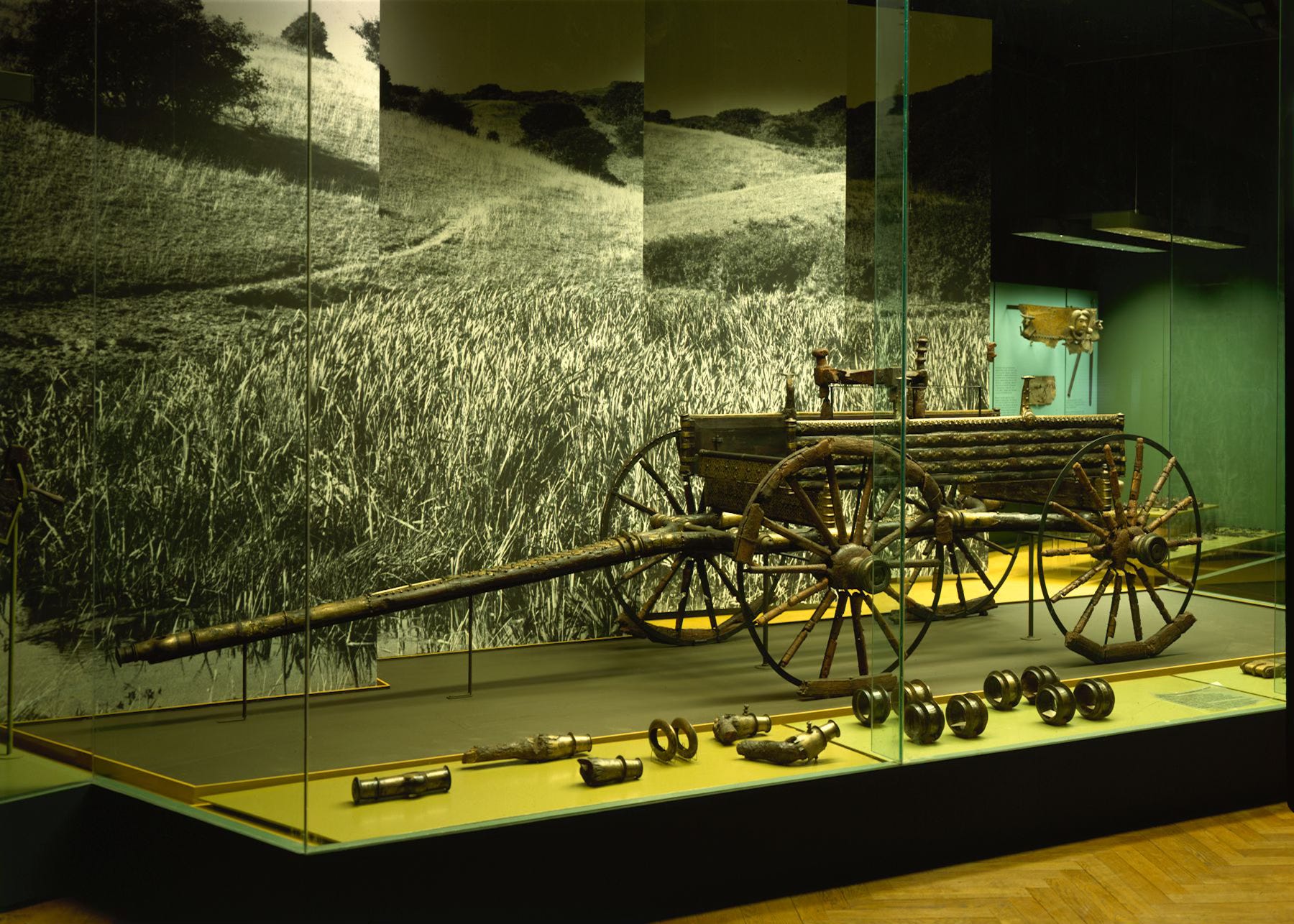
Writing at the end of the first century AD, Tacitus recounts that the Eudoses were part of a broader Germanic group called the Ingvaeones. He also includes the Angles in this group and reports that they all worshipped a goddess called Nerthus, a form of Mother Earth. Tacitus describes the cult of Nerthus as being centred on an island in the North Sea in which there was a consecrated chariot, sacred to Nerthus, that only her priest was allowed to touch. The chariot was drawn by heifers or cows and no one went to war when the goddess’s sacred chariot was brought out during religious festivals. After the return of her chariot to the island, the slaves who aided the priest were ritually drowned, keeping the cult of the goddess mysterious. If the Jutes were considered ‘favoured’ or ‘blessed ones’, their name may reflect an association with the cult of Nerthus.
Tacitus’s description of the island of Nerthus and the procession of her ritual chariot has led to all sorts of conjecture among historians of religion. Nerthus seems to be reflected in Norse mythology as Njǫrðr, a male god associated especially with the sea. It has been assumed that Nerthus somehow changed sex in later pagan belief as if a grammatical change turned Nerthus into a male divinity or Njǫrðr was originally Nerthus’s husband.
The name of the Ingvaeones has also been linked with that of the Old Norse god Ingvi, the Old English hero Ing and the Swedish kings known as the Ynglings. Ingvi is even accounted the father of Njǫrðr in a medieval Norwegian account and it is clear from Anglo-Saxon tradition that the rune for the sound ŋ was named after Ing. It seems likely that the Ingvaeones shared a common religious cult and that some sort of reflection of Nerthus worship is preserved in the later traditions surrounding Njǫrðr, Ingvi and Ing. But how their relationship may best be explained remains unclear.
The Jutes seem to have received their name in the same manner as the Eudoses – as if they were also considered favoured or blessed in some manner. But the name of the Jutes does not seem to derive directly from the form Eudoses recorded by Tacitus. The change of Eud- to Jut-, however, can be explained by two linguistic developments.
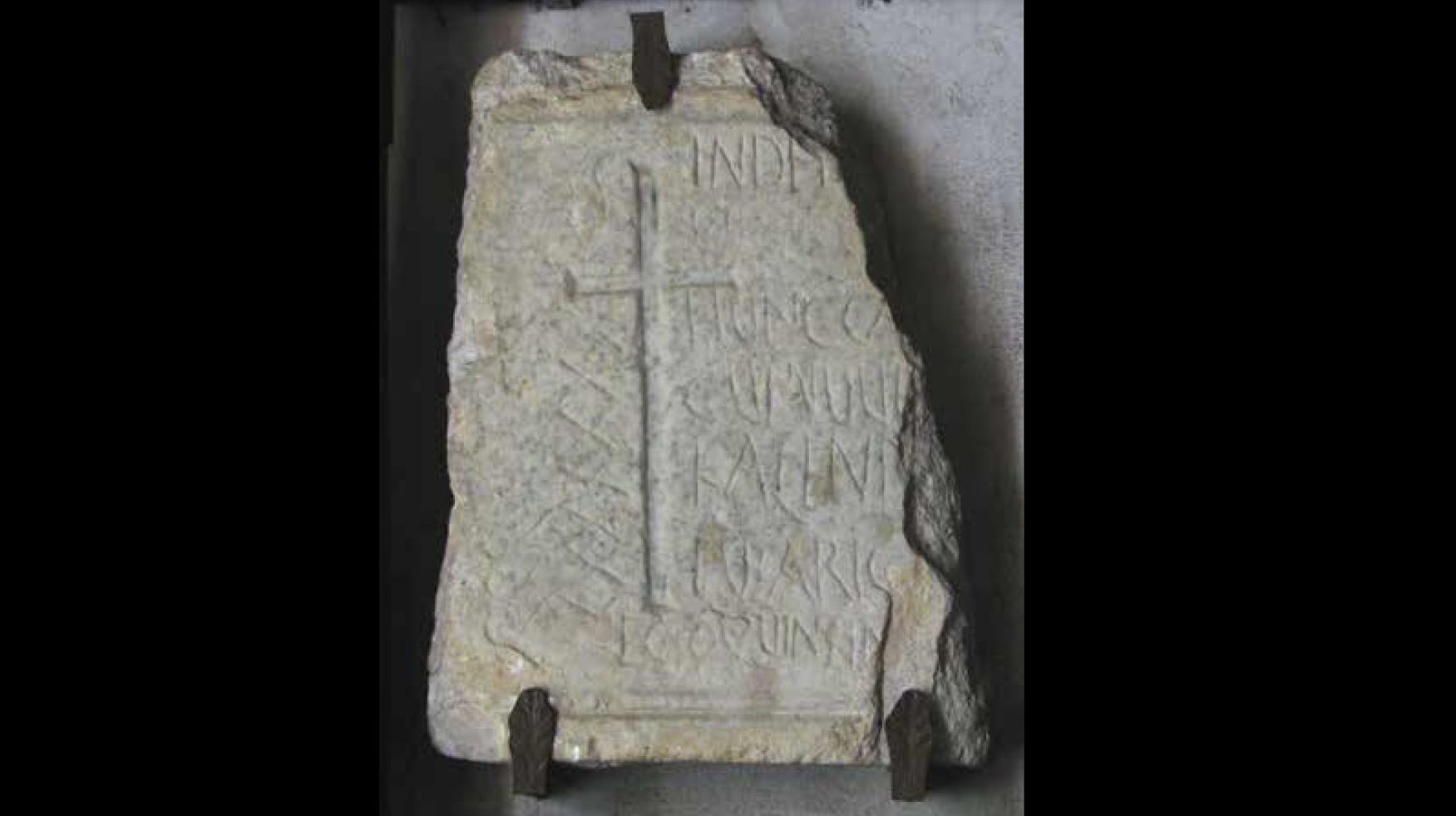
A change of eu to iu appears to have been characteristic of some early English dialects seen, for example, in the name of the Frankish bishop Leudardus whose name is recorded in that form on an early pendant from Canterbury, but who is called Liudhard by Bede (with eu changed to iu).
The other development, d to t, is less well understood. But one of the effects associated with what has been traditionally been called Kluge’s law by linguists is a strengthening or fortition of d to t. It is seen in cognates such as the root of Old English cradol ‘cradle’ and Old High German kratto ‘basket’, and a similar development may explain the relationship of jóð and Eudoses to Jute.
The name of the Jutes can be explained, then, as a derivative of a term meaning ‘favoured’ or ‘helped’ and to reflect the participation of the Jutes in a religious cult. Their name seems to be related to that of the Eudoses, worshippers of the goddess Nerthus, and it may be that the description Jute arose originally as a variant of the name of the Eudoses, an ancient tribe from the Cimbrian Peninsula that is not otherwise mentioned in historical accounts.
It seems very likely that the Jutes and the Eudoses received their names in similar manners and that both peoples were originally considered to be ‘favoured’ or ‘blessed’ in some sense. The Juthungi are likely to have received their name in a similar manner, but the only early evidence that might connect any of these tribes with blessing is Tacitus’s description of the cult of the goddess Nerthus. It is not known how long veneration of the goddess lasted – her cult may have long been forgotten by the time of the Anglo-Saxon migrations to Britain. Yet a linguistic trace of the veneration of Nerthus may be reflected in the name given to the peninsula that was originally named after the Cimbri, but that was later most strongly associated with the people who founded the early Anglo-Saxon kingdom of Kent.

The Age of Arthur is a reader-supported publication. To receive new posts and support my work, consider becoming a free or paid subscriber.
Comments
Nothing yet. Say the first thing.
Sign in to join the conversation.