
Earlier this month, I was invited by Innovate UK - the UK government’s national innovation agency, part of UK Research and Innovation - to be the guest speaker at their “Humans & AI” event, as part of the Human Futures series.
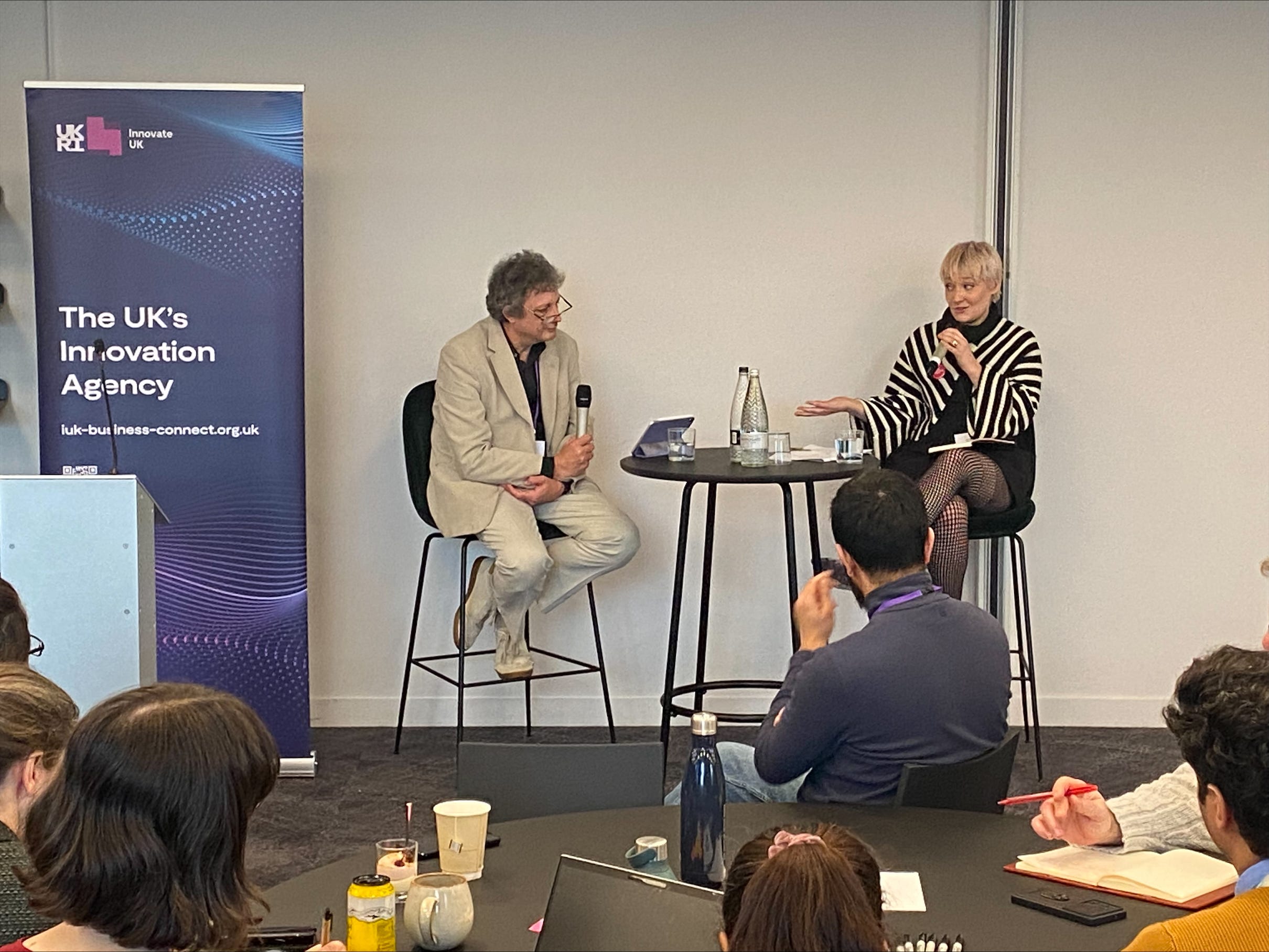
Now, I’m not a tech expert. I’m certainly not an AI expert. So you might reasonably wonder why, of all the people they could have invited, they chose me.
To be honest, at first, I wondered the same.
The invitation followed my attendance at their pilot event last spring on Humans & Longevity - which, on paper, might have seemed a more obvious fit. But the whole premise of the Human Futures series, led by futurist Jonathan Mitchener (who has a fantastic talent for stretching a room), is to think differently. To step outside the obvious. To move beyond the mainstream narrative and interrogate what sits underneath it. And to talk about “human futures” not in the context of the next quarter, but 10, 15, 20 years from now - and beyond.
So, as I sat with it, I began to think: why shouldn’t someone whose work centres on ageing and longevity help lead a conversation about AI?
Both are reshaping our societies. Both are pervasive. Both are forces we cannot opt out of. And crucially, both are deeply intertwined.
AI is omnipresent. So is ageing.
And as my work around intergenerational and age-diverse workforces has deepened over the past year, the relationship between the two has become impossible to ignore.
Yes, much of the existing conversation still centres on bias - from profoundly ageist AI recruitment tools screening out applicants based on age (or perceived age), to AI-generated content reinforcing stereotypes when used without critical thinking. We’ve written, spoken and consulted on this extensively at Ageism Is Never In Style - particularly the urgent need for age-bias literacy and age-inclusion training, so that AI becomes a collaborative tool rather than a bias amplifier.
And of course, there’s the role of AI within age-tech - a booming sector projected to be worth around $2 trillion. On an almost daily basis, I’m introduced to new AI tools, services and devices designed to support longer lives and independent living.
(Side note: I continue to find it illuminating how many of these products still use ageist language - particularly in their marketing. Many of the creators and teams themselves would benefit from ageism training, and need to realign their budgets accordingly this. Because if the execution alienates and offends the very audience it intends to serve, the technology can never reach its full potential.)
But there’s a bigger, less discussed shift happening at the intersection of AI, ageing and the future of work.
Creativity. Critical thinking. Collaboration: these three capabilities are consistently cited as the pillars of future workforce success. And interestingly, they are also the capabilities most unlocked by genuinely intergenerational teams.
As more routine and entry-level roles become automated, organisations will depend even more on experienced workers; people with judgement, contextual understanding, ethical reasoning and developed interpersonal skills. The people who can interrogate AI outputs, challenge assumptions, identify blind spots and combine technological capability with lived insight.
They are also the people who mentor, transfer knowledge and develop younger colleagues navigating an AI-shaped workplace for the first time.
And yet, most conversations about AI and age - when they happen at all - centre on fear for “older workers”.
One could argue the greater structural threat is to younger workers whose traditional entry points are being automated away.
The reality is that AI affects everyone - and our ageing populations - in myriad ways. It doesn’t diminish the need for age diversity and intergenerational workforces. It intensifies it.
This is increasingly surfacing in our consultancy and thought leadership. It became the focus of a robust discussion with the SVP of a Fortune 500 client. It sparked debate among senior leaders at a UK healthcare provider I was presenting to. Even my Pilates teacher recently shared her concern about her daughter entering the workforce in an AI-saturated economy.
And still, demographics and ageing rarely sit on the strategic agenda - and certainly aren’t given the same weight as AI.
Investment in AI is framed as “strategy”. Investment in age and demographic intelligence is framed as HR, cost, or D&I. The link between them is routinely missed.
I’ve worked with organisations where C-suites proudly announce AI transformation plans - yet treat age-diversity strategy as optional.
Intergenerational workforces are not a social initiative; they are infrastructure for creativity, innovation and collaboration - the very capabilities AI cannot replicate.
In the UK, eight in ten executives say they are prioritising investment in tech, AI and data. Yet only around one in five report meaningful revenue growth from AI in the past year. Not because AI “doesn’t work”, but because organisations aren’t structured, skilled or culturally equipped to use it well.
Technology does not operate in isolation. It sits within human systems. And those systems are ageing.
By 2050, over two billion people globally will be aged 60+. The future of AI and the future of ageing are not parallel conversations - they are converging ones.
So after a brief hesitation, I accepted the challenge.
It turned out the appetite for that conversation was far greater than any of us anticipated. The event was oversubscribed to the point that registration had to be closed early - a telling signal that people are hungry for a more human-centred lens on AI.
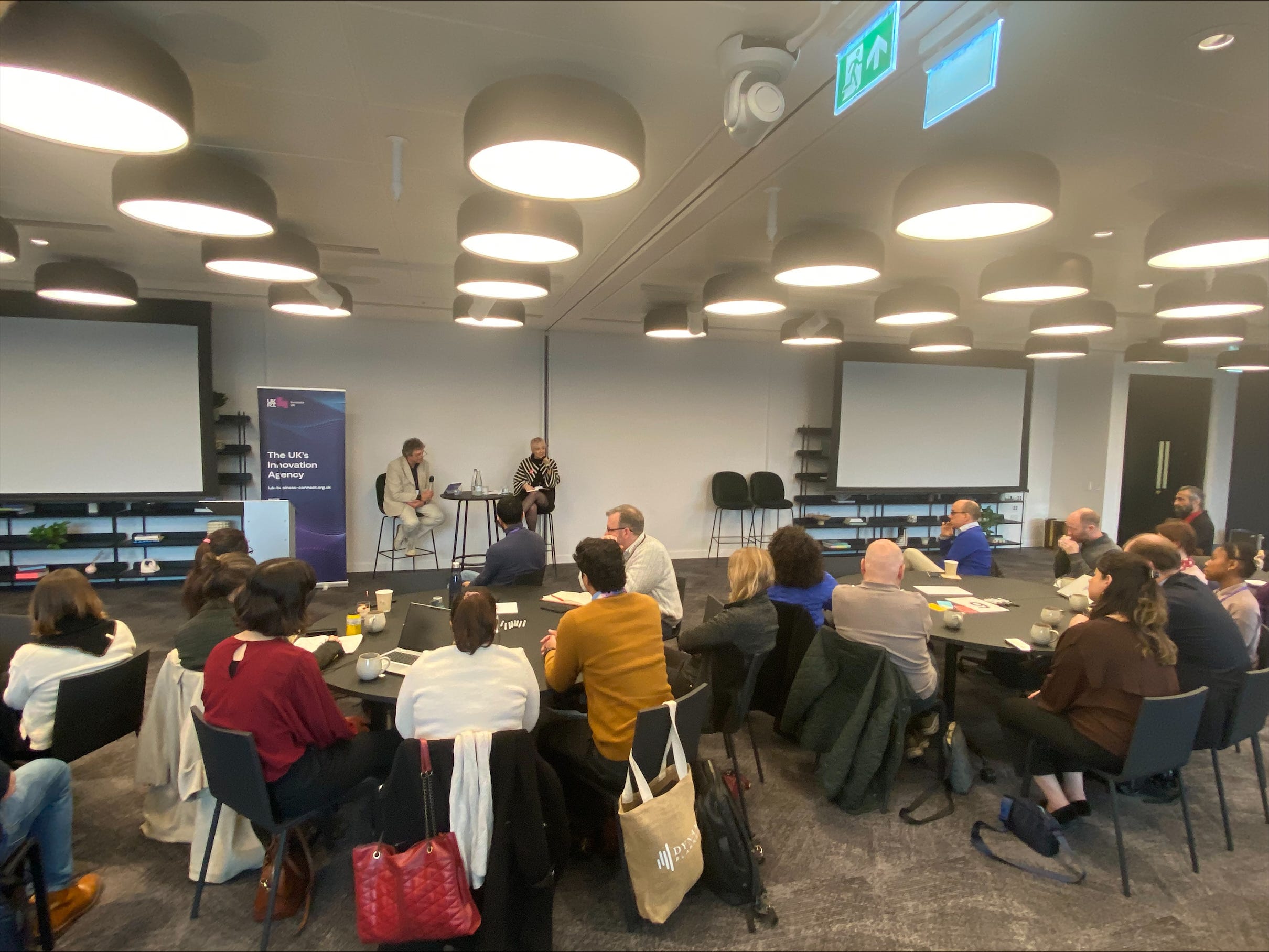
What followed was a genuinely energising afternoon. Jonathan set the scene before we moved into a one-to-one open fireside dialogue - exploring everything from the fact that AI has existed for decades but only recently become visible and accessible, to regulation and ethics, to our collective tendency to both overestimate and underestimate its capabilities.
We touched on authenticity. On the concentration of AI infrastructure. On how little most people understand about how their data is used. And yes, we even detoured into my mother’s current hobby of correcting ChatGPT on the finer historical details of Richard III.
And of course, I was committed to bringing ageing firmly into the room. It was met with real interest and engagement, and sparked much discussion in different break out sessions and during networking.
In one breakout session, I posed the question:
What if one day we could appoint our digital twin as a legal power of attorney?
It sparked fantastic discussion, debate and energy.
Later, as part of the closing exercise, groups were asked to create an “artefact” reflecting their discussions. One piece imagined a world where we routinely live beyond 100, biotech and AI manage our physical longevity - and the true scarce commodity for the wealthy becomes human expertise.
That, to me, is the point.
These conversations are not about tech versus humans. They are about what becomes more valuable as technology accelerates. And how we need to realign, re-engineer, adapt and transform accordingly.
And much of that value lies in judgement, wisdom, insights, ethics and collaboration across generations.
What I love about stepping into spaces slightly outside my lane is that they stretch me. Preparing for this event deepened my own understanding of AI - before, during and after the session. It broadened my perspective and sharpened my thinking about how ageing intersects with technological change.
Because if we are serious about shaping human futures, we cannot afford to treat AI and ageing as separate discussions.
They are already shaping each other.
p.s. Watch this space for more to come as we have a very exciting global report launching launching in partnership with a global client in Q2 which explores this in more depth…
With special thanks to Jonathan, Ryon, Anita and all the team at UK Innovate for inviting me, for being such hospitable hosts, and for a great event
Comments
Nothing yet. Say the first thing.
Sign in to join the conversation.