
Today marks 3 years since we launched our global viral campaign #ILookMyAge.
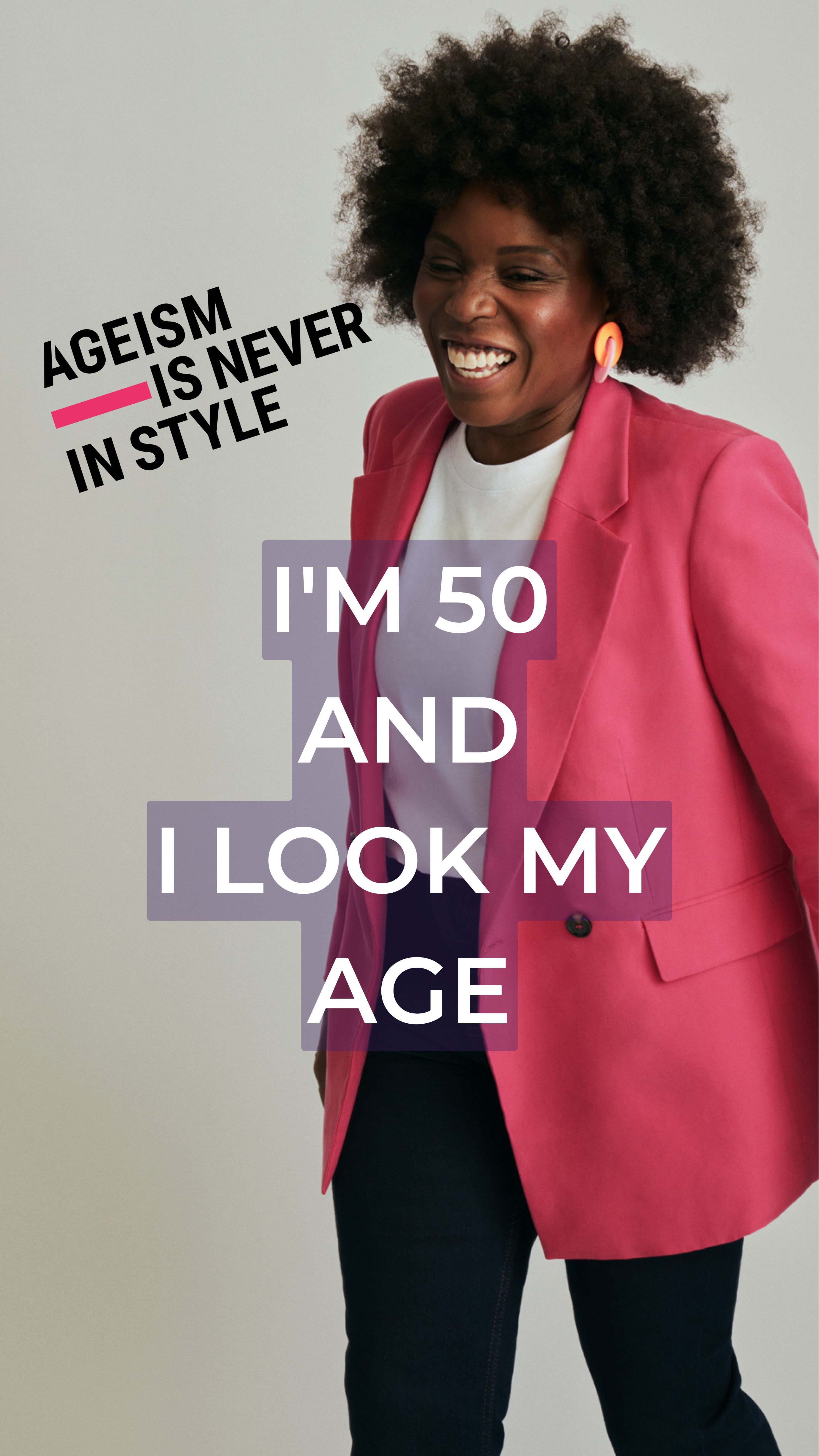
With over 45 million views, and thousands of participants globally, we know it made a difference culturally and socially, shifting the dial in the age positive movement, and further opening the stage for more empowering, open and unapologetic conversations around ageing. That is undeniable.
At its heart, #ILookMyAge was about celebrating the diversity and individually of ageing, challenging ageist and narrow perceptions of what age ‘looks like’ and what it means to ‘look good’ for your age, and the power unapologetically embracing your age.
It became a global viral phenomenon that empowered thousands to use their voices and platforms to collectively stand up against ageist stereotypes, demand to be rightfully seen and valued, and prove the importance of accurate, diverse representation. Crucially, the campaign didn’t judge, discriminate or alienate: it respected choice and welcomed everyone. And in doing so, it encouraged people to challenge their own internalised biases and assumptions about what ageing “should” look like.
The campaign also proved something incredibly important to brands and businesses: midlife and older women are not only worthy of authentic representation, they are powerful audiences with cultural influence and commercial value. It demonstrated that women over 50 can thrive - and go viral - on platforms traditionally and poorly dismissed as the domain of youth, such as Instagram and TikTok. And with so many 50+ women going viral through the campaign, many became influencers and content creators in their own right.
As a social media-led campaign, it would be easy to focus purely on its wider cultural significance, and it’s something i’ve discussed at length.
But what about its impact on business itself? On workplaces, organisations and the people within them? When I was in Brussels recently working with Toyota, Benjamin Repoux, Chair of Toyota Motor Europe’s OneGeneration ERG talked about how much #ILookMyAge inspired him, and asked me how it had specifically positively influenced the workplace. Which made me focus on its impact through another lens.
And rightfully so - because Ageism Is Never In Style has always sat at the intersection of culture and business - and the two are far more interconnected than many realise.
So #ILookMyAge’s impact was much broader than most realise. And in order to foster truly age inclusive workplaces, that deserves to be understood too. Let’s explore…
1. It changed how people engage with age at work
On the surface, #ILookMyAge appeared upbeat, playful and centred on appearance.
But its real power lay in the nuance beneath it.
The campaign challenged the deeply embedded language, assumptions and “compliments” around age that society has normalised for decades without questioning the harm they cause. Including the supposedly flattering remarks come with an age caveat attached.
These ideas about age and ageing are not harmless throwaway comments. They shape how we live, how we see ourselves, how we interact with others, and how we participate in the workplace and wider society.
#ILookMyAge’s cultural impact virality and media coverage - from Le Monde to The Washington Post - sparked internal conversations and reflections within businesses, and prompted people to reflect on their own biases - which is important when 59% of HR decision-makers admit to making age-related assumptions about candidates…
And it gave people permission to openly discuss age - something many had avoided for years, particularly in professional environments where age is often perceived as something that can be weaponised against you.
In fact, many participants told us it was the first time they had ever publicly shared their actual age and felt comfortable doing so.
And that all matters.
Because avoiding conversations about age in the workplace does not make ageism disappear. If anything, silence reinforces it.
Rather than avoiding the topic, we need more honest, grounded and respectful conversations about age - conversations that help us rethink when, where and why age is relevant at all. That way we can move beyond these deeply entrenched and limiting ideas that shape what we believe is possible for ourselves and others.
And #ILookMyAge also helped people realise that openly stating your age can, itself, be an act of disruption.
All in all, it gave people the confidence to engage with age openly. Confidence to stop treating age as a blind spot. Confidence to stop feeling they needed to transform themselves in order to remain visible or valuable. It gave people permission to simply be themselves - including at work.
That is one of the most powerful tools any workplace can have.
2. It created careers, opportunities and visibility
Many of the women who took part in the campaign started with only a handful of followers.
Then, almost overnight, they found themselves going viral, with audiences growing into the tens - and sometimes hundreds - of thousands.
That visibility opened up entirely new career paths, side hustles and opportunities that many had never imagined were available to them. Content creation, influencing, speaking opportunities, brand partnerships, consultancy work — all emerging from a campaign rooted in visibility and representation.
And there is something incredibly important about that.
Because ageism doesn’t just limit how people are perceived. It limits what people believe is still available to them. And we showed just what can be done when that is flipped on its heard, and the power of calling out and challenging ageism head on.
3. It transformed representation - including within the workplace
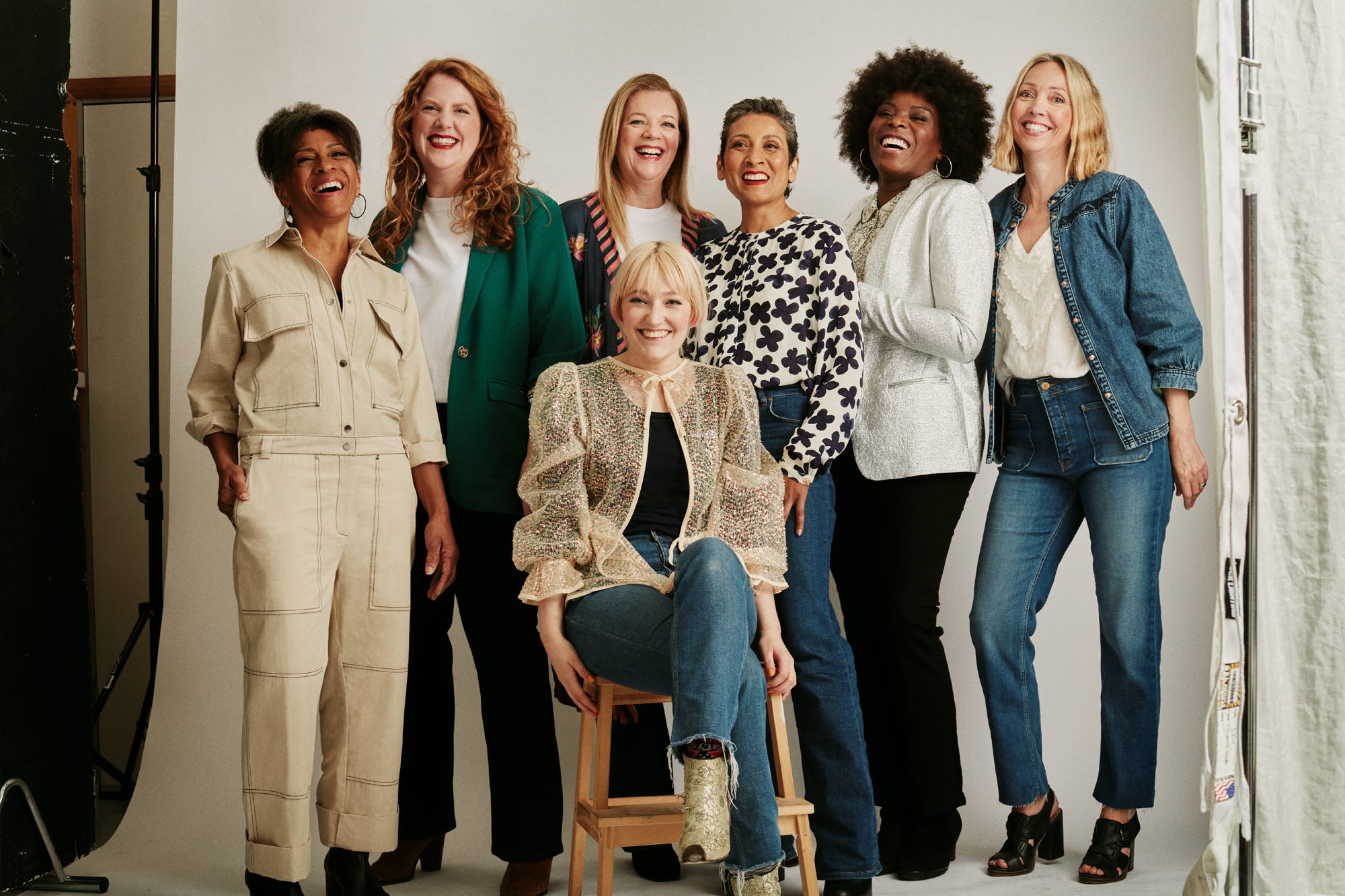
#ILookMyAge was entirely our own creation, but we initially developed it to amplify our groundbreaking free stock imagery project with the charity Centre for Ageing Better: ‘Ending the Age of Invisibility’.
To say it exceeded expectations would be an understatement.
The project created the first free library of editorial-style stock imagery featuring women in their 50s and 60s - imagery that simply did not exist at the time in any authentic or meaningful way.
The aim was to improve how women over 50 - and ageing more broadly - are represented across media and marketing. Research we conducted as part of the project found that 88% of people felt women over 50 were represented poorly in media, whilst 55% of women said these portrayals negatively affected how they felt about ageing themselves.
The images have since gone on to achieve over 7 millions views and downloads, becoming some of the most recognisable visuals used to depict modern women in midlife. In reality, you have almost certainly seen them somewhere, even if you didn’t realise it.
And whilst we often discuss the external media impact of the imagery in culture and media, its influence within workplaces has been equally significant.
I have seen these images used in countless workplace reports, presentations and internal communications to better represent multigenerational workforces and communicate research around demographic change, ageing, longevity and inclusion.
For example, one of our images is the cover of The Future.Laboratory’s Gen X: Now and Next report and, as Fiona Harkin, former Director of Foresight at The Future.Laboratory put it
“The struggle for appropriate, relevant imagery is REAL 🙏🏻🙏🏻”.
And I remember being genuinely stunned when my husband messaged me to say the FTSE 250 company he works for had used the imagery in its internal annual report - completely independently, with no involvement from him whatsoever.
That matters.
Because representation shapes culture internally as much as externally.
Our upcoming report with Kantar (due to be published in mid October) reinforces just how important age-inclusive representation is in employer branding and workplace culture. People want - and need - to see themselves reflected, especially as we are working longer and we need to tap into ageing populations and workforces to support demographic shifts and alleviate the challenges they present.
Looking back at the project itself, I still marvel at how we made it happen. We had the tiniest of budgets, and I led and produced the entire project from start to finish - from drafting the initial survey, to hosting an open casting call and casting, to the mood boarding, to photoshoot itself (and we launched #ILookMyAge itself independently from Centre For Ageing Better).
We were an all-female intergenerational creative team from Ageism Is Never In Style, with the creatives through AINIS taking reduced fees. And from the very start, as soon we received the budget, I personally decided to work entirely pro bono to ensure everyone else involved (including the team, crew and models) could be remunerated.
I remain incredibly grateful to the team for believing in the project so wholeheartedly:
Creative Director & Producer - myself
Photographer - Jenna Smith
Hair & Make Up - Anna Gibson
Styling - Claire Ginzler
Social Media & Community Lead - Aimee Wilkinson
Branding- Kim Molloy
If you do use any of the images, please use the full attribution: photographed by Jenna Smith for Ageism Is Never In Style x Centre for Ageing Better.
We are so proud of the legacy the project has created. It has shown what is possible - and how much more there still is to represent.
4. It forced brands to think differently
It is no secret that some major brands appeared to be heavily “inspired” by our work in the months following #ILookMyAge.
At the time, it was undeniably frustrating to witness campaigns emerge carrying striking similarities to both #ILookMyAge and our wider #StrikeOutAgeism work.
And yet, despite how disappointing aspects of that experience were, I remain proud of the impact.
Because the reality is that #ILookMyAge created a ripple effect across an industry long considered one of the greatest perpetuators of ageism.
Major global brands began launching campaigns centred around age representation. Conversations that would have felt inconceivable even 10 or 15 years ago suddenly became mainstream.
Of course, there are still contradictions. There is still performative behaviour. There is still a very long way to go.
But these campaigns existing at all signals something important: conversations inside organisations are changing too.
Attitudes internally are shifting. Behaviours are shifting. Expectations are shifting.
And that matters just as much as the external marketing output.
5. It changed the trajectory of Ageism Is Never In Style - and my own life
Three years on, Ageism Is Never In Style is working in ways I could never have imagined back then - increasingly helping companies, firms, and organisations drive change from within.
And none of that would have happened without #ILookMyAge.
Pre #ILookMyAge I had already been invited to do keynotes, present on panels, consulted for the likes of L’Oreal Groupe, research projects, give media expert interviews, write articles etc etc all on age and generational inclusion. Not to mention we’d actually successfully launched multiple groundbreaking campaigns (many think #ILookMyAge was our first, but it was preceded by TheySay, WeSay in 2022 which had 3.2+ million views). But this was all supplementary to my fashion retail business The Bias Cut - the first age inclusive online fashion womenswear boutique - and Ageism Is Never In Style was originally its sister community platform.
But in the months leading up to the campaign, I was professionally exhausted. The Bias Cut was struggling under the impact of Brexit, rising costs and global instability, and I was questioning what was realistically achievable.
#ILookMyAge changed all of that.
It reignited me. It gave me clarity again. It made me realise the scale of Ageism Is Never In Style’s impact. It allowed me refocus, to pivot, and realise the potential of what had been there all along.
So I uncoupled Ageism Is Never In Style from The Bias Cut at the start of 2024, and brought all our strategic consultancy, community and campaign and comms work under one roof, and centred my focus on that instead.
That has since led us to work with Fortune 500 companies, global firms and major organisations to help drive change in business and strategy, culturally and structurally.
Ultimately, #ILookMyAge gave people confidence, as much as it also gave me confidence too. To know I’m on the right track. To keep going. And to remain true to my mission. So what we’ve achieved to date since, and we will continue to achieve, would not have been possible without it.
10 years ago a business man said my business would be a hockey-stick.
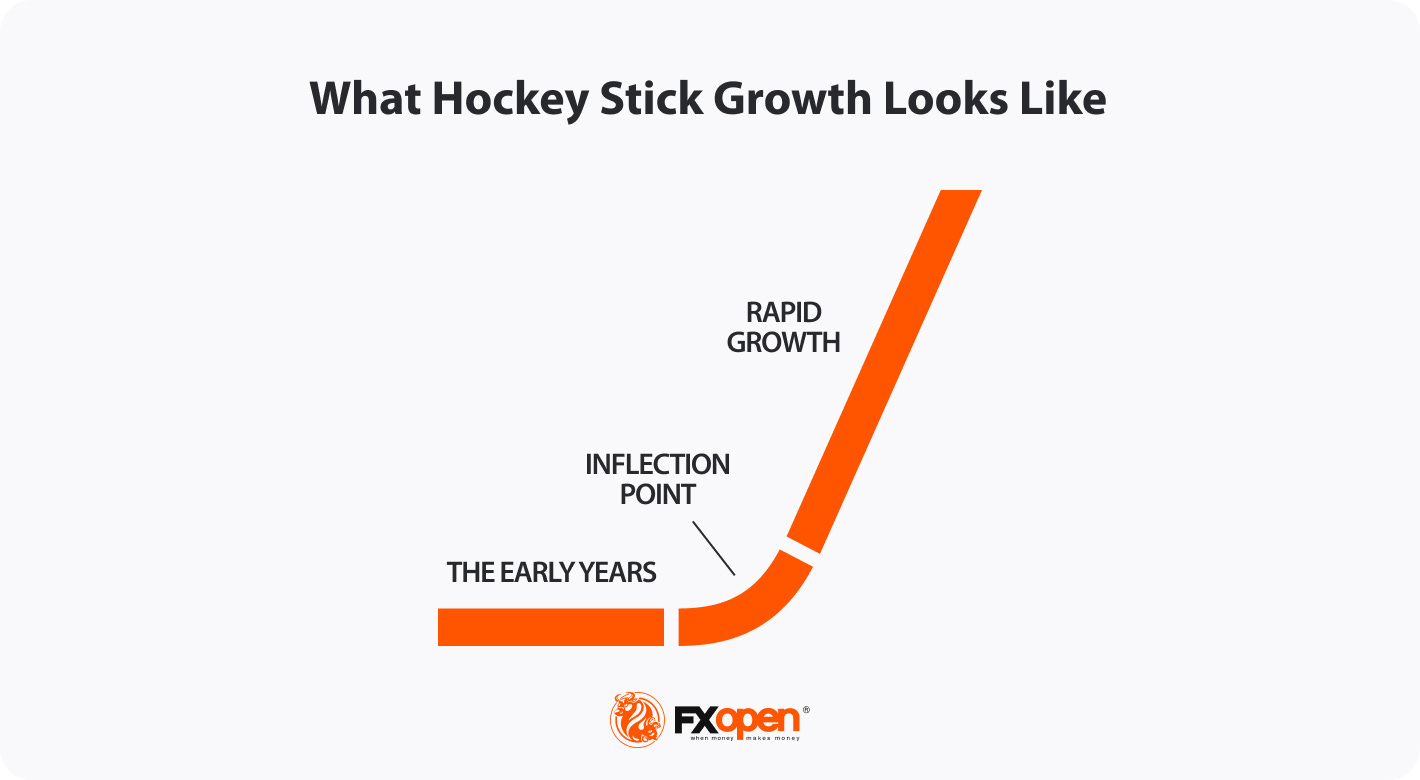
And 10 years on, he was right. And #ILookMyAge was the inflection point.
Comments
Nothing yet. Say the first thing.
Sign in to join the conversation.