
Culture is one of the biggest drivers - and reflectors - of ageist beliefs. Some argue workplace, policy or structural reform is more urgent. But they're not mutually exclusive.
Culture shapes everything - from how talent is attracted, nurtured, and retained, to how businesses are led, to board and C-suite strategy, to how brands connect with their audiences - and everything feeds back into culture.
So if we want to change hearts and minds around age in business and the workplace, we have to put a lens on culture.
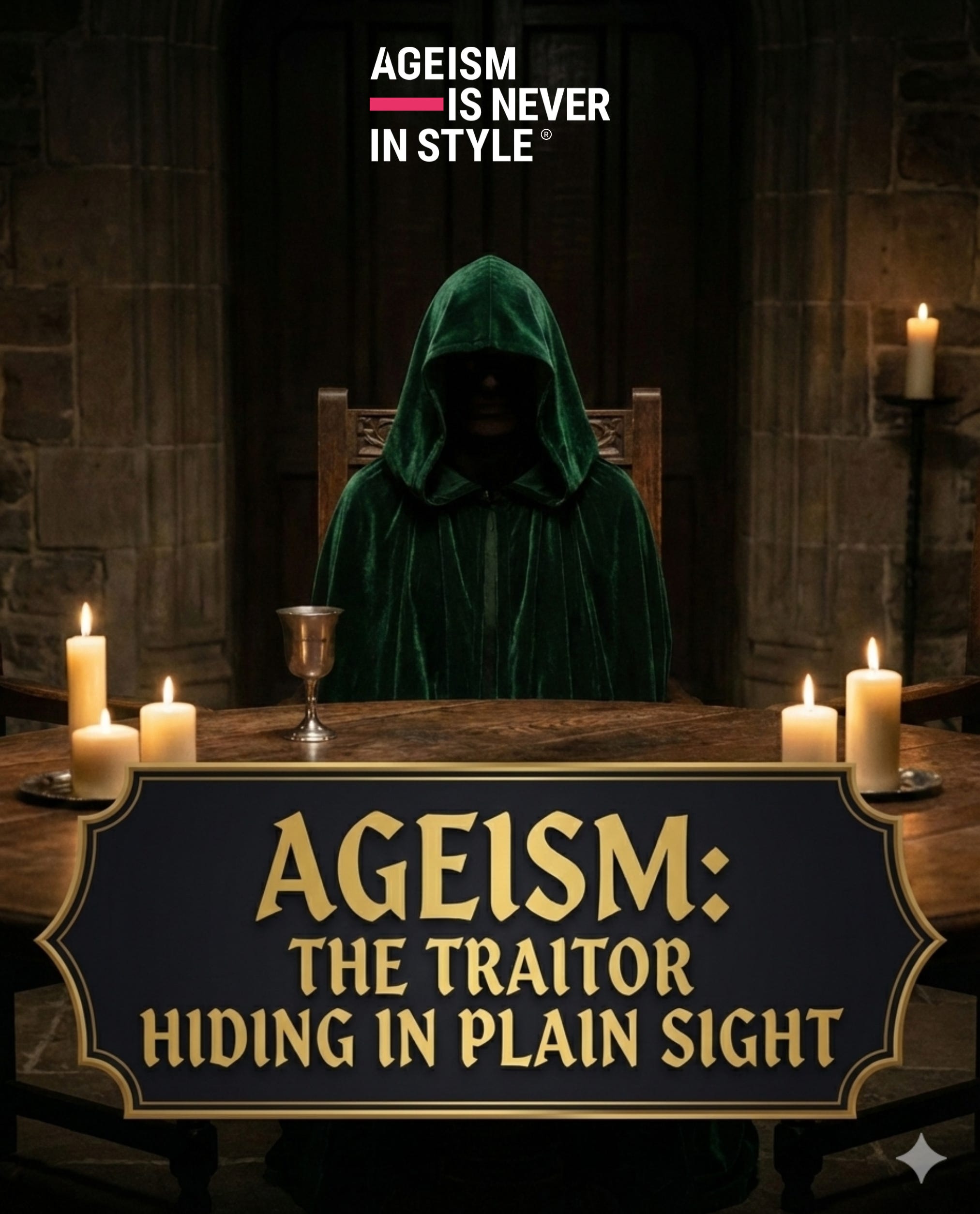
Take The Traitors.
Critics have discussed how contestants distrust those who are ethnic minorities, exposing racial bias.
But there’s also another, quieter, almost permissible bias hiding in plain sight: ageism.
Who gets “murdered” first? Often, the older players. Because they’re viewed as trustworthy so won't come under suspect, making them a threat to the Traitors.
And then came last night’s big reveal: the Secret Traitor is Fiona, 62. Cue shock! Because, of course, “sweet, older Fiona” could never be the traitor, right?!
It might seem kind, but it's benevolent ageism; Fiona was labelled, underestimated, overlooked.
My gut told me it was Fiona, or Harriet. Both formidable 50+ women. And yet, part of me was disappointed to be right. The producers presumably chose Fiona for maximum shock and, for many, delivered.
But it exposes the reality of 2026: unconscious age bias is everywhere. We still overlook or excuse it far too often. Yes, there’s overt, loud bias but also humour, benevolence, microaggressions, and internalised ageism.
And it is still largely unaddressed. Only those with vision and foresight are putting age diversity on their agenda.
Last year, I delivered a presentation to senior leaders on ageism. When I asked if age had ever been considered, even alongside other biases, they admitted it had not.
This is far too common - and far too risky.
Age assumptions shapes both talent and market strategy. It affects L&D. Culture & Belonging. And ageism brings legal and reputational risk (UK payouts rose 624% in 2023–24), and undermines the competitive advantage that age inclusion delivers: innovation, productivity, stronger business outcomes.
By 2023, nearly 50% of the workforce will be over 50. And we have up to 5 generations working side by side.
Yet the strategic advantage of generational diversity is betrayed by age bias - and the many ways it manifests for all ages (yes, younger people experience it too).
So addressing ageism cannot be optional. It is a strategic necessity, requiring a holistic approach that combines strategy, talent, market intelligence, and cultural influence.
Only then will we foster true age inclusion and turn it into a genuine competitive advantage.
Comments
Nothing yet. Say the first thing.
Sign in to join the conversation.