
Hello my lovely Solarpunks~ Greetings from SF :)
Enjoy this beautiful poetic AI-free song from Paul Simon.
I’ve been living alone in San Francisco this month, settling into a routine.
I wake up and do my morning yoga, make my morning matcha, and hop into meetings. Some days, I take a midday break at the nearby bouldering gym. I do more deep work in the afternoon, then journal in a park, read, take walks, or bike around.
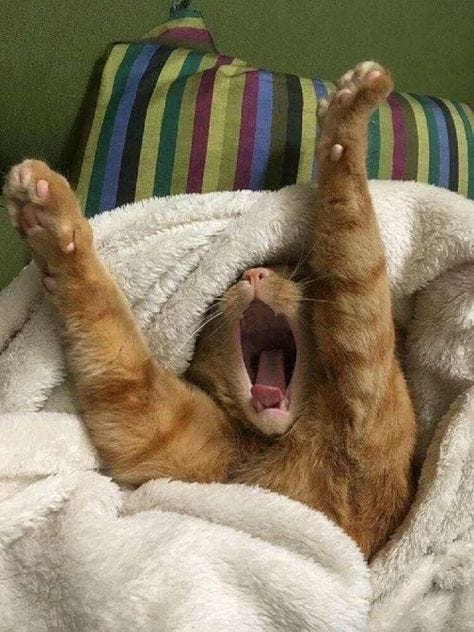
Sometimes I take a bath. Sometimes I watch Star Trek from 1987. Sometimes I play with my friends’ lovely cat.
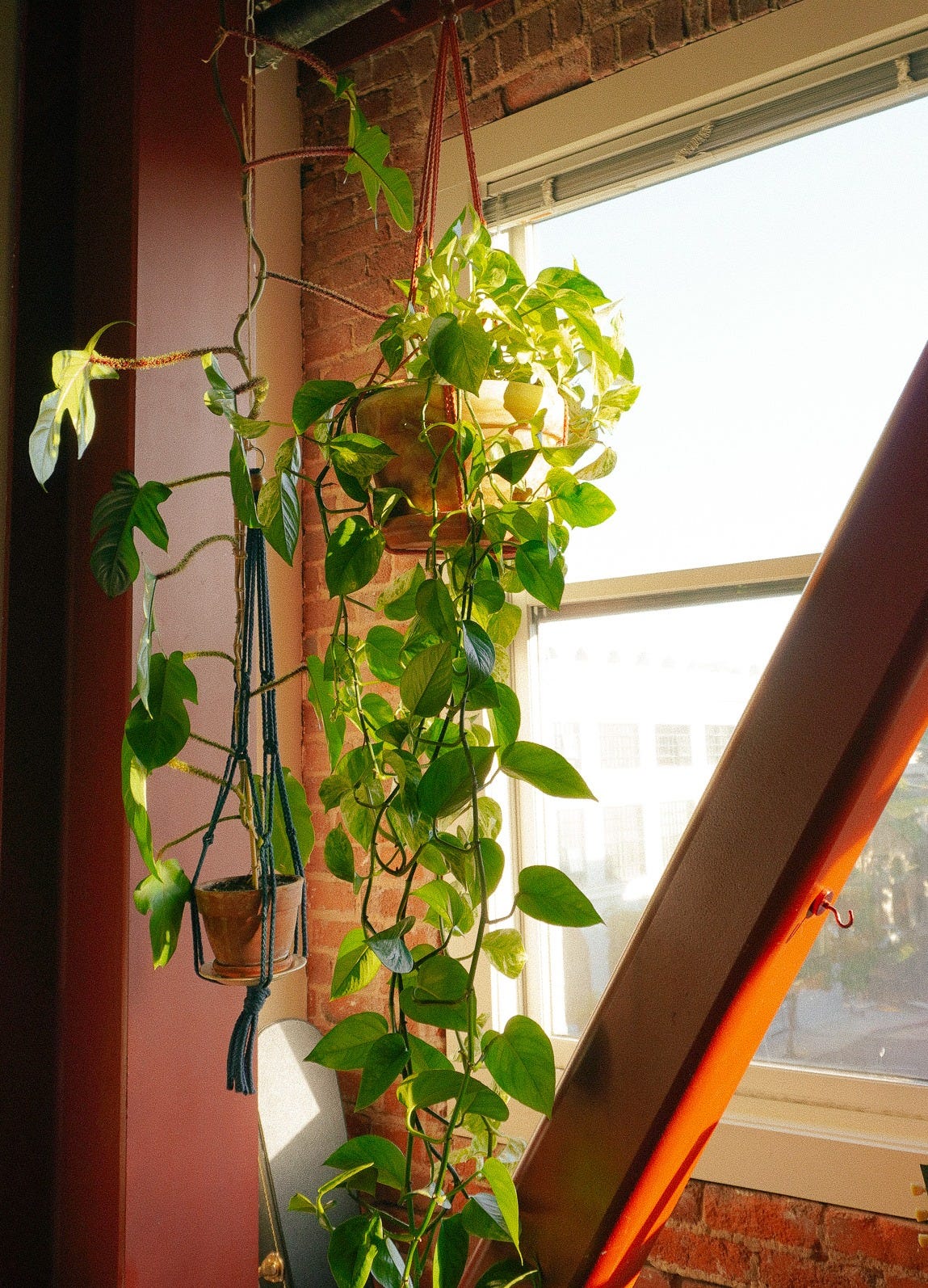
I’ve said no to almost all the big parties, events, and adventures. I catch up with two or three close friends each week, usually over deep, one-on-one conversations. Some days I go a whole day without talking to anyone.
The first few days were uncomfortable. I found myself restless and bored. But after going over those humps, I discovered a surprising amount of beauty in the depths of boredom.
I started asking myself: am I building communities out of genuine love for connections, or am I escaping from the fear of solitude?
How can you tell the difference?
People leave cities because life there can feel extractive: noise, pollution, financial pressure, screen-bound work, stressful social lives, and careers that no longer feel meaningful.
People leave villages because they want opportunity, infrastructure, cultural stimulation, or a place in the wider conversation.
Wherever you live, there will be reasons it isn’t perfect. There are, of course, material differences between inconvenience and danger. Escaping a conflict zone, persecution, or poverty is not the same thing as getting tired of your boring neighborhood.
But for people whose basic needs are met, the differentiation becomes harder.
Maybe dissatisfaction gives us the energy to change our lives. But if we can only love a place before we arrive, while it is still imaginary, what happens when the dream becomes your new routine? When your vision becomes spreadsheets, to-do lists, and customer complaints?
The first time I ‘escaped’, I moved to California, I thought the beaches would solve all my problems. It didn’t. I was in my early twenties and I was unhappy, lost, but also thrilled to explore the world. Moving to a new place allowed me to explore, but didn’t change the fact that I was unhappy, and lost.
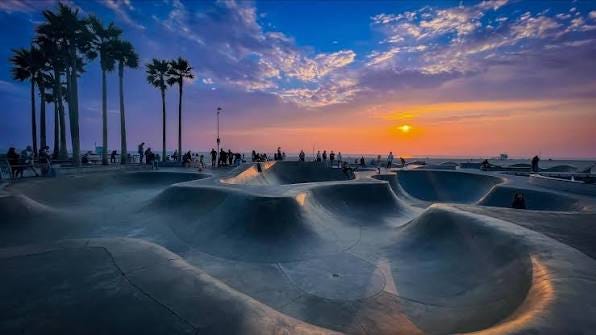
The pink sunsets made me happy at first, until they became normal. Then I needed another destination, another meaning, another life goal.
You can build your Solarpunk Utopia, create a hundred-million-dollar company, save hundreds of wildlife species, or find your perfect princess. But if you’re doing it because you can’t bear the present, to run away from ‘the void’, it’ll only come back in another mask.
What is ‘the void’? It can be a mixture of things: fear of boredom, routine, inability to find meaning in the mundane, addiction to novelty, excitement, endless dopamine hits, the hedonic treadmill… We all know our own shadows best.
It’s easy to recognize certain unhealthy obsessions in forms of addictions, but when that obsession is healthy, beautiful, altruistic and noble, does that mean it’s ok to run away?
James Clear writes about a trap hidden inside goal-setting:
When we assume happiness will begin after we reach a goal, we keep postponing it until the next milestone. The destination moves every time we arrive.
This doesn’t mean goals are bad. It means they can’t and they shouldn’t bear the full weight of meaning, and they shouldn’t be the barrier between us and fulfillment.
Mindfulness has been one of the best ways I’ve found to dance with ‘the void’.
Vipassana offers a deceptively simple practice: observe what is happening without immediately reacting to it.
In his Waking Up meditation app, Sam Harris describes the difference between being lost inside a thought and observing it from outside. The practice isn’t to suppress the void or escape it, but to face reality as it is. Equanimity is not indifference—it lets us remain involved without losing our balance.
The void is still here. I’m just learning to stare it in the face.
Nomadism is expansive, it lets you taste the best of all places. You can wake up next to tropical ocean, or cozy up in the ski resort in the mountains, you can be in the hustling of cities, or enjoying a tranquil evening on a regenerative farm. People who experienced this expansiveness have a hard time settling down, because there’s no place that can be all the places.
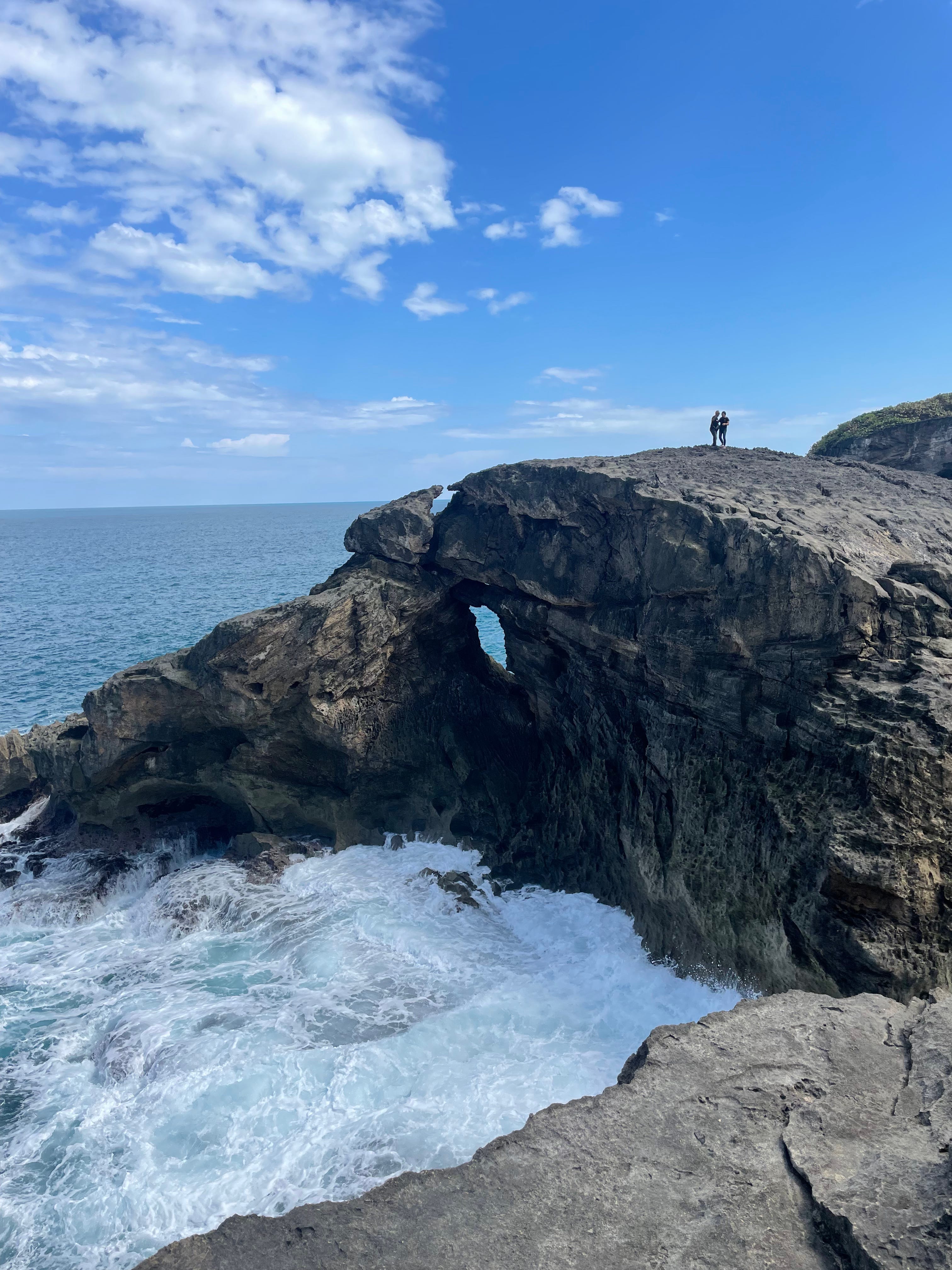
Similar to love, committing to a city is not so different from committing to a person.
I’ve been yearning, craving to grow roots somewhere. I recognized that growing roots in one place means leaving other places. You have to actually mean it, say no to epic trips, residencies, living experiments, and the fantasy of waking up in a different country every month.
It’s the same when you commit to a person: you opt out of all other options and possibilities.
Commitment means gaining something, but commitment is also the deliberate death of other possible lives. Love may be abundant, but attention isn’t. You can go for width, or you can go for depth.
A beautiful life can be filled with both at different times, but you can’t live every possible life at once.
Turning something from an idea into a reality can make it seem smaller.
The imagination has no limits.
The physical world does.
— Rick Rubin, The Creative Act
A relationship is smaller than the fantasy of perfect love. A real home is smaller than the imagined place that contains every climate, culture, friend, landscape, and possibility. A company, a book, a family, a friendship... all of these dreams boil down to daily administrative tasks when you turn them into reality.
Sometimes they are wonderful, sometimes awful, then they are wonderful again, then awful again.
In between the peaks and valleys is the mundane, unglamorous maintenance of keeping everything alive.
Wisdom doesn’t belong only in remote mountains. Living an ordinary day with presence, wonder, and genuine joy may be one of the rarest forms of wisdom in our time.
The grass is greener where you water it.

There is an extreme version of “being present” that becomes an excuse never to change anything.
There is another extreme that treats the present as so broken and unbearable that the only imaginable response is escape—flights, rockets, drugs, endless travel, ideologies, fantasies of a perfectly designed society, even spiritual transcendence.
The Kybalion, a modern New Thought text drawing on Hermetic ideas, describes a principle of polarity: opposites may be identical in nature but different in degree:
All truths are but half-truths.
In the Tao Te Ching, opposites aren’t enemies: being and non-being create each other; difficulty and ease complete each other.
Buddhism offers another framing: the Middle Way. It isn’t a timid compromise or the mathematical midpoint between two extremes. It is a path that avoids becoming trapped by either one.
Maybe presence and progress work the same way. We don’t have to reject society to change it. We don’t have to stop dreaming in order to love what is already here. I’m striving to be present enough to receive the life already here, while remaining courageous enough to create what does not yet exist.
The universe is about 13.8 billion years old. Earth formed roughly 4.6 billion years ago. Against that scale, recorded human civilization is pretty much a ‘bleep’. (Stats from NASA Science)
Each of our lives is an only a tiny pixel of that ‘bleep’—a microscopic, almost invisible ‘bloop’. But that little bloop can mean the whole universe to us.
We never received an instruction manual for being human. We’ve spent history experimenting, failing, repairing, forgetting, and trying again. We still have a long way to go.
But shouldn’t we celebrate how far we’ve come? And why should we stop here?
We build new homes, communities, companies, art, technology, empires, and civilizations, because the present is not good enough. That reasoning doesn’t have to be escapism, it can also be love! And I LOVE building Agartha.
It helps to ask ourselves:
Am I creating because I feel alive—or because I’m terrified of stopping?
Am I moving toward wonder—or away from the void?
Can I pursue the dream without making the present my enemy?
Is my life devoid of meaning without the pursuit of my dream?
Most of us are doing both, in changing proportions, all the time, and that’s ok! These questions don’t produce a clean diagnosis. The goal isn’t to purge all escapist mentality all at once in pursuit of perfection or purity.
The practice is simply to notice, in order to choose consciously. So we get to decide how we want to spend this brief ‘bleep’ of a life.
To be alive is a miracle. — Thich Nhat Hanh
Cheers to miracles, to staring at the void, and to the beautiful, daunting ordinariness of our day-to-day lives.
✨ Thanks for reading! Agartha is a Solarpunk Builder Network on a mission to accelerate Planetary Regeneration. 💕 Join us as we chronicle our journey through residencies, co-living places, pop-up cities, regenerative villages, and Solarpunk lifestyles. ☀️
Comments
Nothing yet. Say the first thing.
Sign in to join the conversation.