
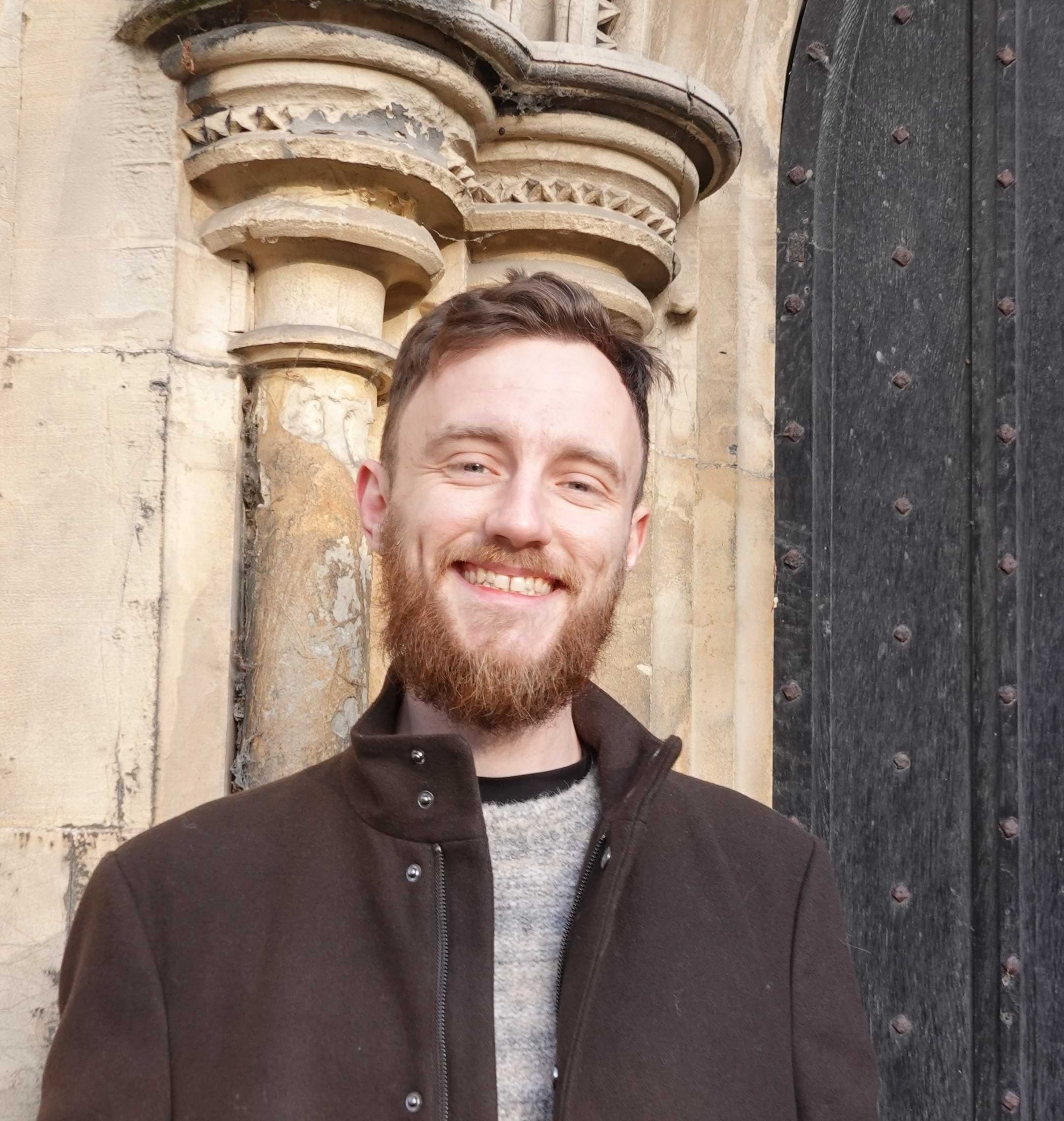
I’m proud to announce I’m starting a PhD in philosophy, an unwavering and lifelong dream since I was fifteen. In this essay I’m going to mostly reminisce, because I’m just so stoked and grateful—I do not apologize for any accompanying navel-gazing. But perhaps you’ll be encouraged or satisfy your curiosity as to how one becomes a PhD in philosophy—perhaps you’re a family member who saw this on Facebook and wanted to see how that nerdy little kid is getting along. Welcome all.

It’s difficult to pinpoint the origin of my loony desire to “be a philosopher when I grow up.” Studying Plato and Christian apologetics and getting involved in Lincoln-Douglas debate certainly played their roles. But my inner disposition toward wonder, rigor, and creative thinking began as a child. My mom tells lore of my deep contemplation of mac-n-cheese boxes before I could form sentences.
In high school, I was decently good at debate, but my systematic thinking sometimes got in the way of the necessary extemporaneous element. My best placement was tenth in the national tournament—not bad! I thought about law but decided against it (realistically, too much paper work, not enough taking the stand.)
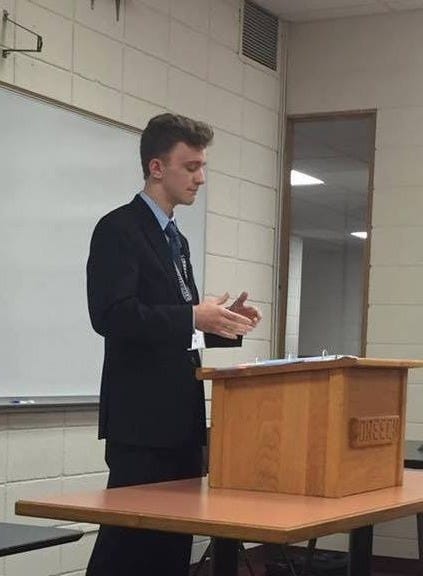
In any case, I enjoyed public speaking, teaching, and debating, but it was writing that really captured my heart. A high school teacher named Dana Bertino inspired me to think critically about history, philosophy, and theology and do so through the means of a wonderful thing called an essay (picture a halo around that word.) And we were mostly homeschooled apart from a day or two a week of classes (hard to explain)—so we wrote those essays by hand baby!
A funny story. I took an English comp exam to skip intro in college—and failed. I didn’t take it seriously, and my handwriting was atrocious. Also, I knew one of the examiners was getting up there, like mid-eighties, not to make excuses. Anyway. Did I mention I’m a professional ghostwriter and editor? On my retake, I passed, but I note that God always finds ways to keep you humble.

Among the handful of colleges in Texas I considered, I chose Dallas Baptist University. What drew me was the small class sizes and the Christian camaraderie (I heard horror stories about A&M’s 1,000-student weed-out courses). I pursued a double major in biblical studies and philosophy. While sophomores in college agonized about their degrees, I gloried in my tiny philosophy lectures.
I had two professors at DBU, Yin and Yang.
One was a well-manicured, immaculately dressed analytic thinker who became a friend, Dr. Jared Brandt. He was an unapologetic Thomist and a Baptist LARPer—later “converted” to a high-church denomination after he was unceremoniously let go. (That’s a tale for another time.) Jared was gracious, ennobling, and rigorous.
On the other hand, Yang, the perpetually bed-headed, riding cap-wearing, long goatee-flouting, Red Bull-chugging motorcyclist who happened to be an adjunct philosophy professor—something like a living incarnation of Zen and the Art of Motorcycle Maintenance. His name is Professor Tod Kappleman, a neo-Platonist phenomenologist. He somehow received three master’s degrees from Dallas University without receiving a PhD (a story he never told). He, too, was certainly a Baptist LARPer. Todd was stimulating, raucous, occasionally offensive, and extremely inspiring.
These two men were like the “two wolves inside every guy.” I try to strike a balance between their energies. In any event, I loved my time at DBU. I hung out with the open-minded folks on the fringe of the quite conservative Christian institution, the artists, creatives, and internationals, and I kept my sanity. I even got semi-close to the president through all my leadership activities.
After graduating, I faced a crossroads. I tried to get into a couple of PhDs, but nothing doing. DBU, for all its glory, could barely claim to offer a philosophy degree. And it was a teaching school, so the activity of academic philosophy simply did not go on. The professors were not publishing or paid to read up on journals. There were no graduate students of philosophy (and barely any graduate students at all). No shame on DBU and no regrets. However, I needed greener grass for my mind to chill in.
I sought counsel on next steps from several professors. And, as Prof. Todd put it, a European degree is sexy. So, I applied to study overseas and got into the University of Edinburgh. In Edinburgh, I was like Alice in Wonderland. I’d read many papers and several books on the philosophy of mind in between my undergrad and master’s (2+ years of a normal job), but at the UoE, I learned to speak and write the language of modern analytic philosophy.
I enjoyed chatting philosophy with my master’s supervisor, Dr. Berislav Marušić—who goes by Beri. He writes analytic, existential philosophy; he’s an excellent scholar and a funny, whimsical guy. He said to us once, “Philosophy is a spectrum. On one end, a paper can be probably correct but uninteresting. On the other, a paper can be interesting, but probably incorrect.”
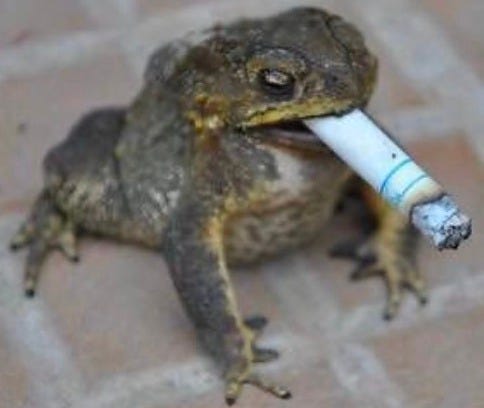
I acquired how-to knowledge, absorbed tons of interesting ideas, and gained countless friends gaining my M.Sc (master’s of science). One is Kobe, now a PhD student at Pompeu Fabra University in Spain. He occasionally posts essays on Substack and often writes full-length essays in my comment section. All you need to know about him is that his profile picture is that of a frog smoking a cigarette. Another is Hongyu Chen, now a PhD student at Toronto. He would write on Substack, but he has approximately negative spare time. I knew others who, although excellent philosophers, moved on to non-philosophy fields, and God bless them for their wise decision to part from the madness of academic philosophy. In any case, I proudly graduated first-first in November of 2024. The next year, I published a paper in an academic journal based on an essay I wrote for Dr. Jo E. Wolff.
Throughout this journey, Shannon, my wife, has been supportive in every regard. She keeps me grounded, doesn’t let me take anything too seriously, makes sure I get my nose out of the books, and forces me to relax. She is, in other words, an essential component of my sanity—heck, she’s even a mental health therapist! Shannon delights in cooking and food, painting and traveling, decorating and video games. She’s the perfect partner in my life, and I am to her, for other reasons.

We loved Edinburgh and stuck around while I worked and considered PhD options. My first-first master’s degree at one of the world’s oldest and best universities notwithstanding, there were several other limiting factors.
PhDs in the US and Canada take forever (5-7 years), the stipend is tiny, and you’re overworked. The additional coursework would just double up on the master’s I already completed. This path is possible, but not necessarily desirable when you might want to start a family.
PhDs in the UK are short and pay fair wages (3 years), but there’s a problem. A recent flurry of budget cuts means public research grants are mind-bogglingly competitive. (One public university in the UK told me they only had one funded PhD for the entire humanities school.) We weren’t sure we wanted to stick around in the UK for another 3+ years anyway.
Seems bleak, right?
I’m tenacious. I want the degree and believe God has called me to it. I would severely regret not getting a PhD, regardless of my career outcomes.
So, Shannon and I carved a path that works for us: I applied for self-funded, part-time UK PhDs that can be moved online if we want to move back to the states. I would work full-time and would make as much or more than a stipend anyway. (Obligatory note: This strategy also works because we come from well-off families, there’s no denying privilege plays a role here. For that, we are constantly grateful.)
In the UK, PhDs are merely writing and researching. No coursework and, typically, no teaching either. Therefore, to even apply, you need to work out a research proposal.
I considered studying panpsychism but thought better of it. Instead, I continued my master’s thesis to explore feelings of wonder, awe, and similar experiences. Specifically, I’m interested in those feelings that do not have obvious targets or objects. In other words, sometimes wonder arises in the face of a mountain. There’s the object: a mountain. Sometimes, in spiritual experiences, there is no clear target or object of experience. Instead, it’s like the feeling is a shift in how you see the world as a whole. These experiences, call them “existential self-transcendent experiences” or maybe experiences of value, are the subject of my PhD proposal.
I was accepted to several PhDs, but boiled them down to two options: the University of Glasgow and the University of York.
York’s supervisor was much more niche to my interests and a highly successful academic, but we didn’t click particularly well. And I didn’t want to take the train down every time I visited.
Glasgow’s supervisor, Dr. David Bain, was less in my niche but an extremely easy guy to get along with and another excellent academic.
Both could be moved online. Both were the same cost.
I went with… drumroll… Glasgow!
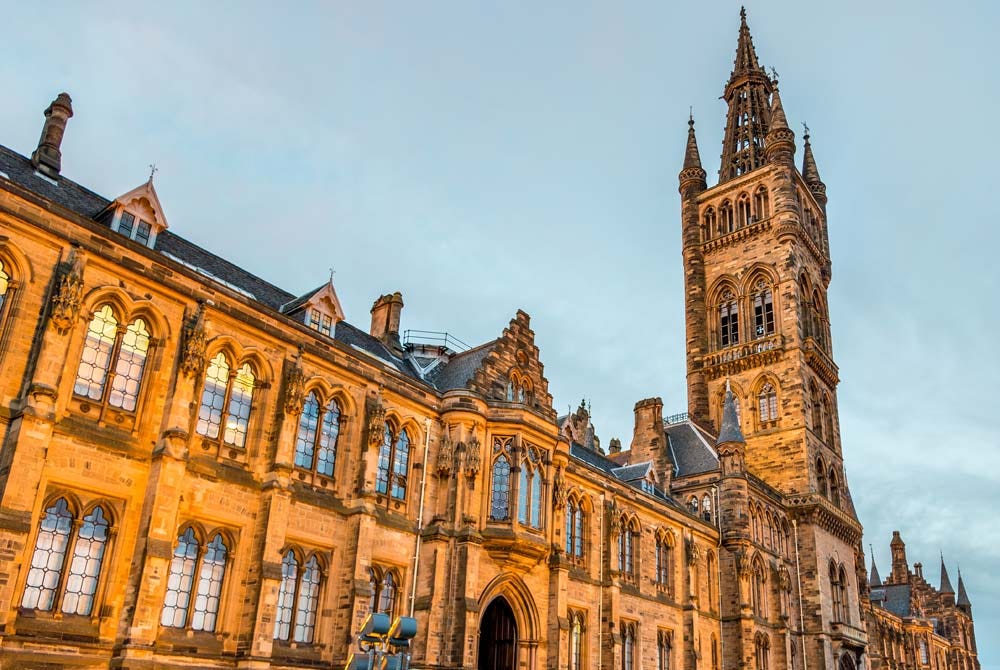
Here’s a little secret. I’ve been in the program for about 2 months, depending on who you ask—it’s complicated. Anyway, given this new and joyful endeavor, I will write more on my Substack about my PhD to kill two birds with one stone. I’m a firm believer that you can claim to understand something only when you can explain it in simple (ish) terms.
My first chapter in my dissertation will probably be about the relevant philosophical theories of emotion, which will act as a groundwork for the rest of my thesis. So, anticipate essays on the philosophy of emotion up next.
I already have one in the pipeline about the theory that emotions are like thoughts and aren’t actually feelings at all.
I hope to keep everything on my Substack free, except for voice-overs, but if you want do become a paid subscriber, you’ll be investing in my PhD research since I’m paying out of pocket. You can also check out my ghostwriting and editing services. Either way, thanks for going on this crazy ride with me.
Soli Deo Gloria
If you liked this essay, here’s another one:
Are Electrons Conscious? An Introduction to Pansychism
·
Jan 11
In Edinburgh, Scotland, cobbled stairs and alleys sink into the ground between bookshops, pubs, castles, and bridges. You may find yourself down below on Friday night, dodging vomit, beer bottles, and EDM in Cowgate, or up top, on a lush hill with an eerily half-finished monument resembling the…
No posts
Comments
Nothing yet. Say the first thing.
Sign in to join the conversation.