

(NOTE: A voice recording is available for paid subscribers. I also use Amazon affiliate links.)
“Be imitators of me, as I am of Christ.” Paul wrote this to a group of churches in the cosmopolitan city of Corinth (modern-day Greece) two thousand years ago. In context, he’s encouraging them to subordinate religious disagreements and cultural practices under the good news—like Paul and like Jesus. Paul repeats this idea of imitating him insofar as he imitates Christ in Philippians 3:17.
In short, Christians should follow in the footsteps of other Christians as they walk in Christ’s footsteps. I don’t think it’s a stretch to apply this text to ways of thinking or in an intellectual sense. After all, Paul says elsewhere, “Have this mind among yourselves, which is yours in Christ Jesus…” and “we have the mind of Christ.” (Philippians 2:5; 1 Corinthians 2:16)
Jesus’ mind is exceptional in human history. His teachings are filled with compassion, irony, knowledge of the scriptures, profound philosophical analysis, exegetical interpretation, creative and imaginative storytelling, and grounded metaphors.
As an exercise, then, I’m going to outline a few Christian thinkers who I think imitate Christ’s mind well—and I want to imitate them, insofar as they do. This is also descriptive, not merely prescriptive. This is a list of folks who have informed and transformed my thinking; I actively follow them as they imitate Christ’s intellect.
These are roughly, kind of, sort of in order of influence (as of 2026).
1. Dr. Tim Mackie (and Jon Collins!)
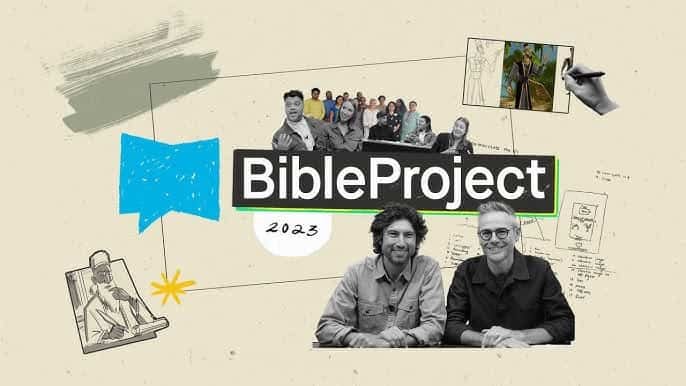
These are the guys behind Bible Project. They are down-to-earth, insightful, and winsome. They have single-handedly shown me a way of linking my love of great literature and its analysis to the Bible. As a ritual, I listen to their podcast every week.
Mackie does some incredible work of exegesis—especially on the Old Testament. Their understanding of scriptural “hyperlinks” and wordplay unlocked for me a new world of grounded, orthodox, yet analogous reading of scripture. They are rescuing untold swaths of fundamentalists from their misguided view of biblical interpretation. At the same time, they have an incredibly high view of scripture as the Word of God. I cannot recommend them enough. Their videos are spectacular; I love their podcast most.
2. Dr. Tim Keller (1950-2023)
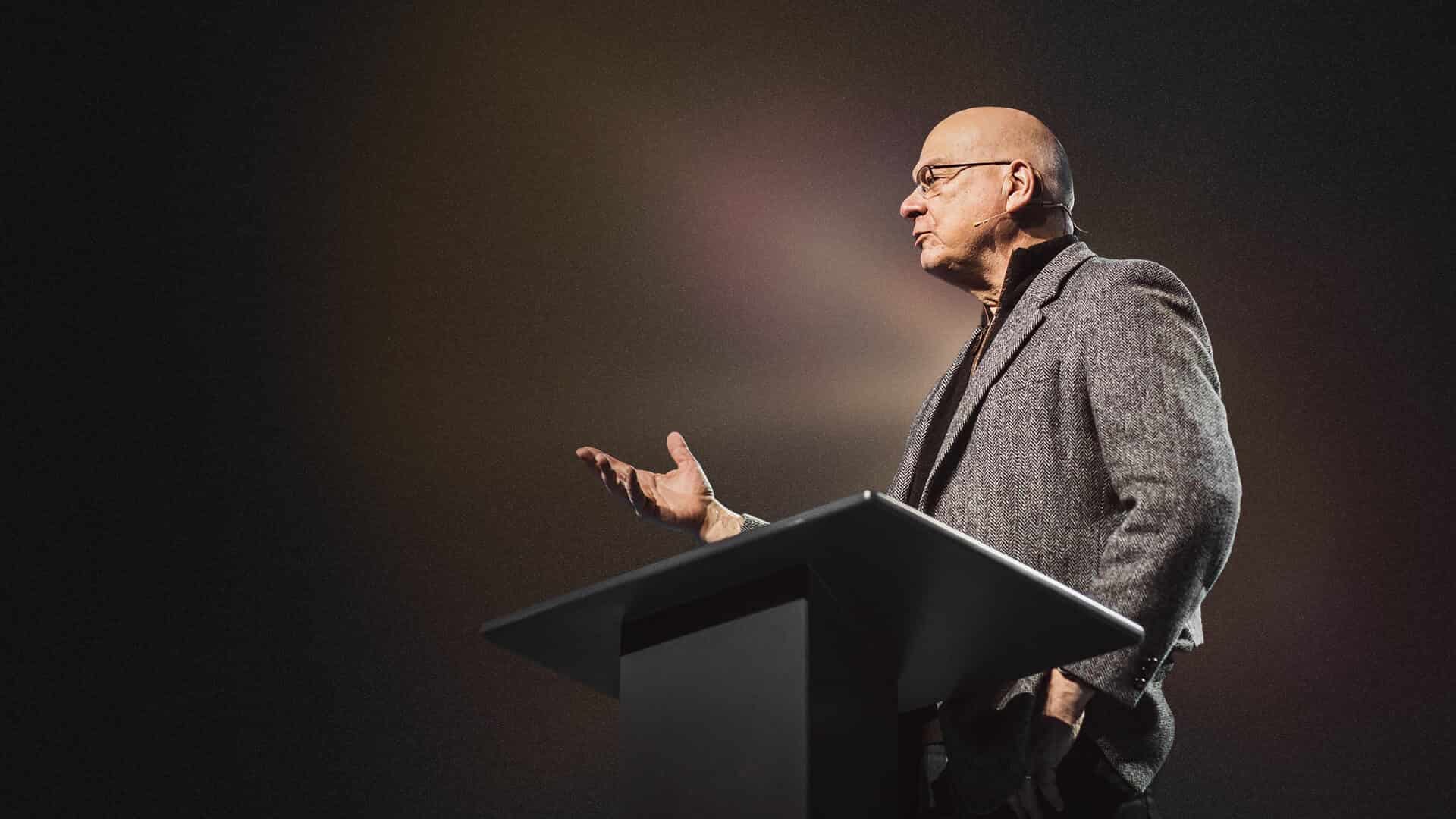
Keller’s time pastoring a small-town congregation for nine years prepared his soul to start the (eventual) 5,000-member congregation of Redeemer Church in NYC. He was exceptionally well-read and educated and spoke to a myriad of issues in a wonderfully sharp way.
Keller’s humble yet clever voice and “middle-church” approach inspire my way of talking (or writing) about my faith in public sphere. He could speak skillfully and empathetically to skeptics. He was, in many ways, the C.S. Lewis of our times. He received glowing obituaries in places like The New York Times, The Atlantic, The New Yorker, and other left-leaning, secular publications, despite his conservative theological views. The Reason for God and The Meaning of Marriage are two bangers. He also started The Gospel Coalition—a great source for reformed thought.
3. Dr. N.T. Wright
Wright is the Anglican bishop of Durham and probably the leading N.T. scholar alive today, in particular, for his work on Paul. Wright’s podcast series and books have helped transform my view of New Creation and resurrection. In particular, Wright’s emphasis on heaven “not being a place in the sky where you go when you die” but instead, as a transformative re-creation of earth, where our resurrected bodies, like Christ, take on an elevated nature in Christ, has been transformative.
Wright is also exceptionally pastoral. His humble heart and gentle, but precise, exegesis of scripture inform his pastoral advice. This is a small but cool detail: his confidence in biblical interpretation matches his confidence in the pastoral advice he gives. Of course one must read his magnum opus, Paul: A Biography. I also deeply enjoyed his “Ask N.T. Wright” podcast series. Again, much like Keller, another C.S. Lewis of our time.
4. Chad Gardner (King’s Kaleidoscope)

Gardner inspires me to think creatively, purely, and sincerely. His lyrics (often collaborating with Brian Eichelberger and Zach Bolen from the band Citizens) are a surefire way to move me to tears. Their continual wrestling with burnout, deconstruction, apathy, and joy in simple faith inspires my own mind in Christ. Their thinking constantly helps me rediscover my childlike faith.
Contemporary language and phraseology crash into ancient hymn-like worship (they have rock renditions of many hymns). One of my favorite records is “Naked Feet and Holy Fire” (just the title alone goes hard).
Bridge to the outro:
Feel the rush of burning light, (There you are, there you are) // Naked feet and holy fire (There you are, there you are) // Pieces of my mess unwind // (There you are, there you are) // Heaven hold me in the vine (There you are, there you are) // Bending colors in my eyes (There you are, there you are) // Tears of glory mending time
They’re fantastic musically, but I also want to imitate their Christ-like thinking.
Subscribe for holy fire and naked feet. If you’re able, please consider being a paid subscriber to support my PhD work!
5. Dr. Preston Sprinkle

Sprinkle has written an impressive corpus of accessible biblical theology. So far, he’s written primarily about sex and sexuality, but his scope, I’m sure, will continue to expand. His treatment of the theology of the body and transgenderism was excellent in Embodied. His compassionate, but scholarly, treatment of homosexuality in Does the Bible Support Same-Sex Marriage is highly commendable as well. Embarrassingly, I’ll admit I thought Erasing Hell was only written by Francis Chan (another great writer), but behold, Sprinkle co-authored it—and it massively influenced my thoughts on Hell.
His most recent work, From Genesis to Junia: An Honest Search for What the Bible Really Says About Women in Leadership, is shaping up to be exceptional as I dig in. Conservatives dislike this work because it arrives at a largely egalitarian position; progressives don’t like this work because… he’s a man? Anyway. As usual, so far, the work is an excellent mixture of readability and academic nerdiness.
6. Dr. Alvin Plantinga
Plantinga’s work as a philosopher is highly praised and recognized apart from his faith. His creative argument, the evolutionary argument against naturalism, is the kind of rigorous, imaginative philosophy I want to do with my life. His deft attacks on naturalism won him the Templeton Prize. His career is well aligned with my own academic aims. He has many, many thousands of citations. He essentially “single-handedly” garnered respect for Christianity in academic philosophy in the ‘70s and ‘80s.
7. Joshua S. Porter

Josh was a Christian punk rock artist leading the band called Showbread. In the past decade or so, he’s released several works of fiction and engages with evangelicalism in incisive ways. His book, Death to Deconstruction, is a fantastic example of non-philosophical apologetics. In it, he addresses the racism of his upbringing, becoming a pacifist, disillusionment with Christian nationalism, the poverty of evangelical art, and more.
He ends the book in a “radical” position: creedal, orthodox Christianity is the most punk-rock, hardcore belief system out there. We need more folks who style themselves as Flannery O’Connor-spirited—wrestling with the darkest realities of life.
8. Dr. Dane C. Ortlund
It’s difficult to get through to a pastor’s kid like myself—especially if you don’t have the benefit of going deeper via novel academic arguments or copious scholarly references. But in Deeper and Gentle and Lowly, I can genuinely say I met Jesus in a fresh way. I became awed by Christ’s weakness and triumph in the gospel in a way that inspired my soul to new relational dimensions. Ortlund’s heart and writing are unmatched in their invitational, gentle demeanor.
9. Dr. William Lane Craig

I almost didn’t include Craig. His approach is almost too rational or even… predictable? But in truth, he has been, and continues to be, a massive influence on my thinking and approach to the Bible and philosophy—and how they integrate. My calling and thinking have never truly been in line with the apologist’s approach, but Craig is not only the best apologist of our time, he’s also a brilliant scholarly philosophy/theologian combo (two PhDs).
In particular, his ideas about the “mytho-history” interpretation of Genesis 1-10 seem correct and exceptionally helpful. His accessible apologetics work, On Guard, helped inspire me in high school to get into philosophy.
10. Jackie Hill-Perry

Hill-Perry exploded into the Reformed world with her book Gay Girl, Good God, but after sharing her testimony in a beautiful, profound, and personal manner, she continues to write excellent biblical devotionals and biblical theology, like Holier Than Thou. She’s a theologian in her own right, and she happens to be an inspired poet and hip-hop artist.
11. Dr. Christopher Watkin
I haven’t fully waded through the tome of Biblical Critical Theory, but Watkin’s style of thinking that integrates academic, French, critical theory into the through lines of the Bible is astounding. It’s what I’ve been looking for all my life. He’s a leading academic scholar of critical theory at a secular institution in Australia, and, surprise! He’s a Christian. Dr. Watkin is someone I aspire to read and learn more from.
12. Griffin Gooch (Reality Theology)
This Substacker, theologian, and PhD student at Aberdeen has started to take a seat as a truly transformative writer after Jesus’ mind. He hasn’t yet published a book, but he’s already publishing in journals—and I’ll be first in line to get whatever bestseller he inevitably writes about Christianity, psychology, and happiness.
Since he’s so fresh on the scene, maybe I’ll put a disclaimer here: his place on the list is revoked if he goes off the deep end (whichever deep end that might be).
Honorable Mentions
Dr. Carl Trueman (pastor, historian, The Rise and Triumph of the Modern Self)
Makoto Fujimura (artist, writer, Art + Faith)
Dr. Rosaria Champagne Butterfield (writer, scholar, The Gospel Comes with a Housekey)
Justin Earley (writer, Everyman, The Body Shapes the Soul)
Mark Sayers (pastor, A Non-Anxious Presence)
John Mark Comer (mega-famous, former pastor, writer, Practicing the Way)
Dr. Michael Heiser (scholar, The Unseen Realm).
A Glaring Gap
As you’ve probably noticed, only one woman appears in my primary list—and only one in my honorable mentions. I’d like to change that. While I take much more inspiration and insight from female philosophers, my influence as a Christian thinker is primarily transformed by men. I don’t have any lofty ideas of closing the gender gap in my thinking, let’s say, but I know I’m majorly missing out. Someone send me recommendations! Please!
What’s shared by Chad, Tom, Craig, Jackie, etc.?
All these thinkers deeply, deeply care about the Bible. Superficially, they also all address and dismantle fundamentalism while maintaining a broadly orthodox (and mostly “evangelical,” though there are exceptions) perspective. Most find themselves loosely in the Reformed tradition—but all are markedly ecumenical as well.
I want to imitate these thinkers in their meek, gospel, Christ-centered thought processes; in their rhetoric, writing, and unique voices, they are all winsome, persuasive, and downright excellent in all their public-facing projects. They refuse to straw-man. They’re grounded but educated, insightful but creative, readable but scholarly, serious but not about themselves, and above all, their influence stems from humility and clarity.
These thinkers never back down from molten hot cultural questions, existential pondering, or the deeply dark realities of human life (violence, racism, sexual abuse, internal torment, doubts, depression, pharisaicalism, nihilism, existentialism); they charge straight in with love and reason, wisdom and irony, argument and storytelling.
Just like Jesus.
I want to imitate them as they imitate Christ.
Who do you follow who follows the mind and thinking of Christ?
Thanks for reading.
Soli Deo Gloria
If you liked this, consider checking out my other essays, like “The Demonology, Ontology, and Christology of K-Pop Demon Hunters” or “A Review of John Mark Comer’s “Practicing the Way.”
Comments
Nothing yet. Say the first thing.
Sign in to join the conversation.