
Part 2 of 3
Professor Milda Alisauskiene is a leading Lithuanian sociologist of religion at Vytautas Magnus University in Kaunas. Growing up during the Soviet era, she witnessed Lithuania’s national and religious awakening firsthand. She completed her undergraduate studies in 1994 and earned her master’s (1999–2002) at Vilnius University and PhD in sociology at VMU, where she now explores the interplay between religion, national identity, and human rights. Her 2023 monograph analyzes post-independence religious pluralism and the Catholic Church’s role in religion and state relations. Milda’s research sheds light on minority faiths, secular movements, and the ongoing negotiation of religious freedom in a modern EU democracy.
In this interview, Scott Douglas Jacobsen and Professor Milda Alisauskiene examine Lithuania’s minority religions, secular movements, and the social legacies of Soviet religious policy. They discuss Orthodox Christians, Old Believers, Baptists, Pentecostals, Jehovah’s Witnesses, and anti-religious propaganda that stigmatized smaller faith communities. The conversation also explores the emergence of humanist, skeptic, and atheist organizations, generational differences in openly identifying as nonreligious, and gendered pressures surrounding faith, cultural continuity, family tradition, and public dissent in Lithuania.
Scott Douglas Jacobsen: Do the younger generations who do that get chastised, or has the overall society changed around them too? Can they say this without facing backlash?
Milda Alisauskiene: I think there is still backlash from the Roman Catholic Church. However, society in general appears to be becoming more liberal with each generation. That does not necessarily mean people are more accepting or positive, but they are more neutral.
Jacobsen: Now, one step back—one big step back. One giant leap. Lithuania was once the Lithuanian Kingdom. Essentially, you had Lithuania in the center, and then from the West came the influence or invasion from Poland, bringing Catholicism; then from the East came the influence or invasion from Russia, bringing Orthodoxy, and so on. And so was the most recent sort of invasion at that point the Poles, so that the country became majority Catholic? Was that the case?
Alisauskiene: I would say that the Catholic Church positioned itself as a key organization after the Counter-Reformation. The Counter-Reformation was successful here, and that influence continued. The Church also greatly benefited—if I can put it that way—in constructing its symbolic capital during the Russian Empire.
Jacobsen: I like that phrase, “symbolic capital.”
Alisauskiene: Yes. During the Russian Empire, the Catholic Church was nurtured within a context of anti-Russian sentiment. It supported dissidents, worked underground, and participated in various civil mobilizations against the Empire. That legacy contributed to its emergence as a key actor during the establishment of the First Republic.
Look at the photo of the Vilnius Council, which declared Lithuanian independence in 1918. You will see one bishop, three priests, and about twenty people total. That presence is visible.
Jacobsen: That sounds like many kingdoms that had bishops in the House of Lords.
Alisauskiene: Yes, but that is an example of an established religion with its distinct historical development. Here, it was different. There was already an idea in 1918 of being a democratic country, constructing a Western-style democracy. However, there was little reflection at that time on the relationship between religion and the state, or the need for their separation.
It took nearly the entire period of the First Republic to begin seriously considering separation. That conversation became especially visible during debates over the introduction of civil marriage. That was the turning point.
The final constitution adopted by the First Republic did include such measures. Still, they were never implemented—occupation began shortly thereafter.
Jacobsen: That is an important point. I think for maybe fifty years or more, there has been this unspoken assumption—Francis Fukuyama was the worst example of it—with the idea of the “end of history.” Everyone seemed to carry this inchoate belief that, because of decades of continuous development and economic progress, things could only keep moving forward. However, there can always be backsliding.
There is a point in time where—even when you have made a particular gain—it can be taken away. I think the current generation got their first real sense of that in North America, particularly Americans, in 2022, when Roe v. Wade was repealed with the Dobbs decision. That was the first time many were genuinely shocked. The first Trump election, too.
I think a lot of progressives, left-wing individuals, and secular people were quite shocked by that. However, the second time around, they were less shocked. In a way, those moments were necessary educational points. They demonstrated that history has no guide, no equivalent of a divine guiding hand. These are human choices, and therefore subject to population dynamics.
Now, about minority religions in Lithuania, which ones are noteworthy? Moreover, which ones have always been there—groups that were not entirely wiped out, maybe even pagan traditions that persisted in various forms?
Alisauskiene: Christianity is the dominant religious tradition in Lithuania. Among Christian minorities, the largest is the Russian Orthodox Church. There is also a group known as the Old Believers. This sect split from the Russian Orthodox Church due to the Tsar’s religious reforms in the 17th century. These communities often moved to the outskirts of the empire to live in isolation.
Other groups include Baptists, Methodists, Pentecostals, and Jehovah’s Witnesses. Jehovah’s Witnesses came to this region in 1912. During the Soviet period, they faced significant persecution. Many were arrested and sent into internal exile or imprisoned for their beliefs. The situation changed under Gorbachev. I would say 1987 was the year when the last Jehovah’s Witnesses returned from prison for refusing military service.
As for Pentecostals, the authorities at the time decided there was no need to have two separate religious organizations. So they merged them with the Baptists into a single group labelled “Baptists.” This had consequences.
When we first conducted public evaluations—asking people how much they knew about various minority groups and how they viewed them (positively, neutrally, or negatively)—we were amazed. Baptists received a disproportionately high number of negative evaluations.
Jacobsen: There are strange things like that. In Canada, for example, Sikhs often receive very poor evaluations in surveys.
Alisauskiene: Yes. I found that interesting too. I began speaking with people about it, and they suggested I look into the Soviet period. So I conducted a survey, and it was fascinating to see how, even during the Khrushchev period, there was state-imposed anti-religious propaganda.
This propaganda specifically targeted Baptists and other small religious groups, portraying them as cult-like and dangerous. It was not a blanket anti-religious campaign against all faiths. Instead, it was a focused anti-cult stance, presenting these small groups as brainwashing outsiders.
Jacobsen: I am sure they even had movies about it.
Alisauskiene: Yes. Yes, they did. The state suppressed them. I do not know the exact number, but when I was conducting my research, I watched six films produced between 1961 and 1965. These were state-sponsored productions—films designed to spread anti-religious propaganda.
In those films, it is very clear that there was a targeted anti-Baptist narrative. My informants told me that if you were serving in the Soviet military, there were occasional amusement evenings for the soldiers. One of the forms of entertainment was watching these kinds of propaganda films.
Through this, they disseminated the message widely. Moreover, now we see that a significant portion of the Lithuanian population perceives Baptists as somehow frightening or suspicious.
So yes, that was an exciting finding.
Jacobsen: Did anyone from the Baptist community emerge from this as a prominent or outspoken personality? A comedian, a documentarian, a filmmaker, a musician? Because usually when a group experiences that much focused pressure, someone often becomes a cultural figure. Alternatively, the community is too small for that to happen.
Alisauskiene: They are too small.
Jacobsen: So, when did the humanist groups, secular organizations, skeptics, and atheist associations start to emerge more visibly? I know the Happy Humanist Association is only about five years old.
Alisauskiene: Yes.
Jacobsen: And they primarily conduct ceremonies.
Alisauskiene: Yes.
Jacobsen: I also found out that the skeptic group is only about 14 years old. This is a 21st-century phenomenon.
Alisauskiene: Yes. I would agree with that. When I was writing the chapter on the freethought and atheism movement in Lithuania, I remember counting how many people in public life had openly declared themselves atheists at that time.
That was around 2015, about ten years ago. Moreover, I found five people.
Jacobsen: Five people?
Alisauskiene: Yes, five individuals who had publicly identified as atheists back then.
Jacobsen: What were the gender dynamics of that? Was it mostly men, mostly women, or relatively balanced?
Alisauskiene: Mostly men.
Jacobsen: I have done many interviews around the world with these kinds of individuals and groups, particularly ex-Muslim groups. In places like Pakistan, Saudi Arabia, and Iran, individuals often migrate to Western countries in search of greater freedom.
Typically, men have more freedom of movement, financial autonomy, and choice, both due to religious injunctions and societal norms. So, most of the early migrants and organizers were men. They were the ones who created online spaces during the New Atheism or so-called militant atheism period. They produced much of the early content.
There is now a newer wave of women becoming visible, but in the beginning, it was primarily men. That is a recurring trend: a small cohort of men comes forward first, and if they create safe spaces, it opens the door for women to speak up too. It is generally riskier for women to do so.
Alisauskiene: Yes. There is more risk for women to speak about faith and religion, especially since religion is often framed as the responsibility of women, maintaining tradition, continuing religious practices in the family, and raising children in the “proper” religion.
A Further Inquiry is a reader-supported publication. To receive new posts and support our work, consider becoming a free or paid subscriber.
Scott Douglas Jacobsen is the Lifestyle and Finance Writer and Editor for A Further Inquiry with more than 400 published articles in the outlet. He is the Founder and Publisher of In-Sight Publishing (ISBN: 978–1–0692343; 978–1–0673505) and Editor-in-Chief of In-Sight: Interviews (ISSN: 2369–6885). He writes for International Policy Digest (ISSN: 2332–9416), The Humanist (Print: ISSN, 0018–7399; Online: ISSN, 2163–3576), Basic Income Earth Network (UK Registered Charity 1177066), Humanist Perspectives (ISSN: 1719–6337), Vocal, Medium, The Good Men Project, The New Enlightenment Project, The Washington Outsider, rabble.ca, and other media. His bibliography index can be found via the Jacobsen Bank at In-Sight Publishing. He has served in national and international leadership roles within humanist and media organizations, held several academic fellowships, and currently serves on several boards. He is a member in good standing in numerous media organizations, including the Canadian Association of Journalists, PEN Canada (CRA: 88916 2541 RR0001), Reporters Without Borders (SIREN: 343 684 221/SIRET: 343 684 221 00041/EIN: 20–0708028), and others.
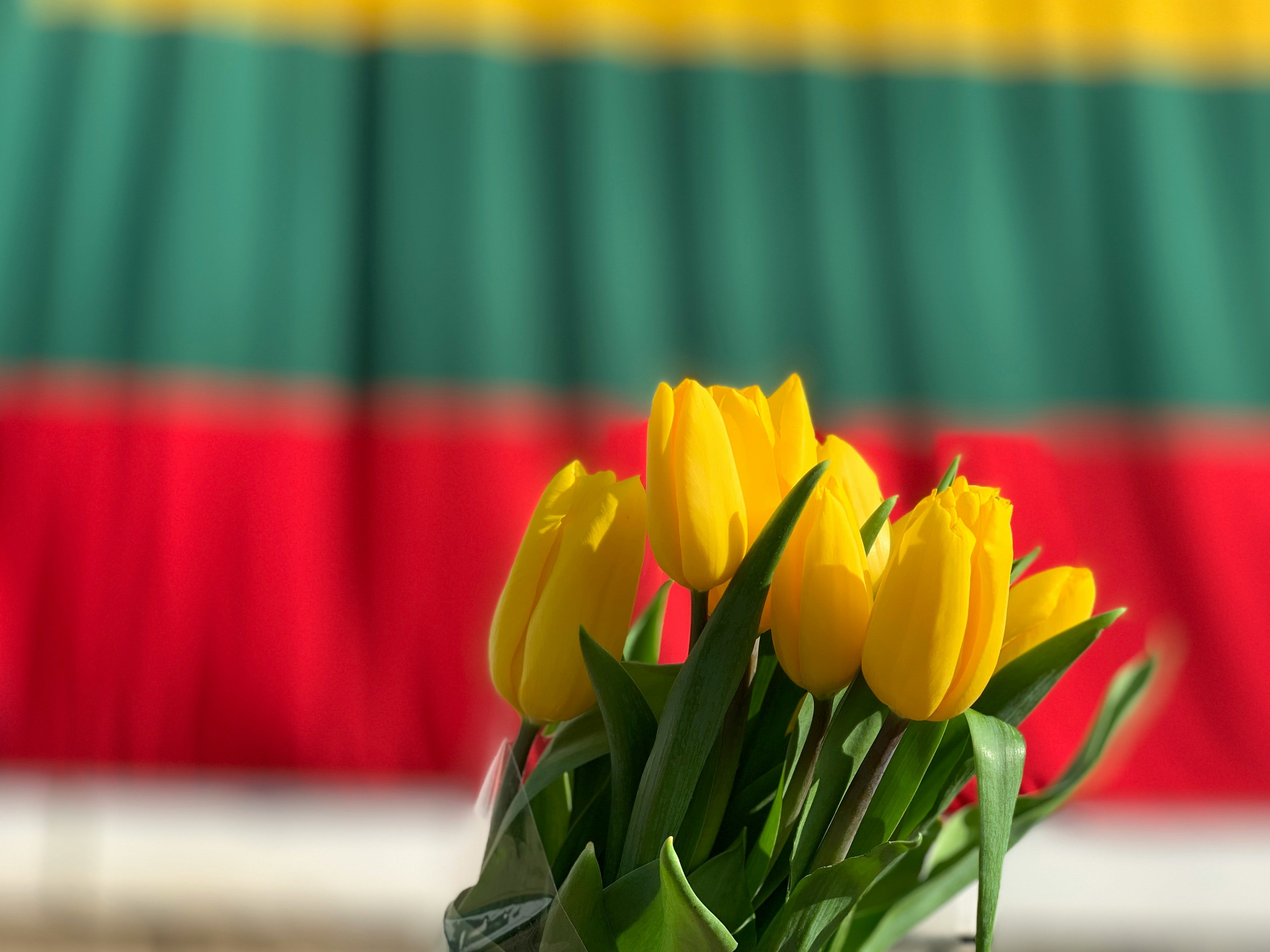
Photo by Justina Pakalnytė on Unsplash
Thanks for reading A Further Inquiry! This post is public so feel free to share it.
Comments
Nothing yet. Say the first thing.
Sign in to join the conversation.