
Part 3 of 3
Professor Milda Alisauskiene is a leading Lithuanian sociologist of religion at Vytautas Magnus University in Kaunas. Growing up during the Soviet era, she witnessed Lithuania’s national and religious awakening firsthand. She completed her undergraduate studies in 1994 and earned her master’s (1999–2002) at Vilnius University and PhD in sociology at VMU, where she now explores the interplay between religion, national identity, and human rights. Her 2023 monograph analyzes post-independence religious pluralism and the Catholic Church’s role in religion and state relations. Milda’s research sheds light on minority faiths, secular movements, and the ongoing negotiation of religious freedom in a modern EU democracy.
In this interview, Scott Douglas Jacobsen and Professor Milda Alisauskiene discuss religion and politics in contemporary Lithuania, including Catholic influence through affiliated NGOs and cross-party advocacy. They examine reproductive rights debates, relations with Poland, historical tensions over Vilnius, and Pope John Paul II’s role in shaping Lithuanian-Polish reconciliation. Alisauskiene also considers minority autonomy movements, changing bilateral relations, regional security after Russia’s annexation of Crimea, and Lithuania and Poland’s alignment in supporting Ukraine against Russian aggression.
Scott Douglas Jacobsen: And a lot of that invisible labour—preserving the culture, teaching the next generation—is placed on women. Also, in the Christian tradition, the two major female figures are one woman: the Virgin Mary and Mother Mary. These are the most revered roles for women in the religion. Moreover, those values are predicated entirely on a woman’s sexual status—virginity and motherhood. Alright, let us jump forward to 2020. How are things looking now in terms of religion, cultic movements, and secular or non-religious developments?
Milda Alisauskiene: By 2020, we saw a more vocal and influential presence of the Roman Catholic Church across various sectors, including satellite non-governmental organizations. These organizations promote and strengthen Church values and advocate for them within the political sphere, including in Parliament.
We have individuals who represent either the Roman Catholic Church directly or its affiliated NGOs, and they are involved in various working groups within the government, pushing for those values.
Recently, we witnessed an intense debate around a proposed reproductive rights law. Currently, we have a left-wing to center-left coalition, and the Social Democrats have included reproductive rights in their political agenda.
However, it became evident that almost every political party—regardless of its stated ideology—includes individuals who support Roman Catholic values. That cross-party alignment complicates the policy landscape.
Jacobsen: How much Polish political influence is infused into this, considering that the historical infusion of Catholicism into Lithuanian culture came primarily from the Poles?
Alisauskiene: No. It is interesting because of what happened in 1920.
Jacobsen: Government academics meeting each other in the library—what are the chances?
Alisauskiene: In 1920, Poland invaded Lithuania and occupied Vilnius. So, when Lithuanian independence was re-established, there was significant suspicion toward Poland. People wondered what would happen to Vilnius, especially since Vilnius had been returned to Lithuania by the Soviet army.
Once the Declaration of Independence was signed, and it became clear that we were leaving the Soviet Union, concerns about Polish intentions remained. People were uncertain about how relations would evolve. Moreover—surprise, surprise—the issue of occupation was eventually left in the past.
However, there remained sentiments within parts of Polish society that Vilnius should be a Polish city. Moreover, even today, there are still elements in Lithuanian society that remain suspicious of Poland or harbour resentment because of that historical occupation.
However, at the governmental level, the question has been resolved. I was surprised to see that Yuval Harari, in one of his interviews, referred to this as a good example of how historical grievances can be addressed constructively.
Jacobsen: He said that?
Alisauskiene: Yes, he did—in one of his many interviews. He mentioned the Lithuanian-Polish conflict over Vilnius as an example of how historical untruths and disputes can be managed. He drew a contrast with Israel and Palestine, acknowledging it was a different story altogether. Still, he admired how the Lithuanian-Polish situation had been resolved.
Part of the credit for resolving that issue goes to Pope John Paul II. The early years after Lithuanian independence were chaotic. However, in 1993, the Pope visited Lithuania.
There are two regions in Lithuania where Poles form the majority: the Šalčininkai region near the Belarusian and Polish borders, and the Vilnius region—not the city itself, but the surrounding area. In both regions, there were movements where some people demanded autonomy. They claimed, “We are Poles here, and we want autonomy.”
We now know that Soviet authorities influenced these efforts. It resembled other cases like Moldova and Transnistria, where ethnic or national minority groups were encouraged to seek autonomy, creating tension in the newly independent states.
These movements raised issues related to human rights and the rights of national minorities. Then Pope John Paul II came, and in his speeches, he addressed the Polish population directly. He said, “You are Lithuanian Poles.” It was a powerful metanarrative: you are Poles, but you belong to Lithuania.
Jacobsen: And the Pope saying it—
Alisauskiene: —and of course, he was their Pope.
Jacobsen: John Paul II, among all Popes.
Alisauskiene: There were also stories connecting John Paul II to Lithuania—some claimed his mother was Lithuanian, though he never openly acknowledged or expanded on that. He put those stories aside, but he did emphasize the importance of the Polish community here.
That statement helped draw a firm line, and the groups demanding autonomy were essentially disempowered. Their claims lost traction.
Returning to your question about Lithuanian-Polish relations today, it depends very much on who is in power. For instance, when President Lech Kaczyński was in office in Poland—before he died in the plane crash—he had a good relationship with our then-president. So, relations were stable at the leadership level.
After 2014, however, when Crimea was annexed, this region realized we were under threat. It became a question of when, not if, aggression would come our way. We needed to prepare ourselves.
The Kaczyński-led government—his Law and Justice Party—pushed for militarization and recognized the need to build strong alliances. That led to closer cooperation. Even today, we share a common goal: to stand against Russia and support Ukraine.
So, currently, we are very much aligned. We are on the same page.
Jacobsen: Thank you very much for your time today. I appreciate it.
Alisauskiene: You are welcome.
Jacobsen: It has been lovely to meet you.
Alisauskiene: Thank you.
Scott Douglas Jacobsen is the Lifestyle and Finance Writer and Editor for A Further Inquiry with more than 400 published articles in the outlet. He is the Founder and Publisher of In-Sight Publishing (ISBN: 978–1–0692343; 978–1–0673505) and Editor-in-Chief of In-Sight: Interviews (ISSN: 2369–6885). He writes for International Policy Digest (ISSN: 2332–9416), The Humanist (Print: ISSN, 0018–7399; Online: ISSN, 2163–3576), Basic Income Earth Network (UK Registered Charity 1177066), Humanist Perspectives (ISSN: 1719–6337), Vocal, Medium, The Good Men Project, The New Enlightenment Project, The Washington Outsider, rabble.ca, and other media. His bibliography index can be found via the Jacobsen Bank at In-Sight Publishing. He has served in national and international leadership roles within humanist and media organizations, held several academic fellowships, and currently serves on several boards. He is a member in good standing in numerous media organizations, including the Canadian Association of Journalists, PEN Canada (CRA: 88916 2541 RR0001), Reporters Without Borders (SIREN: 343 684 221/SIRET: 343 684 221 00041/EIN: 20–0708028), and others.
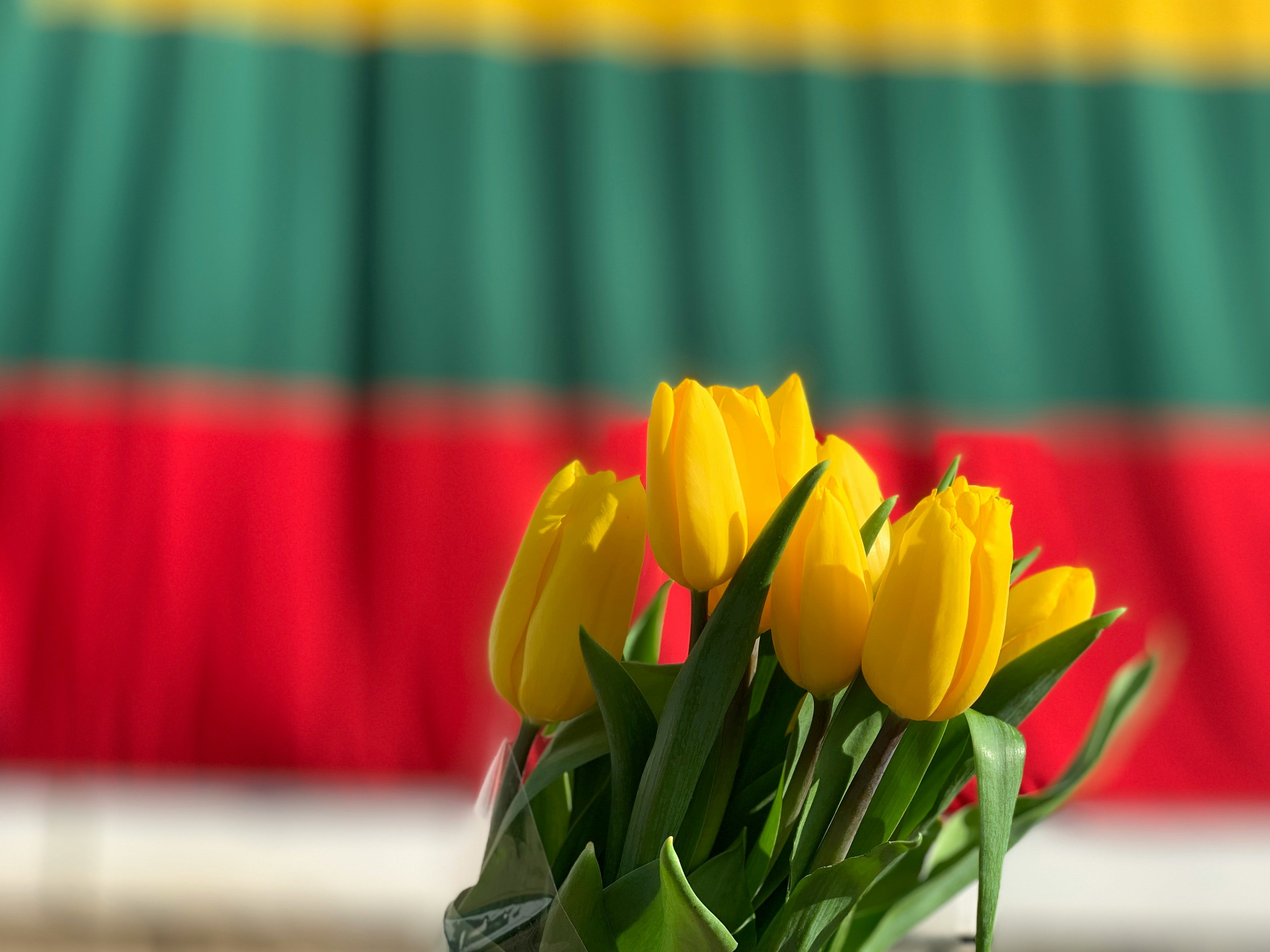
Photo by Justina Pakalnytė on Unsplash
Thanks for reading A Further Inquiry! This post is public so feel free to share it.
Comments
Nothing yet. Say the first thing.
Sign in to join the conversation.