
The first poems in Section IX begin at the point where systems stop pretending to be neutral.
Becky Cherriman and Madailín Burnhope take us straight into the places where the state becomes physical. These poems know the state does not only fail from a distance. It enters. It touches. It delays. It assesses. And it records.
But it keeps also asking for patience from people who have already spent too much of their lives being patient with harm.
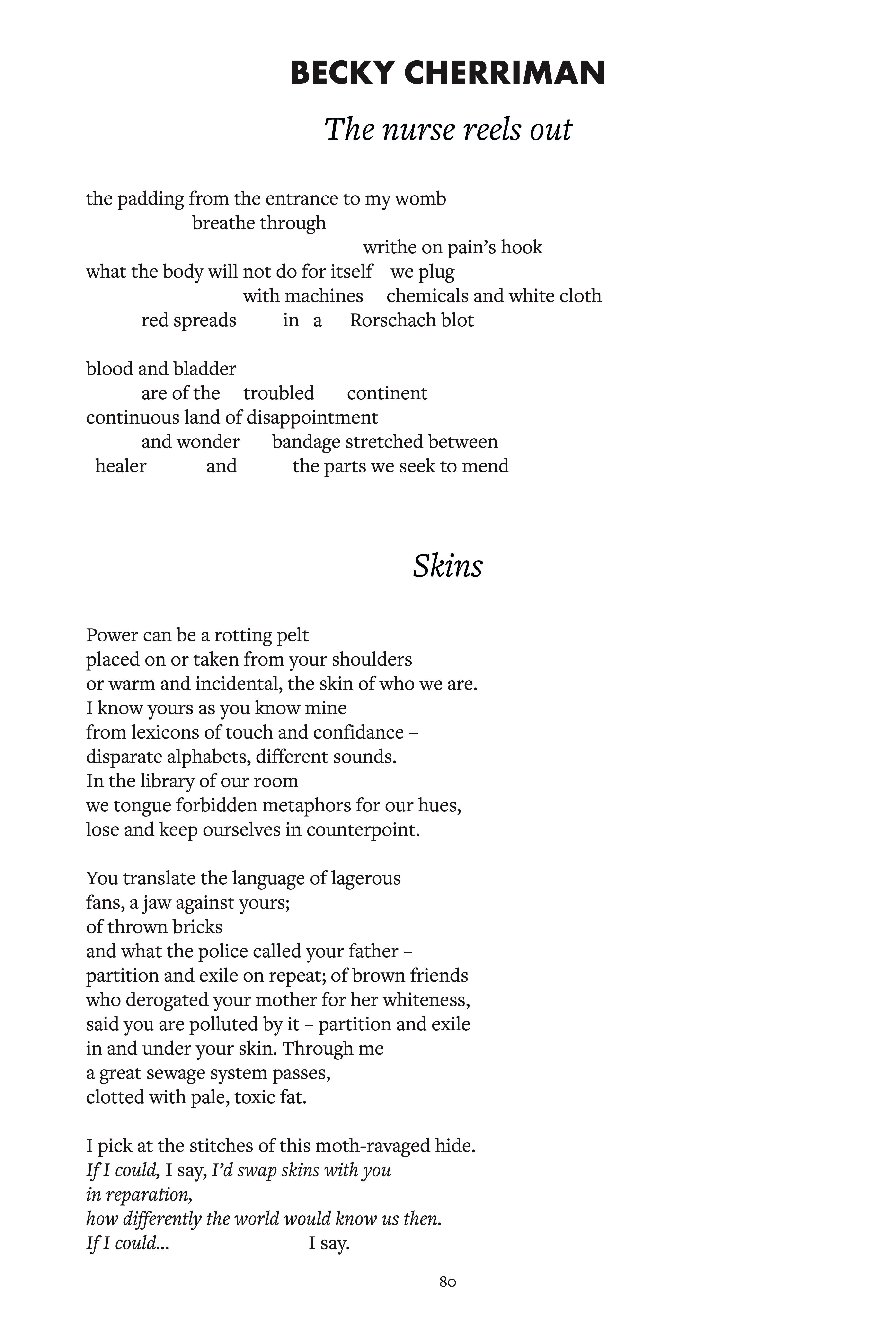
Becky Cherriman
In Becky Cherriman’s opening poem, the body is already inside the machine. The nurse, the padding, the chemicals, the white cloth: care and violation are held close enough to trouble each other. The body is managed, entered, helped, hurt, mended, exposed. There is no easy purity here. Medicine can save and still feel like surrender. Repair can have the texture of force, even when it’s also there to help.
“Skins” widens the wound. Power becomes something worn or removed. Here the system is not one building or institution. It is older and more atmospheric. It is in what gets said to a father. It is in who is believed to belong. It is in the histories lovers carry into bed with them, whether they want to or not.
The poem’s impossible wish - to swap skins in reparation - breaks my heart because it knows love cannot refund history.
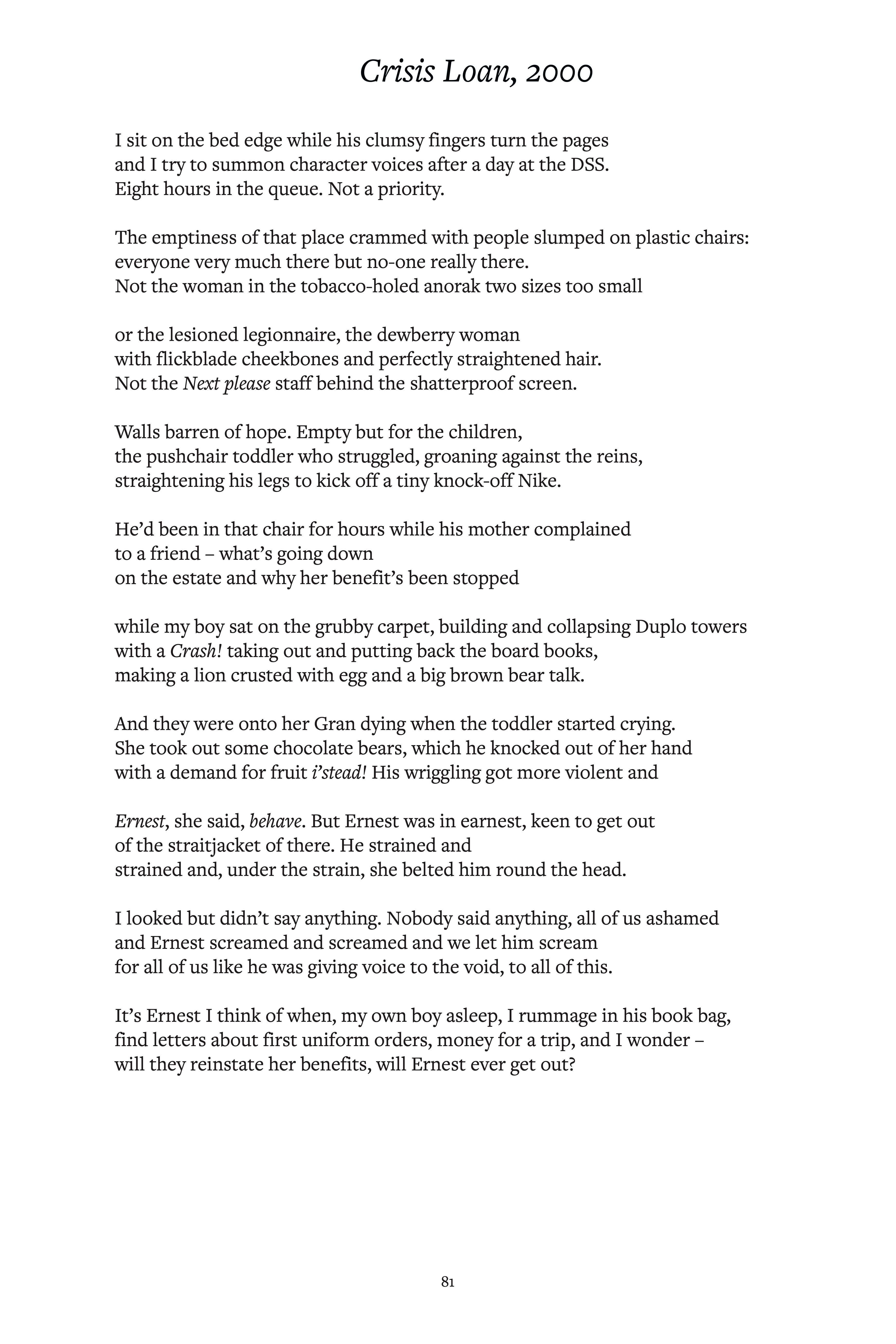
And then comes “Crisis Loan, 2000”, one of the clearest poems I know about what bureaucracy does to the soul.
Eight hours at the DSS. Plastic chairs. A shatterproof screen. A room full of people made to wait so long they begin to disappear in front of one another. Nobody is absent, exactly. Everyone is there. But the system has already thinned them out. It has made them into cases, delays, voices, claims, interruptions. It has made hope feel administratively inappropriate.
And in the middle of this, Ernest.
Ernest is not an argument. He is a child who wants fruit, who wants out, who has been strapped in too long, who screams until the room has to hear what it has been refusing to hear. When he is hit, the poem does not offer the reader a clean place to stand. The speaker looks and says nothing. Everyone says nothing.
This is where Becky’s poem becomes devastating. It does not let us pretend the state’s violence remains inside the state. It leaks into parenting. Into tiredness. Into witness. Into the body of a toddler. Into the body of a mother who has been held too long in a room designed to make need feel like an offence.
Madailín Burnhope
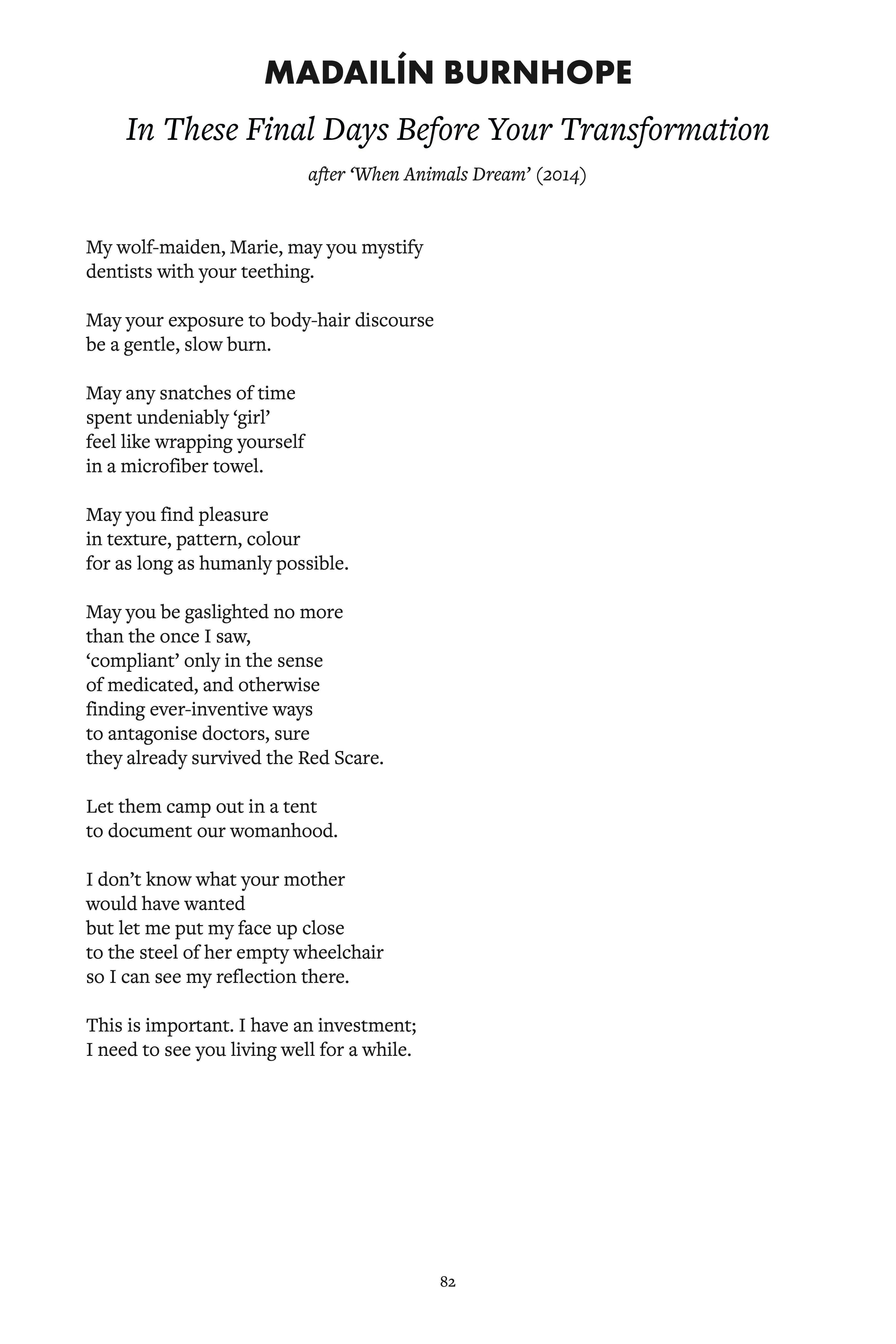
Madailín Burnhope’s “In These Final Days Before Your Transformation” brings another system into view: the medical gaze, the category, the diagnosis, the clipboard logic of people deciding what a body is before the person inside it has finished becoming.
The poem is addressed to a wolf-maiden. Marie is not presented as a case. She is creaturely, beloved, strange, vivid, on the edge of change. The poem wants her to have pleasure before the world tightens around her: texture, pattern, colour, whatever brief freedom is possible before language starts making claims.
But the systems arrive here too. Doctors. Compliance. Medication. Observation. The awful little theatre of being watched by people who think watching is the same as knowing. Burnhope’s blessing has teeth because it knows what is coming. It knows bodies like Marie’s are rarely left alone to become.
What moves me is the poem’s refusal to make survival grand. It asks for something smaller and more desperate: let her live well for a while. Let her antagonise doctors. Let her exceed the file. Let her remain wolf enough to trouble the tent they pitch around her womanhood.
That empty wheelchair near the end changes the temperature of the poem. Suddenly the blessing is not abstract. It is grief speaking forward. It is someone looking into absence and needing another life not to be swallowed by the same machinery. It is care sharpened by loss.
The state likes abstraction. Poetry does not have to! That’s what I love so much about these poems, they refuse that abstraction.They show that systems do not collapse in theory. They collapse onto people.
Comments
Nothing yet. Say the first thing.
Sign in to join the conversation.