
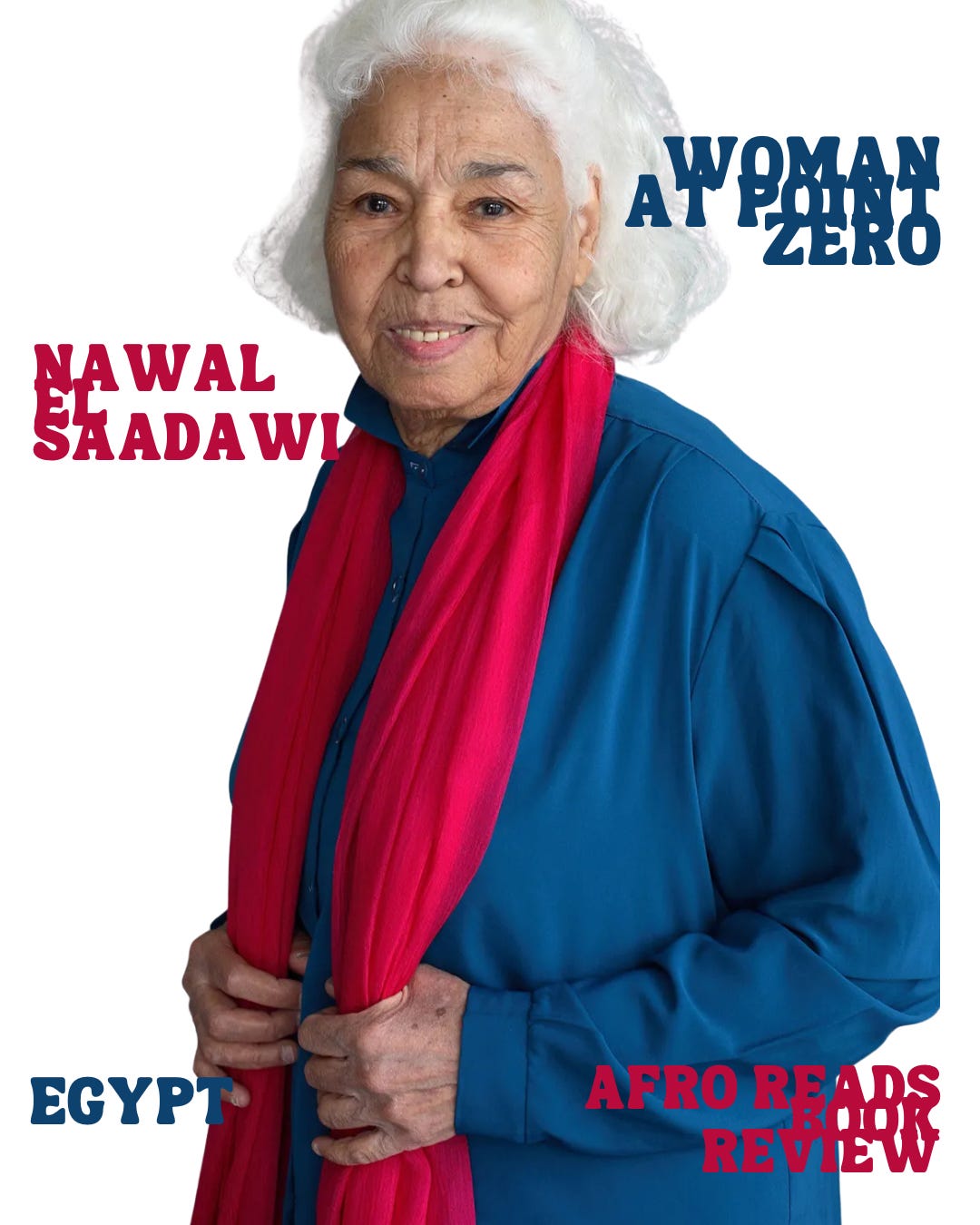
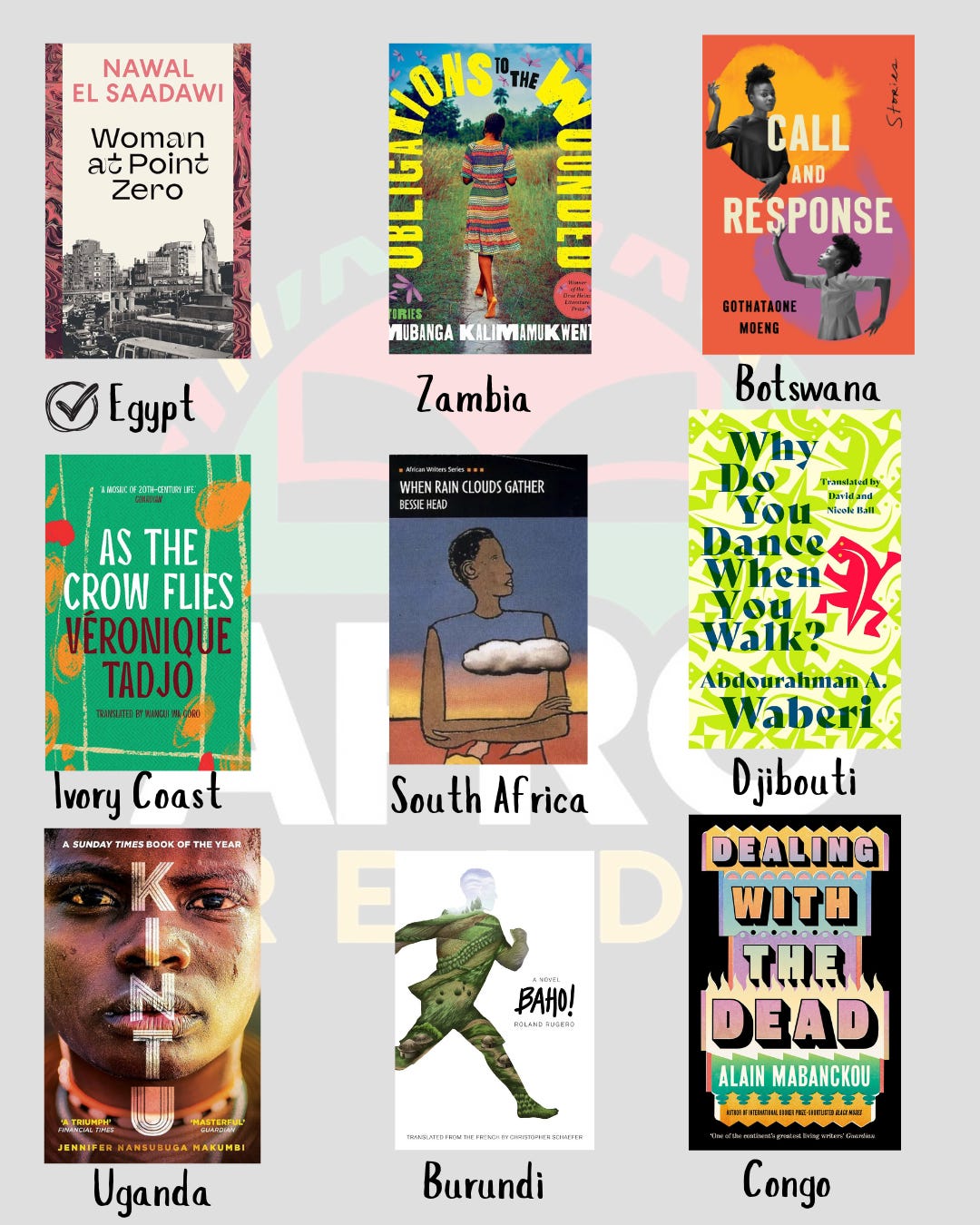
I had been transitioning quite a bit toward the end of last year. I found myself leaning into shorter reads such as my Egyptian book of choice: “Woman at Point Zero”.
Inspired by a real woman, we have ther story of Firdaus, a woman in prison who has been found guilty of murder. She has already reached her limit with society; to the point where she is content with the courts’ decision to end her life. Then we have the author, a physician, who becomes intrigued with what she has heard about and sets her heart on finding a way to speak to her.
Once she is able to, she hasn’t any inclination that knowing this woman’s life story will want her to grab a man by his genitals and proudly walk through the streets while doing so.
From childhood up until she dies, Fridaus’ body has always been eyed by men. From her father to her husband to her first love, and lastly, to a pimp. Having graduated from school didn’t make her worthy of being treated with respect nor living through the struggle of working an everyday job. One thing did give her respect, so much that she died for it. Being free to choose whom can put their hands on her body and at what price.
**This post contains affiliated links, if you decide to make a purchase I will receive a small commission
Published in 1977, this novel feels unsettlingly current. It should read like history, but it doesn’t. The issues of body shaming, domestic violence, and women being seen as lesser within culture and religion remain deeply embedded in the 21st century. Women are still police, not only by men, but by other women and even family members. Especially if they choose a life outside of marriage and motherhood by being ‘the fun aunty’. Young girls are trained early to believe they won’t be seen unless they expose their bodies, that affection must be earned through sacrifice, and that love, respect, or equality are not expectations, but rewards. Men, too, are shaped by this same system. Patriarchy has its clutches on us all.
The author’s Arab background adds another critical layer. In cultures that are heavily male-dominated, the weight placed on women’s bodies, choices, and autonomy can be even more suffocating. Throughout the novel, Firdaus recalls seeing herself once in a mirror, dressed in long garments. The women she sees daily are fully covered; sometimes with only their eyes visible. Firdaus even shares that she knew her mother and her teacher by their eyes—the only ones who showed her love. She noticed those who also did not care for her, there was a darkness within them. It could be seen through their eyes.
This book had me by the throat! To realize that the only space where Firdaus experiences true freedom is in death is devastating. It forces an uncomfortable question:
How many women today are still not free in their own choices? Career. Travel. Love. Family. Every path comes with a deadline, a judgment, a ticking clock. And this was the 1970s when our mothers, grandmothers, and great-grandmothers often had no say at all. They endured. They survived. They rolled with the punches because there was no other way without judgement and dishonor.
So I’m left wondering:
Has society really changed?
Or are we still living under patriarchy, just dressed in a newer language, filtered through culture and religion?
“I sometimes wonder whether a person can be born twice” (pg. 19)
‘Everybody has to die, Firdaus. I will die, and you will die.
The important thing is how to live until you die?
“How is it possible to live? Life is so hard.’
‘You must be harder than life, Firdaus. Life is very hard. The only people who really live are those who are harder than life itself.’ (Pg. 56)
“Now I realized that the least deluded of all women was the prostitute. That marriage was the system built on the most cruel suffering for women.” (Pg. 94)
A woman’s life is always miserable. A prostitute, however, is a little better off. (Pg 97)
That men force women to sell their bodies at a price, and that the lowest paid body is that of a wife. All women are prostitutes of one kind or another. (Pg. 99)
“And who said that to kill does not require gentleness?’ (Pg 108)
‘I am speaking the truth. And truth is savage and dangerous? (Pg 110)
Nawal el Saadwi, is a woman who spent her life advocating for other women, particularly those of her background — being Arab, practicing Islam, child marriage, and undergoing female circumcision. She went to school to be a doctor, which was how she discovered the woman who inspired this story. She was doing a study on neurosis on women in prison. There was even a time where she spent a few months in prison herself. She jeopardized the comfort of home by her family and financial stability by her career as a physician and divorced her husbands to live freely as an activist and stand in her power. She passed away in 2021 at the age of 89.
No posts
Comments
Nothing yet. Say the first thing.
Sign in to join the conversation.