
At the age of 18 I became consciously aware of the histories evolving around the continent of Africa. I was constantly studying via books, documentaries, and oral traditions. Trying to understand the differences between western propaganda and fact.
No longer walking around the world naively, I must quote the words of Erykah Badu
Choosing self study is still my best practice, but now I know this isn’t just a hobby. This is my calling — my life’s work. Black History is World History and I will no longer gate keep my knowledge.
As Brother Anthony Browder recently quoted:
“If you don’t realize that you are here to make history, not just to study it, then you’ve missed the point.”
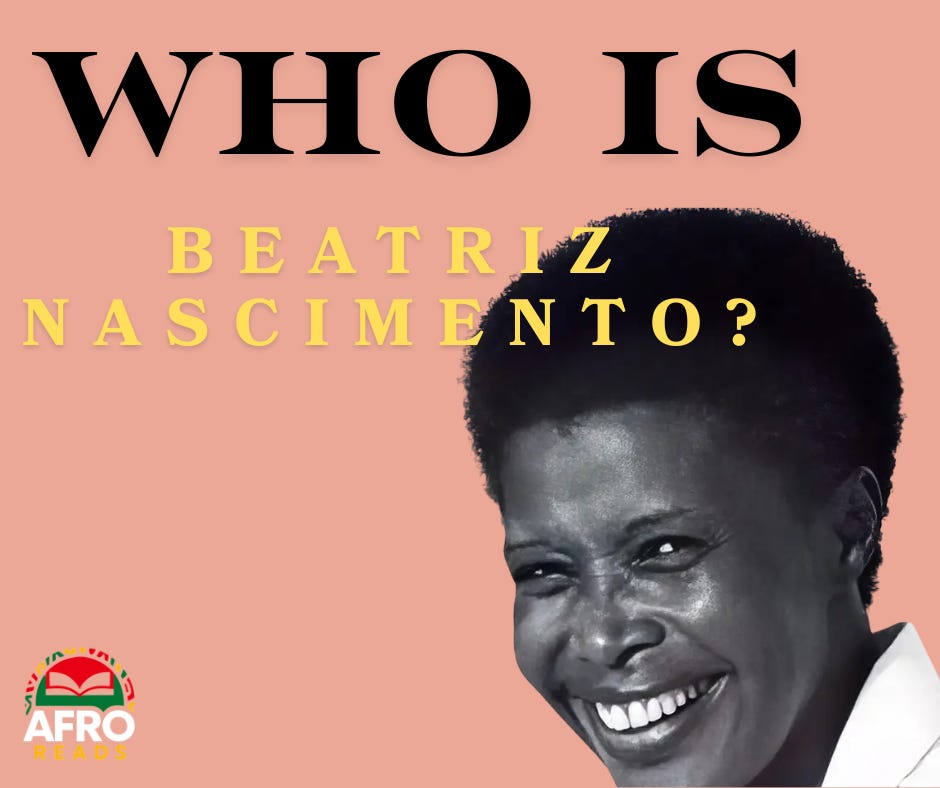
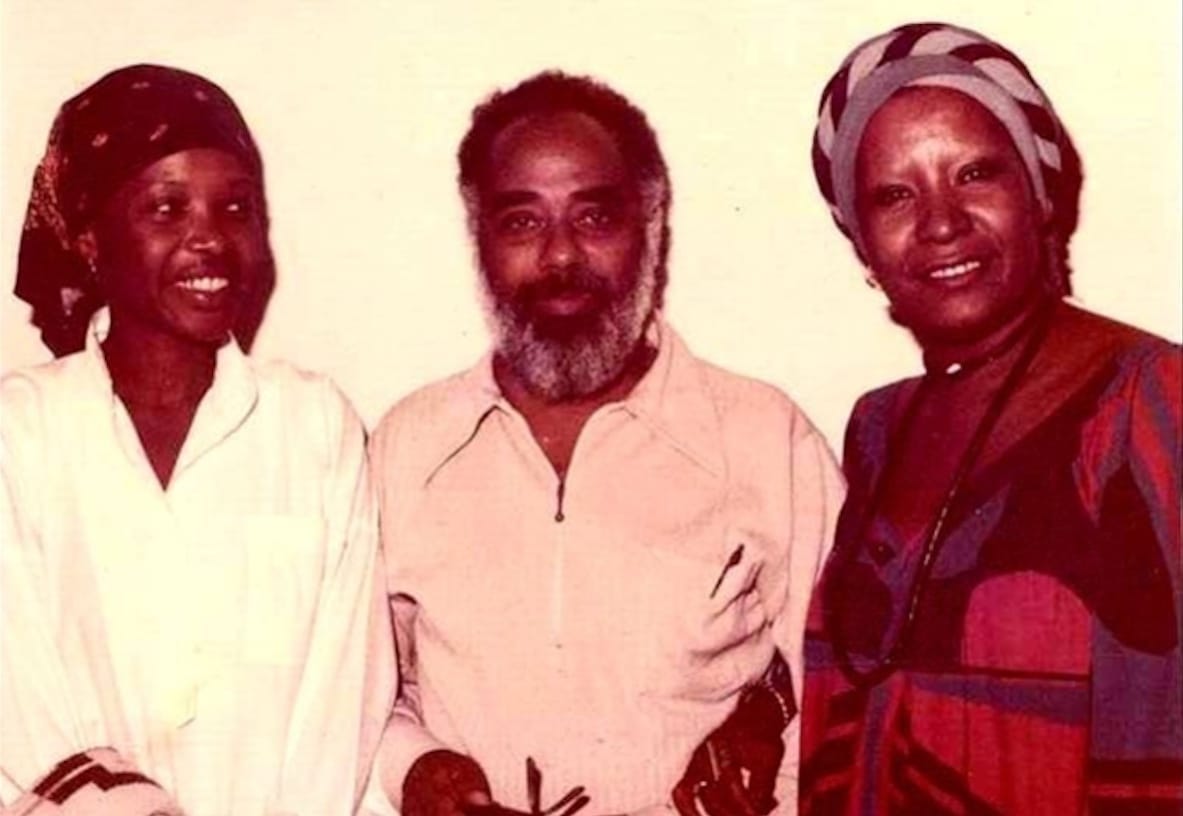
In saying all of this, I discovered the radical scholars, activists, writers, and poets of Afro•Brazilian culture from their women; Carolina Maria de Jesus, Lelia Gonzalez, and the woman I will discuss today, Beatriz Nasicememto.
“We said that we must be understood as Brazilians, without being confused with black North Americans or Africans.” (

As a Black American I believed prejudices the white oppressor inflicted on Afro people were the same. The U.S.A and South Africa suffered at the hands of whites to degrading signs dictating where they could or couldn’t go, lynching’s, and ghettos. Jim Crow and Apartheid are literally the same term; allowing the same laws and abuse to legally take place.

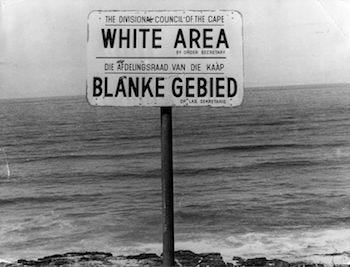
But in Brazil, there is another form of racism that for some may be viewed as more deadly. It doesn’t just kill the physical body or the culture that you witness, it kills the spirit and leaves Afro people in a form of psychosis. In North America and South Africa, it was well known that white and black could not mix and white didn’t want anything to do with the black community, at least not openly. We all know the white women wanted our men and the white men wanted our bodies.
Yet, in Brazil, the whites flaunted Afro cultures, from the religion, the dances, the music, the sound. They took credit for it all, simply because they had the foolish belief that one day, blackness mixed with whiteness and brownness mixed with whiteness will evidently cause all Afro people to disappear.
How would you respond as an Afro•Brazilian if a white Brazilian told you that your color would one day disappear, therefore, racism does not exist in Brazil because they believe that eventually you will be erased from the country?
How would you feel if a white Brazilian had the nerve to say they are blacker than you because they attend candomblé?
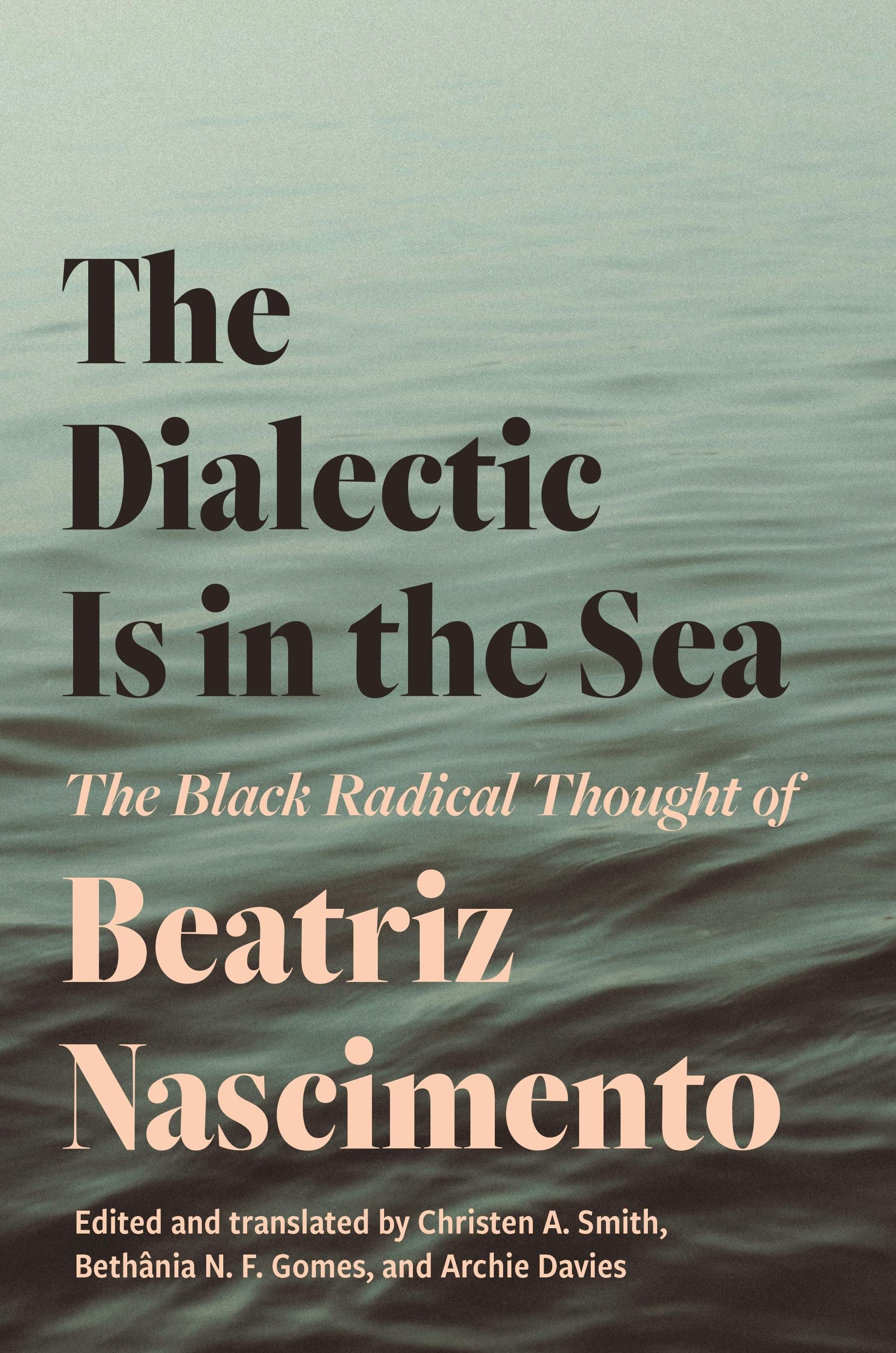
Beatriz Nascimento took these prejudices and dedicated her oeuvre to educating her people. Now her only child, her daughter has ensured the diaspora knows her name through this book.
Beatriz wrote in a 25 year period and is known as a radical public intellectual, organizer in Black Brazil’s Movement from the 1970s-1990s. She critiqued white supremacy, the patriarchy, sexism, racial capitalism and more during a dangerous time when Brazil was under a military dictatorship. She received a bachelors degree in history in the 70s, received a graduate degree, and went on to purse a master’s degree in mass communications. She continuously studied the histories of Africa and the Americas from the past and present.
She coined the term, ‘transatlanticidade’, meaning Transatlanticity in English, to describe the geopolitical and geo-cultural complex connecting Africa (Congo-Angola region), Portugal, and Brazil, viewing the Atlantic Ocean as a space of Black cultural and spiritual sustenance.
Her research of Quilombos2 (the kingdom of Palmares3 being the most significant) was the highlight of her analysis in her community. She conducted an anthography on surviving Quilombo communities in the state if Minas Gerais. Her belief was that Quilombos were not just historical occurrences but also cultural and political that can be traces back to Bantu-Congo (Angola) practices. She not only studied through the archives, she actually travelled back to the motherland and places in the Caribbean to create her 1989 film Ôrí.4
Brother Miguel Fernandes shared a quote with me:
“Racism in Brazil is in the form of a smile.”
This quote definitely sums up the essays by the editors and Beatriz’s own essays that were finally translated from Portuguese. I myself, am slowly sifting through the text. I cannot go on any page without highlighting, I finally reached the section of her essays: ‘For A History of Black People”, “Toward Racial Consciousness”, “The Black Women in the Labor Market”.
Brazil was believed to have no racism, because it was not in the form of anger. Even resulting to taking off the ‘color/race’ section of the Census, to make the world think that they were ‘united as one’. Yet, white scholars believed that the black problem would disappear by color mixing. Black people were still very much there then, as they are right now.
Last night I was reading “Toward Racial Consciousness” and it put me in mind of DuBois’ “Double Consciousness” where he discusses black people having to view themselves from two different lens; the black lens and the white lens.
In her essay she talks about her and the one other Afro person in a class full of whites. Beatriz was always in the top three of her class, but was never recognized by her teacher for it until she graduated. The other, Jurema, who was always at the bottom of the class academically. They were both two sides of the same coin, wearing dirty clothes and having short afros, which caused them to be picked on and face racial slurs by calling them Joao, which is Portuguese for the name John. Therefore, the slurs stated that they looked like boys due to their short and nappy hair. Adults and kids alike called them those names, even those within the Afro community. So at the end, Jurema ends up dropping out of school and becoming barefoot and unmarried while barefoot and pregnant with another child on her hip. Juerema once tells Beatriz to continue her studies, yet, in the end Beatriz realizes it was not much use. Maybe she had come out more ‘alive’ but the prejudice is still the same. (p133)
Unfortunately, she was killed and left behind unfinished essays and poetry. Once again, I have to thank the editors, translators, Archie Davies is a Leverhulme Early Career Fellow in the Department of Geography at the University of Sheffield.
Christen Smith is Associate Professor of African and African Diaspora Studies and Anthropology in the Department of Anthropology at the University of Texas at Austin. Then, most importantly, her daughter for making this body of work available in English.
“Being black is confront a history of almost 500 years of painful resistance, of physical and moral suffering, the feeling of not existing , the practice of still not belonging to the society to which you gave everything you had, and to which still today, you give what is left of yourself”
-"For a History of Black People”
A Creative-Theoretical Immersion into Black Radical Intellectual Thought, Part 2
The Continuities of Beatriz Nascimento’s Black Radical Thought
Erykah Badu song from Mama’s Gun: A.D. 2000
https://decolonisegeography.com/blog/2021/06/beatriz-nascimento-quilombo-and-geographies-of-liberation/
A cluster of quilombos self-governed by enslaved Africans who escaped the plantation. It contained a mixed of a few white and indigenous people also escaping servitude. It was founded in 1605 in the present day state of Alagoas when they revolted. It remained independent until 1694, the King, Zumbi, was captured in 1695 and hung by the Portuguese on Nov 20th, this is why this date is currently called Black Conscious Day in Brazil.
No posts
Comments
Nothing yet. Say the first thing.
Sign in to join the conversation.