
I interviewed Wayétu in February with the hopes that this would be the interview that put my podcast on the map. Unfortunately, technology was not in our favor.
Before our tech issues, we briefly got to speak on how she started writing African Literature. Believe it or not, writing was not her number one choice. She began her creative journey in theatre.
Later in her undergraduate career, she began writing, but from the lens of a Black woman in America. A former boyfriend encouraged her to write instead from an African perspective; indulging in the language and culture.
It was my pleasure to get ahold of her throughout her busy schedule of mothering, writing, and meeting deadlines. Her novel was the one that inspired Afro•Reads, starting my adventure of traveling through Africa through literature starting with her native home, Liberia.
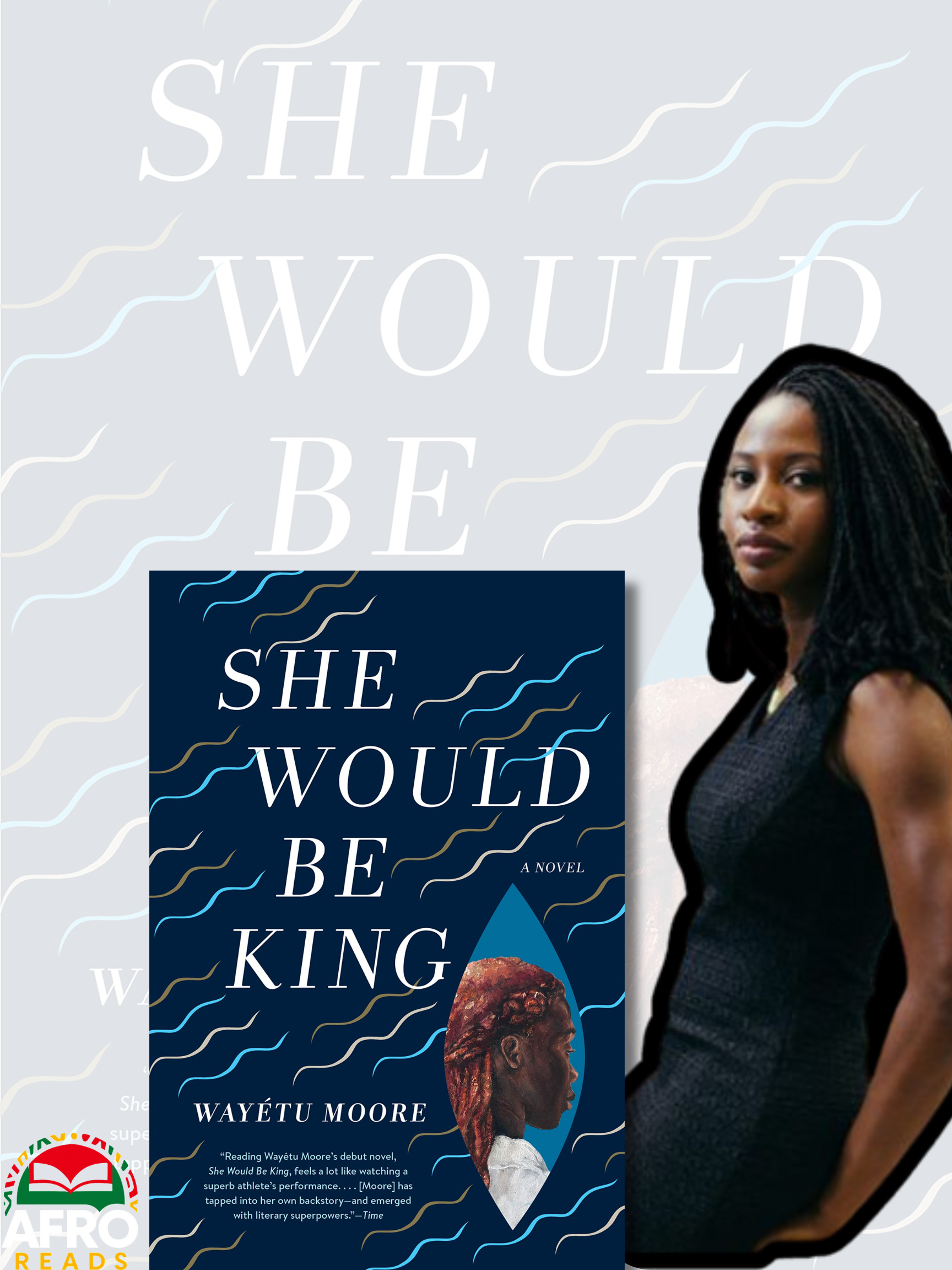
“The girl with the biggest gift of us all.
Life.
If she was not a girl or if she was not a woman; if she was not a woman or if she was not a witch, she would be king…”
L: What inspired you to write She Would Be King?
W: The inspiration for She Would Be King came from a deep desire to reconnect with Liberia, a place I left at five years old during the civil war.
I was raised in a homogenous community north of Houston, TX and like many young African immigrants and/or first generation Americans, the messaging I was receiving outside of the house about African countries was very different from the messaging I received at home from my parents.
My parents did their best to keep us tethered to Liberia mostly through food and music.
When that early dynamic married my artistry, Liberia was the first place I visited through my work. The novel is a blend of history and magical realism, exploring the founding of Liberia through the lens of three characters with supernatural abilities. Writing it was a way to navigate my feelings of love and rejection, both for and from Liberia, and also how to share its history with the world through my art.
L: How long did it take you to write it/do the research for it?
“W: I wrote a first draft in one year, but the editing process took several years. The manuscript lost an entire character (4 became 3) and was edited down from 600 pages to a little over 300.
L: Your parents left Liberia during the first civil war. You were a young child, so do you recall any memories of Liberia?
W: Yes, I have vivid memories of Liberia, though they are a mix of idyllic and traumatic. I wrote about these experiences in my memoir, which was also a reconciliation of my identity.
L: Have you traveled to Liberia since?
W: When I began writing She Would Be King in 2007, I hadn’t returned to Liberia since I was five. My homegoing trip was in 2013 and in many ways it fundamentally changed the book. It enabled me to bridge the gap between my past and present.
L: How did your family influence you when you were writing? Who was the storyteller in your family before you?
W: My family has been a cornerstone of my storytelling. My grandmother was pivotal in shaping my imagination. My siblings are usually in a group of first readers once I have a first draft. And I think of everyone who came before me when I write, all the stories they wanted to tell but couldn’t.
“There is a weight that builds on shoulders when one leaves home. The longer a person stays away, the heavier the burden of displacement.”
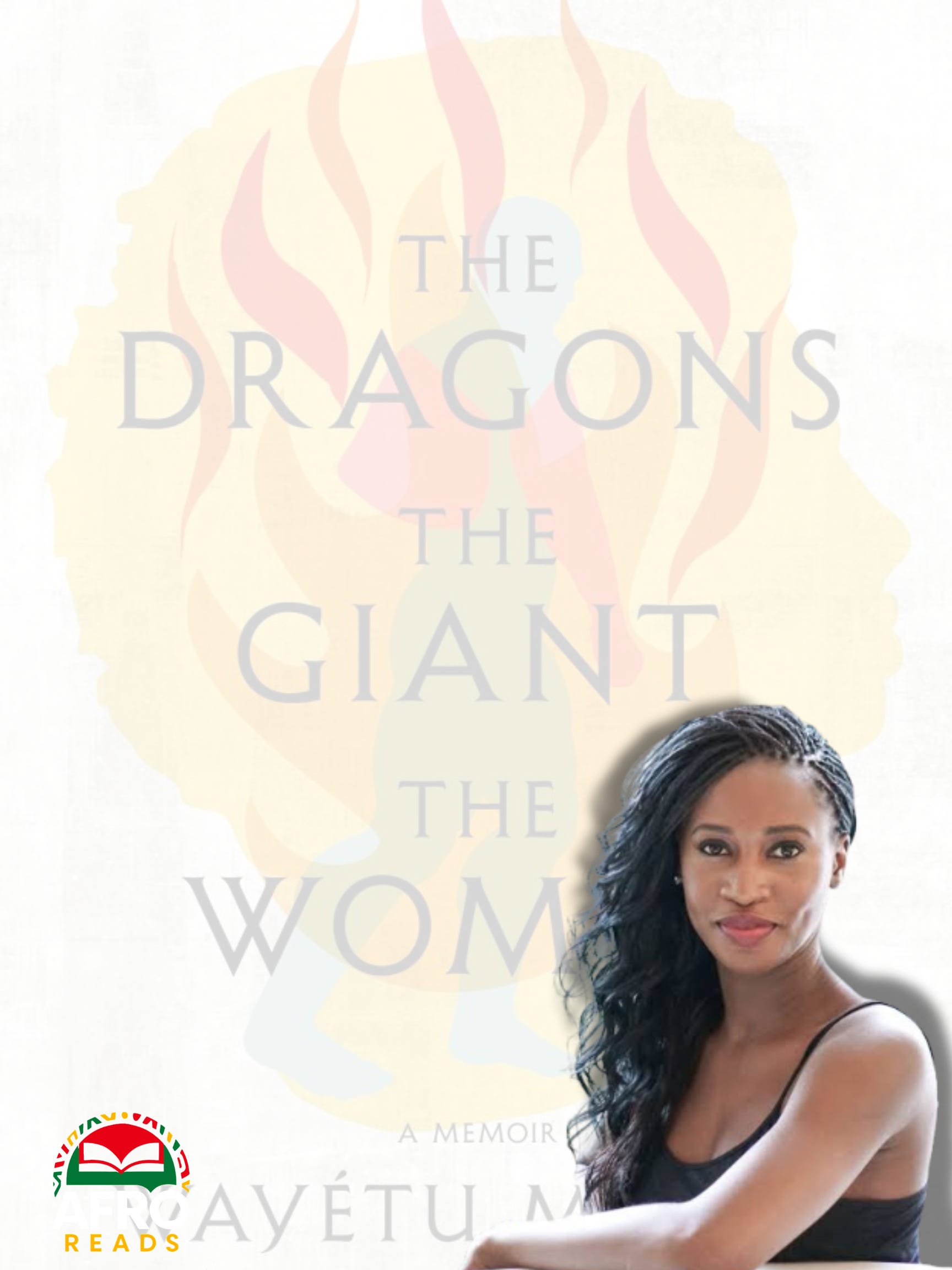
L: You have a memoir. Tell us about it. How did you come up with the title The Dragons, The Giant, The Women?
W: The title reflects the fantastical lens through which I experienced the war as a child. My father, the “giant,” protected us with his strength and love, while my mother, one of the “women,” risked everything to reunite our family. The other woman was the rebel soldier who helped to smuggle us across the border from Liberia to Sierra Leone. The “dragons” symbolize the dangers we faced, reimagined through the stories my family told to shield us from the harsh realities of war.
L: I see you’re working on a new novel. Any hint when it will be released? Can you tell us what it is about?

W: My novel, Habila, explores the mythology of Mami Wata through an experiences of a Liberian immigrant family. It will be released in January 2027.
L: What do you do when you’re not writing?
W: When I’m not writing, and/or obviously reading, I enjoy spending time with my family. My children are my guiding light, my safest place. I am a fan of design and I explore that across mediums.
L: How do you stay creative? Do you wait for a spark or do you just do it?
W: While I do have moments of spontaneous inspiration, I’ve learned that showing up and doing the work, even when the spark isn’t there, is essential to my creative process.
L: Do you have any advice for mothers who are writers?
W: To mothers who are writers, I’d say: give yourself grace.
Last Fall, I joined Decontee (Archive Libera), for her study group. Every year in October this space is offered for Liberians and those in the Diaspora to meet and converse around a chosen topic dealing with the history of Liberia. I highly recommend you join in, I’ll post reminders.
*This post contains affiliated links, if you decide to purchase I will receive a small commission.
No posts
Comments
Nothing yet. Say the first thing.
Sign in to join the conversation.