
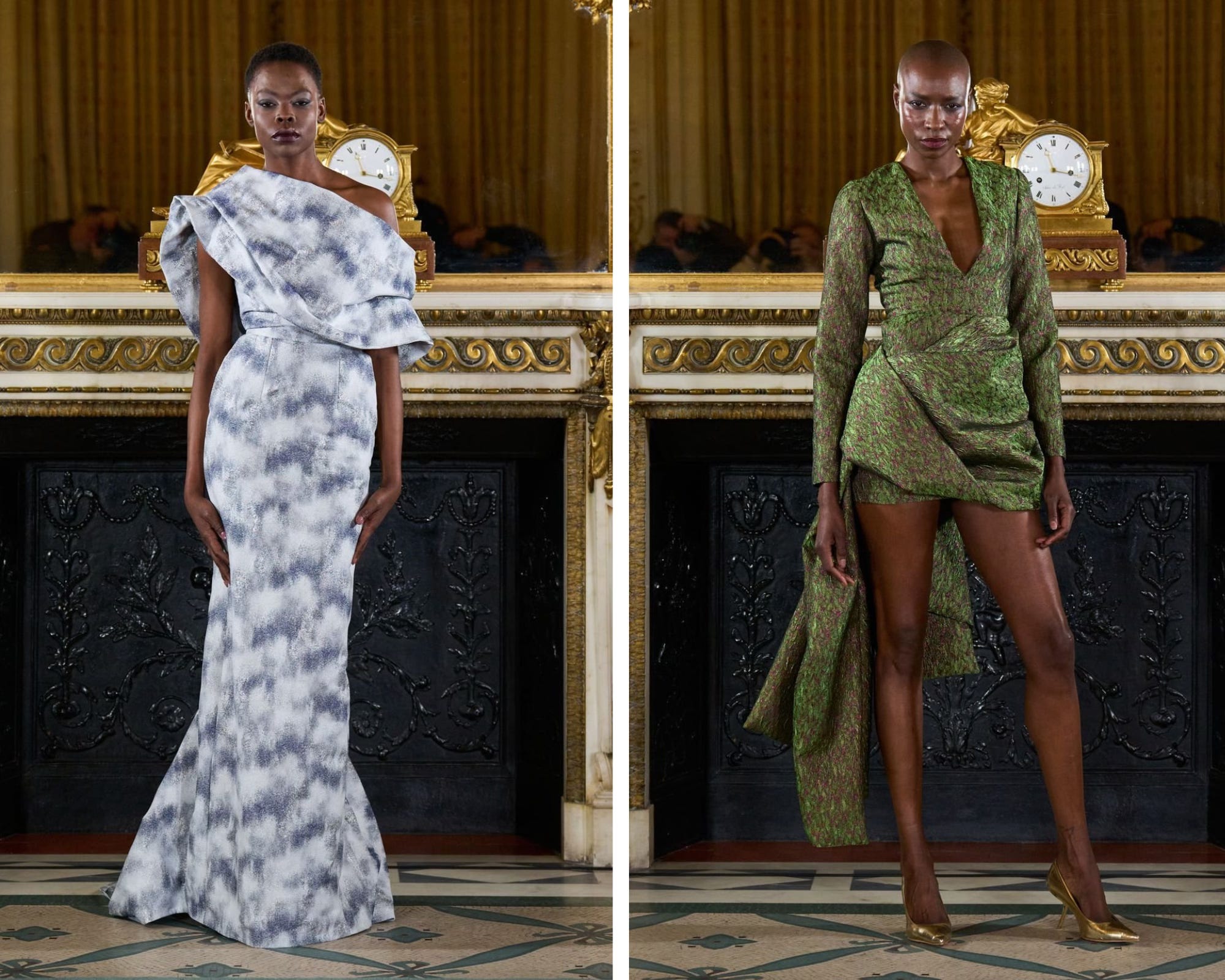
For Imane Ayissi, couture is about momentarily fleeing the lows of life. This spring/summer 2026 season in Paris, the Cameroon-born designer presented a version of that escape. He offered more than just a collection but an open invitation into the inner workings of his artistic journey, the playful and carefree moments of experimentation that are often unseen by the public, and what he calls his favourite part of the creative process. It’s both transformative and liberating.
Titled BISSAKARAK, which means “scribble” or “first draft” in the Ewondo language of Cameroon, the collection explores draping and knotting techniques across Africa and Greece. He also draws inspiration from a 2024 visit to the Museum of Modern Art in New York that featured the works of American painter Mark Rothko.
This post is public so feel free to share it.
From Everyday Ritual To Couture:
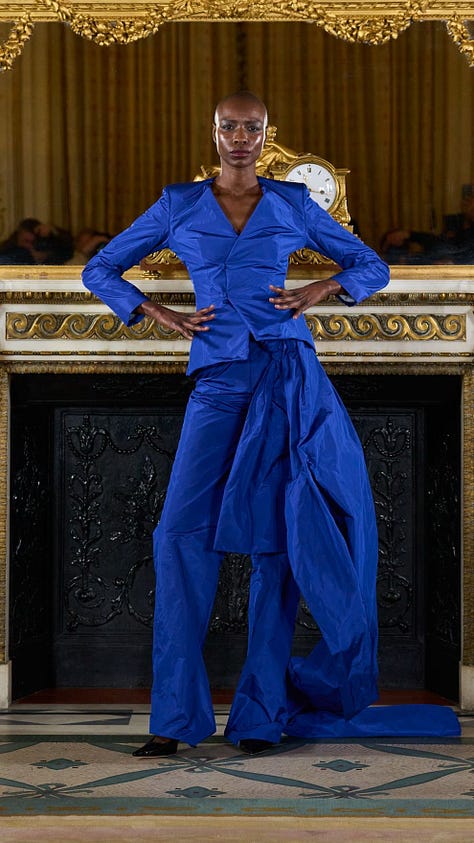
Exploring the ritual of tying loincloths in his home continent, Ayissi dreamed up exquisite garments blooming with energetic colours. Fluid, flowy and lighter in texture.
Picture how men and women across Africa wear waist cloth’s. It’s intuitive, functional, and effortless. Never about chasing perfection. It’s not something you think about too hard. It happens naturally, transforming into a new shape, a new drape, a new silhouette each time. Ayissi’s idea with these garments is to offer multiple possibilities through draping, layering, and cloaking the body.
Ghanaian Kente, raffia from Madagascar, and woven fabrics from Nigeria collide as heritage meets new-age couture, a mission his been naturing since launching his brand more than two decades ago.
When Art Becomes Fashion
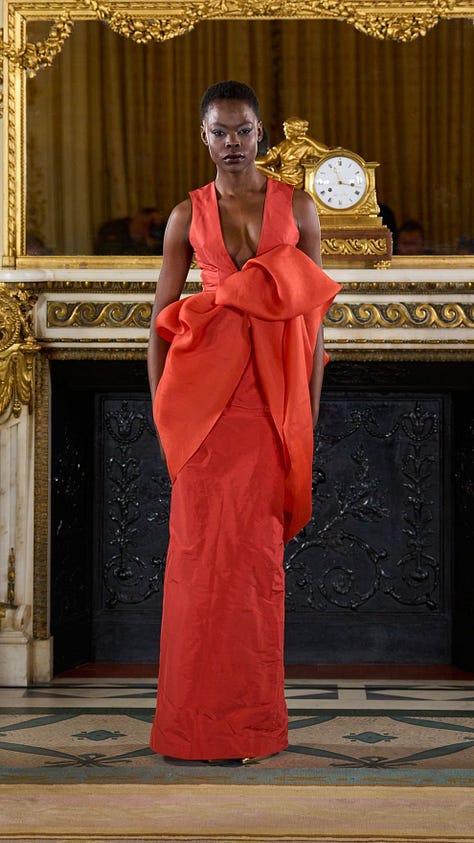
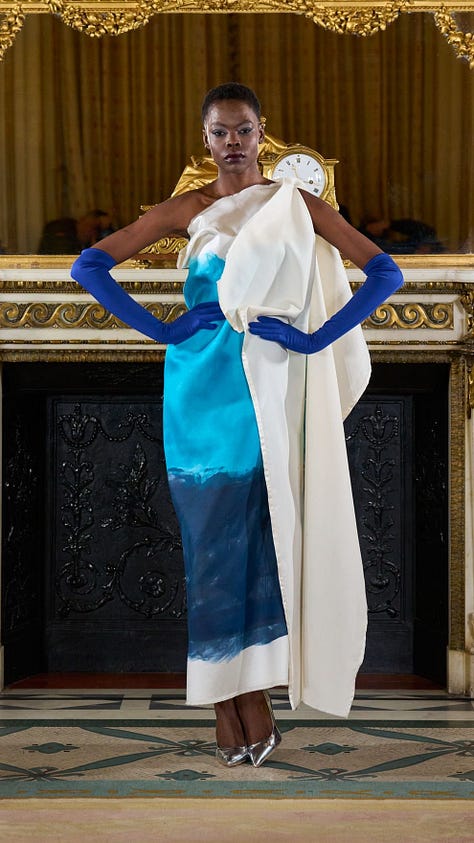
Intersecting art with style, a series of simplified, painterly gowns references the work of Rothko, who is renowned as one of the pioneers of colour field painting, a style of abstract painting characterised by large areas of intense colour. “Some of the silhouettes are inspired by the energy and depth of these colours,” Ayissi revealed via the press notes.
Rothko would have probably been proud of Ayissi’s interpretation. During his lifetime, the artist had challenged audiences to experience his works about colour in a more layered and thoughtful manner that transcended beyond societal and traditional colour psychology. For example, in his paintings, red was intended to mean more than just love. To him, the emotions behind his works were much more complex than that.
Looking at Ayissi and Rothko’s work, their common thread is a profound instinct to feel deeply and shape emotion through craft. And this collection delivers on that premise and more.
That’s all for now. Thanks for reading this edition of Africa Fashion Decoded.
NB* I’ll soon be introducing paid subscriptions. If you find value in my work and would like to support independent journalism, consider becoming a paid subscriber. Paid subscribers receive exclusive content and access and other perks.
Comments
Nothing yet. Say the first thing.
Sign in to join the conversation.