
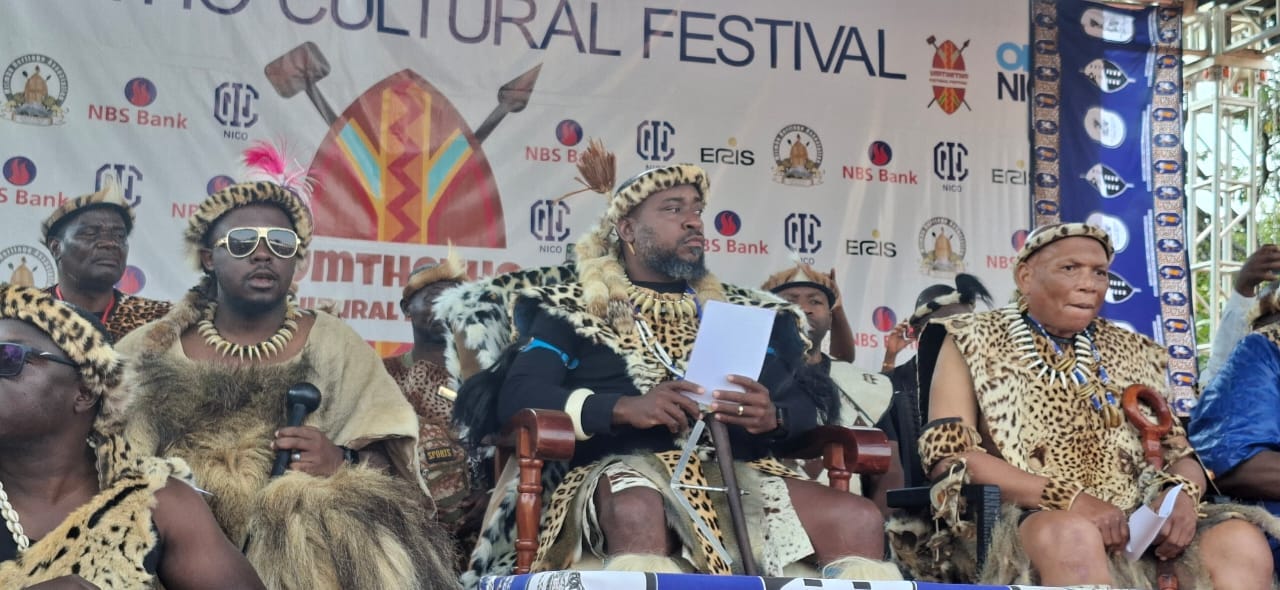
MZIMBA, Malawi — Paramount Chief Inkosi Ya Makhosi M’mbelwa V and the Mzimba Heritage Association (MZIHA) have rejected calls to divide Mzimba into smaller districts, arguing that administrative fragmentation will not automatically translate into development and could undermine the unity needed to address the district’s economic and social challenges, writes Tionge Hara.
The position was reaffirmed Saturday during the 2026 Umthetho Cultural Festival at Hora Mountain, where traditional leaders, government officials, cultural groups and delegates from across the region gathered under the theme, “Mzimba: United for Land Preservation and Sustainable Development.”
The festival became a platform for Mzimba’s traditional and cultural leadership to shift the debate from district boundaries to what they described as more urgent priorities — protecting ancestral land, conserving the environment, strengthening cultural identity and attracting investment.
Inkosi Ya Makhosi M’mbelwa V acknowledged that Mzimba, Malawi’s largest district, continues to face significant development deficits but said splitting it would not address the underlying challenges.
He argued that the size of a district is not a reliable measure of its development prospects, pointing to smaller districts that continue to experience major infrastructure and service-delivery challenges.
The Paramount Chief therefore described proposals to divide Mzimba as a “non-starter,” urging stakeholders to concentrate on securing investment and improving infrastructure rather than pursuing administrative fragmentation.
MZIHA Secretary General Khumbo Bonzo Soko reinforced the position, saying there was insufficient justification for dividing the district.
“There are calls that are quite uninformed,” Soko said. “If you look at the logic of resource allocation, there is nothing that would justify the cause for the division of the district.”
He said Mzimba should continue to be treated as “one body” and warned that the debate over division could create unnecessary divisions among communities.
“The position of the Heritage Association is that Mzimba is one body, and it should not be divided,” Soko said.
Beyond the question of district boundaries, the festival placed the protection of land and natural resources at the centre of Mzimba’s development agenda.
M’mbelwa V raised concern over the unauthorised sale of land, urging communities to protect ancestral land from practices that could undermine the interests of present and future generations.
The Paramount Chief called on residents to treat land as a long-term community asset rather than a commodity that can be disposed of without regard for its social, cultural and economic value.
Soko similarly urged communities to address environmental degradation, particularly indiscriminate tree cutting.
The appeals reflected the festival’s central message that sustainable development cannot be separated from responsible management of Mzimba’s natural resources.
While rejecting administrative division, M’mbelwa V used the festival to outline a development vision centred on Hora Mountain and its cultural heritage.
Among the projects identified for the historic site is the construction of a modern hotel designed to accommodate tourists, visitors and participants in cultural events.
A mini-stadium is also planned as part of efforts to create space for sporting activities, youth engagement and community events.
The projects are intended to transform Hora into a stronger tourism and cultural destination while creating opportunities for local businesses and young people.
M’mbelwa V commended corporate organisations and development partners that contributed to the successful staging of the Umthetho festival, saying partnerships would be critical to unlocking Mzimba’s economic potential.
The development agenda outlined at Hora was complemented by assurances from government that major infrastructure projects in the Northern Region remain on its priority list.
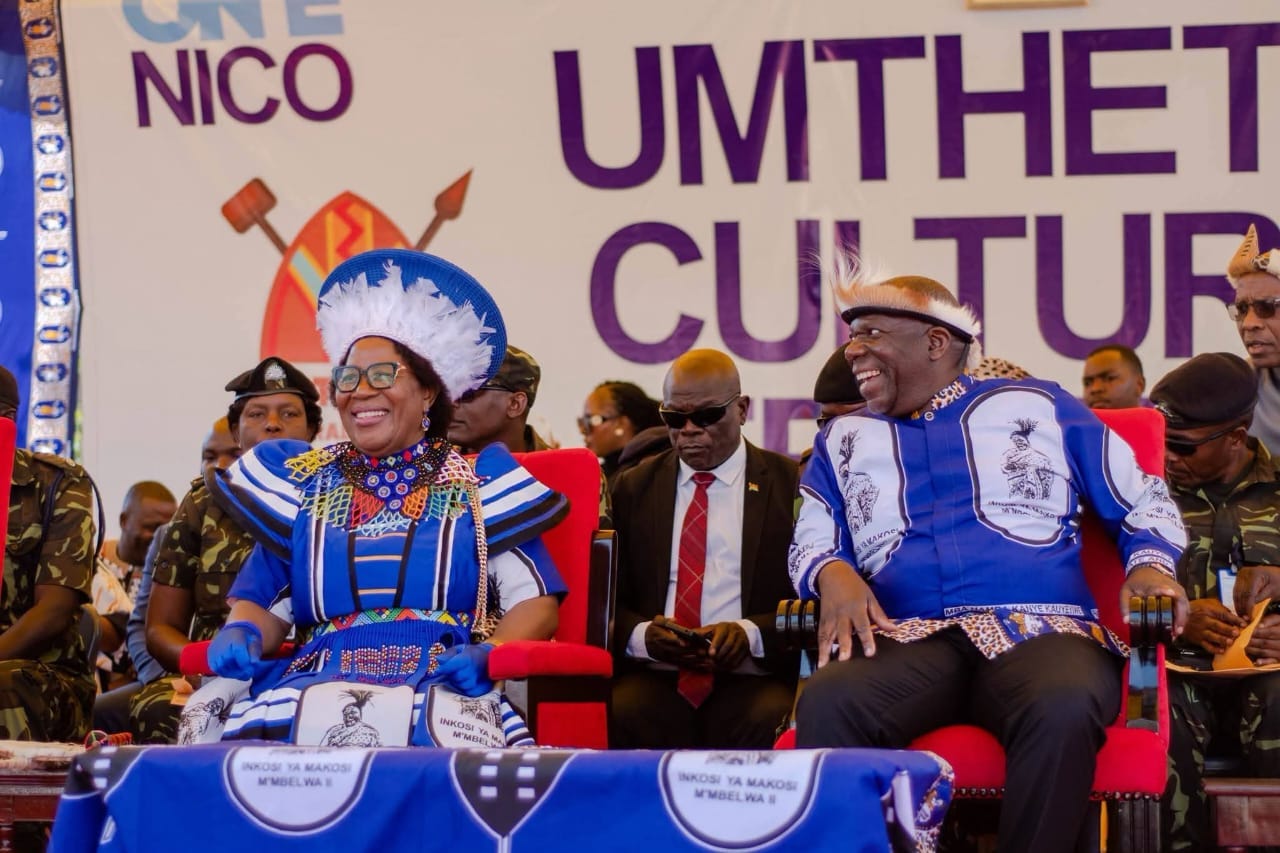
Speaking on behalf of President Arthur Peter Mutharika, Second Vice President Enock Kanzingeni Chihana reaffirmed the government’s commitment to infrastructure development and national unity.
Chihana said procurement and other procedural requirements for the proposed Mombera University were nearing completion following engagement with the Public Procurement and Disposal of Assets Authority (PPDA).
He said an announcement on the commencement of construction would be made once the remaining processes were completed.
The university project is expected to expand access to higher education and contribute to the development of human capital in the Northern Region.
Chihana also provided an update on road infrastructure, including the rehabilitation of the M1 Road.
He said funding had been secured for the Chiweta-Karonga section of the M1, with tender evaluations currently underway.
Procurement processes are also progressing for the Chitipa-Ilomba and Nyika-Nthalire-Chitipa roads.
The government is meanwhile negotiating with contractor CR20 over stalled works on the Mtangatatanga-Kafukule and Embangweni-Edingeni roads.
According to Chihana, discussions are aimed at resolving outstanding issues and allowing construction to resume.
The Phwamphwa-Njakwa road section remains subject to legal processes. Chihana said the Roads Authority is working to resolve the outstanding legal matters with the contractor before works can restart.
The Second Vice President also addressed the longstanding Kasasile land dispute, which affects communities in Nkhata Bay, Mzimba and Rumphi.
He said government had established a Cabinet Committee under his leadership to address the dispute.
The committee, he said, would seek a solution that respects the rule of law while taking into account the humanitarian consequences of the dispute and the rights of affected communities.
The issue has been particularly sensitive because of competing land claims and its implications for communities across the three districts.
The 2026 Umthetho Cultural Festival also provided a platform for strengthening cultural links between Malawi and neighbouring countries.
Traditional leaders and delegates from Zambia, Mozambique, South Africa and Tanzania attended the event, underscoring the cross-border cultural connections of communities in the region.
Chihana said culture could provide countries with a distinctive tourism product while strengthening national identity.
“Culture offers a unique tourism product for which each country has a competitive advantage,” he said, adding that countries around the world had recognised culture as an important driver of identity and economic development.
He also conveyed President Mutharika’s condolences to M’mbelwa V following the recent death of Inkosi Ya Makhosi Mpezeni of Zambia, describing the loss as significant to communities whose cultural and historical ties extend beyond national borders.
The messages from Hora ultimately converged around a common argument: that Mzimba’s development challenges require investment, infrastructure, environmental stewardship and unity rather than the creation of new administrative boundaries.
For M’mbelwa V and MZIHA, the immediate priorities are protecting land, expanding tourism, developing infrastructure and creating economic opportunities for the district’s population.
For government, the festival provided an opportunity to reassure the Northern Region that major projects — from Mombera University to road rehabilitation — remain on the development agenda.
The challenge now is translating those commitments into completed projects and measurable improvements in the lives of communities across Mzimba and the wider Northern Region.
Comments
Nothing yet. Say the first thing.
Sign in to join the conversation.