
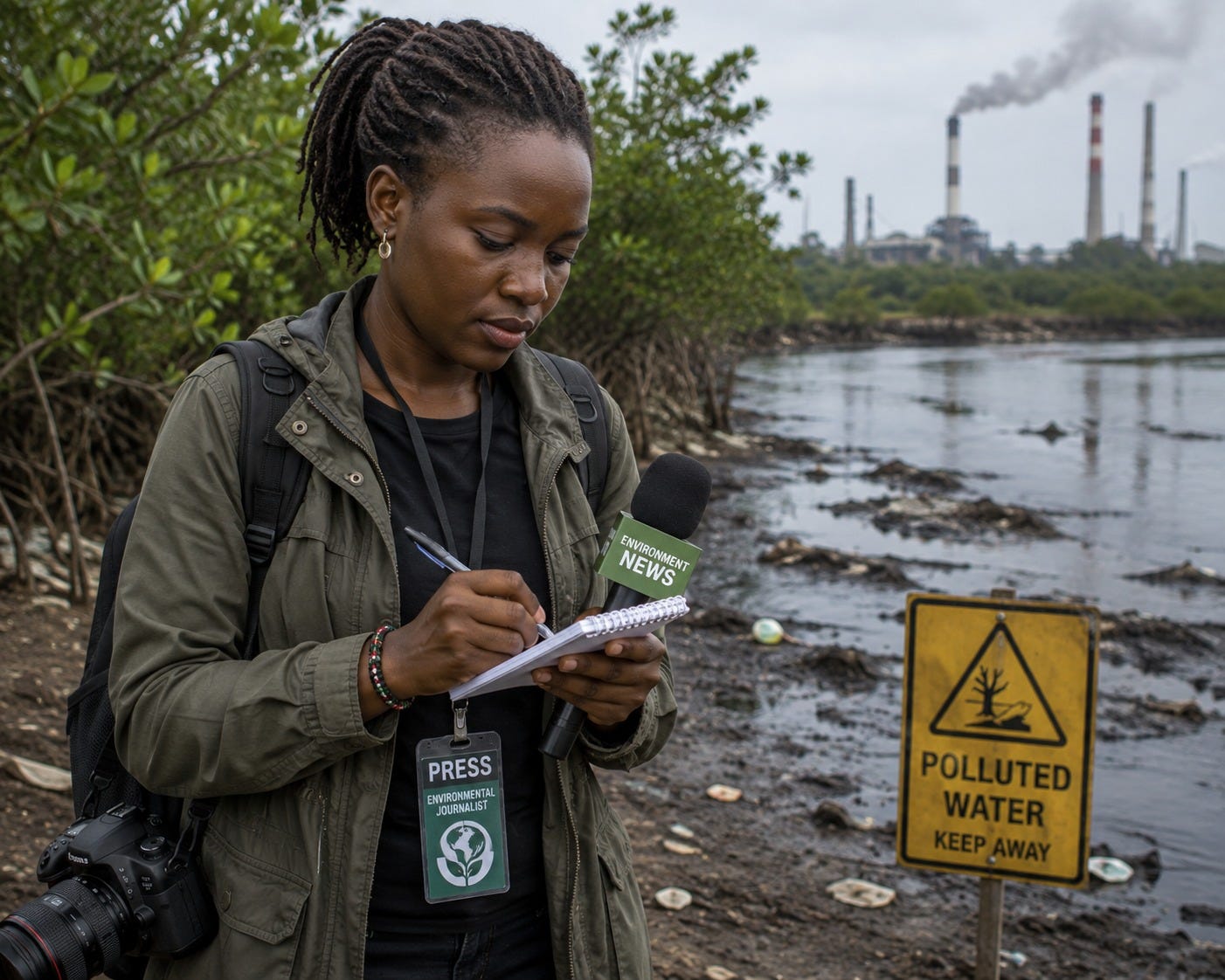
LILONGWE, Malawi — Chronic underfunding, political interference, poor access to information and growing safety concerns are undermining environmental journalism across Africa, a new 2025 report by Africa 21 has found, writes Happy Njalam’mano.
The report, The State of Environmental Journalism in Africa, examines the challenges facing journalists covering climate change, biodiversity, pollution and natural resource management across the continent.
It paints a sobering picture of a profession struggling to provide citizens with accurate, timely and in-depth environmental information, warning that the challenges are interconnected and continue to weaken the media’s ability to hold authorities and powerful interests accountable.
According to the report, inadequate funding is the single biggest obstacle to quality environmental reporting.
Journalists told researchers that many media organisations lack the financial resources to support investigative and field reporting, particularly stories that require travel to remote forests, mining sites, protected areas and rural communities where many environmental problems occur.
“The main challenge is funding for travel because our media organisations do not finance our reporting, even though most environmental stories are not covered in cities but rather in rural areas,” one journalist said.
Other journalists said environmental reporting requires substantial resources for transport, accommodation, specialised equipment and the time needed to investigate complex issues — costs that many newsrooms are unable or unwilling to meet.
The funding problem means important environmental stories can remain underreported, particularly when journalists must travel long distances to document deforestation, illegal mining, pollution, wildlife crimes or the effects of climate change on rural communities.
The report also identifies limited access to reliable environmental data as a major constraint.
Journalists reported difficulties obtaining official information, accessing government statistics and securing interviews with scientists and technical experts.
The lack of accessible and reliable data can make it difficult for journalists to independently verify environmental claims and explain the scale and impact of environmental problems to the public.
The report further highlights the challenge of translating highly technical scientific information into stories that ordinary citizens can easily understand and relate to.
Political and commercial interests are also limiting environmental reporting, particularly when investigations involve powerful actors, according to the report.
Journalists reported facing pressure while covering mining companies, deforestation, major infrastructure projects, hydrocarbons and other sectors with significant political or economic influence.
Some journalists said they had experienced hostility from government officials, while those working for state-owned media reported editorial restrictions.
“I work for a public media outlet, and the government is often opposed to this type of reporting,” one journalist said.
The findings suggest that environmental journalism is not only a technical and financial challenge but also a press freedom issue, especially where environmental investigations intersect with powerful political and commercial interests.
Safety is another major concern, particularly for journalists working in areas affected by armed conflict, illegal mining, wildlife trafficking and organised crime.
Such environments can expose reporters to intimidation, harassment and physical danger, making it harder for journalists to conduct sustained investigations in some of Africa’s most environmentally sensitive areas.
The report also identifies limited access to specialised training and professional development as a factor widening the skills gap among environmental journalists.
Journalists need specialised knowledge to interpret scientific evidence, analyse environmental data, understand climate policy and communicate complex issues accurately.
To address the challenges, Africa 21 recommends establishing a permanent funding mechanism to support environmental journalism.
The proposed mechanism would help finance field investigations, long-form reporting and cross-border investigations into major environmental issues.
The report also recommends stronger networks linking environmental journalists across countries.
Such collaboration could strengthen investigations into issues that do not stop at national borders, including timber trafficking, illegal mining, transboundary pollution and wildlife trafficking.
The report is based on responses from journalists in 47 African countries, including Malawi, highlighting that the challenges facing environmental journalism are widespread across the continent.
For Africa’s growing climate and environmental challenges to receive the sustained public attention they require, the report suggests that journalists need more than access to information — they also need the financial resources, professional skills, editorial independence and safety necessary to investigate and report effectively.
Comments
Nothing yet. Say the first thing.
Sign in to join the conversation.