
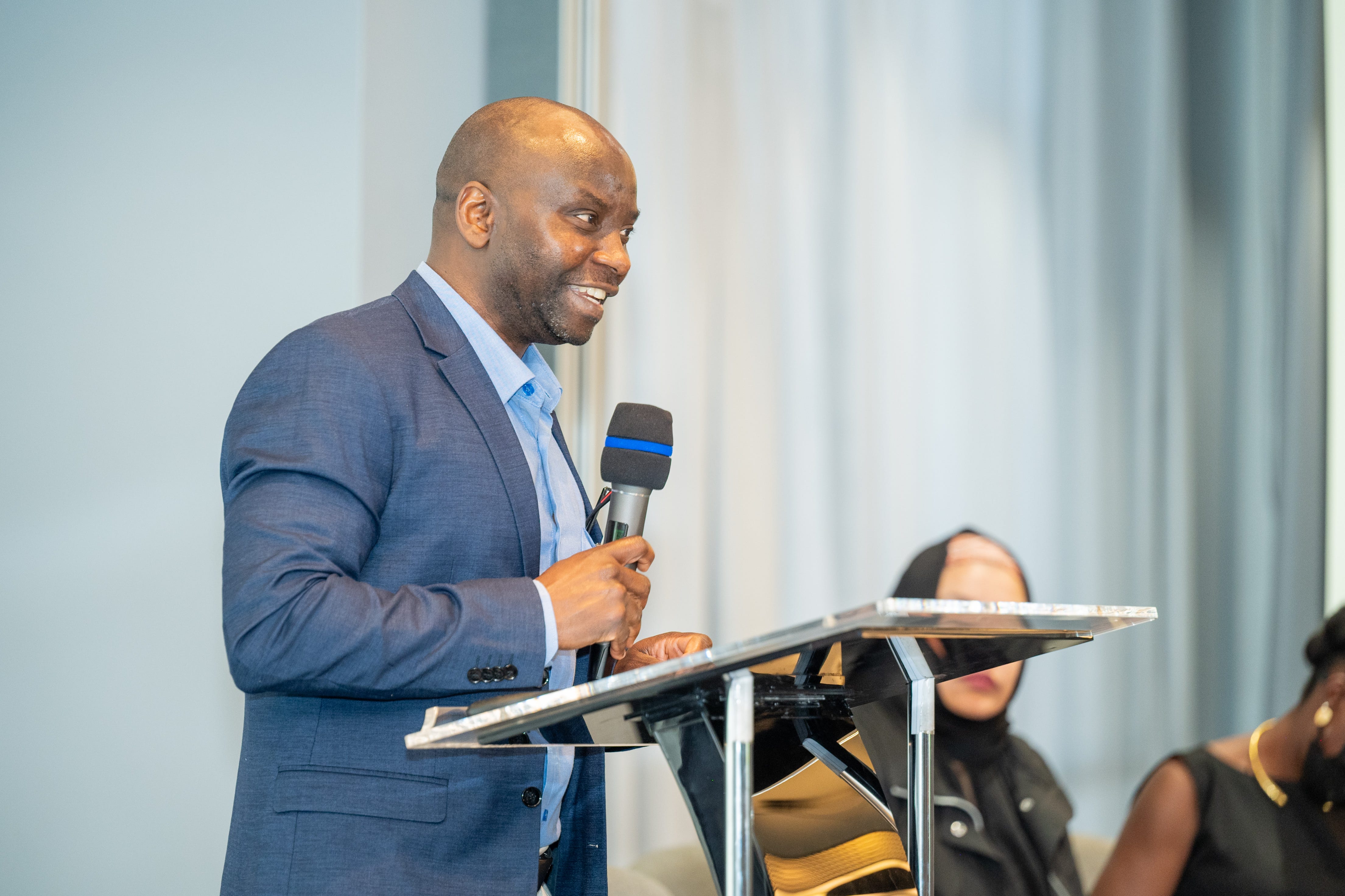
NAIROBI, Kenya —Political economist Professor Horman Chitonge argued at the 2026 Opa Kapijimpanga Lecture on Tuesday that Africa’s recurring public debt crisis reflects a deeper, structural failure to achieve economic sovereignty, writes Winston Mwale.
The lecture, “The African Public Debt Crisis from an Economic Sovereignty Perspective: Going Beyond the Symptoms,” was hosted by the African Forum and Network on Debt and Development (AFRODAD) during the sixth annual African Conference on Debt and Development (AfCoDD) on Aug. 25-28, 2026, at the Radisson Blu Hotel in Nairobi’s Upper Hill district.
Chitonge, a Centre for African Studies professor and research associate at PRISM, School of Economics, University of Cape Town, challenged explanations of African debt that blame either “fiscal profligacy” or a biased global financial architecture.
While these factors are significant, they are only surface-level symptoms.
The core issue is a structural deficit in economic sovereignty that leaves African nations vulnerable to external shocks.
“Public debt in Africa is a symptom of something deeper—low economic sovereignty,” Chitonge declared, shifting the focus from short-term fiscal metrics to long-term structural capacities.
Africa’s public debt crisis, recurring since the 1970s, is conventionally framed through two competing explanations [1]. The first, favored by international lenders, blames a lack of fiscal discipline, poor governance, and corruption.
Chitonge cited the IMF’s 2023 evaluation of Zambia as an example: “years of fiscal profligacy led to Zambia accumulating large fiscal and external imbalances. Consistently high fiscal deficits were driven by high spending on wages, subsidies, and inefficient public investment that failed to deliver growth dividends”
The second view blames a biased global financial system that subjects African borrowers to “default lending”.
UNCTAD data shows African nations borrow on average at interest rates four times higher than the U.S. and eight times higher than Germany.
While acknowledging both arguments, Chitonge proposed a third view: the permanent debt crisis is rooted in historical and structural factors.
Fiscal profligacy and high interest rates are symptoms; the true underlying cause is low economic sovereignty, which prevents African states from executing independent policies and resisting external shocks.
Chitonge traced the origins of the continent’s first major debt crisis to the 1973 oil shock, which was exacerbated by the second in 1979.
By the late 1970s, these economic strains were highly visible.
A grim 1981 World Bank assessment noted: “for most African countries, and for the majority of the African population, the record is grim, and it is no exaggeration to talk of crisis. Slow overall economic growth, sluggish agricultural performance coupled with rapid rates of population increase, and balance-of-payments and fiscal crises” were dramatic indicators of economic trouble.
Key macroeconomic indicators moved rapidly in the wrong direction during this decade:
Deficits: Current account deficits rose from $1.5 billion in 1970 to $8 billion in 1980.
Debt: External debt climbed from $6 billion in 1970 to $32 billion by 1979, while debt service doubled from 6% of export earnings to 12%.
Reserves: Foreign exchange reserves fell sharply, covering only two months of imports in 1979, and fell lower in 1980.
Pressure: Fiscal pressure rose from declining domestic revenues and deteriorating terms of trade due to falling commodity demand and rising import prices.
“By the end of the 1980s, more than 30 African countries were in economic ICU receiving structural adjustment treatment from the IMF and the World Bank,” Chitonge said, referencing historical analyses from the United Nations Economic Commission for Africa (UNECA).
The fundamental pathology of this treatment was that African nations were forced into a destructive cycle: “accessing expensive credit only to service” existing debts rather than investing in productive capacity.
Chitonge asserted that “the real problem is not the levels of public debt” [5], contrasting the 2024 debt-to-GDP ratios of major global economies with Sub-Saharan Africa’s average [6].
Wealthy nations maintain debt-to-GDP ratios that dwarf those of African countries.
For instance, Japan’s public debt stood at 290.5% of its GDP, Italy’s at 160.7%, Canada’s at 124.7%, France’s at 123.9%, and the U.S. at 123.0%.
Spain registered 118.5%, Brazil 94.8%, India 92.5%, China 86.2%, and Germany 73.6%, compared to an average of just 62.7% for Sub-Saharan Africa in 2024.
Yet, despite double or triple the debt-to-GDP ratios, wealthy countries face no defaults.
Chitonge explained that the difference lies in economic sovereignty.
High-income countries enjoy substantial “substantive” economic sovereignty. As sovereign currency issuers borrowing in their own denominations with diversified domestic economies, they retain complete autonomy over their monetary and fiscal instruments.
In contrast, African nations, lacking these structural capabilities, are highly dependent on foreign currency-denominated debt and external financial flows, making even modest debt levels unsustainable.
Chitonge synthesized several definitions of economic sovereignty, describing it as a dynamic measure of national resilience and policy autonomy.
He cited Sałek-Imińska (2025), who defined economic sovereignty as “the ability of making its own economic policies, conduct its own fiscal and monetary policies, and maintain control over key economic resources”.
He also referenced Jelili (2025), who described it as “an index that reflects the economic resilience of a country”.
Assa (2022) defined it as the “degree of freedom a state enjoys, as a sovereign currency issuer, in directing its monetary and financial instruments toward the creation of productive capabilities”.
Aspir (2020) characterized it as “the power of national governments to make decisions independently of those made by other governments”.
Chitonge emphasized that economic sovereignty is broader than monetary sovereignty (the currency principle).
It refers to the autonomy of a country to make decisions without pressure or compulsion from other nations, including decisions on its natural wealth.
Importantly, economic sovereignty “does not mean autarky,” nor does it require a country to isolate itself from the global economy.
Instead, it is measured by the levels of dependence a nation exhibits across several critical vectors, including development support (aid), technology, manufactured products, foreign investments, foreign ideas, and the export of primary commodities.
Without substantive economic sovereignty, political independence is largely hollow.
“Without economic sovereignty, political sovereignty is only a token displayed in national flags, national anthems, electing of national leaders, and national assembly, national army, central bank, etc.”.
He invoked Kwame Nkrumah’s warning: “we are fast learning that political independence is not enough to rid us of the consequences of colonial rule”.
True liberation requires establishing de facto economic sovereignty.
Chitonge outlined “The Four Pillars of Economic Sovereignty” designed to guide African nations toward structural self-reliance:
Monetary and Fiscal Autonomy: The ability of a state to execute independent economic policies without external compulsion. High levels of foreign debt directly undermine this pillar. Citing Sałek-Imińska (2025), Chitonge explained that foreign debt obligates payments to external creditors: “This can give rise to pressure to pursue certain economic policies and increase the risk of debt crises, which in turn threatens economic stability. Foreign creditors can exert pressure to adopt certain economic reforms, which limits a country’s sovereignty”.
Productive Capabilities Autonomy: The freedom and capacity of a nation to develop its own industrial base, diversify, and reduce reliance on external manufactured goods.
Food and Energy Security: The domestic capacity to feed and power the nation, shielding it from global supply chain and price shocks.
Control Over Natural Resources: Ensuring that national wealth is exploited to advance the interests of citizens rather than foreign multinationals.
At the heart of Africa’s low economic sovereignty is a severe deficit in productive capabilities.
Chitonge utilized UNCTAD’s definition of productive capabilities: “the productive resources, entrepreneurial capabilities and production linkages which together determine the capacity of a country to produce goods and services and enable it to grow and develop”.
These capabilities require physical tools, economic infrastructure, human skills, local financial resources, technical know-how, research and development (R&D) capacities, supportive trade and industrial policies, and strong institutions.
“Building productive capabilities helps to strengthen economic sovereignty,” Chitonge argued, because it gives a country the structural power to transform and diversify its economy, reducing external vulnerability.
To quantify Africa’s deficit, Chitonge presented comparative historical data on the global Productive Capacity Index (PCI) between 2000 and 2022.
The figures paint a sobering picture of stagnation: Africa’s index rose marginally from 23.4 in 2000 to just 31.9 in 2022, staying far below North America (66.8 in 2022), Europe (57.9), East Asia (59.0), Latin America & Caribbean (47.7), South East Asia (46.9), and the global average of 46.8 in 2022.
This deficit in domestic productive capacity creates a condition of “real economic dependence”.
Africa’s Manufacturing Value Added (MVA) per capita in 2023 was a mere $226, compared to a world average of $1,936.
In contrast, the MVA per capita stood at $1,186 in Latin America, $1,522 in Asia, $4,986 in North America, $5,379 in the OECD, and a staggering $6,185 in the European Union.
Lacking the ability to manufacture high-value goods, African countries are trapped in exporting raw materials and suffer from permanently negative terms of trade, forcing them to rely on foreign financial flows, such as aid, FDI, remittances, and external debt.
The consequences of low economic sovereignty are vividly illustrated by Africa’s relationship with its own natural wealth.
While the continent possesses immense natural resources, it has historically failed to translate this wealth into domestic prosperity.
Chitonge presented the Natural Resources Exploitation Index, which measures a region’s reliance on raw resource extraction.
Between 2000 and 2020, Africa’s index remained exceptionally high, starting at 49.9 in 2000 and ending at 49.0 in 2020.
By comparison, North America’s index fell from 30.5 to 25.1, Europe’s declined from 30.8 to 26.5, and East Asia maintained a low index of 16.7 in 2020, while the global average was 37.8.
These figures demonstrate that Africa is structurally locked into exporting raw, unprocessed materials while other regions focus on value addition.
Chitonge characterized this imbalance as “the curse of producing raw-materials for cleverer people in the world to add value to those raw materials and get much more value from them”.
To demonstrate this “modern slavery,” Chitonge shared a stark real-world example from the global coffee trade.
“A kg of bean coffee of good quality may go for US$2.5 per kg,” Chitonge explained.
“The same quantity of coffee roasted, ground and packaged may go for US$40” on supermarket shelves in the Global North.
“This is where there is massive haemorrhage of money from the global South to the global North,” he said [18]. “It is not only the loss of money per kg. It is also the loss of jobs”.
This exploitative dynamic is rooted in colonial history.
Chitonge quoted Albert Sarraut, France’s Minister of Colonies in 1923, who patronizingly wrote that France must organize the exploitation of territories and resources because “the native races... did not provide alone or did not know how to measure in value, and whose profit was thus lost for them”.
To counter this, Chitonge cited Tanzanian founding father Julius Nyerere, who argued that “a truly liberated nation is a self-reliant nation, one which has freed itself from economic and cultural dependence on other nations”.
True liberation requires establishing Permanent Sovereignty Over Natural Resources (PSNR), which is intrinsically linked to the right of self-determination.
Another critical manifestation of low economic sovereignty is the continent’s growing inability to feed itself.
Despite possessing vast tracts of arable land, Africa’s food import bill has grown exponentially, rising from $17 billion in 2000 to $28 billion in 2005, $55 billion in 2010, $72 billion in 2015, $78 billion in 2020, $104 billion in 2022, and a projected $110 billion in 2025.
This massive reliance on foreign agricultural products represents a profound structural vulnerability.
Every dollar spent importing food is a dollar that cannot be used to build domestic productive capacity or service public debt.
Furthermore, this heavy reliance on food imports raises Africa’s vulnerability to international price volatility, global supply chain bottlenecks, and geopolitical conflicts.
To move the conversation beyond theoretical analysis, Chitonge detailed a robust methodology for assessing and indexing economic sovereignty.
The framework divides indicators into internal and external categories:
Internal Sovereignty Indicators: These combine fiscal metrics, such as the status of the national budget, the structure of domestic tax revenues, domestic public debt, inflation rates, exchange rate stability, unemployment rates, GDP per capita, and the diversity of the domestic export basket.
External Sovereignty Indicators: These focus on a country’s trade balance, the size of its foreign exchange reserves, and the scale of its external public debt.
The framework further organizes these indicators into three operational dimensions:
Proactive: Local economic aspects reflecting resilience, including infrastructure, skills, structure, innovation, and technology.
Defensive: Capacity to pursue economic objectives with minimal interference, including fiscal and monetary autonomy, food/energy security, external debt levels, and food import ratios.
Prosperity: Elements promoting sustained economic growth, including governance, accountability, the rule of law, levels of corruption, and state implementation capacity.
Chitonge presented the 2025 Economic Sovereignty Index (ESI) rankings, which clearly illustrate the global disparity in economic power.
The index ranks countries based on their structural resilience and policy autonomy.
High-income nations lead the global rankings: Sweden (87.6, rank one), followed by Switzerland (87.3), Denmark (86.3), the United States (85.0), Germany (85.0), the United Kingdom (84.8), Finland (84.7), Canada (84.0), Japan (83.3), and Australia (83.2).
In contrast, African states score much lower.
The top African performers are Mauritius (62.9, rank 40), South Africa (55.0, rank 53), Tunisia (50.6, rank 64), Morocco (49.7, rank 67), Botswana (48.2, rank 68), Namibia (47.5, rank 70), Egypt (45.1, rank 74), Ghana (42.6, rank 78), Algeria (41.7, rank 82), and Côte d’Ivoire (39.4, rank 84).
The bottom of the index is dominated by African countries, including several in or at high risk of debt distress: Uganda (31.2, rank 92), Nigeria (29.8, rank 93), Angola (29.2, rank 94), Cameroon (29.0, rank 95), Mauritania (28.8, rank 96), Burkina Faso (27.7, rank 97), Mozambique (27.9, rank 98), Madagascar (24.9, rank 99), Ethiopia (24.0, rank 100), and Mali (23.0, rank 101).
Chitonge pointed out that the bottom of this index correlates almost perfectly with the geography of Africa’s recurring debt crises.
Countries like Angola, Ethiopia, Mozambique, and Nigeria, which score lowest on economic sovereignty, are the same nations that find themselves repeatedly trapped in debt restructuring cycles.
In his closing thoughts, Professor Chitonge reiterated that African nations must look beyond the symptoms of the public debt crisis if they hope to secure a prosperous future.
“Public debt crisis is not something new in Africa; it has been a recurrent problem,” Chitonge concluded [23]. “But public debt crisis is only a manifestation or symptom of a much deeper problem: low economic sovereignty”.
To resolve the root causes of the debt trap, African nations must consciously build their substantive sovereignty.
This does not mean pursuing isolationist autarky, but rather ensuring that African states regain control over their monetary and fiscal affairs, secure control over their natural resources, cultivate the autonomy to build domestic productive capabilities, and achieve food and energy security.
“Strengthening economic sovereignty is the condition for achieving national sovereignty,” Chitonge declared, “and it entails reducing all different forms of dependence”
Until the structural imbalance is corrected, the flags, anthems, and elections of the continent will remain nominal symbols of a freedom yet to be fully realized.
Comments
Nothing yet. Say the first thing.
Sign in to join the conversation.