
August 07, 2026
Oil prices rose on Friday, August 7, 2026, with Brent up about 1% to roughly $83–$83.50 per barrel and WTI gaining similarly to around $78–$78.50. The increase reflected weak U.S. July jobs data, which showed a net loss, and continued uncertainty over stalled U.S.-Iran talks that could affect Strait of Hormuz flows. Both benchmarks are still headed for weekly losses of about 9–12% after earlier optimism over a diplomatic breakthrough faded. Gains were limited by reports of an Iran-Oman agreement on reopening the Strait, though Iran’s many conditions suggest the U.S. is unlikely to accept the terms.
Citi raised its third-quarter 2026 Brent crude forecast to $80 per barrel from $75, citing extended U.S.-Iran nuclear negotiations that have delayed a resolution and supported near-term prices. The bank still expects a deal eventually, while keeping its fourth-quarter 2026 forecast at $70 and its full-year 2027 outlook at $65.
Bloomberg: Libya Sees 2 Million-Barrel Oil Plan on Track as US Pushes Unity
Libya’s National Oil Corp. says its plan to increase crude production to 2 mb/d by early 2031 remains on track after a US-brokered unified budget provided more than $2 billion in operating funding. The company has maintained output at about 1.4 mb/d and aims to restart idle fields while investing $20 billion alongside $16 billion from international partners. A $1 billion loan will help raise output above 1.5 mb/d by mid-2027, with additional financing planned afterward.
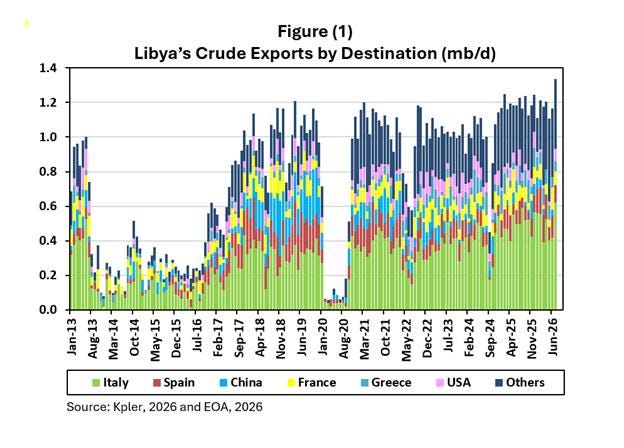
Figure 1 shows Libya’s crude oil exports by destination. Both production and exports have been rising, with crude exports reaching their highest level since the fall of Gaddafi. Output and shipments would have been even stronger without domestic disputes, labor strikes, and power shortages. Power shortages remain a major obstacle to further production and export growth, and despite recent progress, reaching more than 2 mb/d remains questionable, as discussed below.
Geography, crude quality, and the configuration of European refineries make Europe the main market for Libyan oil. The key questions are: 1. Once Libya raises production above 2 mb/d, where will the additional oil go? 2. Will such an increase create tension within OPEC+? 3. Libya is not currently exempt from quotas, but once it recovers production to pre-2011 levels it will become subject to them. 4. What happens then?
Comments
Nothing yet. Say the first thing.
Sign in to join the conversation.