
A Magical Theory of Art is a series exploring the intersection of imagination, art, and the occult. The essay is about wandering the kaleidoscopic edge of sleep and developing our innate capacity for liminal mind. How might learning to dwell in the in-between open creative possibilities and clearer perception?
A Magical Theory of Art is now a reader-supported series. My intention is to keep the theoretical and philosophical portions of these essays available to all, with more practical content for paid subscribers at the end of the article.
If these essays have sparked something in you, I invite you to consider becoming a paid supporter. Your support makes this research possible and allows me to continue writing, painting, and sharing these ideas with you. You can also you can support my work by purchasing a print or original artwork.
Dreaming: the Original Altered State
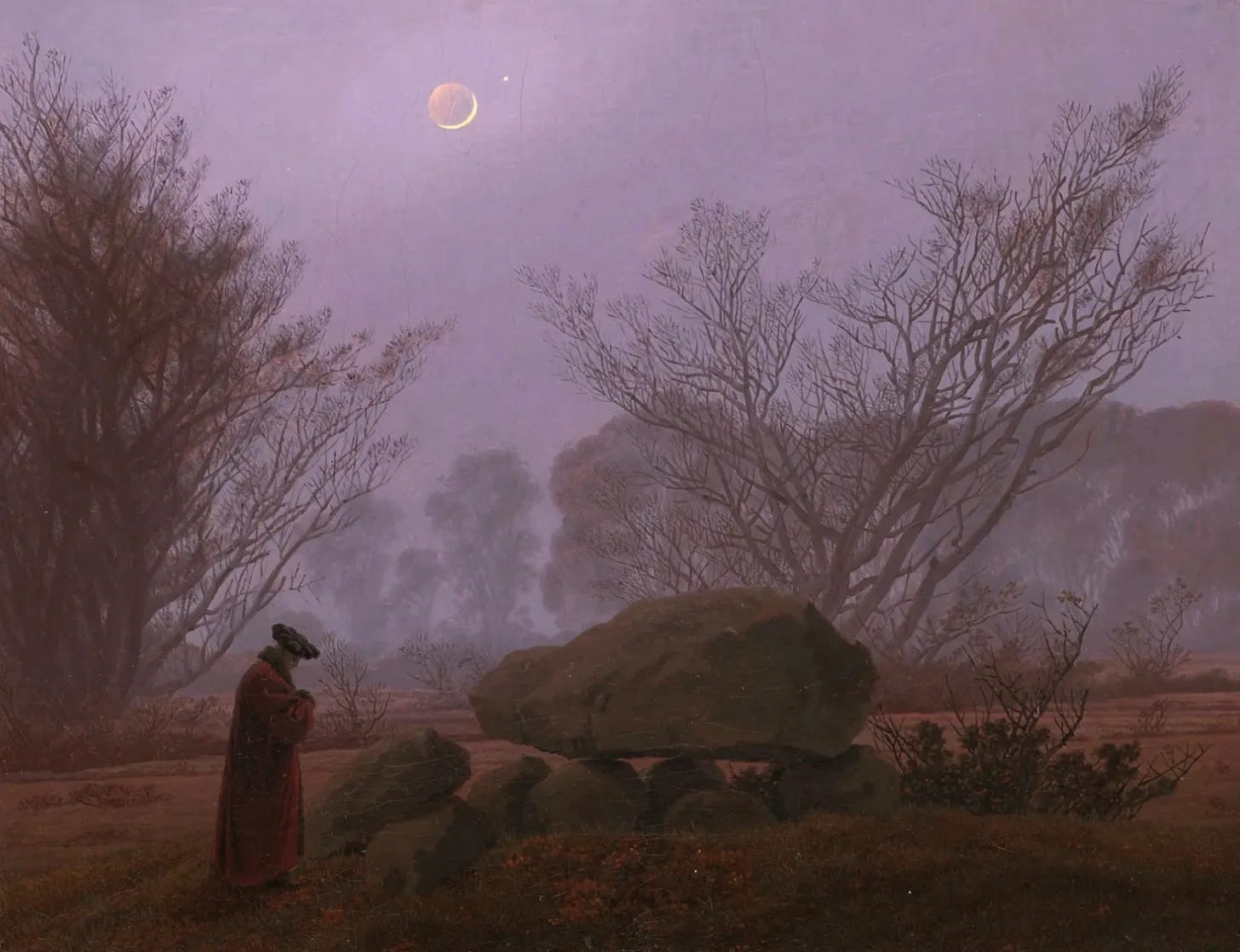
Dreaming is the original altered state. Whoever you are, whatever your orientation to reality may be—materialist, panpsychist, idealist, or otherwise—we are all witnesses to this weird mode of consciousness. Every night, ready or not, the unknown seeps in, and we find ourselves in a mirror land, meeting our mirror self. Dreaming is everyone’s innate point of contact with the other side of things.
As per ancient symbolism, if waking consciousness is the bright light of the sun, then dreaming belongs to the moon, whose reflected light illuminates an autosymbolic landscape spontaneously woven from images, memories, and associations. But there are also dawn and dusk, the liminal hours where one world flows into the other, reminding us that consciousness is also a continuum. What might happen, or be revealed, if we learned to linger in crepuscular consciousness a little longer? This is where the practice of liminal dreaming begins.
Consciousness at the Edge of Sleep
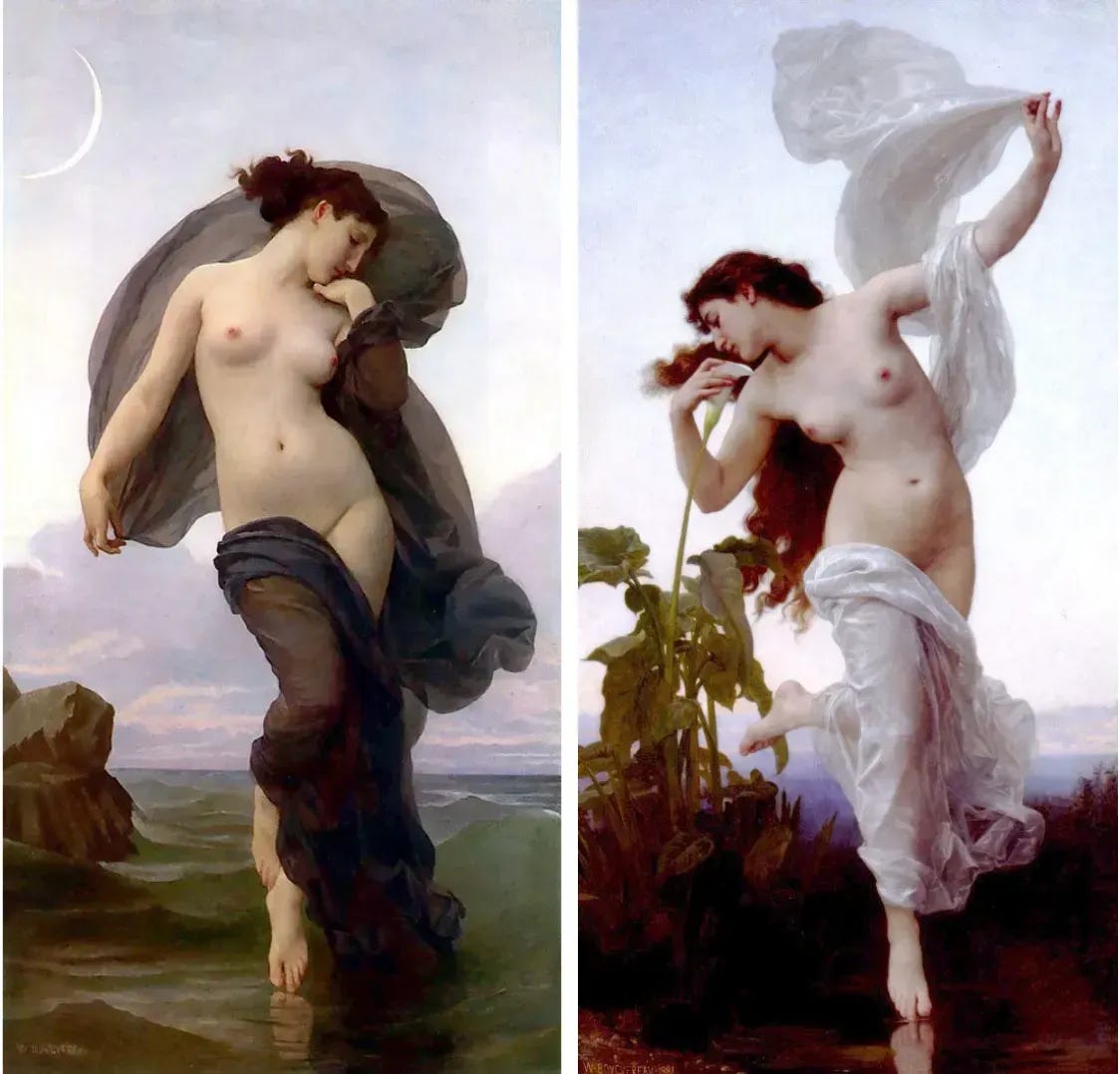
“The seat of the soul is where the inner world and the outer world meet.” — Novalis
In Liminal Dreaming1 (2019), Jennifer Dumpert invites the reader to explore consciousness at the edge of sleep and offers a wealth of useful practices for doing so. Dumpert is the founder of the Oneironauticum, an international organization dedicated to exploring the phenomenological experience of dreams as a means of experimenting with the mind, which I think is really cool.
Liminal dreaming is the transition state between wakefulness and sleep. It bookends both ends of sleep: hypnagogia, as we descend into sleep, and hypnopompia, as we return to daylight consciousness. It’s a wild, unstable space where the body-mind unloads sensory data and the self loosens its grip. Space and time become distorted; thoughts and memory trigger multi-layered chains of association. Most people experience hypnagogic hallucinations. It’s not uncommon to see faces turn our way and dissolve, or to perceive geometric patterns, lights, and colours, or to hear distant voices and humming sounds, or sometimes an odd sentence reverberates. Body jerks and twitches are common too.
Liminal dreaming is weird, psychedelic, and easy to access. As a practice, Dumpert argues that it can serve as a channel for creativity, problem-solving, metacognition, healing, and the playful exploration of consciousness. As I discussed in a previous installment of A Magical Theory of Art, ancient dream mystery traditions understood the potency of this in-between state, and hypnagogia was integral to dream incubation practices throughout antiquity. To me, though, the real appeal is in the cultivation of a liminal mind.
Liminal Mind: Seeing Double
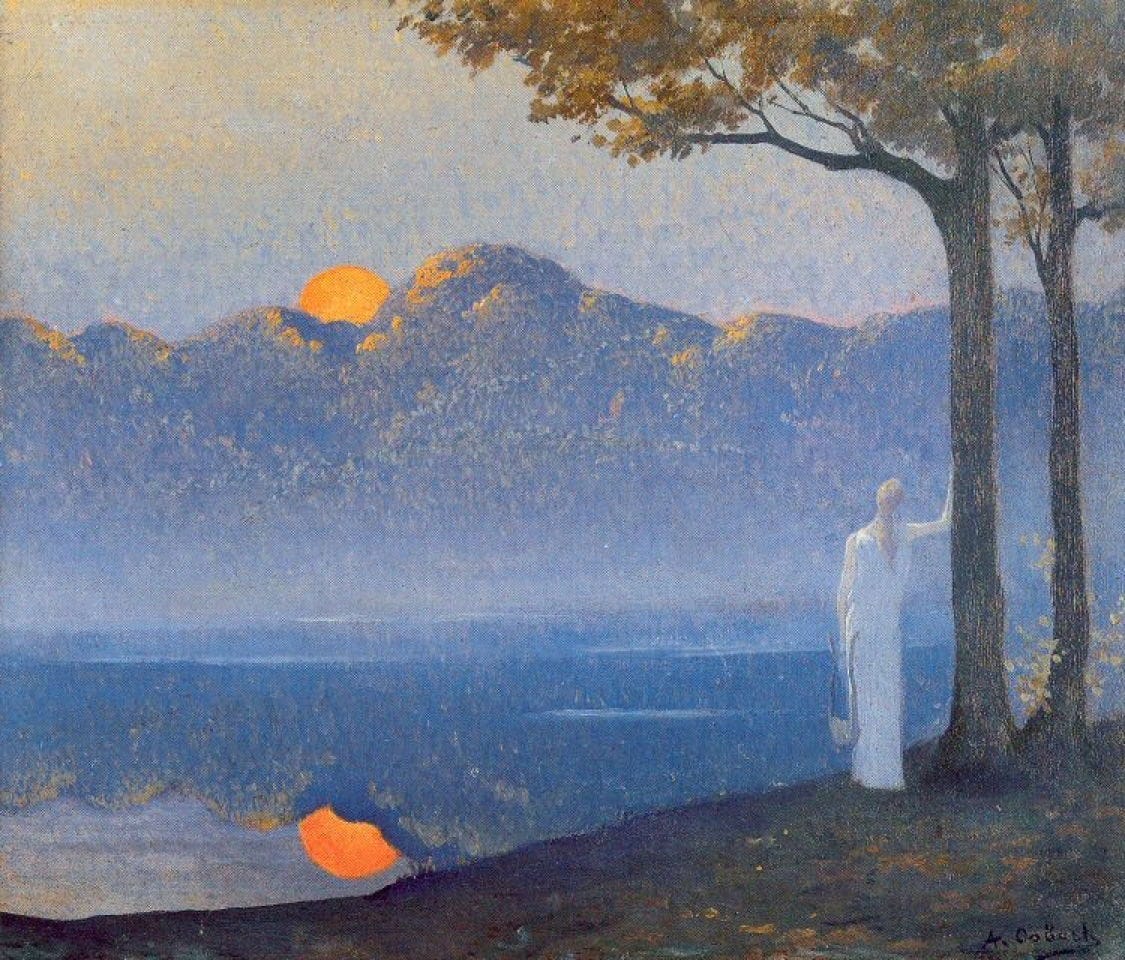
“We don’t see things as they are, we see them as we are.” — Anais Nin
A liminal mind is the capacity to perceive the material world and the imaginal overlay that interpenetrates it simultaneously. We all experience material reality through the gate of our human senses, which, as points of access between the external and internal world, are liminal apparatuses in themselves. Reality is always in some way mediated—by our senses and also our imagination. To see is to interpret what we see, meaning that “the mind does as much work as the eye” (Dumpert, p. 81). As such, the imagination is a core faculty of perception. A developed liminal mind can hold both orientations at once, like looking through a bifocal lens.
Not only is our experience of reality entangled with memory and symbolic association, but selective attention also filters the overwhelming flood of sensory information we swim through at all times. While this keeps us sane, it also creates frustrating blind spots. Anyone who has tried drawing from life will be familiar with how difficult it is to unlearn the visual shortcuts that underpin perception. As we attempt to draw what we see on the page, most are surprised by how little of the objective world we actually see, and how much the imagination is constantly filling in the blanks. When I teach students to draw, I am really teaching them to see more accurately.
Similarly, foundational magical practices often include practices for cleansing the lens of perception and deconditioning the habits of selective attention that narrow our experience of reality. Developing “supernatural powers” has a lot to do with learning to notice what ordinarily escapes awareness while becoming sensitive to increasingly subtle stimuli. Attention is a spell we can cast (and also our Achilles’ heel in predatory digital spaces designed around its capture and extraction).
So when we turn our attention toward liminal mind, our metacognition becomes heightened, enabling us to observe the unconscious layers that filter perception. New impressions can then penetrate our now loosened mental barriers, allowing us to perceive the imaginal more clearly. As a result, cultivating a liminal mind may open the floodgates to a wide array of unusual, thrilling, and sometimes uncanny experiences.
Perhaps it is a state of mind that unleashes psychic phenomena and invites run-ins with otherworldly intelligences. Or, maybe it’s just an opportunity to witness the spontaneous, absurd drama of the unconscious, and none of it means anything. Thankfully, cultivating a liminal mind doesn't require belief to trigger worthwile experiences. It is how we choose to engage with and act on the content revealed by our liminal experiences that determines their creative potential.
So let’s talk about how this.
The Creative Sweet Spot
“Creativity is not the sole domain of artists, nor is the need to generate ideas confined to academics or inventors. We all hold the potential to make things, to ponder things, and to generate ideas.” — Jennifer Dumpert
Once we learn to bask in the liminal dreaming state with greater conscious awareness, we can begin to turn the bifocal lens of liminal mind toward whatever we fancy. Whether we're seeking inspiration, a creative solution to a problem, or pondering a philosophical question, this mode of consciousness often reveals novel associations and possibilities that our ordinary habits of thought tend to overlook. Imagination informs perception; creativity and problem-solving require that we perceive things differently.
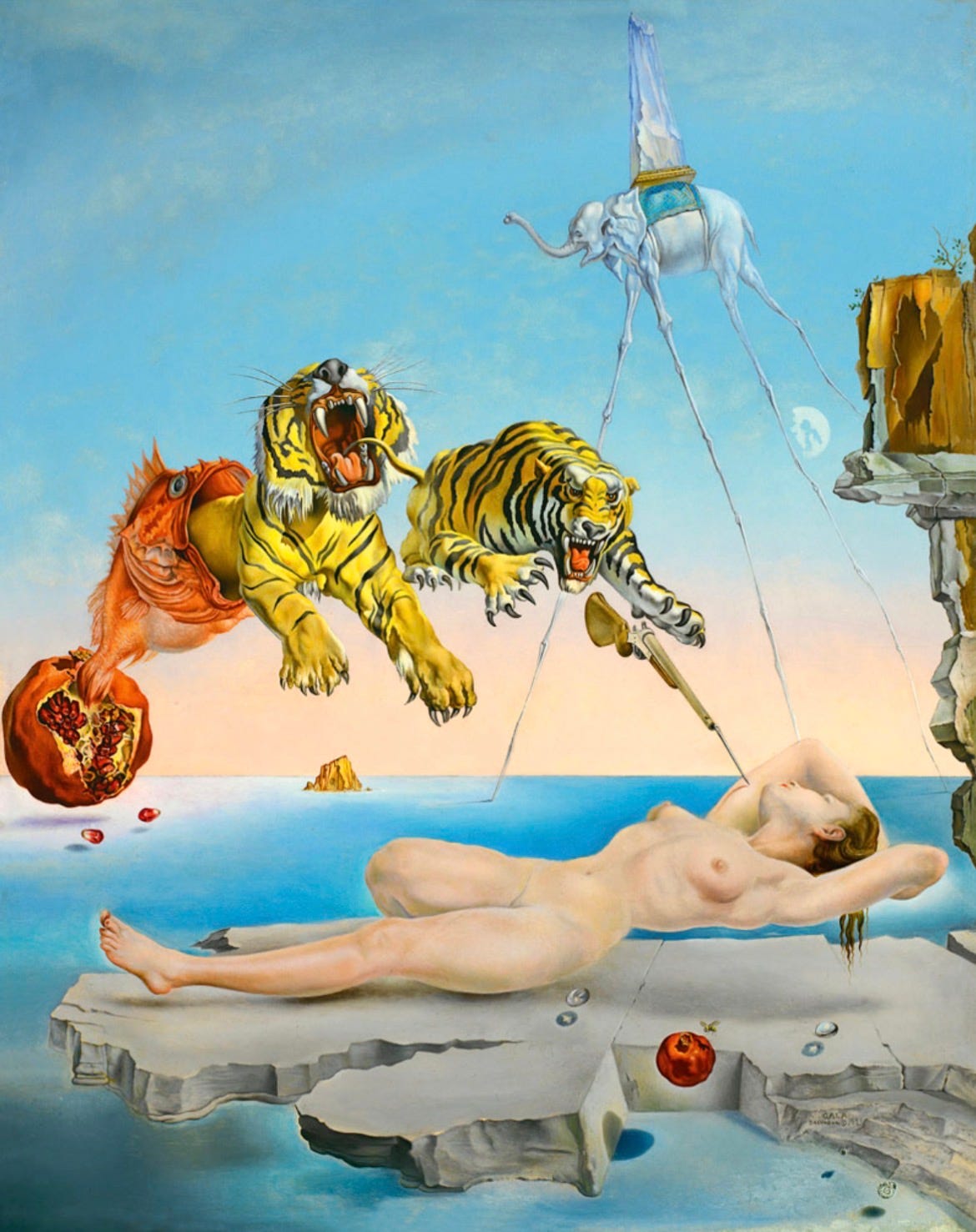
Historically, we know of many visionaries who have deliberately cultivated the hypnagogic state to unlock their creativity. Salvador Dalí is perhaps the most famous since dreamscapes were the core focus of his work. Edgar Allan Poe and Franz Kafka both drew on the liminal dream state as a source of imagery for their writing. We also know that Beethoven, Isaac Newton, and Thomas Edison practiced it when they needed to solve a difficult problem2.
Recent research on dreams corroborates liminal dreaming’s creative application, referring to hypnagogia as the “creative sweet spot.” In one study, participants who spent as little as fifteen seconds in this state were three times more likely to solve creative problems than those who remained awake or those who fell into deep sleep3.
While our culture tends to uphold reason as the pinnacle of intellectual achievement, it often neglects the value of the imagination as a legitimate way of knowing. I'm not suggesting that imagination should replace reason, but it might do us good to see them as complementary functions that “together produce a fuller understanding of existence” (Dumpert, p. 102). Liminal mind is great at perceiving unexpected patterns, symbols, and relationships while the analytical mind evaluates, refines, and gives them concrete form. They are meant to work in concert, with one opening new unforeseen possibilities and the other testing and developing them.
Dear reader, A Magical Theory of Art is now a reader-supported series. My intention is to keep the theoretical and philosophical portions of these essays available to all, with more practical content for paid subscribers. Below, I share five tips that have helped me cultivate a liminal dreaming practice, inviting you to experiment with liminal mind for yourself.
If these essays have sparked something in you, I invite you to consider becoming a paid supporter. Your support makes this research possible and allows me to continue writing, painting, and sharing these ideas with you. You can also you can support my work by purchasing a print or original artwork.
Comments
Nothing yet. Say the first thing.
Sign in to join the conversation.