
In this episode Paul Hellier (of The Fair Food Forager and Friends Show) and I discuss electromagnetism, frequency, EMF, the world of physics and the promotion of certain scientists including Einstein.
Think differently... The Fair Food Forager & Friends show is a guest / interview based show on health, history, environment, geopolitics, esoteric, taboo and sometimes mind blowing, informative chats with anyone questioning the accepted narrative. Things the mainstream just won't talk about.
The auto-generate transcript has only been lightly edited, so the usual caveats apply.
Hans: Anyone who has lived through the last decade or so with their eyes open has gotten quite the education in how people attempt to twist reality to serve their own purposes. Certainly that has been going on for as long as history. I particularly appreciate Robert Frederick’s treatment of Francis Bacon.
I was familiar with a lot of the basics of Francis Bacon and particularly his influence on science. But Robert Frederick opened my eyes to how that was just one small part of a much larger kind of program for world domination of the British Empire. So when you go back and take a look at the history of science, you can see how certain scientists have been promoted for better or worse, to serve other people’s agendas. Everyone wanted their own nation’s scientists to be acclaimed, the best and brightest and savviest of all the scientists in the world. And those rivalries led to a lot of skullduggery taking place in the background that only accidentally comes to light even centuries after the events.
Hans: Well, thank you so much for having me on.
Hans: my story is I started off in industrial engineering because I wanted to be an entrepreneur and run my own business. I very quickly realized that if I was going to run my own business, I probably needed to invent some product that I’d be able to sell. That got me into physics. And before I knew it, I had graduated with a PhD in theoretical electromagnetism.
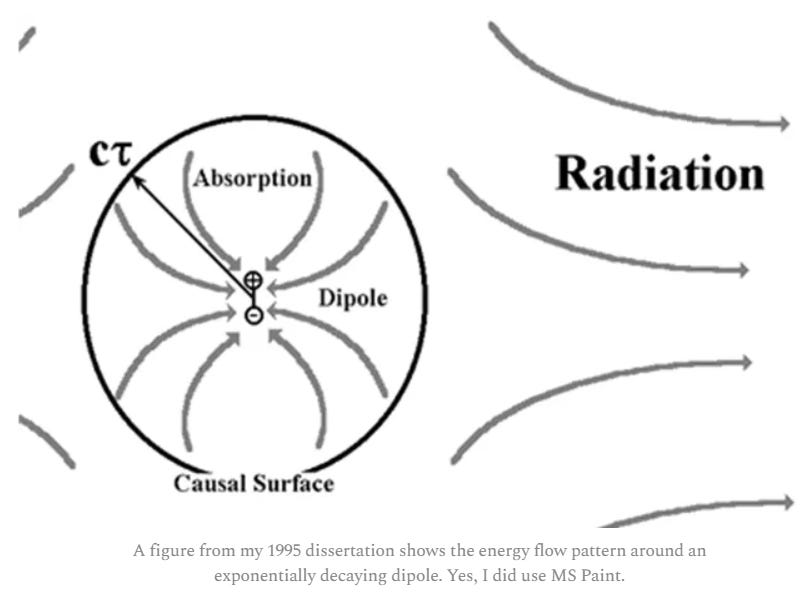
I very quickly realized that there is a vast difference between what physicists do for electromagnetism and the practical everyday electromagnetism that electrical engineers do. So, a few more years of study on top of the PhD and I finally landed my first job as an ultra-wideband antenna designer. That married my interest in understanding the evolution and time Domain Behavior of Electromagnetic Fields with my physics interest in energy flow and understanding how radiation works and finding a way to put it in a practical application.
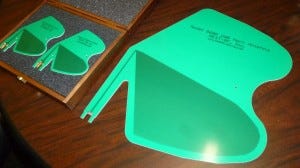
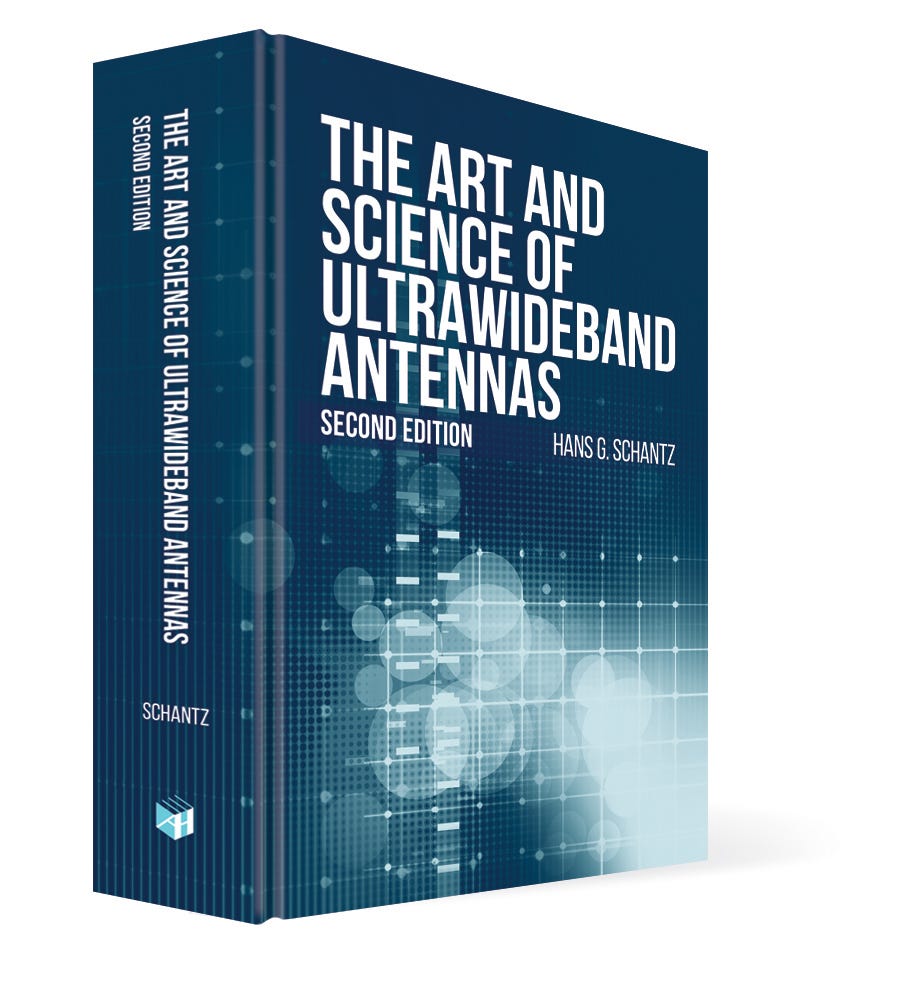
I went on to found a company called Q-Track where my business partners and I went to the opposite end of the spectrum and we used very low-frequency, long-wavelength signals exploiting their near-field properties to make very precise indoor location systems that worked around clutter. My company, Q-Track, was acquired a few years back and I came along with the acquisition and since then I’ve been working in the defense RF radar world. While I was doing the startup at Q-Track, I started writing my first book on ultra-wideband antennas. It’s in a second edition now.
After I finished the second edition of the book, I was really tired of equations and references, so I ended up taking a break by writing fiction, and that was the first book of my Hidden Truth series.

It’s a science fiction alternate history techno-thriller about an evil conspiracy trying to take over the world that was kind of tongue-in-cheek when I was writing it 10 years ago, but a lot of what I thought were gross exaggerations and parodies have a lot of relevance today.

I also wrote a novel called The Wise of Heart, bringing the Scopes Monkey Trial up to date and, you know, flipping the script and making it about transgenderism instead of about evolution.
And my most recent project is I’m taking all of the ideas that I’ve developed over a career working in wireless electromagnetism and RF about how electromagnetism works. The fundamental idea is the conventional wisdom holds that electromagnetism is due to one thing, a photon, that is simultaneously a localized particle and a non-localized wave. Well, I think those are mutually contradictory and paradoxical properties. I think electromagnetism is due to two things. I think it’s due to fields that are non-local and behave like waves and guide the flow of energy, which in the quantum limit looks like particles. It’s a strictly classical electromagnetic Worldview that builds on the insights of people like Poynting and Heaviside and Hertz. But interestingly enough, it ties in nicely with the pilot wave theory of quantum mechanics, an interpretation that’s widely neglected.
I decided, after having a lot of difficulty getting my ideas in journals and in professional circles, that the best way to promote my ideas was to write books at an introductory level for Advanced High School Students or Undergraduates who are just interested in how electromagnetism works. That kicked off my Fields & Energy project. The first book, Fundamentals and Origins of Electromagnetism, is on Amazon. The second book, Second book will be Where Physics Went Wrong. Most of that content is already on my Substack. And then the final book is How Electromagnetism and Quantum Mechanics Work. So I’m serializing that trilogy on my Substack at aetherczar.substack.com.
So that in brief is my story.
Hans: Basically, yes. An electromagnetic wave is really two waves in one. It’s an electric wave working together with a magnetic wave. And those two waves have fields that are at right angles to each other. And then mutually perpendicular is the flow of the energy that they’re guiding.
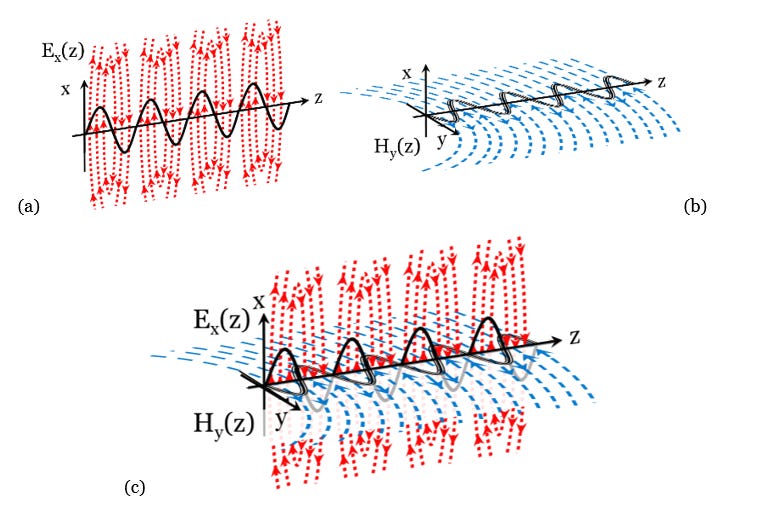
So in the context of a cell phone, we would look at the signal that it’s radiated and be able to understand the flow of energy. And interestingly, the conventional perspective on that would be to look just at what the cell phone is doing. In my interpretation, I think that although you can break down electromagnetic systems to consider individual fields like the transmitted field from the cell phone, that really there’s just one electromagnetic field and that field is competing with all of all of the other fields, the infrared heat, the sunshine, the other radio waves to guide the flow of energy. So I think energy takes a much more complicated path through real-world systems than the simplistic, you know, signal goes straight from the cell phone to the tower kind of picture.
Hans: Well, it depends. You’re right. 6G is envisioning using typically millimeter wave and very short wavelengths at very high frequencies compared to ordinary microwave-ish kinds of cell phone signals. But actually that tends to make them less penetrating. It’s the longer wavelength signals that will penetrate through the walls and into buildings. But the problem is at those lower frequencies there’s not enough bandwidth to send a lot of data. So in order to meet all of the data mobility needs of all of the cell phone customers who want to stream videos over their cell phones in urban areas, What RF engineers have had to do is move up to those higher frequencies, even though the propagation isn’t as good, but they have to have a lot of different signals going on at the same time.
So the idea there is those short wavelengths let them focus a personalized beam of energy to your phone to send the data. But it really is not as... It’s not as penetrating as the more conventional lower frequency signals would be. And as you said, it’s competing with everything as well. So we have so much technology around us that’s emitting these beams. And then, as you said, there’s light and sunlight. And yeah, how does it not get confused in... Yeah, that’s something, see, when a physicist tries to understand, or when an engineer tries to understand a cell phone and look at the signal that the cell phone emits, the engineer will take a look at that signal and will calculate the distance, and maybe there’s a second bounce version of that signal called multipath that’s taking some different paths through the environment, add them all up, Calculate all their contributions Work out what the received signal will look like at the cell phone tower And then it’s game over Wash your hands, move on to the next problem.
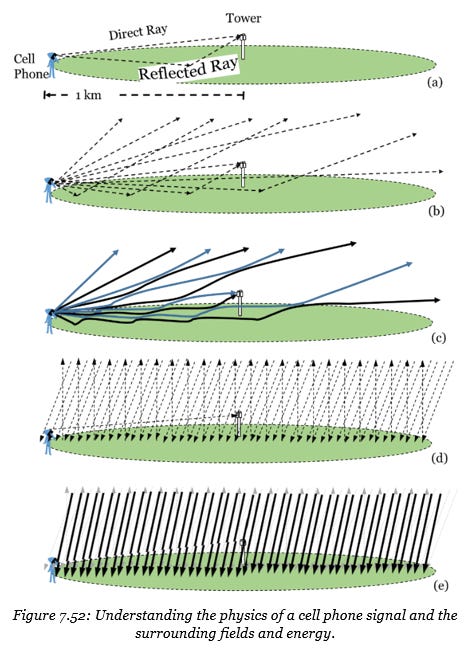
But what’s really happening is The signal from your cell phone is actually pretty weak compared to all of the other signals that are present in your environment. Like, your cell phone is transmitting with a power of a few hundred milliwatts of RF power. The sun, on the other hand, is beaming down with about a kilowatt So it has vastly larger, stronger fields and power flows. So in my vision or my picture of electromagnetism, what’s happening is that little tiny ripple of a cell phone signal is... Moving out into the sunshine and whatever energy it originally was guiding or carrying is ripped away by the much stronger fields of the sunshine. And only once it gets near the cell phone tower does that little ripple of a cell phone signal perturb or bump some of the energy it finds in the local environment in order to get it into the receive antennae.
So, in my view, fields and energy are two different things. They take different paths through the system, and the energy that a field ends up with at a receiver is not necessarily the energy it starts with at the transmitter.
Hans: What they typically do in, I mean, the older cell phones you may remember had a little stubby whip or protrusion coming out of the top of the cell phones. They’ve gotten very clever about how they get the cell phone to radiate. What you’ll normally find in a cell phone is little patch antennas on the back of the cell phone. And they are designed to excite Electromagnetic Modes on Your Cell Phone to pretty much turn your entire cell phone into an antenna at the right frequency. It’s really kind of amazing how they’re able to pull that off, and it’s no longer a a one-size-fits-all kind of solution when you’re designing an antenna for a small device. You almost have to design it on a case-by-case basis, taking into account the size of the device and how you’re imagining someone’s going to hold it and what impact it’s going to have on the hand and on the head that it might be held next to. And of course, there’s a concern about trying to make sure the device doesn’t radiate an excessive amount of power into your skull or into your hand as you’re holding it.
Hans: Well, that’s an interesting question. If you’d asked me that 10 years ago, I’d have given you the conventional RF party line about how Albert Einstein proved cell phones can’t cause cancer because... He demonstrated through his work on the photoelectric effect that you have to have a photon of a certain energy in order to have enough energy to modify the chemical structure of DNA and possibly cause cancer.
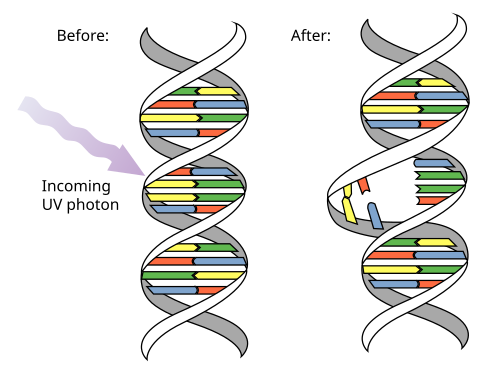
That’s why ultraviolet rays can give you sunburns and why x-rays or gamma rays, yes, they can cause cancer. But for RF and wireless from cell phones, from your data networks and radio stations and so forth, the thing you have to worry about is just heat. And the way they set up that standard is they went back to take a look at how the sun works.
A kilowatt per square meter, you can go out in the sun and it might be a little hot, but your body is capable of dissipating that amount of heat that’s being beamed down on you. So the threshold for RF safety is they want to make sure your cell phone or your microwave oven or radio station isn’t going to heat you up any more than a sunbeam would. And that makes sense from that perspective.
But there’s been all kinds of fascinating work that’s been done more recently about much more subtle effects of RF. For instance, I had a good friend who had brain cancer. And one of the things that his cancer doctors prescribed for him was a helmet with magnetic coils. And they would resonate at around 200 kilohertz, a relatively low frequency by wireless standards. And it has been demonstrated in medical tests that with the right waveform and the right pulse rate and so forth, that can tend to retard cancer. [See Novocure, for instance].

Of course, that’s an effect that is much lower than any thermal heating kind of effect. So I do think there is a lot we do not fully understand about the more subtle effects of wireless and how it can have an impact on our body’s nervous system or other subtle effects. interactions, electrochemical interactions that we have in our body. I guess the good news, though, is we live bathed in a sea of RF, and there doesn’t appear to be very acute toxic reactions to it. But it’s still something that you should be careful of. I I’ll set it down, I’ll use a wired headset to talk on my cell phone, I would only keep my cell phone next to me if I’m carrying it. somewhere and I can’t take it out of my pocket and put it like on the other seat of the car, keep it away from me.
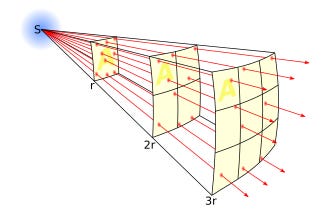
So some of the most extreme RF exposures you’ll get are the ones that are pretty much under your control. Keep your Wi-Fi router away from where you sleep, stay as far away from your phone as is reasonably achievable while still being able to use it, things like that.
Hans: Well, I guess it depends on the person. But really, all that means is if you go down to a high enough resolution looking at how things work, Things tend to not be a continuum, but rather to break down into particles. That was the initial discovery of atomic theory, that we could explain chemical reactions from the theory that everything is made of atoms, and those atoms come together with certain rules to form molecules, and they combine in certain ratios, which explains why so many grams of this substance and so many grams of that substance will come together to give you some resultant from the reaction. When you’re looking and talking about electromagnetism, it’s really tough to perceive quantum effects on a macroscopic level.
There’s been some research arguing that the human eye is so sensitive that with a probability greater than just chance, you can detect a single photon in your eye in a darkened room. But your eye is not a very efficient photon detector, so it doesn’t detect them with a very high probability rate, but apparently it can be done. But for most everyday kinds of applications, the quantum realm, other than the fact that quantum mechanics enables a lot of the interesting devices that we take advantage of, everything from computer chips with the solid-state devices that make up integrated circuits these days, or things like lasers that rely on aspects of quantum physics in order to work. Once you get down to that tiny, tiny scale, how do they find evidence for any of this?
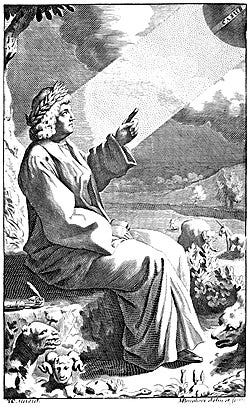
Well, that’s... makes it very interesting for trying to figure out where to start on it. Some of the first evidence was observed in classical times by a Roman poet, I think it’s Leucippius [I spoke in error, it’s Lucretius], who made a bunch of observations about how wet clothes on a sunny day will dry without you ever actually seeing the water leaving the clothes, or that if you see a beam of light in a dark room, you’ll see little tiny flecks of dust in the room.
One of the most Fruitful such observations is when Lewis and Clark were making their explorations traversing North America, one of the many plants that they collected was a flower called, I think it was Pink Fairy Flower, something like that. and samples of that got in the hands of a Scottish botanist named Brown. He took a look at it under his microscope and he discovered the pollen was wiggling around in a very random fashion. He attributed that to the pollen must be alive in some sense and moving on its own.
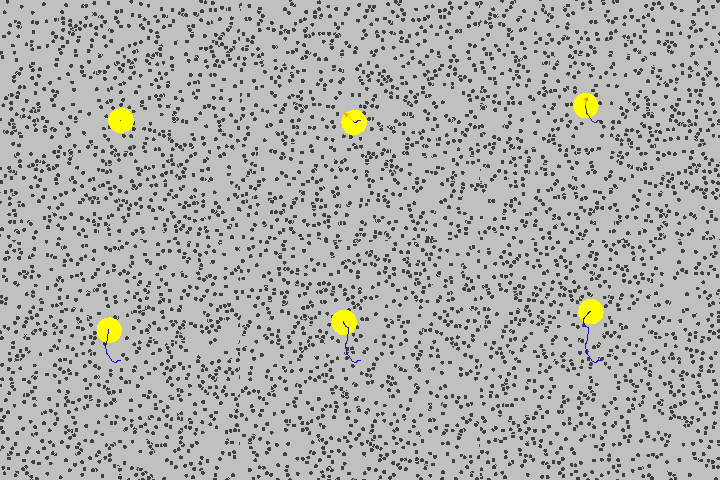
But one of the other things Einstein discovered is that behavior, something called Brownian motion, is actually due to the fact that when you get down to a very small scale, and pollen floating in water is a small enough scale to see this, there will be random fluctuations. A few more atoms will hit on one side of the pollen than on the other side of the pollen as everything is jostling around, and that gives rise to that kind of random Motion of the Pollen Under the Microscope. So that, for instance, is evidence of quantum behavior in the sense of the atomic theory.
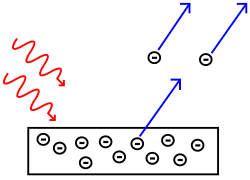
I mentioned the photoelectric effect, which is something else that Einstein did some pioneering work in, and the idea there was it was discovered that you could shine light on a metal, and even if it was a very intense light, nothing would happen until you got the frequency up high enough, and then even a very weak light of a high enough frequency would be able to make electrons pop out of the surface of the metal and start a current flowing. And that has been interpreted as you have to have enough energy in an individual photon of a high enough frequency in order to interact with the electron and make it jump out of the surface of the metal.
There’s some interesting work that was done on the thermal radiation that a physicist named Max Planck looked at. He really came up with the first idea that light might have a quantum nature. He found mathematically he had to assume that light was quantized, that it came in discrete frequencies instead of being a continuum in order to explain the spectrum that he saw from thermal radiation from what’s called a black body. So there’s been a lot of experimental evidence that led people down this road to starting to think in terms of quantum theory.
Hans: Well, it’s really... The waves are carrying the energy around, but the way you send data on a radio wave, an electromagnetic wave, is you have to modulate it in some way. You have to make some kind of a change in the wave. One of the first kinds of radios was amplitude modulation. In fact, AM radio is still a fixture on your radio dial in most places. And what that did was just take a carrier wave, an RF wave at a particular frequency of several hundred kilohertz or megahertz or more, and change the intensity of it in sync with the audio.
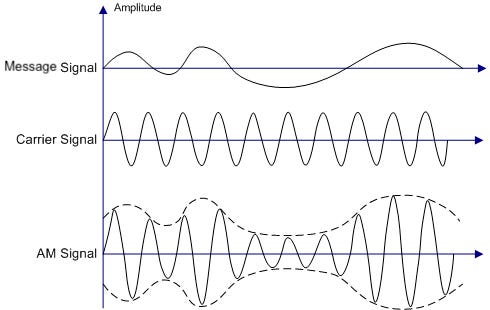
So our voices operate with acoustic frequencies that are on the order of maybe 20 to as high as 10,000 or so hertz. So they put that much slower vibration in the amplitude of a radio wave and they can send the audio that way over the radio wave.
There are a whole bunch of other kinds of modulations, frequency modulation, phase modulation that are used for those kinds of analog signals. In data transfer, what they typically do is they’re trying to send ones and zeros, binary data. So what they’ll do is things like, well, one of the simplest is something called binary phase shift keying or BPSK, where what they’ll do is they’ll just invert the wave. And if you have a wave in the normal orientation, that’s a 1, and if it’s inverted, it’s a 0.
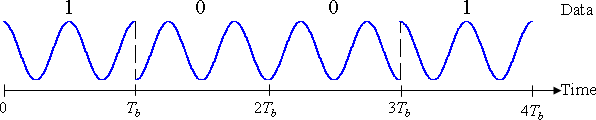
But they can do much more complicated modulations where they’re changing both the amplitude and the phase of that underlying signal to pack more data into a more narrow bandwidth. That’s one of the fascinating things about studying wireless engineering is understanding the many clever modulation schemes people have done in order to make a radio wave carry data and then be able to extract it reliably on the other end without getting interfered with by all the other signals in the environment.
Hans: I’ve looked into that a little bit. I find the hypothesis fascinating of the hidden civilization, the traces of which were wiped out. As I’ve looked into it, certainly I think there’s a lot we don’t know about our ancient history, but Tartaria, I think, if you’re talking about this recently and in historic times, I really don’t think the evidence supports there having been a vast technologically advanced civilization within the last few centuries leaving buildings around for us to discover instead of build.
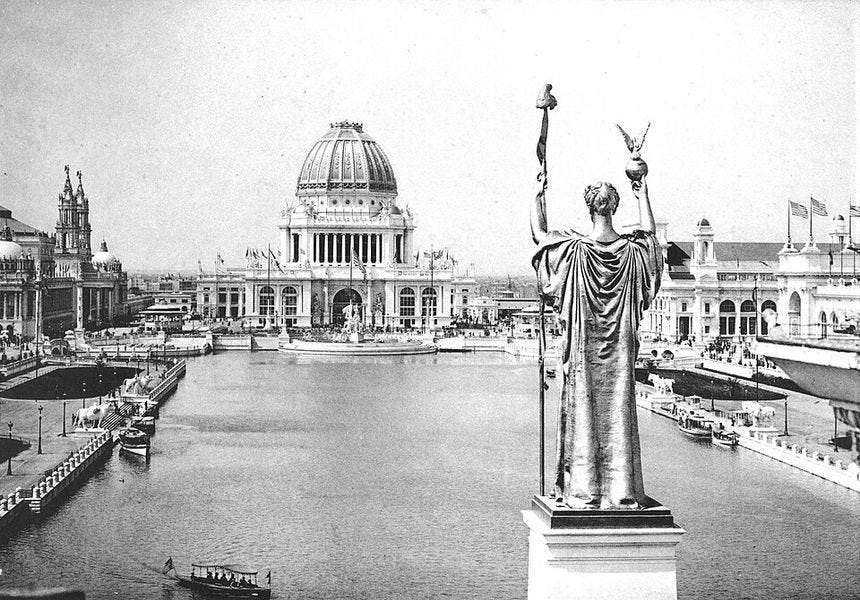
I know people who look at World’s Fairs are fascinated at how they were able to put up these magnificent looking if somewhat fragile and temporary buildings in such a quick time frame. But…
There is certainly some interesting bits of RF and wireless technology that appear to have been available in ancient times. For instance, there’s something called, referred to as the Baghdad Battery, where people have found old ceramic jars with copper and zinc electrodes that look as though they were batteries that may have been used to do things like electroplating of gold on base metals. So there’s a lot of ancient technology that was closely protected and secret that we still aren’t really sure how it was done.
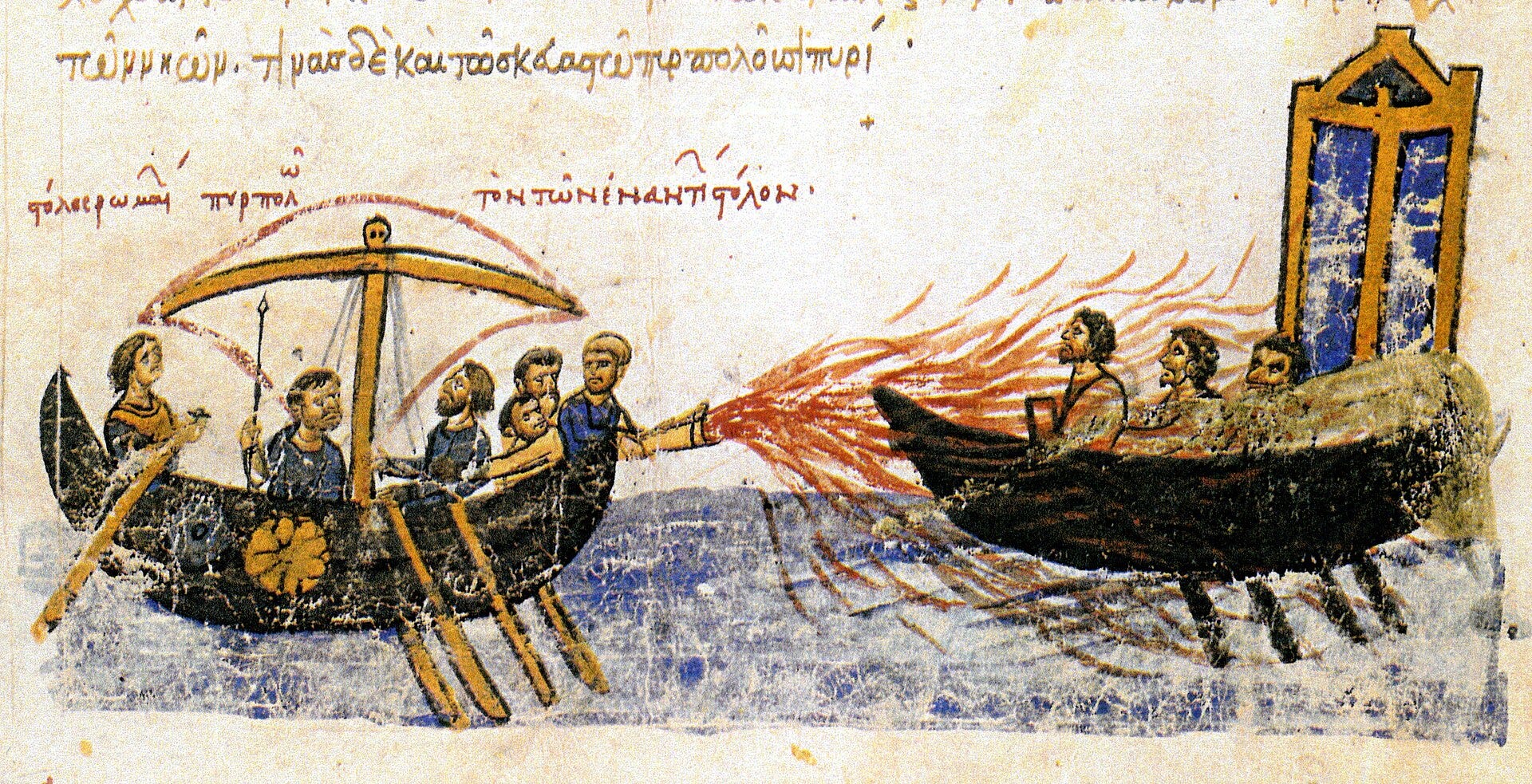
The Byzantines, for instance, had Greek fire. They had an incendiary weapon that gave them, you know, basically a super weapon that gave them naval supremacy because they could light the enemy ships on fire and send streams of burning material and engulf enemy ships in flame. We’re still not really sure how that worked, though a lot of chemical engineers have taken some guesses about how they might have pulled that off.
There’s also some fascinating, you know, look at Roman concrete, for instance. The Romans, just whether by luck or skill, we’re not sure, or just the materials they had available, the particular kind of basalt and pumice. that they were working with came up with some concrete that has proven remarkably durable. Like when they made the Pantheon, the vast spherical shell out of concrete, I mean, it stands to this day with less damage and deterioration than a lot of modern concrete structures that have only been around for a few decades.
So there’s certainly a lot we don’t understand about ancient Technology and there are probably additional technologies we aren’t even familiar with out there, but I don’t think the kind of widespread version that’s envisioned by the people who talk about Tartaria has enough support to get too excited about.
Hans: Oh, I do indeed. And anyone who has lived through the last decade or so with their eyes open has gotten quite the education in how people attempt to twist reality to serve their own purposes. And certainly that has been going on for as long as history. And I particularly appreciate Robert Frederick’s treatment of Francis Bacon. I was familiar with a lot of the basics of Francis Bacon and particularly his influence on science. But Robert Frederick opened my eyes to how that was just one small part of a much larger kind of program for world domination of the British Empire.
So when you go back and take a look at the history of science, you can see how certain scientists have been promoted for better or worse. to serve other people’s agendas. Everyone wanted their own nation’s scientists to be acclaimed, the best and brightest and savviest of all the scientists in the world. And those rivalries led to a lot of skullduggery taking place in the background that only accidentally comes to light even centuries after the events. I’ll give you an example.
The discovery of the planet Neptune. There was a French, I guess you’d call him an astronomer and physicist, who calculated, looking at perturbations in the orbit of Uranus, he calculated there had to be another planet out there beyond the orbit of Uranus. And he made a prediction of where that planet ought to be. And people didn’t really pay much attention to it. The English astronomers, they saw his article in the journal, but ho-hum, people make predictions all the time.
The Discovery of Neptune
·
December 11, 2024

Excerpted from Oliver Lodge, Pioneers of Science, London: Macmillan and Co. 1893, Lecture XV, pp. 317-330. Lodge presents the conventionally accepted story of the “co-discovery” of Neptune by Le Verrier and Adams. More recently, long withheld correspondence shed new light on the story. Read “NO AO-DIO Preservation Project Succeeds Long-Hidden RGO File on 1846 Planet-Chase: Safe At Last Adams’ Final Prediction Missed by Over Ten Degrees Britain’s “Discoverer”: Perfect Simp or Conniving Babe?” for a modern and more accurate take on the behind-the-scenes skullduggery and the attempted cover-up.
Then Le Verrier got serious and wrote another article with revised calculations. And that started to get people excited. And George Airy, the Astronomer Royal for Britain, assigned astronomers to start looking and see if they could find this mystery planet. Le Verrier went to an astronomer in Berlin who just so happened to have very accurate star charts of the area that Le Verrier had predicted this new planet, which we ended up calling Neptune, would be. So the astronomer in Berlin was able to take a look at his field of view and compare it to his star charts and very quickly identify, wait, that one is not in the star charts, let’s track it for a few days, it’s moved, bingo, we’ve got it.
Meanwhile, the British astronomers, not having those star charts, were having to make observations one week and then come back a few weeks later and compare to see if anything had moved. So it was a much more inefficient process. The upshot was that Le Verrier and the German astronomer, whose name is escaping me right now, they made the discovery and announced it. And Airy came back and said, oh, well, we had it. And look, John Couch Adams had a calculation that was almost the same as Le Verrier. So English science is just as good as French science.
5.2.3 The Search for Vulcan
·
December 4, 2024
Uranus was not where it was supposed to be, according to Newton’s theory. William Herschel (1738–1822) identified Uranus as a planet in 1781, however the seventh planet had been captured in earlier star charts by astronomers who failed to recognize it as a planet. Those earlier positions were difficult to reconcile with the planet’s location in the deca…
The full correspondence file on this, a historian went looking for it, I think in the 1970s, wanted to write the story of the English reaction to Le Verrier’s discovery and how the English astronomer Adams had come up with his calculation. And for some reason the file was missing. All of the correspondence that Airy had had with Adams and with the astronomers there who were looking for this mystery planet, no one could find it until an astronomer who had been at the Greenwich Observatory died in Argentina. in 1998 or 1999, and his colleagues were going through his stuff and found this folder with all of these 150-year-old documents. They found the correspondence and all of the skullduggery that Airy was engaging in, exaggerating how closely Adams was to the correct solution and so forth, that finally came to light.
But certainly when I was in school, that was not the version of the story that I got. Le Verrier, yeah, he had it first, but Adams was right there in a photo finish with him with just as accurate a calculation. We only learn about stories like that through pretty extraordinary circumstances where someone brings the original correspondence to light despite the fact that people are trying to hide it. I mean, if that English astronomer who’d walked off with the files had just decided, well, let me just junk them, No one would know any of this. Fortunately, he kept and preserved them, and when they were finally found, the true story came to light. But those kinds of things happen all the time, and most of the time we don’t necessarily know what’s going on.
Hans: Well, Francis Bacon is the one who first decided that science would be a tool of statecraft, that it would be used for the benefit of all mankind, and incidentally, for the benefit of those who were wielding this awesome scientific power. It’s interesting that for all of his advocacy of experimental science, Bacon was dismissive of his contemporaries who were doing real science, people like Gilbert, who was doing a lot of the pioneering work in magnetism, or his doctor who was named William Harvey, who did a lot of the pioneering work in understanding the circulatory system. Bacon preached a good game, but in practice, the results he got were negligible with his advocacy of science.
But what he did do was promote the idea of science Scientism and of scientists having a leading role in the state through his novella, New Atlantis, which, I mean, it’s a quick and easy read. Everyone should read that because the modern scientific establishment is, it was basically designed by Bacon in that little short story from, you know, 1622, 23, whenever it was published. That was the inspiration for the Royal Society.
When the Royal Society did their first history within a decade or so being formed, they had this beautiful, elaborate frontispiece facing the title page where they had The three key figures in the Royal Society. Of course, they had the king, I guess it was King Charles II. They had the current president of the Royal Society. And there on the side was Francis Bacon, the man who inspired the whole enterprise. as they acknowledged. And interestingly, if you’re into Masonic symbolism, it’s rife with checkerboard floors and compasses and squares all over the place and the parallel columns. There’s all kinds of Masonic symbolism in that, and this is long before the official coming out of Freemasonry in 1717. But that had a lot of influence on the course of science and on using science as a tool to advance political goals.
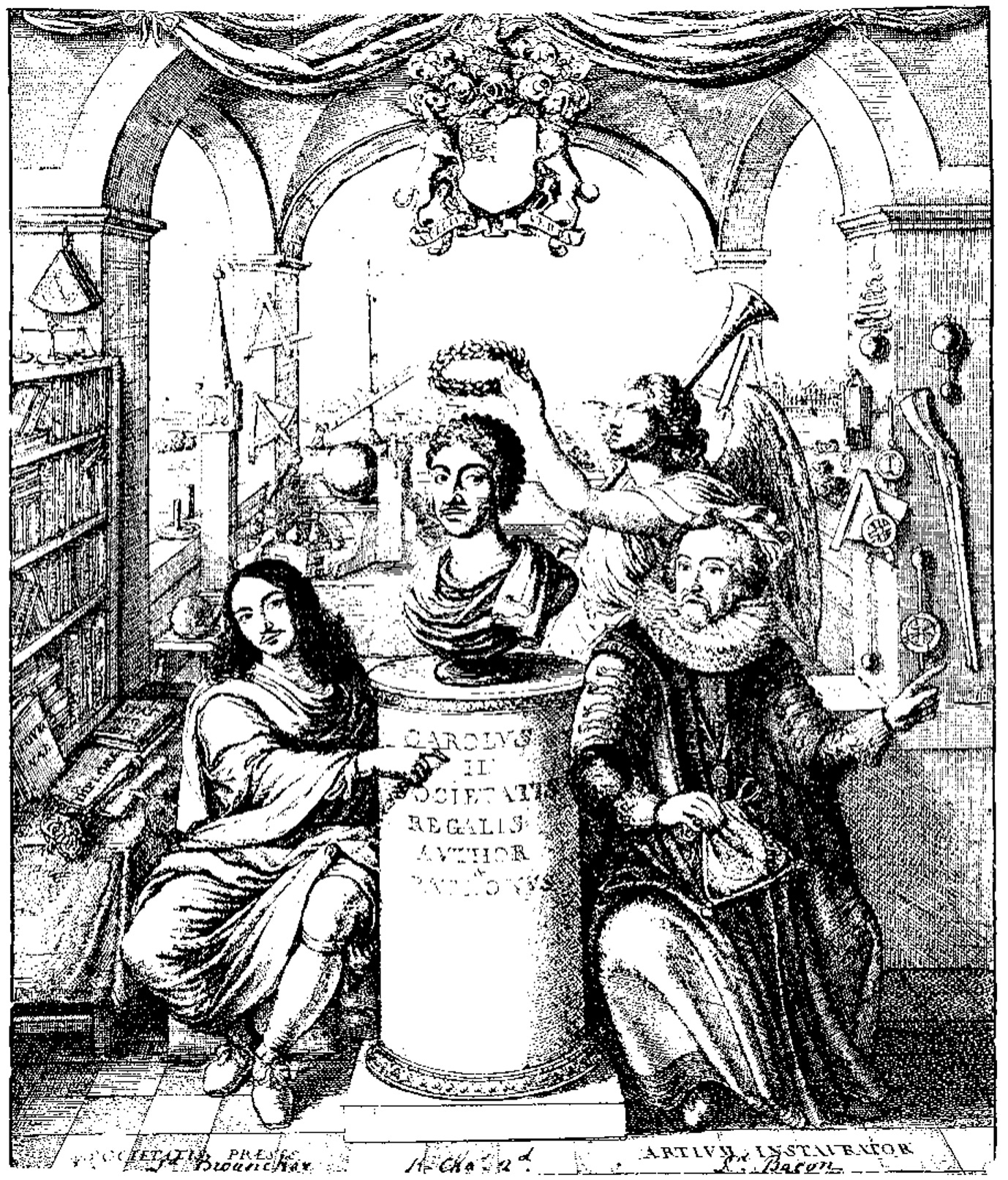
Some of the more significant episodes of that are, of course, evolution was promoted very heavily by insiders in the British establishment. Freudian psychology similarly got a lot of boosting in the 1920s. One of the things that I particularly have investigated is how Einstein got so popular. That’s a fascinating story if you’d like me to go into the popularity of Einstein.
Hans: Richard Feynman had a good antidote for that. He’s a famous physicist. Feynman said that science is the belief in the ignorance of the experts. And if you’re not approaching science from that perspective where you are willing to accept that the so-called experts could very easily be wrong and you need to be figuring things out yourself, if you’re advocating trust the science, you’re demonstrating you have no clue what science is or how it works. And yes, people who are willing to spout politically convenient things Ideas. They’re the ones who get the promotion. They’re the ones in the public eye.
The story with Einstein is kind of fascinating because He came to the United States on a lecture tour. It was a promotional tour to raise funds for the Hebrew University in Jerusalem. And he came in a party with some leading Zionist leaders, including Chaim Weitzman, who ended up being the first president of Israel.
And there was a lot of division within the American Jewish community about that. The more established German-English Jews who held positions of responsibility, owned newspapers, ran businesses and so forth, and were involved in banking. They were very skeptical of the newly arrived Eastern European and Russian Jews who were very enthusiastic about this notion of having a Jewish homeland in Palestine.
So when Weitzman showed up with Einstein and the rest of his party, thousands of people came to greet them on the docks. And when they were there to greet Weitzman and the Zionists, and Einstein was kind of a second thought.
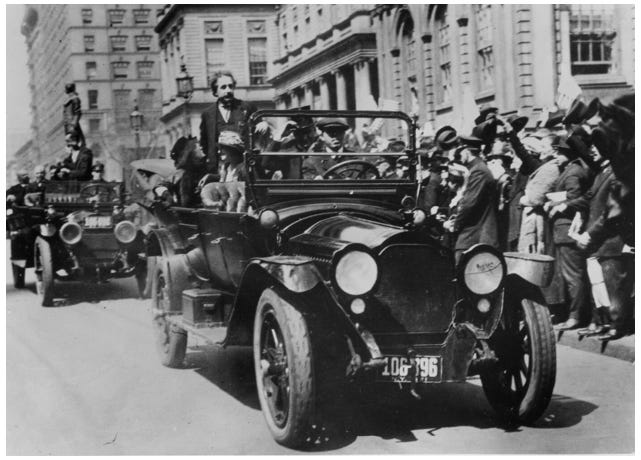
But when the non-Jewish reporters came to cover the story, they hadn’t heard of this Weitzman guy, but Einstein had been in the news because of his work in relativity. So they just assumed that the crowd was there to greet Einstein, the famous scientist. And people like Ox at the New York Times, that fit his agenda because that stole the oxygen from the Zionist campaign and transferred it to Einstein instead.
5.2.8 Einstein Comes to America
·
March 19, 2025
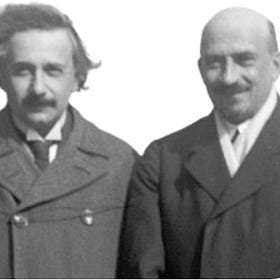
Part 1 introduced the legendary public relations pioneer Edward L. Bernays who plays an important role in today’s post. This piece describes how Einstein came to America in 1921 as a member of a Zionist fundraising mission. Divisions between assimilationist Jews and more radical Zionist Jews had the unintended effect of shifting the focus away from the …
So the New York Times in particular. was relentless about promoting Einstein all through this course. You’d have never known that it was about trying to raise funds for the Zionist cause and for the Hebrew University in Jerusalem. It was all Einstein, Einstein, Einstein, giving lectures, meeting the president, and so on and so forth. So that’s a case where we can understand the publicity campaign that was going on.
And in fact, it’s really instructive to go back to the 1920s and take a look at the kinds of publicity campaigns and propaganda back then. Because those were the early days of people like Edward Bernays who were busy trying to manipulate public opinion. Bernays founded public relations. And instead of wining and dining reporters and twisting editors’ arms to try to get them to cover his clients, His approach was to create events that demanded coverage.
5.2.8 Einstein Comes to America
·
February 14, 2025

A young Austrian-born Edward Bernays (1891–1995) parlayed a job promoting U.S. tours of Enrico Caruso, the Ballets Russes, and Broadway musicals into a junior position at the U.S. Committee on Public Information (CPI), the government’s wartime propaganda bureau. What he lacked in seniority, he made up for in energy and salesmanship. After the war’s end …
So when he got married, for instance, Bernays had his wife go and register in her maiden name for the honeymoon suite at the Waldorf Astoria. And that was so unconventional that hundreds of newspapers wrote articles about the august hotel, most prestigious hotel in New York, being willing to let the honeymoon suite go to a woman under her maiden name instead of in the name of her father or her husband. And it was a triple whammy for him because he got to promote the Waldorf Astoria, he got to promote himself, and he got to promote the cause of feminism, which he was a big supporter of.
And it turns out he was a friend of Chaim Weitzman, and if Bernays is to be believed, which you have to be a little careful about, Weitzman actually offered him the position of foreign minister or secretary of state for Israel for all of his contributions to the cause. Bernays declined it. But although it’s acknowledged that Bernays did work for Weitzman, I haven’t been able to find anything on the details of specifically what he did. But it’s interesting to note that whole scheme of thousands of people coming to greet the boat at the docks when it arrived. That’s exactly the kind of events and circumstances that Bernays would tend to engineer if he were involved in a publicity campaign. So I suspect that he was involved. The evidence is just circumstantial.
Going back to the 1920s and taking a look at the propaganda campaigns is very instructive because you can see how all of these things worked and how they played out and how people were easily manipulated. Things like when Einstein’s friend Max Born wrote a book on relativity.
Born thought, you know, I’m going to put a picture of Albert Einstein facing the title page of the book. And his and Einstein’s mutual friend, a physicist named Max von Laue, was absolutely shocked at the effrontery of putting a picture of someone in a book. I mean, it was Shameless self-promotion. We couldn’t have that kind of thing. It’s disreputable. It’ll ruin your reputation and Einstein’s reputation. And so Born pulled the picture.
But meanwhile, in a lot of the Jewish press that was very friendly to Einstein in the wake of the discovery, the verification of general relativity through the 1919 eclipse of the sun, they were putting his picture on the cover of magazines and promoting him as the most brilliant thinker since Copernicus and Galileo and Newton, you know, step aside Newton, here comes Einstein.
And you can understand how A culture that had Max von Laue’s attitude of recoiling from that shameless self-promotion. There’d be a lot of people reacting negatively and a lot of people influenced by that over-the-top attitude. Promotion. I mean, we think nothing of that kind of thing today, but in the early years of propaganda, those attacks or those techniques were really powerful and devastating and had enormous effect.
That’s all for now. Remember always to keep calm, and make physics great again.
See you next week,
Hans
P.S. Pick up your copy of Fields & Energy Book I: Fundamentals and Origins of Electromagnetism, if you haven’t already:
Enjoyed the article, but maybe not quite enough to spring for a paid subscription?
Then click on the button below to buy me a coffee. Thanks!

You may follow me online in other places as well:
Telegram: 𝔸𝕖𝕥𝕙𝕖𝕣𝕔𝕫𝕒𝕣’𝕤 𝔸𝕖𝕥𝕙𝕖𝕣𝕤𝕥𝕣𝕖𝕒𝕞
Gab: @aetherczar
Twitter: @aetherczar
Amazon: Hans G. Schantz
Comments
Nothing yet. Say the first thing.
Sign in to join the conversation.