
I normally don't follow judicial races. They're aggressively nonpartisan and thus usually boring. So unless I happen to know one of the candidates, I either outsource my selection to trusted friends or just skip the judicial portion of the ballot altogether. Though I should say, find me a judicial candidate campaigning on instant executions for rapists, pedophiles and left-lane blockers and I'll personally remove all my nonessential organs and sell them on the black market just to fund their campaign.
But there's another way to get me invested in a judicial race, and it's a bit more realistic. Get anyone even remotely KFC-adjacent to run for judge and you've got my attention. Make it Ariel's own wife, Monica Segura, Lady Macbeth herself, and hot damn, I’m all in. Which is why when the Miami Herald published its endorsement in the Group 5 race earlier this week, I read and reread every word of it with forensic care. (I recommend you do the same before proceeding.)
I won’t bury the lede here: Monica didn’t land the endorsement.
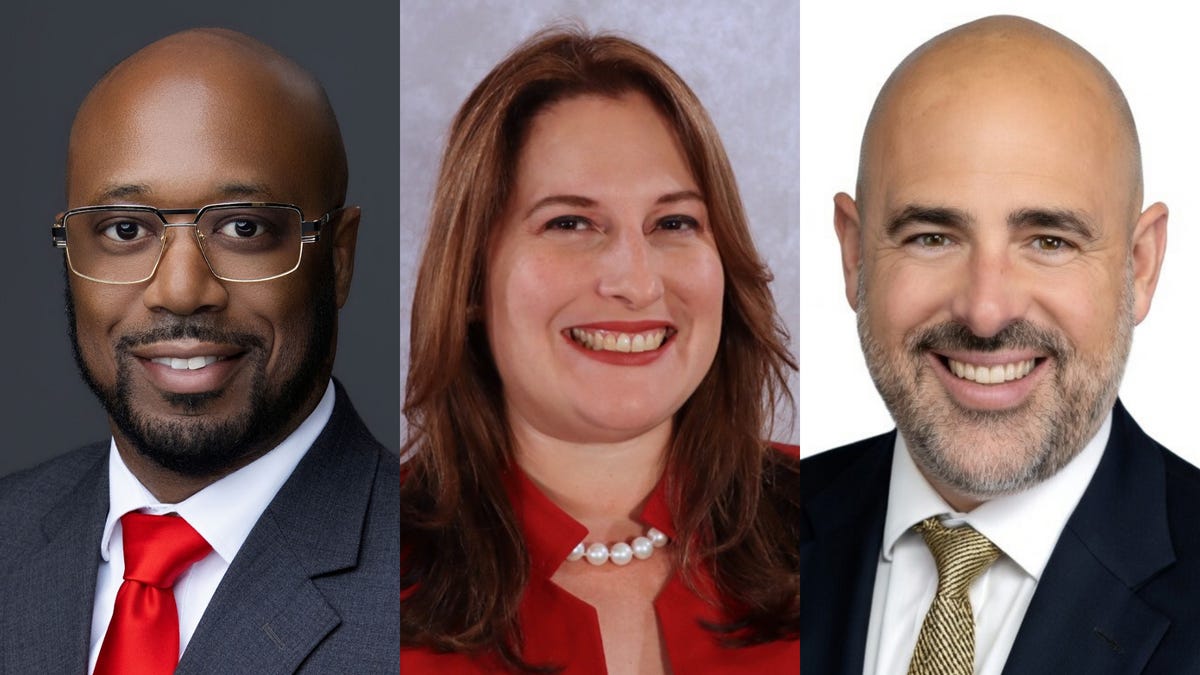
Don’t get me wrong, this was hardly unexpected. The frontrunner in the Group 5 race, and the candidate the Herald endorsed, is Arthur “Marty” McNeil (although personally, I would have gone with Arthur “Marty McFly” McNeil). McNeil is a public defender with over 60 trials under his belt, 56 of them criminal jury trials. Monica has tried one (that’s the first number after zero) civil jury trial, which once again affirms the Fernandez family’s abiding conviction that voracious ambition is the only qualification one needs for literally any job.
What was unexpected, though, was just how poorly Monica fared in this exercise. She didn’t just fail to secure the endorsement, she damn near got the editorial equivalent of the Irish Goodbye from the Herald. She was overshadowed not only by McNeil, the frontrunner she was always going to lose to, but by Alex Annunziato, who was once busted buying heroin from an undercover detective.
Now, to be clear, the Herald doesn’t rank candidates. Nowhere in that piece does the board say Monica finished third, and nowhere does it say anything explicitly negative about her. But the Herald, like every editorial board, writes with a style that is dripping with subtext. I actually think it’s something of an evolved phenomenon, whereby the environmental pressure to appear neutral and objective, colliding with the environmental pressure to satisfy the biases and prejudices of its very human practitioners, has produced a journalistic grammar that, while dry, is exquisitely optimized for hidden meaning.
Take, for instance, the structure and proportions of the piece. Again, the board doesn't explicitly rank the candidates, but it leads with its preferred choice, which tells the reader that what follows is being presented in descending order of preference. We all do this all the time, list things in ascending or descending order, often unconsciously. In fact, the English language is replete with hierarchical structures that most people have never heard of but nevertheless understand intuitively. Adjectives are a great example. Most English speakers go through life obeying a strict adjectival hierarchy they never knew existed. It's called the "royal order of adjectives" and it goes like this: opinion, size, age, shape, color, origin, material, purpose. In short, it's why it had to be a "Little Red Corvette" and not a "Red Little Corvette." Nobody ever explained that rule to you. Your brain just knows it, the same way your brain just knew what the Herald was doing when it listed Monica third.
That, by the way, was a completely unnecessary aside, but whatever, it’s my Substack.

Anyway, word count does similar work. McNeil gets three paragraphs and roughly 170 words. Annunziato gets two and about 140. Monica gets one paragraph and 77 words, which is less than half of what either opponent received, and less than the Herald spent describing Annunziato's heroin arrest. How do you know an editorial board is unimpressed with a candidate? Her entire candidacy gets less ink than her opponent's felony drug bust.
Then there's the interesting transitional sentence, which only further supports this. Right before Annunziato's section, the board installs a bridge: "McNeil is not the only qualified candidate in this race." That sentence ushers Annunziato in under the banner of qualified, which is the board's way of saying he's a legitimate contender who happened to finish second. Monica gets no such bridge. She just poofs into existence at the bottom of the piece, unheralded, after the board has spent its goodwill on the other two.
Which brings us to Monica's paragraph itself, where the board really goes to work. It notes she's in-house counsel for an insurance carrier and has "also worked at various big firms." Note the quotation marks, which the Herald actually uses in its piece. There is absolutely no reason to use quotes there other than to say "those are literally her words, not ours, because, yes, we know it's absurdly vague." It's credibility protection and mockery rolled into one minor stylistic choice. Chef’s kiss!
The rest of the paragraph is just as uninspiring. The editors note that Monica "touted" her work on the Chinese drywall litigation, up to 12,000 claims by her own count. Touted. They could have said cited, pointed to, or any number of options. But they went with touted, the snidest choice on the menu, the contemptuous eye-roll of the verb world, immediately followed, of course, by the surgical mention of her having only one civil trial under her belt.
Oh, and of course, there’s the delicious little coda. The final thought the Herald wanted to leave its readers with: “Segura is the wife of Coral Gables Commissioner Ariel Fernandez.” Full stop. Nothing more to say, because, really, nothing more needs to be said.
To be fair, the piece ends by noting that all three candidates would “probably” make good judges, but that's a bone thrown to all three because the Herald needed to be seen throwing it. You can tell by how it's built. It’s collective rather than individual, hedged with "probably." Compare that to McNeil, who gets specific praise for specific things. Nobody who reads that line comes away thinking the board actually assessed Monica and concluded she'd be fine. It's the "no offense" you tack onto the end of the offense.
Well done, Herald editors. Seriously.
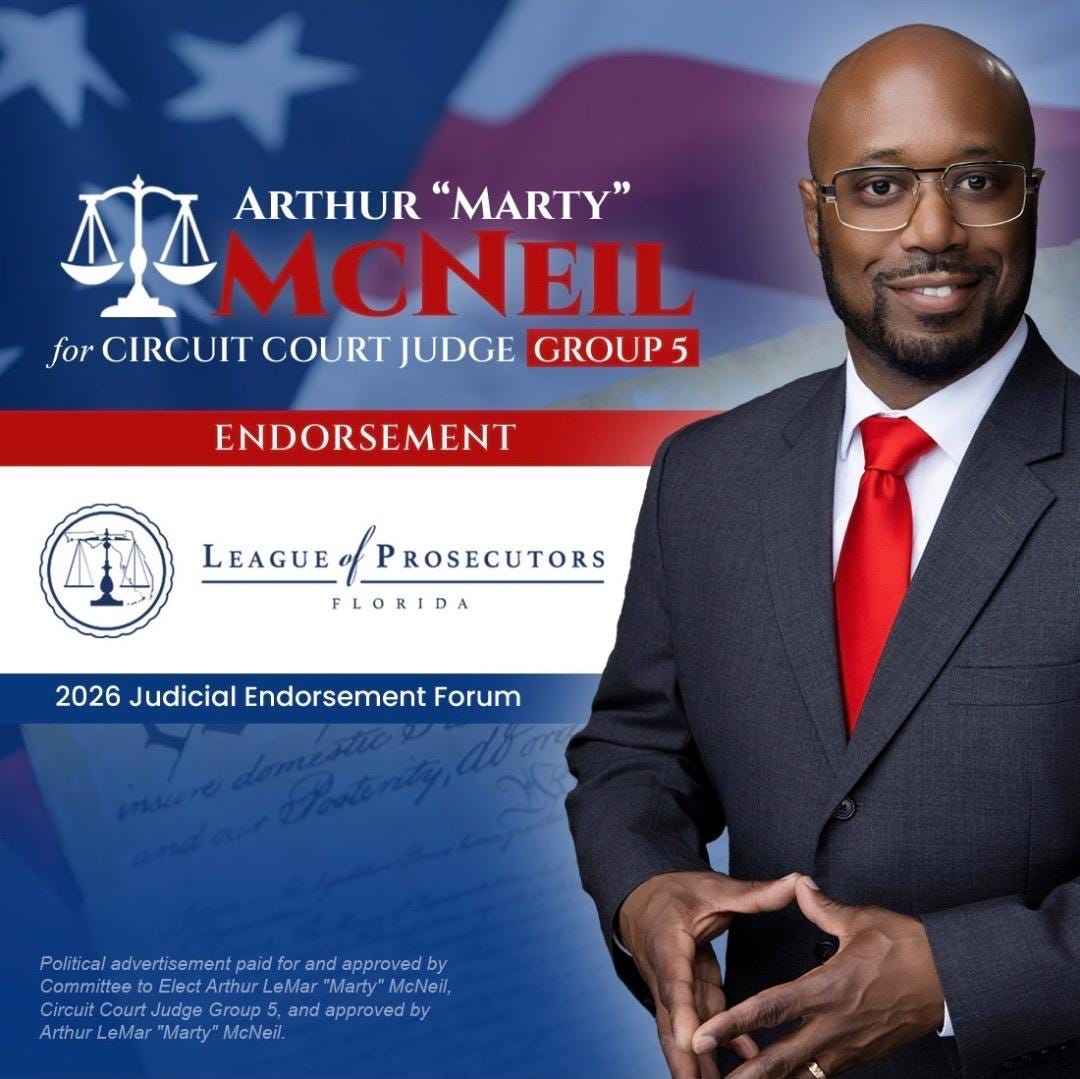
By the way, McNeil has picked up other endorsements along the way, such as from the League of Prosecutors:
But let’s not get ahead of ourselves, because none of that necessarily means much. I’ve seen polling on this race, and while Monica carries unusually high “unqualified” ratings from her fellow attorneys, she’s also running against a guy who got busted for heroin, and she’s the only Hispanic name on the ballot. In a low-information judicial race in Miami-Dade, that last one has historically counted for an awful lot. She’s not the favorite, but she can absolutely still win, which is more than her husband can say nowadays.
Comments
Nothing yet. Say the first thing.
Sign in to join the conversation.