
I was one of the few kids in my high school with a BlackBerry. This wasn’t because my parents wouldn’t let me have an iPhone or because I got peer-pressured into BBM (BlackBerry Messenger); I just thought the BlackBerry Bold looked cool. And in my head, Don Draper would’ve had one if he were struggling in geometry in 2009.
There were like seven of us in the entire school with BlackBerrys, and I basically used it to text girls that I had crushes on who had boyfriends and to listen to one of the 25-or-so songs that fit in its music library. The BlackBerry was the last phone I had before I became an iPhone-r and was part of a hell of a run that featured a Nokia Block Phone, a Pantech Duo and a Motorola Razr.
We should go back for many reasons—social media is a disease, short-form video content has destroyed our attention spans, holding a personal tracking system isn’t great as we enter a late-stage capitalistic oligarchy, yadda yadda yadda—but worst of all, movies aren’t as fun anymore with the smartphones we have nowadays.
Obviously, there are exceptions, most notably Park Chan-wook, who has turned modern-day technology into a hellish art. But so many movies, especially those on streaming services, use texting as a bland crutch that frankly just looks like shit.
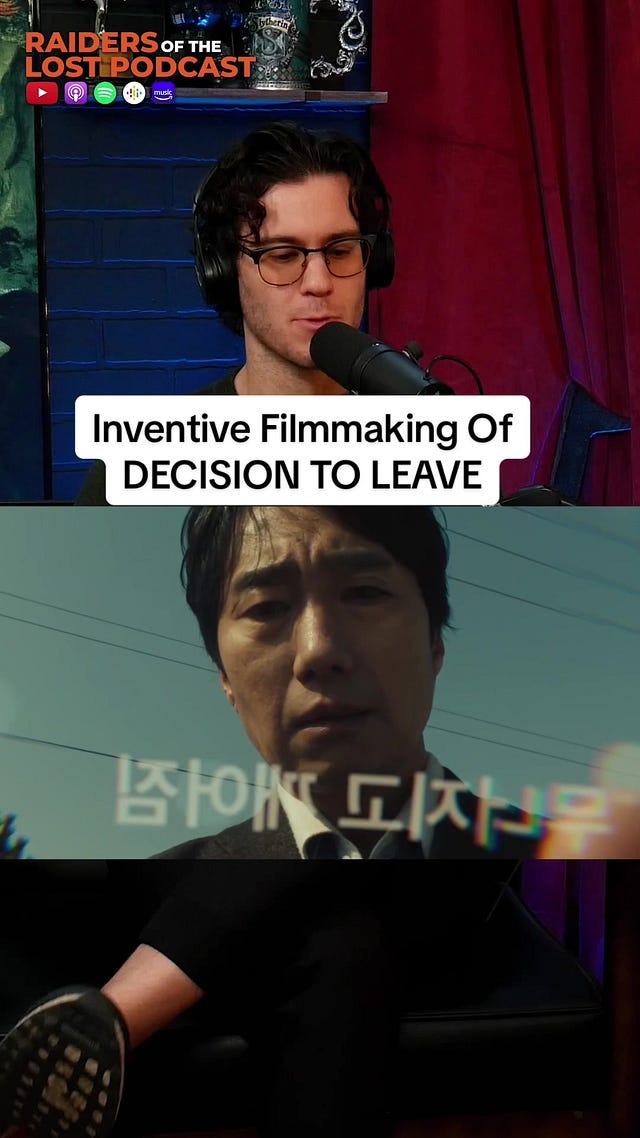
Decision to Leave turns texting into a critical part of the story, as evidenced by the handful of scenes below.
 Tiktok failed to load.
Enable 3rd party cookies or use another browser
And then compare that to the normal streaming … or just bad movie ilk. Which usually steals from the worst of television. For example:
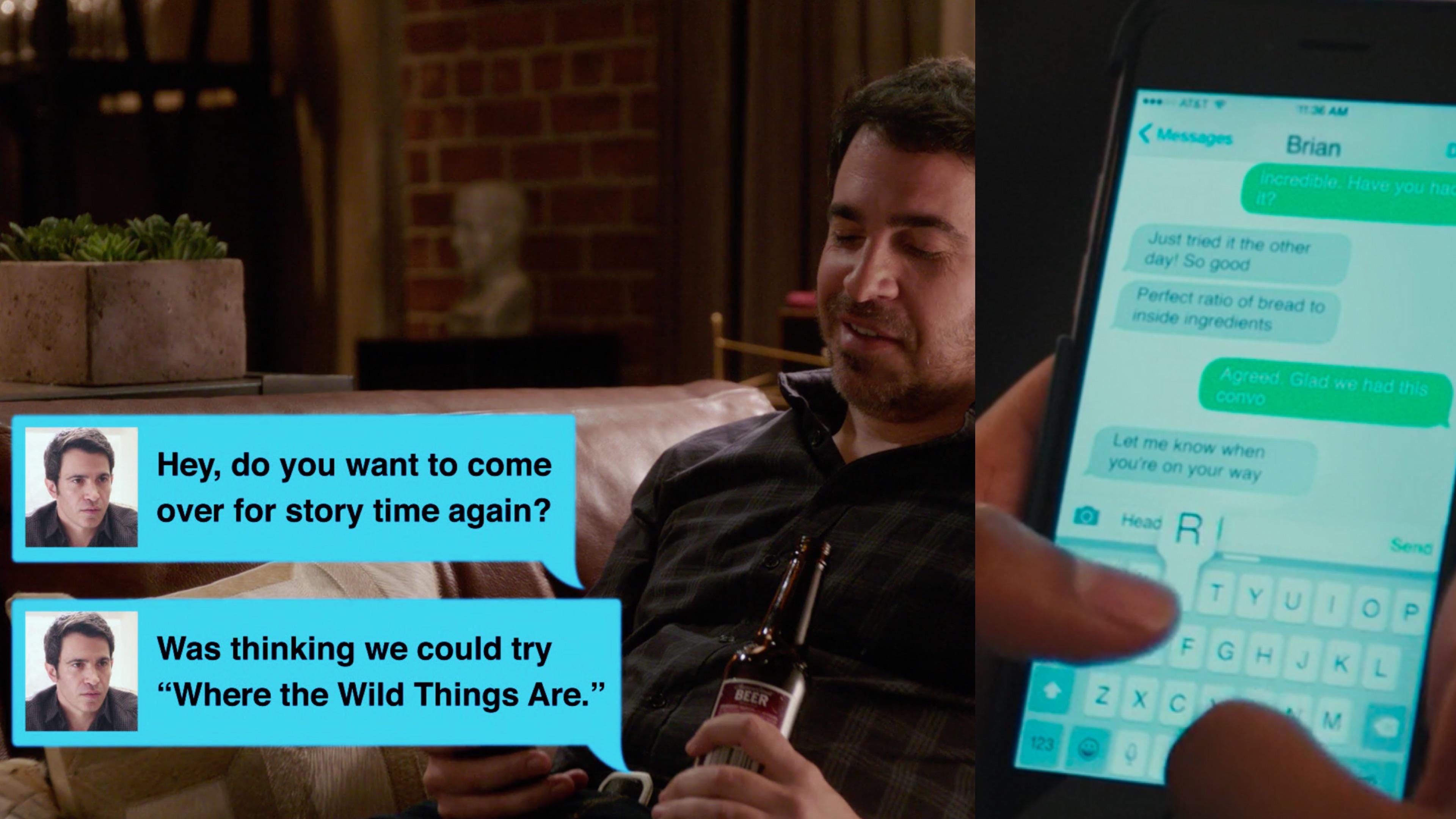
Perhaps the best way to text is to show it how it really is, like a horror movie, in which we stare dead-eyed into the abyss, not able to read how the person on the other side of the line is reacting. In that sense, Bo Burnham’s Eighth Grade is as real as it gets, with zero flourishes other than the daily trauma of modern life.
Anyway, the reason I’m thinking about all of this is because a friend and I saw Michael Clayton the other night. Yes, in theaters. Yes, at the Paris in 35mm. Yes, someone shrieked really loudly when a cop yelled “freeze,” and everyone laughed and/or rolled their eyes.
For those not in the know, Michael Clayton is a George Clooney-led Tony Gilroy legal thriller from 2007, which just so happens to be one of the best movies of the 21st century. That may sound like a reach, but I’ve seen it quite a few times over the last few years, and I think it’s one of the best screenplays I’ve ever read/watched.
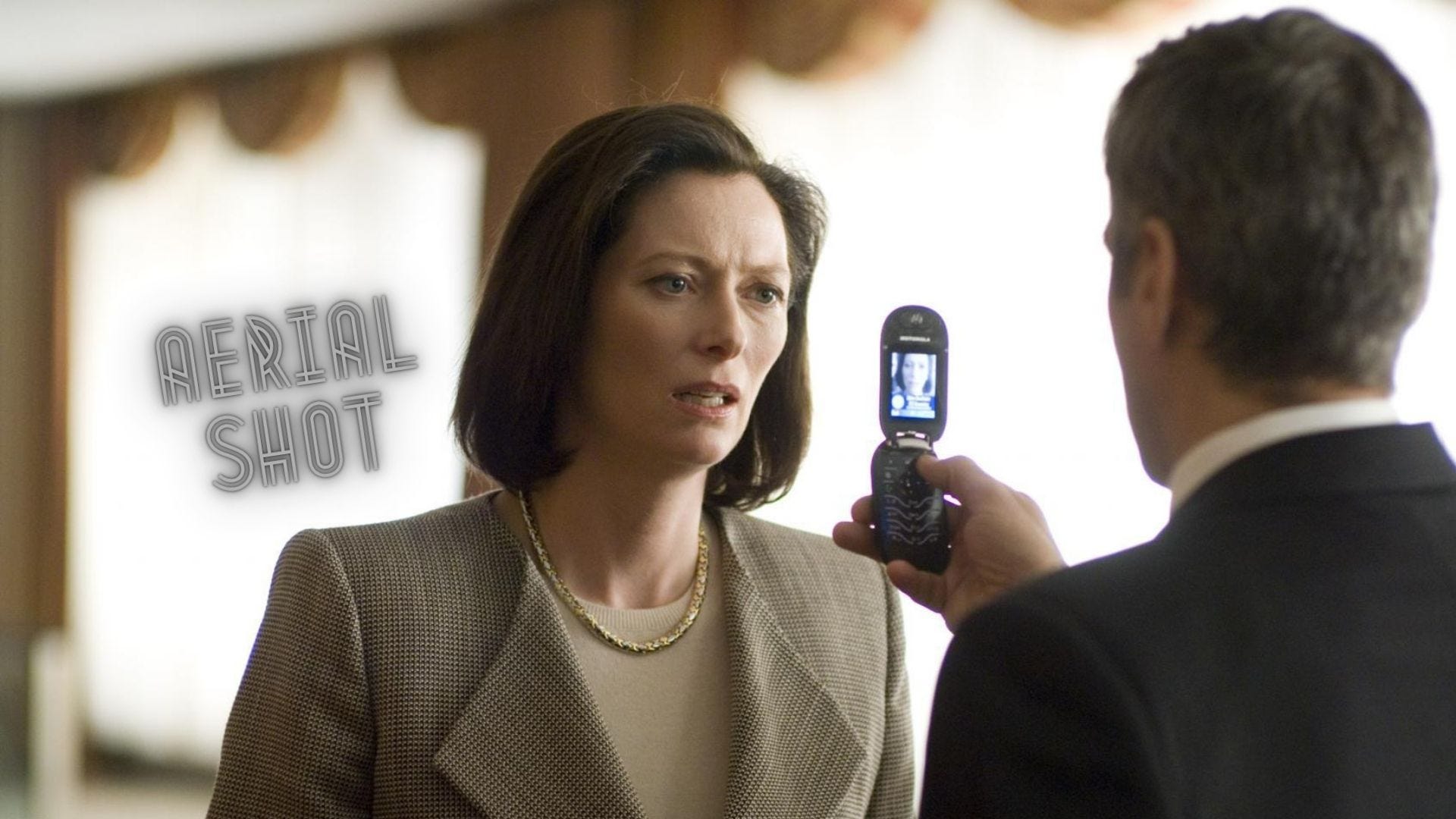
Clooney is magnificent as the put-upon, exhausted titular character, as are Tilda Swinton, Tom Wilkinson and Sydney Pollack. And it’s kind of funny to see how much of the time is Clooney pacing around on his dumb smartphone. Things aren’t that different. Everyone’s looking at their phones or into their computers, but there’s a bit of a separation between where we are today and where we are in this 2007 movie.
The phones are ubiquitous, and still, they don’t take away from the plot. Things feel more grounded and in the real world as opposed to everything happening online in a way that would be required if the movie had a 2026 sheen.
If this movie were made today, so many things would be easily Google-able. Michael Clayton would Arthur Edens’ location at the drop of a hat. And worst of all, the boxes upon boxes of files would be replaced with the uncanny Cloud. Does anyone know what the Cloud actually is? No. But it’s up there, I guess.
There’s something so beautiful about one of the final sequences revolving around a flip phone and an old-fashioned photo. We truly don’t know how well we’ve had it. Which is quite the depressing thought, as in 2007, we were in the midst of the second George W. Bush administration.
And yet, with all that said, there’s zero chance you’re taking this iPhone from me. You won’t be able to pry it out of my cold, dead hands. I have so many stories to read and podcasts to get through and Letterboxd reviews to chuckle at under my breath. What am I going to do? Live in the moment. Not on my watch!
One final note: Please watch Michael Clayton.
Aerial Shot is a reader-supported publication. To receive new posts and support my work, consider becoming a free or paid subscriber.
Comments
Nothing yet. Say the first thing.
Sign in to join the conversation.