
The Permian Basin has been operating near the limits of available gas egress capacity for several years, keeping the system structurally constrained. This is expected to change later in 2026, when roughly 4.5 Bcf/d of new outbound pipeline capacity is scheduled to enter service. Economic-driven gas shut-ins have accumulated this spring with low spot prices. Until that capacity comes online, Waha basis is likely to remain stressed. Producers have been aggressive in hedging Waha exposure for 2026 for some time, reflecting limited near-term relief. Further out, materially improved pricing in late 2026 has attracted additional hedging interest, as the Waha forward curve converges toward Henry Hub through the remainder of the decade. The tightening of the Waha–Henry Hub spread reflects growing confidence that incremental pipeline additions will materially reduce the risk of prolonged system congestion.
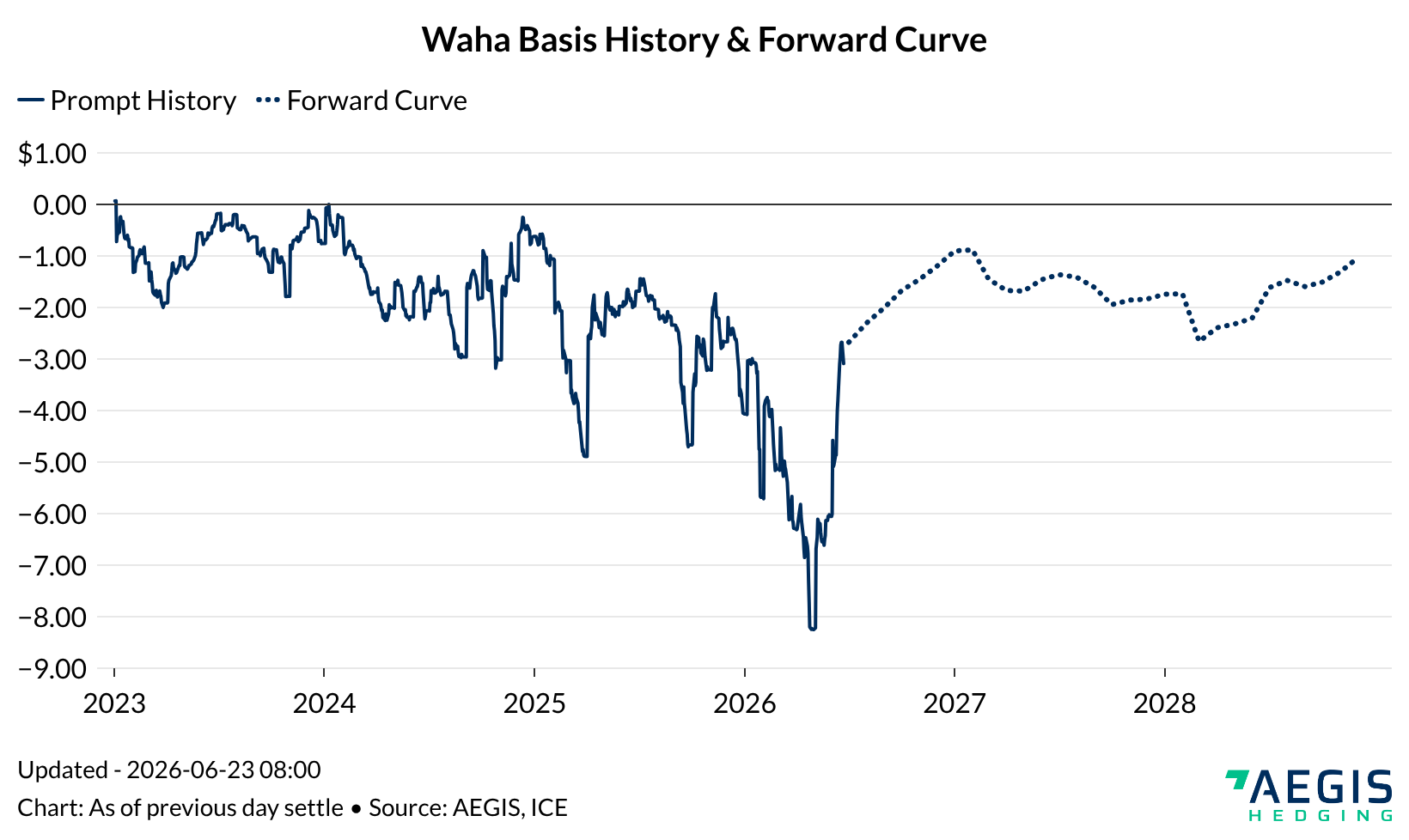
Waha gas prices have dramatically recovered in June, moving into positive cash territory for the first time since February. The startup of Kinder’s Gulf Coast Express expansion (GCX) helped relieve some Permian egress congestion. GCX has been delivering volumes to downstream interconnects since June 9. Waha cash prices have averaged -$0.24/MMBtu in June, up from about -$3.30/MMBtu in May. Most of the improvement for gas in West Texas over the past several weeks and month has been at the front of the curve. The balance of the Summer ’26 strip has improved by over $2.00/MMBtu, as Waha basis for balance-of-Summer ’26 sits at -$2.16/MMBtu (see chart in chart pack). There were minor improvements throughout the curve over the past week, with the largest move coming from the Summer ’27 strip, which improved by $0.20 to -$1.59/MMBtu
Summer ‘26
The Permian’s next major takeaway project doesn’t come online until November of ’26. Waha cash prices in 2026 have been negative for most of the days this year as of early June.
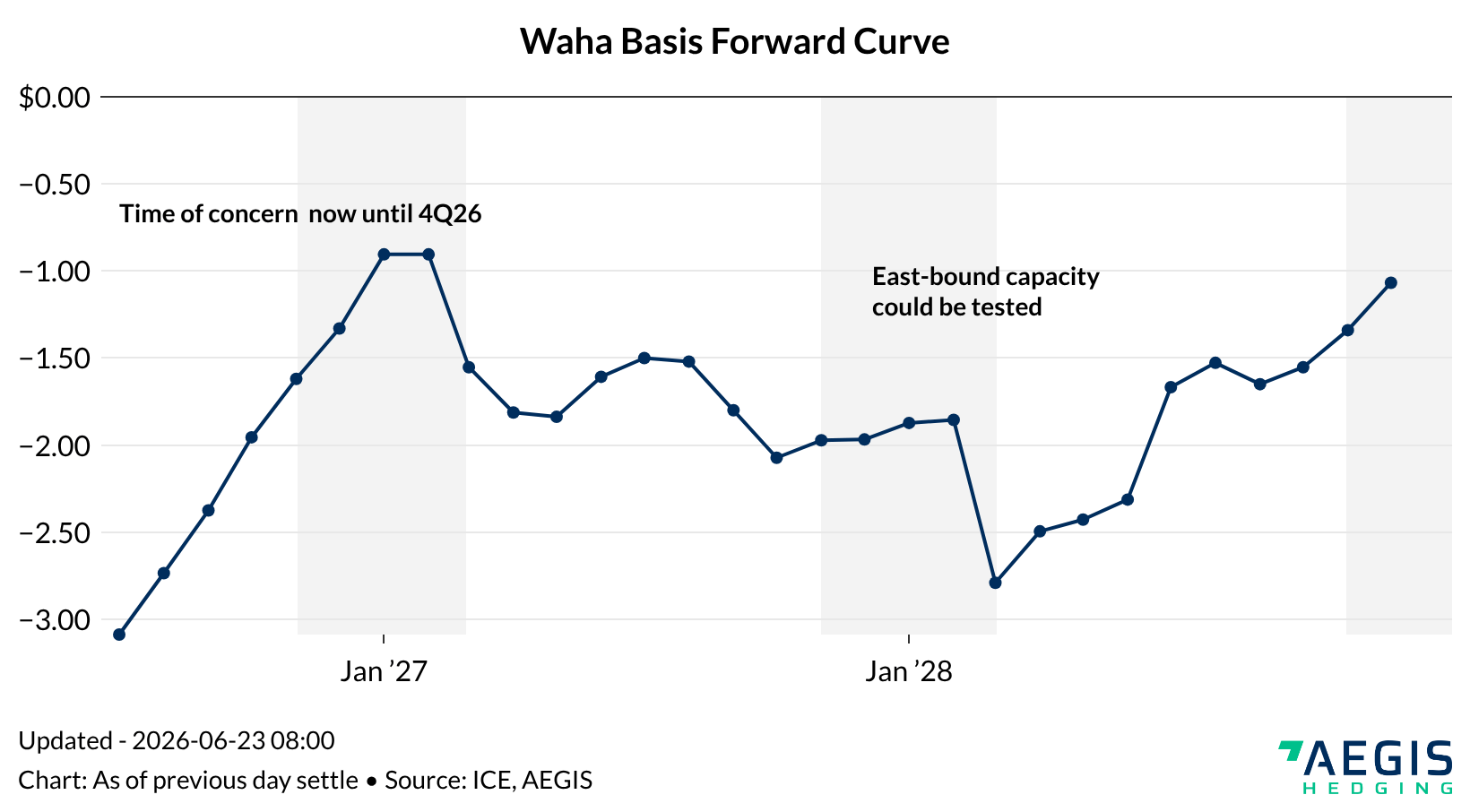
Possible overbuild in outbound capacity as Blackcomb, GCX expansion, and Hugh Brinson come into service. The Waha forward curve is the weakest for this time period as the basin likely operates near the limit of egress. Expect bearish pricing in both cash and possibly the prompt-month if and when pipe maintenance reduces capacity.
Winter ‘26-’27 & Summer ‘27
Both Blackcomb and Hugh Brinson will add over 4 Bcf/d of new eastbound capacity from the Permian. How quickly these pipelines fill will depend on how much uncommitted gas producers have ready to bring online. It is more realistic that some open capacity will remain after these expansions - especially on Hugh Brinson. The overbuild dynamic extends into 2027. The Waha forward curve reflects this outlook, pricing at a narrower discount to Henry Hub during this period due to the expectation of excess takeaway capacity from the Permian.
Winter ‘27-’28 to 2030
The US/Iran war has caused oil prices to soar over $100/Bbl. Forecasts for oil production from the Permian has been revised higher for ‘26 and ‘27. This could carry momentum into later years, depending on the fallout of the war. Rising GORs also support continued strong gas production growth. Roughly 12 Bcf/d of new pipeline capacity is under development to help move gas out of the basin. It is possible the Permian may enter an overbuild phase through parts of the remainder of the decade, easing system constraints and reducing the likelihood of the severely depressed prices observed in 2024 and 2025. Eastbound capacity may fill by early late 2027 to early 2028. One caveat: Producers in the region with whom we speak generally believe operators will ultimately fill all of this new pipeline capacity.
For more details on Permian gas prices and fundamentals, explore the full page below. This page is regularly updated.
Commodity Interest Trading involves risk and, therefore, is not appropriate for all persons. Past performance is not necessarily indicative of future results. Read our full disclaimer here: https://aegis-hedging.com/disclaimer.
Comments
Nothing yet. Say the first thing.
Sign in to join the conversation.