
Health officials say they want to restore trust in medicine, but the mixed messages from HHS Secretary RFK Jr., CMS Czar Mehmet Oz, and their MAHA surrogates are doing anything but. From the official HHS X account tweeting misinformation about Tylenol to Congresswoman Nancy Mace suggesting pregnant women take ibuprofen, a known teratogen, instead, government officials are sending a message that can only confuse the public about otherwise established science.
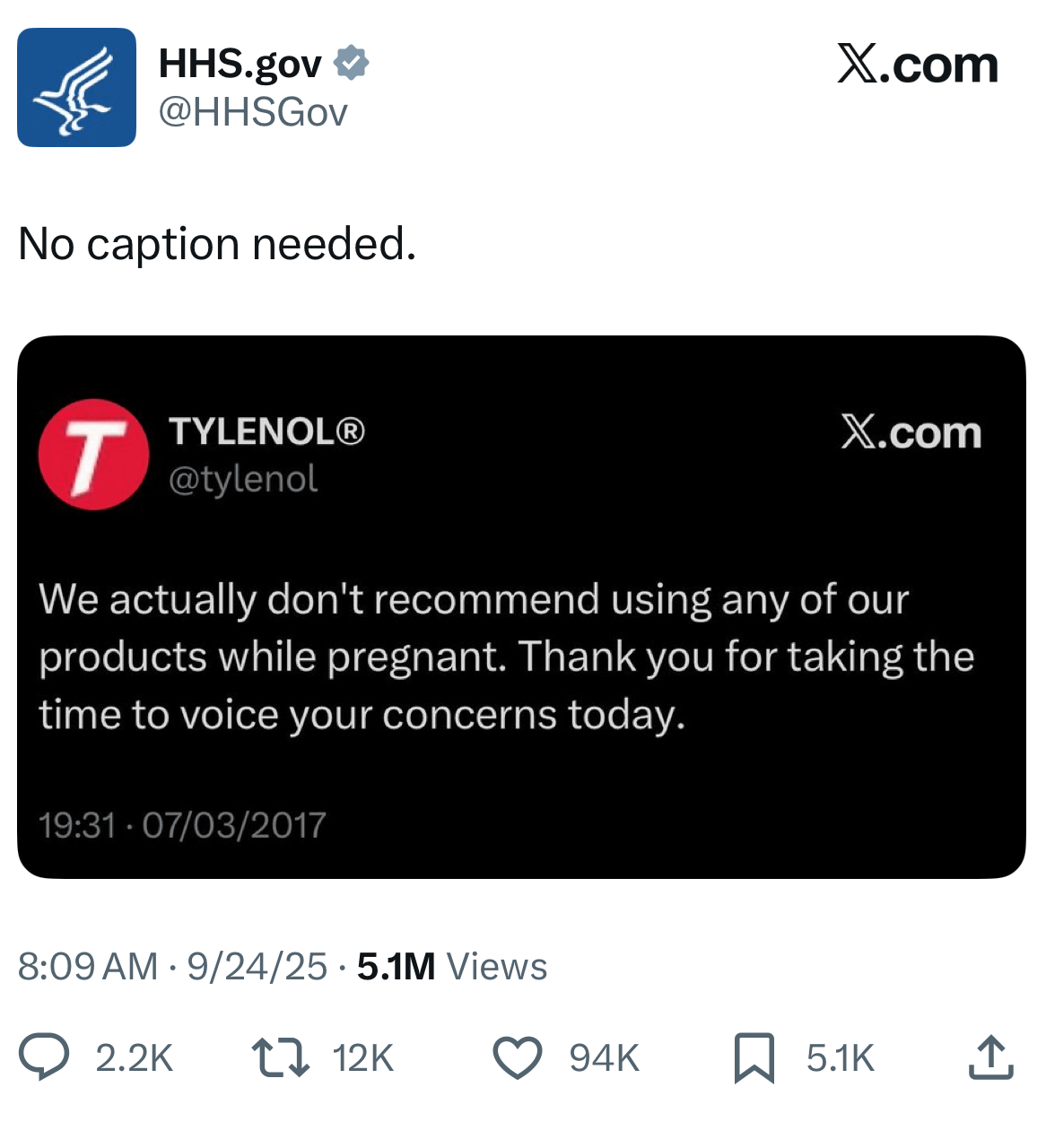
Likewise, rushing the FDA approval of leucovorin (folinic acid) after only phase-2 trials, and presenting it as a treatment for autism only sets the stage for conflict between families and clinicians who may not be comfortable prescribing it. Federal officials who undermine confidence in well-tested therapeutics, rush approvals of inadequately studied ones, all while telling the public to talk to their doctor, may unintentionally worsen mistrust in medicine and pharmaceuticals, leaving people worse off, with unequipped doctors to clean up the mess.
Thanks for reading Adverse Reaction! Subscribe for free to receive new posts and support my work.
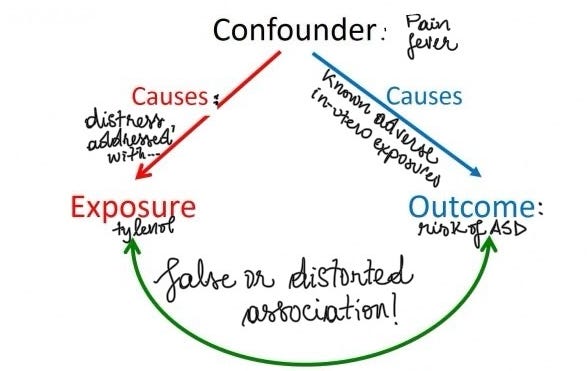
First, let’s bring the fever down: last year, a JAMA study found no association between prenatal Tylenol and autism, ADHD, or intellectual disability. Even if there were, we couldn’t isolate the drug from the conditions it treats (fever and pain, both known in-utero stressors). Tylenol isn’t recreational, so there’s no clean way to disentangle the drug from the illness.
Now, as for the proposed treatment: leucovorin has shown benefits for some autistic children, but only in small phase-2 trials, and no phase-3 trials yet, the hallmark for establishing a drug’s efficacy and safety at scale. Things like treatment duration and long-term risks remain unclear. The FDA’s decision has drawn criticism from both medical experts and legal experts with FDA experience, rightfully so. Unfortunately, fewer than half the public has confidence in the FDA, and this mistrust is even higher among women and conservatives. Evidence also suggests that seemingly neutral science benefits from the most credibility, even among conservative onlookers. Therefore, this premature approval may backfire, especially given how it was communicated to the public.
In a press conference, Dr. Oz announced the approval of prescription leucovorin “for the treatment of autistic children,” without much nuance. “It’s yours, but you have to go to a doctor to get a prescription because they know your child, they know you, and they know the medication,” he followed. But that’s not quite true. Leucovorin was approved for cerebral folate deficiency. Indeed, in existing studies, only participants with folate receptor antibodies benefited from the medication. So, it feels surreal to watch the CMS administrator make such reckless statements. His proclamations set people up for disappointment: those parents of autistic children who either will not improve after taking this medication, or whose pediatricians will decline to prescribe it because they don’t meet the criteria, or data is lacking. For those who can’t get a prescription, I suspect many will desperately turn to the over-the-counter (OTC) version of folinic acid. Indeed, when patients are disappointed or lose trust in their doctors, they often turn to supplements or alternative therapies, from which the supplement industry profits handsomely. Knowing this and Dr. Oz’s history, the vagueness in his statements feels intentional, as a wink to the supplement industry.
But turning to the OTC version may be a fool’s errand or very impractical. One leucovorin capsule contains 25-50 times more folinic acid than the typical OTC tablet. And while Dr. Oz may not personally cash in from this, his Big Supplement friends certainly will. And herein lies the issue with purportedly building trust by holding the establishment and Big Pharma accountable; it becomes ammunition for supplement companies that tout unproven, ineffective, or impractical solutions to complicated problems.
Alternative remedies have an obvious allure when people feel burned by medicine and betrayed by Big Pharma. That’s the sweet spot for the $150-billion supplement industry, which thrives not on evidence but on mistrust. Its marketing leans hard on the language of nature and safety: safer than drugs, all natural, etc. All while quietly cutting corners. Independent studies have found supplements laced with hidden pharmaceuticals, and yet the industry escapes anything like the regulatory scrutiny pharma faces. Instead, companies lean on vague “structure and function” claims (e.g, supports immunity, promotes gut health) that sound medical but stop just short of triggering FDA oversight. The result is a business model that preys on the vulnerable: parents desperate for their toddlers to stop catching daycare viruses, or families clinging to hope for developmental gains. For them, a bottle promising immune support or critical brain development feels like a lifeline, even when the science says otherwise. Especially when doses on the shelf are a fraction of what would ever matter biologically. If supplements were as harmless as advertised, their lobbyists wouldn’t spend millions making sure Congress never lets the FDA look too closely.
To be clear, it’s no secret that Big Pharma can have a nefarious impact on physicians’ prescribing behaviors and thus people’s health. The opioid epidemic, which has ravaged our entire country, was launched by Purdue Pharma’s aggressive marketing of OxyContin. Or take the pandemic: at its fever pitch, the WHO urged pharma giants to share Covid-19 vaccine recipes to rapidly scale global production, but Pfizer and Moderna refused, forcing scientists in places like South Africa to rebuild mRNA technology and to poorer countries in a time of crisis. Profit is a major motive for this industry. The tension between big pharma’s naked capitalism and its necessity is one we should grapple with.
Thanks for reading Adverse Reaction! This post is public, so feel free to share it.
But here’s the paradox: medicine is necessary. Big Pharma produces medications we know to be lifesavers. The supplement industry, in contrast, usually offers the illusion of control, draped in the language of natural health. But they are interdependent. Big Pharma’s excesses erode trust, while Big Supplement harvests that mistrust. And patients are left navigating a landscape where both industries profit from their doubt, and doctors feel unequipped to help them best. So when officials talk about restoring trust, the real question is: trust in whom? Because every time a claim gets inflated or a shortcut gets taken, what grows isn’t trust, it’s the market for its substitutes.
Thanks for reading Adverse Reaction! Subscribe for free to receive new posts and support my work.
Comments
Nothing yet. Say the first thing.
Sign in to join the conversation.