
As a medical student, I deferred leaving America during most of Trump’s first term, fearing I might wake up locked up abroad by an executive order one day. So, the most recent H-1B-specific order really hit home. I submitted my residency applications exactly four years ago this month. I had been an international student in the U.S. for over a decade, and I worried constantly about programs’ willingness to sponsor my eventual H-1B petition. I matched, and my residency sponsored my H-1B. What a relief. I remained in that status as an attending physician and university professor until recently. I also study the physician workforce, and I think the latest executive order carries huge implications for graduate medical education, and even more so for practicing physicians and healthcare in rural America.
Signed on the eve of residency applications, this EO guaranteed chaos for visa-seeking applicants and hospital administrators alike. It effectively raised the cost of petitions from under $6,000 to $100,000, with vague exemptions left to the discretion of the Secretary of State. Hours after many workers rushed home from abroad or canceled trips altogether, White House press secretary Karoline Leavitt tweeted clarifications about current H-1B holders. Whether tweets count as governing is unclear, but employers are risk-averse and may strictly refer to signed, legal documents to make decisions.
Thanks for reading Adverse Reaction! Subscribe for free to receive new posts and support my work.
One may wonder why everyone should care about Silicon Valley’s favorite visa program. Well, about a quarter of U.S. physicians are international medical graduates (IMGs). Historically, hospitals’ choice between H-1Bs and J-1s has been about cost. J-1s are cheaper because individual applicants bear the burden. H-1Bs, by contrast, require hospitals to prove need and cover fees. When petitions were a few thousand dollars, that was trivial for hospitals already investing hundreds of thousands per resident. At $100,000, it becomes prohibitive.
The difference matters. J-1 visas require trainees to return home for two years after completing their residency, unless they obtain a transition-to-H-1B waiver requiring them to work for three years in an underserved area. H-1Bs don’t. They allow people to pursue fellowships, stay in academic centers, and ultimately integrate into the physician workforce. They are the bridge from training to independence. A long one. It can take as long as two years to become a permanent resident after applying, and many feel stuck in the queue. In 2020, for example, around 15,000 practicing physicians were awaiting permanent residency. Stuck in limbo, these physicians keep hospitals running on a temporary status. And now, with the government slapping a six-figure fee on the very visa that keeps them here, the next question becomes: who pays?
Some will suggest that since doctors earn high salaries, employers could just claw back the cost from compensation. But that would be illegal. To shift costs, hospitals would need to lower salaries for everyone, not just H-1B holders. In a context of physician shortages, particularly acute in rural America, that’s not a strategy anyone is likely to pursue.
It is not an exaggeration to say that IMGs are critical to American healthcare. They provide equally good, sometimes better, care than we U.S. grads. And despite claims to the contrary, American citizens already get priority in residency slots. In a study I published, only a minority of hospitals even welcome visa-seeking applicants. Paradoxically, the least prestigious programs, where IMGs are most likely to train, are also the least welcoming, at least on paper. But US grads aren’t that interested in them.
State governments know this. It’s why more than a dozen states have recently passed laws allowing foreign-trained physicians to practice without repeating residency in the U.S.. Those laws depend on the H-1B pathway. Without it, they are DOA, as we morbidly say in medicine: Dead on Arrival.
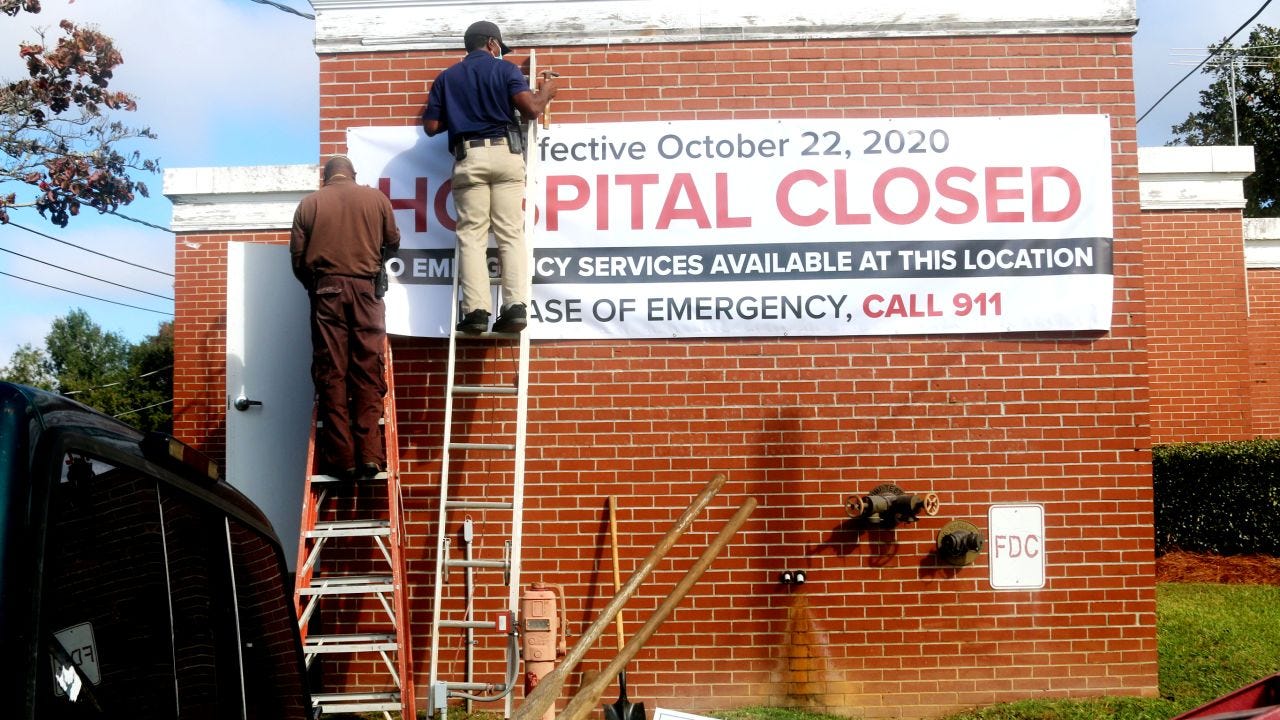
Long-term, we need to train more students who actually want to work in rural areas. But in the meantime, rural hospitals already depend disproportionately on IMGs. Making the H-1B prohibitively expensive doesn’t just disrupt residency applications. It jeopardizes rural hospitals’ lifeline and will only accelerate the already alarming pace of rural hospital closures.
Thanks for reading Adverse Reaction! Subscribe for free to receive new posts and support my work.
Comments
Nothing yet. Say the first thing.
Sign in to join the conversation.