
Last month, Adverb co-hosted Humans in the Loop with Forerunner Ventures and an incredible group of funds, bringing together nearly a thousand founders, builders, and operators shaping the future of AI.
The public conversation around AI is often dominated by discussions of models, benchmarks, and capabilities, and the perception admittedly skews negative outside of tech’s inner circle. But spending a day with founders shaping the future of consumer AI experiences offered an entirely different perspective. The most compelling companies aren’t asking, “What can AI do?” They’re asking, “What aspects of everyday life have become unnecessarily difficult, fragmented, or overwhelming? And how can AI accelerate solutions?”
One theme surfaced repeatedly throughout the day: modern life has become an exercise in coordination. Between work, family, school schedules, homeownership, and an ever-growing number of digital systems, people are increasingly acting as project managers of their own lives.
What we saw at Humans in the Loop was a new generation of companies attempting to solve that problem—not by adding another application or another notification to our phones, but by reducing the cognitive burden that accompanies modern life.
Two presentations from Adverb portfolio companies illustrated this shift particularly well.
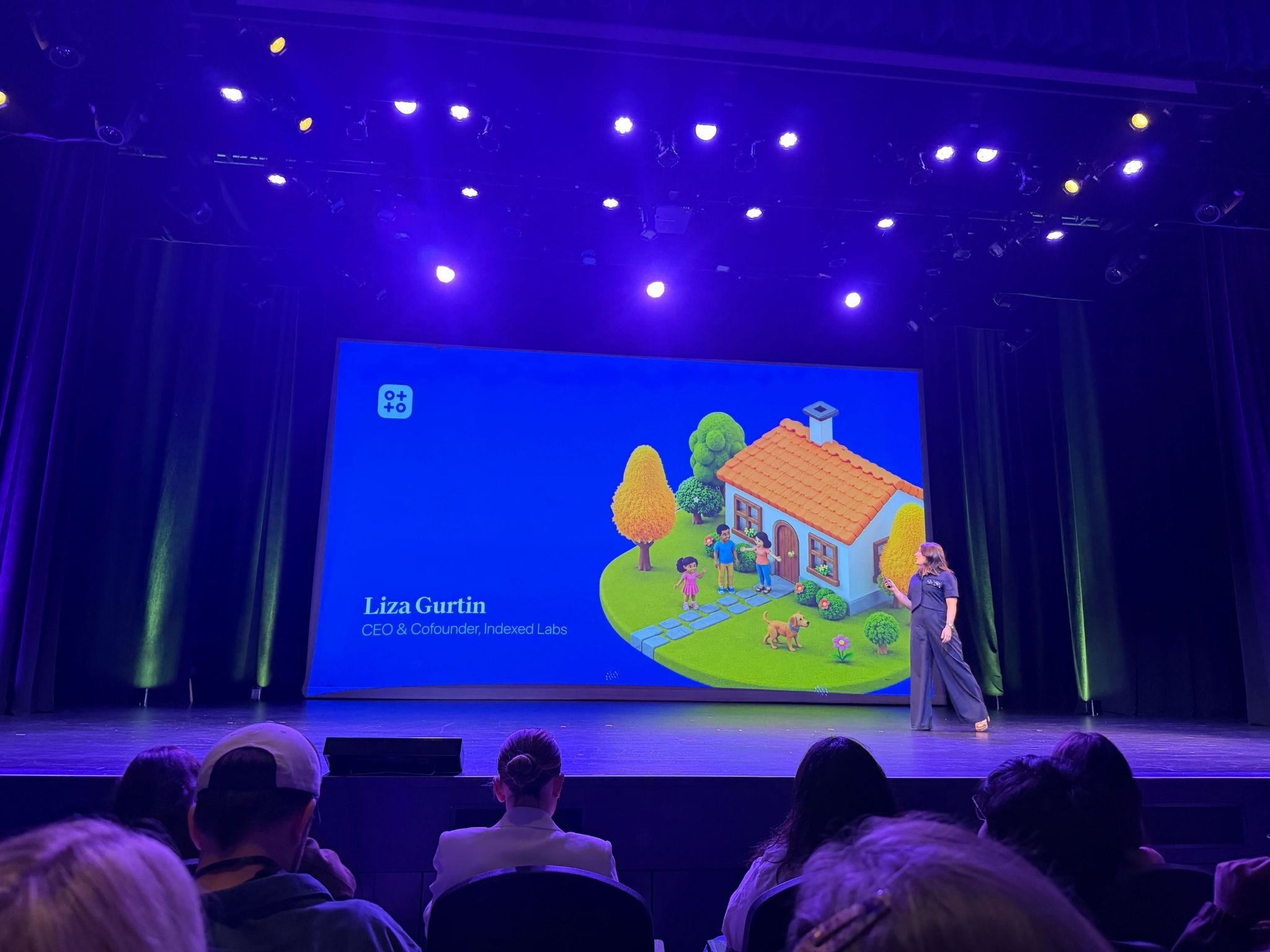
Liza Gurtin, co-founder of Indexed Labs, opened with three small stories that probably sound familiar if you’re a parent.
Will drove to the wrong school for pickup after mixing up his kids’ calendars, then rushed across town feeling like he’d abandoned his kid.
Maddie missed a note about spirit day buried at the bottom of a school email, and her daughter came home in tears.
Tiffany missed golf camp registration and spent the next week scrambling for a backup. None of these in isolation are catastrophic, but it’s death by a thousand papercuts.
Parents are drowning in admin, logistics, and coordination. Kids today are in more after-school enrichment activities than ever before. Over 60% of school weeks are non-standard. And the details are scattered across emails, text threads, PDFs, school websites, apps, and portals. The bottleneck isn’t access to information; it’s the work of making sense of it.
Indexed Labs is building Otto to take the logistics of family life off parents’ plates entirely. Otto ingests information from the dozens of places parents already manage their lives—school emails, calendars, portals, websites, flyers, and group chats—and turns it into a single, personalized source of truth. Instead of asking parents to adopt another tool, it proactively surfaces what matters and handles everything else. The opportunity in AI isn’t to generate more information; it’s to make sense of what already exists—and to act on a parent’s behalf.
✨ Join the waitlist for Indexed
Michael Mizrahi‘s presentation on Casa made a similar source of administrative burden: home ownership. Owning a home is one of life’s most meaningful milestones, but managing one often feels like a full-time job. Little things break, bigger things require coordination, and homeowners are suddenly responsible for finding vendors, comparing quotes, and making decisions in areas where they have little expertise.
Michael framed the opportunity by pointing out that affluent households already have a version of a solution: a house manager who knows the property, understands the systems, coordinates repairs, and handles problems before they become emergencies. Casa is building that experience for everyone.
What makes Casa compelling is that it starts with understanding. In a single visit, Casa captures a detailed digital model of the home—everything from appliances and lightbulbs and paint colors to real-time property data—so that when something goes wrong, the system already knows the answers to most questions a vendor would ask in order to service the property. A water heater acting up is no longer just a vague issue; it is a specific tankless make and model due for maintenance, still under warranty, with a gas bill that has been creeping up for months. From there, Casa can recommend the right fix and dispatch a vetted professional who arrives already briefed.
That combination of intelligence and execution is what makes the idea feel durable. The goal is not simply to make home maintenance easier, but to make homes easier to enjoy living in.
What made Humans in the Loop memorable wasn’t the technology itself, but the reminder that AI is ultimately a means, not an end.
Kirsten Green, founder and managing partner of Forerunner, captured this idea well in her reflections after the event, writing that AI’s narrative problem is really a proximity problem. Most people experience AI through headlines, social media, and predictions about what might happen someday. What changes opinions isn’t a better argument; it’s spending time with the people building this future and understanding the values and motivations behind their work.
We left Humans in the Loop with a similar feeling. Not certainty about where consumer AI is headed and when, but confidence in the people shaping it and their attunement to the humans they’re looking to serve.
No posts
Comments
Nothing yet. Say the first thing.
Sign in to join the conversation.