
One of the most thrilling experiences on my Sicily tours is the moment that we emerge from the south and head east, where, suddenly, the outline of the Queen of Sicily emerges. It sends a chill up my spine every darned time.
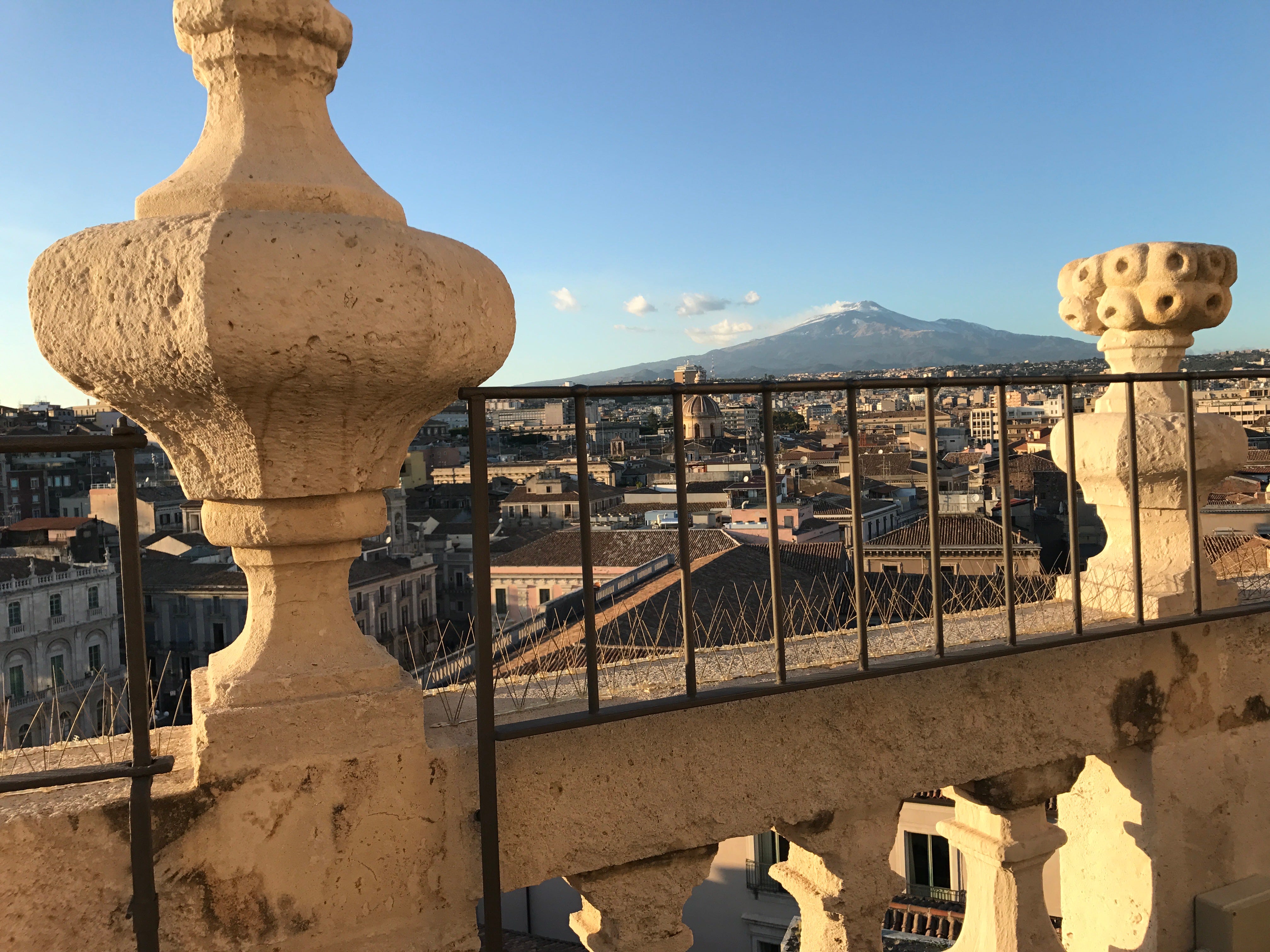
Mount Etna does not merely exist on the Sicily landscape; she rules it. Rising like a regal mother over the island's eastern coast, "Mamma Etna" (as she is fiercely and affectionately called by locals) is a constant, pulsating presence. She dominates the skyline of Catania, wraps her southern flanks in urban bustle, blankets her northern slopes in centuries-old vineyards, and drops gently into quiet western fields of pistachio and olive trees.
To understand Sicily, you have to understand Etna. She is Europe’s largest, highest, and most relentlessly active volcano. A geographical marvel whose temperamental huffs and puffs have sculpted the culture, history, and very survival of the people who live in her shadow.
When people picture a volcano, they often imagine a single, neat mountain peak with a solitary opening at the top. Etna completely upends this image. To look at her summit is not to look at a single crater, but rather a dynamic, shifting cluster of active volcanic mouths that live in a state of constant sibling rivalry.
At the very top of the mountain, four primary open craters—or "mouths"—are continuously reshaping the landscape: Bocca Nuova, Voragine, the Northeast Crater, and the Southeast Crater. These giant vents act as the mountain's primary exhaust pipes, constantly venting gases, coughing up ash, and taking turns staging spectacular, eruptive displays.
But Etna’s complex anatomy doesn't stop at the summit. Because her magma is under immense pressure, it frequently bypasses the main peak entirely, tearing through the weaker basaltic rock on her flanks. This has peppered the mountain’s massive slopes with hundreds of secondary, dormant side craters. From a distance, Etna looks less like a solitary mountain and more like a vast, wrinkled colony of mini-volcanoes, each one representing a moment in history where the earth fractured and a new mouth opened up to breathe fire.
If you ask a Sicilian, the little flank eruptions are scarier than a spectacular summit eruption. They can suddenly, randomly appear and swallow your house.
Pinning down the physical stats of this multi-mouthed giant is like trying to measure a moving target. For decades, standard textbooks listed her peak at around 10,924 feet (3,330 meters). But Etna is an artist who constantly rewrites her own geometry based on which volcanic mouth is throwing the biggest tantrum.
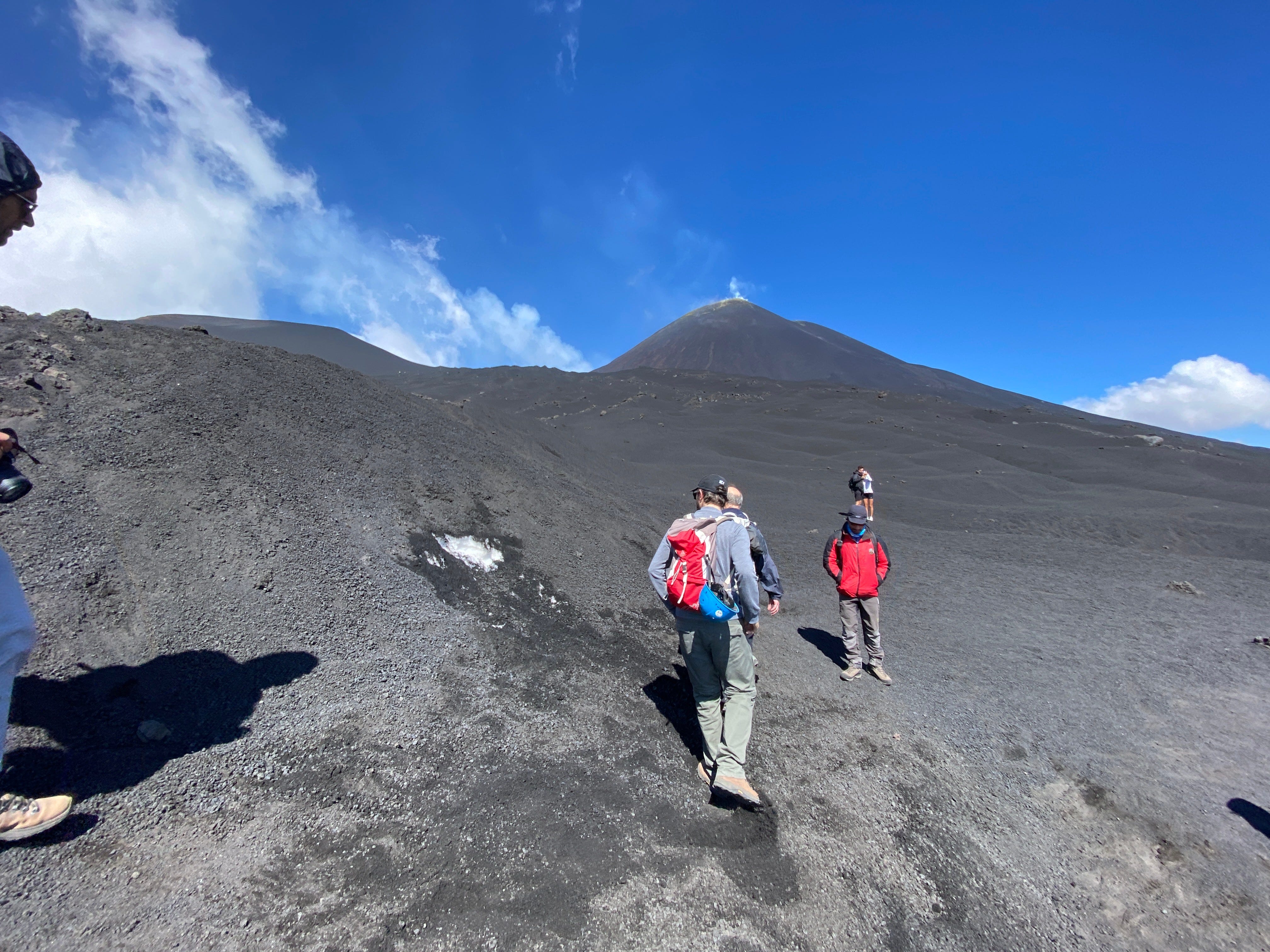
Following a series of dramatic eruptions from the Voragine crater, scientists at Italy’s National Institute of Geophysics and Volcanology (INGV) clocked a historic new record high of 11,155 feet (3,403 meters). Just years prior, the Southeast Crater had briefly claimed the crown, only to be overtaken when Voragine ballooned by an extra 35 meters of accumulated volcanic deposits. Etna grows, collapses, sheds layers, and rebuilds herself in real-time. Will she ever get higher? Well, the limits of atmospheric pressure may keep her vents fighting over just a few meters for eternity.
Her origins are equally dramatic. Half a million years ago, Etna wasn't a mountain at all. She was a prehistoric underwater volcano that slowly, violently cracked the surface of the Mediterranean Sea through continuous deep-sea eruptions, eventually rising up to become the grand summit of Sicily.
Tectonic Tensions: Where Europe Meets Africa
Geologically speaking, Sicily finds itself in a slow-motion car crash. The entire island is caught directly in the collision zone where the African continental plate is grinding northward into the Eurasian plate.
This intense tectonic friction is the engine behind Italy's famously volatile geology. Deep beneath the earth's crust, the clashing of these massive plates opens up deep fissures, allowing molten magma to escape to the surface. It is the exact same subterranean battleground that gave birth to the mountainous spine of the Italian mainland, alongside a fiery family of active neighbors: Mount Vesuvius, Stromboli, and Vulcano.
Yet, Etna stands apart in her design. She is a sprawling complex covering a massive 100-mile circumference—a footprint roughly the size of London.
A Hybrid Giant: Volcanologists classify Etna as a unique hybrid. Her immense, gently sloping lower base mirrors the profile of a Hawaiian shield volcano. However, as she rises toward the sky and approaches her cluster of active summit mouths, she tapers sharply into a steep stratovolcano—the classic, explosive cone type capable of dramatic ash plumes and pyroclastic displays.
To outsiders, living at the foot of an active volcano capable of blasting rivers of molten rock seems like madness. But to Sicilians, Etna is considered a "friendly volcano." Her magma is generally thick, viscous, and slow-moving, resulting in effusive eruptions where lava slowly oozes rather than exploding with catastrophic speed.
Because her movements are highly predictable, Etna rarely claims human lives. Instead, she throws spectacular tantrums. She frequently blankets nearby towns in a heavy layer of "black snow"—fine volcanic ash that locals patiently sweep off their balconies and windshields.
History is filled with stories of the mountain and her people dancing around one another:
The Miracle of 1669: A massive, ten-mile-long river of molten lava threatened to consume the historic heart of Catania. The city was saved when the flow was successfully deflected into the sea by the sheer strength of the robust medieval town walls. A painting in the Duomo of Catania shows local women casually drying their laundry near the flowing magma, confirming that Etna’s worst eruptions were never life threatening.
The Disappearing Village of 1928: When a slow-moving lava flow advanced on a small slope community, the eruption moved so predictably that villagers didn't just escape with their lives—they had enough time to systematically dismantle their homes, packing up furniture, bricks—even the train tracks—to recreate their village further down the slope.
If Etna is a temperamental matriarch, the agricultural bounty she leaves behind is her ultimate apology. The very ash that disrupts flights and blankets streets is packed with an incredibly dense concentration of minerals—potassium, phosphorus, iron, and magnesium. Over centuries, as the lava weathers and breaks down, it creates some of the most fertile, sought-after soil on earth. For years, the town of Zafferana Etnea had packed up ash in toxic waste bags until they realized what they had on their hands. Now? They make beauty products from the black gold.
This volcanic alchemy is why Sicily’s slopes are so densely populated. The mountain acts as a giant greenhouse. On her western slopes, near the town of Bronte, the mineral-rich earth yields "green gold"—intensely flavored, vibrant green pistachios that carry protected DOP status and are prized by pastry chefs globally. Further down the mountain, rows of wild fennel, citrus, and ancient olive groves thrive in soil that would be barren anywhere else.
Nowhere is this relationship more evident than in Etna's wine country. For generations, the historic vines of the north and east slopes were largely ignored, their grapes relegated to cheap, high-alcohol jugs. Today, Etna is one of the most celebrated wine regions on earth. Ancient, pre-phylloxera vines of Nerello Mascalese and Carricante grape varieties dig their roots deep into black basaltic sands and ancient flows. The unique diurnal (alpine-meets-Mediterranean) climate yields deeply complex, mineral-driven, and elegant vintages that rival the finest bottles of Burgundy.
Mamma Etna may be unpredictable, mysterious, and occasionally destructive, but she remains the ultimate life-giver of Sicily.
So, as Mamma cooks up another volcanic show, should you cancel your trip? Should you run? No. Grab a glass of Etna wine and find a perch from which to watch the fireworks.
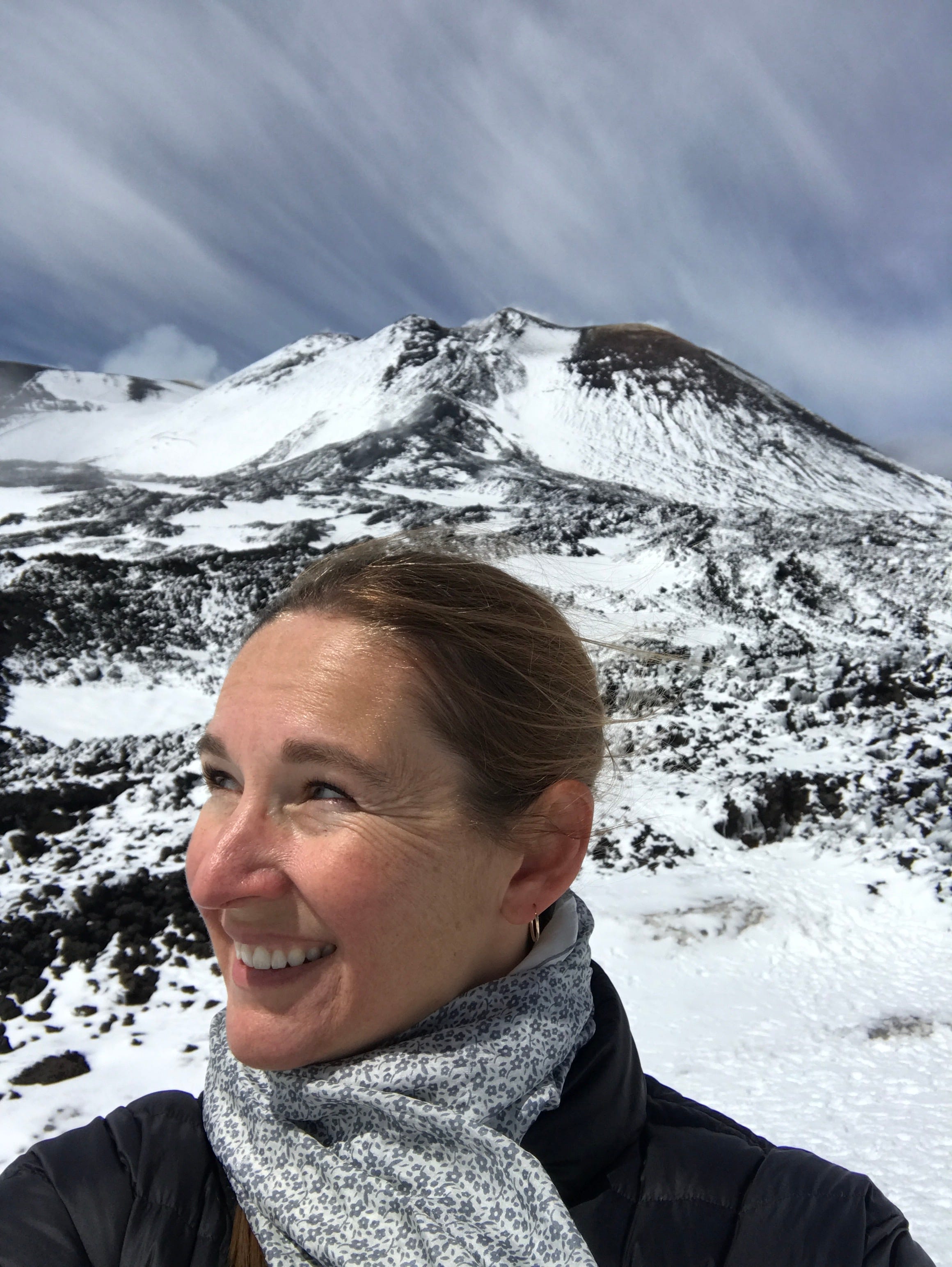
Have you been to Mount Etna and seen her out on a show? Tell us about it in the comments!
Comments
Nothing yet. Say the first thing.
Sign in to join the conversation.