
I had the pleasure of interviewing Megan about her work and forthcoming book on outdoor play and learning. It was a fun chinwag in which she shared some solid insights for educators working within the system of education.
While Will and I have researched and published mostly on outdoor therapies, our work includes around the concepts of experiential learning, outdoor play, nature connection and similar pedagogies as found in education. We tried hard to avoid writing about outdoor therapies in our latest book on youth mental health. We did resort to using examples from our own work and research, and, spoke to one international expert on outdoor risky play, Dr. Ellen Sandseter who I wrote about back in September.
While attending the Outdoor Play Summit in Ottawa a few months ago I heard about the work of one Canadian teacher consultant, Megan Zeni, who sparked my interest in a follow up chat. Oh, and if you haven’t yet signed the 2025 Position Statement on Outdoor Active Play, please do so here.
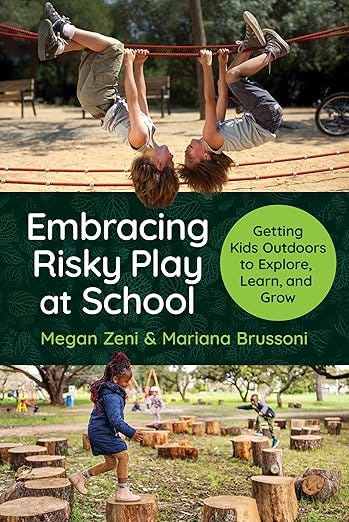
Embracing Risky Play, Pre-sales available now: Pre-orders Here [Canada & USA]
Dr. Megan Zeni is a visionary educator and scholar whose passion for outdoor, place-based learning has transformed classrooms into vibrant ecosystems of discovery. With a PhD in Curriculum and Pedagogy from the University of British Columbia, she champions child-led inquiry, risk-aware play, and sustainable practices that empower young minds to connect deeply with the natural world. As a seasoned teacher, author, and sought-after speaker, Dr. Zeni inspires educators globally through her innovative “Garden Based Learning” framework, blending rigor with wonder to cultivate resilient, curious lifelong learners. In January 2026, her highly anticipated forthcoming book on risky play will further illuminate the transformative power of thrilling, unstructured outdoor experiences, equipping parents and teachers with practical tools to foster fearless exploration and growth.
I have 30 years in the system, so I understand that systems don’t want to change. But they are very, very slow and hard to change. But if you understand how the system works, it’s actually quite easy to thread the needle and weave and duck and to make this change work within the existing system. I always, when I talk with teachers, I talk about how we have to agitate, but in a sudsy way, right? It’s in a way that makes people want to help you, not like shut it down, right? And so I think there’s so much nuance to this question because there’s lots of systemic issues that can be navigated with some skill.
And now we’ve come so far in 10 years. I think there’s been such effective knowledge translation pieces done. The research has been really clear, you know, Mariana [Brussoni], Ellen [Beate Sandseter]…all the people in this space have really been very cohesive. So it doesn’t feel controversial anymore and it doesn’t feel edgy anymore.I mean, the Canadian Pediatric Society is now prescribing it! It’s now so mainstream, right. So active outdoor play is really recognized across the lifespan and risk is just a part of play.
One insight I took away from our convo was that change can happen with uncooperative systems if you are a positive deviant. We write about positive deviants in ‘Kids These Days’ and hopefully leave our readers with inspiration for finding ways to influence systems and speak up as the “adults in the room!”
I think Megan was stoked to be called one:)
If you are interested in Megan’s work in School Gardens, Outdoor Classrooms, and Pedagogies of Place & Play, see here: https://meganzeni.com/
Definitely check out Megan’s forthcoming book here: Publication in January 2026 https://www.outsideplay.org/books
Thanks for reading adults in the room.! This post is public so feel free to share it.
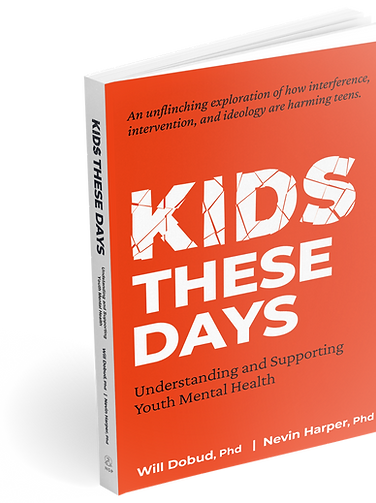
And don’t forget to leave a review and let us know how it lands for you! Be well, Nevin
Comments
Nothing yet. Say the first thing.
Sign in to join the conversation.