
Lately I’ve been wrestling with an uncomfortable truth about academic publishing.
Well, before I go there, I have a confession to make. I am not an academic’s academic. I’ve joked with colleagues in the past about being a ‘hackademic’ as I learning much of my scholarly trade by trial and error. As a researcher and author I more recently have adopted the moniker of ‘slackademic’ for I have moved past tenure and promotional rigmarole, and am faced with a tension; do I believe and value enough the academic peer-review publishing process to keep at it?
Peer-review publishing of research has its problems. Gate keeping. Trust/reliability. Speed and efficiency… Not my focus today:)
After years of practice with co-researchers and graduate students designing studies, analyzing data, and polishing manuscripts, you would think the peer-reviewed article, our gold standard for knowledge dissemination, would reliably shape most scholarly conversations. Yet many papers disappear almost as soon as they appear.
One of my early papers, maybe the most important from my PhD dissertation, got lost in the databases because I submitted it, innocently or ignorantly, to a poorly indexed journal of low impact. I did not know any better and did not have the mentorship to guide me.
Many papers may be downloaded, bookmarked, discussed in classes or on accessed and read repeatedly on ResearchGate, but they never earn a place in other scholars’ bibliographies or rack up the citation count (that game that earns you points in the publish or perish rank and tenure process of the universities).
Large bibliometric studies confirm this. One analysis of nearly 30 million documents (1996–2006) found a substantial proportion remained uncited even after extended time windows, with significant variation across disciplines. Another review of Web of Science data (1900–2015) reported roughly 21 percent of papers had never been cited, a figure that changes dramatically depending on field, journal prestige, and citation lag [an easier read on this issue here].
These studies show that uncited work is not rare but rather seems to be a common enough feature of how our modern scholarly publishing practice operates.
What complicates this picture is the growing evidence that download counts, “accesses,” and altmetrics tell a very different story from citations. Comparative studies of major medical journals, for example, found only tiny overlap between “most downloaded,” “most cited,” and “most mentioned” articles, suggesting three completely different kinds of visibility. In oncology journals, highly accessed papers showed almost no correlation with citation counts, and similar patterns appear in anesthesiology and other clinical fields.
We may as well cut to the chase here: most people hear about research through social media clips and blurbs, not from reading the actual studies anyways, right? Where do you hear about research?
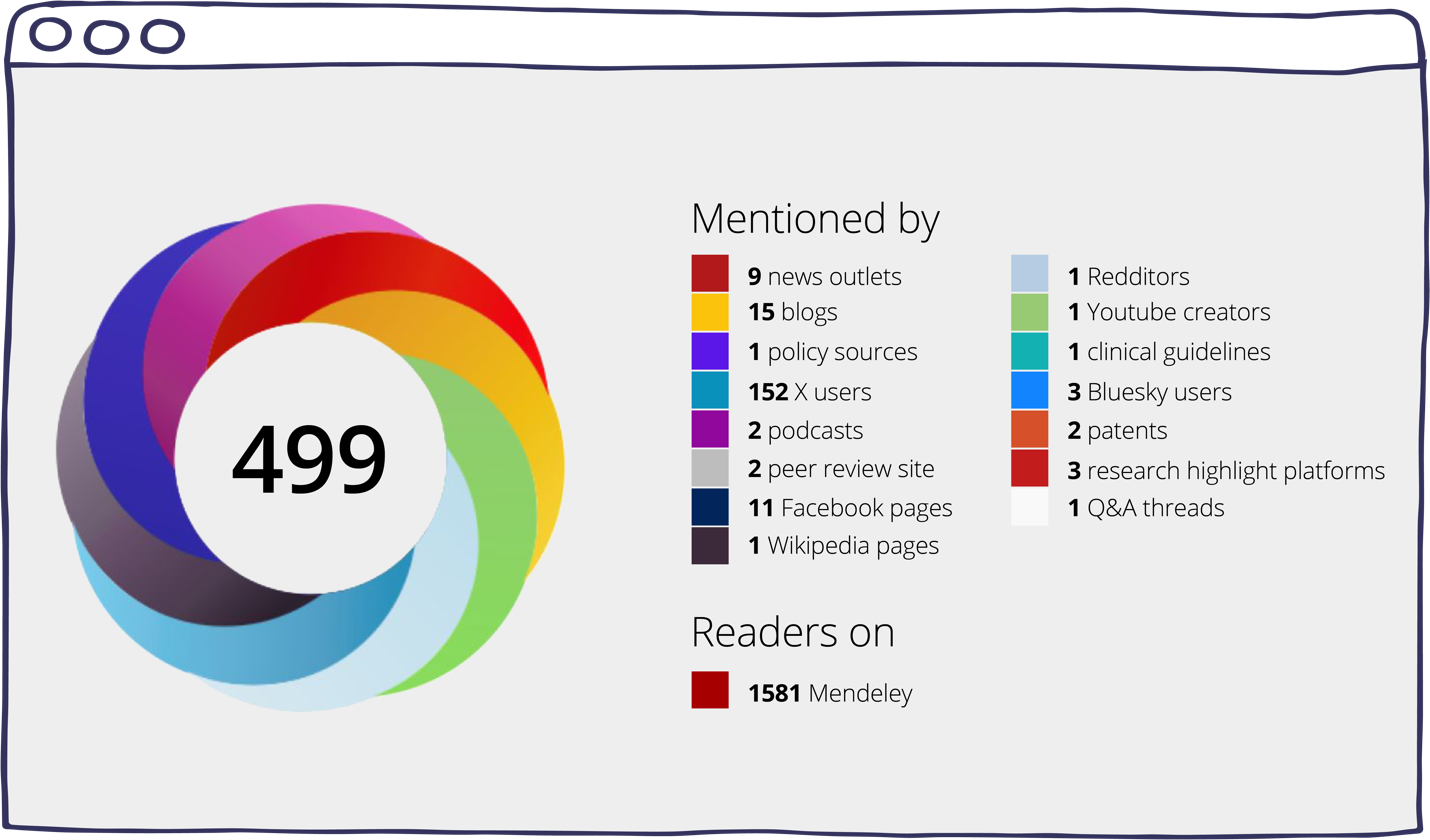
Altmetrics shown in the colorful donut you see online [image credit]
I’ve experienced this firsthand. Every so often I publish a paper that draws thousands of accesses through a journal site or through ResearchGate. I receive a few messages about it from other researchers in my lane, some students, but more often from practitioners. Yet when I check Google Scholar, the citation count barely moves. These papers live in a kind of academic purgatory: widely read, possibly influential, but invisible in the metrics that universities and funders continue to prize and prioritize.
This paper below was published with my colleagues Dougie and Willy in March 2024. We found therapeutic outcomes that contradicted 20 years of peer-reviewed papers from the same industry’s data. This was a real test of our mettle and patience to get published. We had numerous additional hurdles to get over dealing with unhappy colleagues, protective journal editors, and a profitable corporate industry unhappy about our findings. They all pushed back to block and reject our recent research when and if they could.
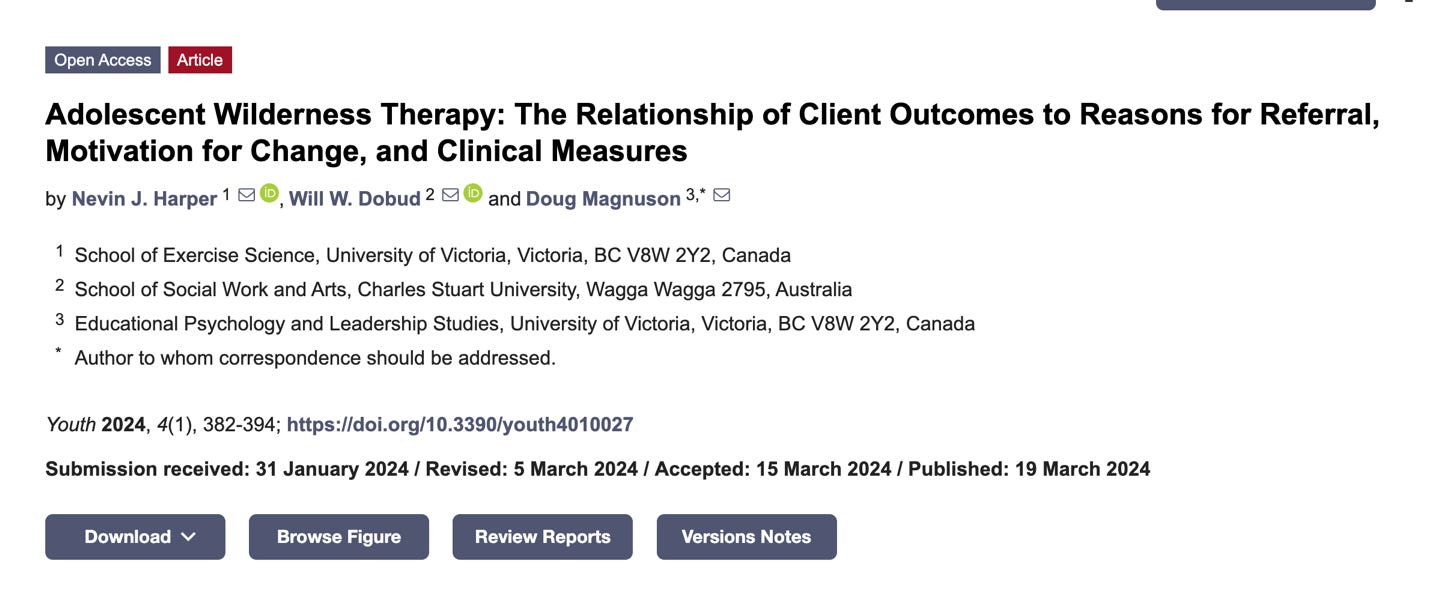
I just checked this paper online a couple days ago and found the graphic, below which was, if not obvious by now, the rationale for writing this little ditty. So, it’s been 15 months since publication, and we know there is always a delay in published work making impact—sometimes up to a decade, but here we see the paper has been “accessed” over 6000 times. The wee half-dome figure highlights citations: 1.
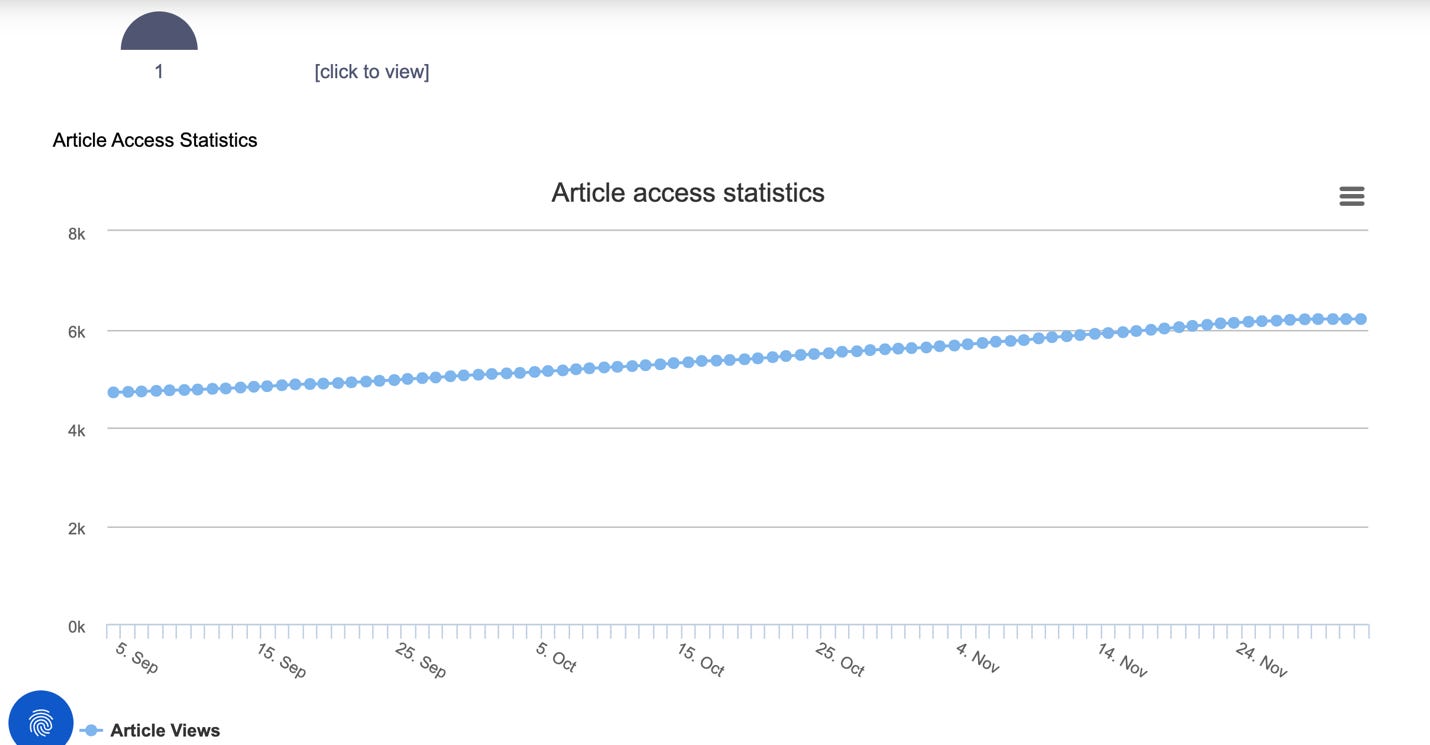
This is rewarding to us as we believe this to be important work, especially since we point to clinical issues and need for change in practice supported by the findings. The problem here is that the bulk of the published literature in the field (outdoor behavioral healthcare) is not in alignment with these finds, and in fact, tout quite positive outcomes overall.
The ‘industry’ would rather our findings not be publicised. But someone is reading this work. We hope it’s the clinicians who have the ethical responsibility to follow the evidence and treat clients with care, compassion, and provide the best ethical practices.
There is also a political layer to all this. Some industries or regulatory bodies may not want certain findings amplified, especially when research has the potential to harm reputations or profits. History is full of cases where results were selectively reported, quietly shelved, or strategically delayed. This makes active, transparent dissemination even more important. If research challenges dominant narratives, leaving it to the slow and selective machinery of citations may ensure it never reaches the people who need it.
This has led me to question why any of us continue publishing academic articles when so many of them disappear into the ether. The reasons are varied and often deeply personal. Publishing is still tied to hiring, tenure and promotion, and grant evaluation. Some work is driven by curiosity, community partnerships, or obligations to funders. Sometimes the purpose is simply to document findings for the public record, even if they never score big in citations. And occasionally a paper becomes a “sleeper” that gains relevance years later.
Even so, the gap between ‘reading’ and ‘citing’ forces a reckoning. If an article is accessed thousands of times but cited only three, was it a failure or a success? The answer depends on which definition of impact we are willing to embrace. Well, not we really, but rather the institutional leaders and the demand for metrics to manage performance.
Given how research now competes in a world of infinite scrolls, short videos, algorithmic feeds, and constant distraction, relying on journal publication alone feels increasingly outdated. This is where knowledge mobilization becomes essential.
Knowledge mobilization means taking active steps to move research beyond academic boundaries: writing plain-language summaries, producing infographics, recording brief explainers, posting preprints, engaging with journalists, or circulating findings to practitioners, policymakers, or community partners. Some institutional leadership actually believes this to be equally if not more important than the research alone.
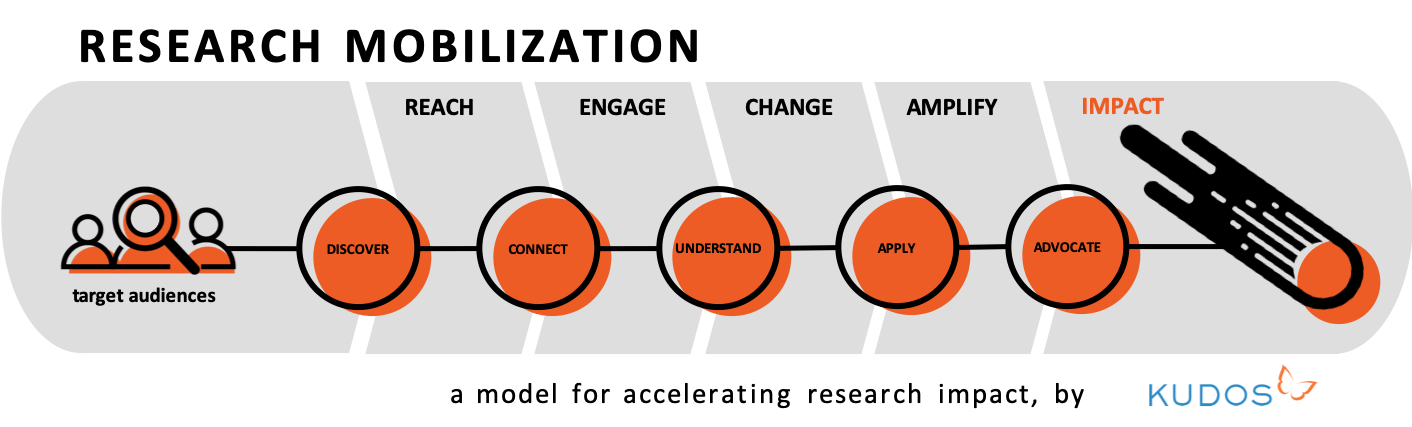
These strategies acknowledge a reality most scholars feel but rarely say aloud: a journal article is no longer the only destination for research. It is only one step in a longer communication path, and often today not the most visible or impactful one.
Today academics are sharing their work on blogs, like here on Substack, and other mediums such as popular websites and even long-format podcasts. Brave new world, except, how does this show up on an academic CV when an academic applies for a promotion? We are not there yet, unless one has been so successful in mainstream and alternative mediums that the institution cannot afford to not promote the academic paving a new way through the promotion process.
The non-impact of “read but not cited” writing
For me, the phenomenon of “read but not cited” research is becoming central to how I understand scholarly communication. These papers may shape practice, teaching, or public conversation without ever leaving a trace in the formal citation record. I’d be bold to suggest this is the case with the paper mentioned above. 1 citation and 6000+ accesses. I’d only hope it has some positive impact in better serving youth and protecting them from harmful practices. I can only hope. Highly read or accessed papers represent a form of impact that our institutions rarely measure yet many researchers quietly value.
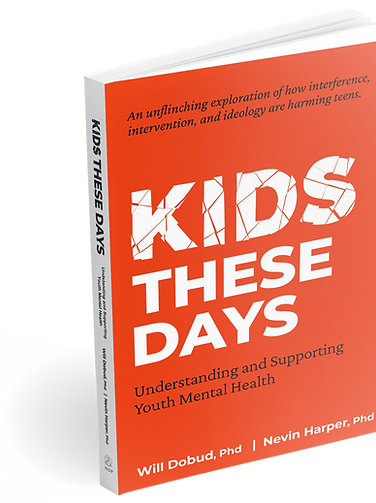
I have found immense personal reward in publishing books. Not the academic ones, but the one’s for my fellow practitioners, or more recently, all adults who care about kids. If that were valued on my CV equal to peer-reviewed published research, my desire to be an academic’s academic may be rekindled.
So maybe it is time to broaden our sense of what counts as academics. Publishing still matters, but so does translating our work to easily understood language, sharing it more broadly, and mobilizing it into meaningful action. If I truly want my work to be useful, I can’t rely solely on citations to tell me whether it is or not. I must meet readers where they are, not where the academy imagines them to be.
This has been my touchstone as a hack/slack/academic. I have not yet given up on published papers. I have had feedback from practitioners since I published my first paper that my work is understandable and useful. This is far more rewarding to me than a positive annual performance review or even a few more citations. So whether pragmatic papers or mainstream storytelling through non-academic books, I carry on.
No posts
Comments
Nothing yet. Say the first thing.
Sign in to join the conversation.