
The normalcy bias is a psychological tendency for people to assume that things will continue more or less as they always have, even when there are clear signs that something unusual, dangerous, or disruptive is happening. It often includes the saying “this kind of thing doesn’t normally happen” or “that happens to other people but won’t happen to me, or that won’t happen here…”
Used in disaster and psychology research, the normalcy bias helps us understand why some people ignore evacuation orders, dismiss warnings, or continue everyday routines even when evidence suggests they should act differently.
During wildfires or hurricanes, some people stay home because compared to the warnings in previous events, “it wasn’t that bad.” The levees always held, until they didn’t, and those New Orleanians who stayed home were rescued from their roofs on national television. Their judgements were clouded by the normalcy bias.
Investors may ignore signs of a financial crash because markets have always recovered before. Remember 2007 to 2009?
Organizations sometimes fail to respond quickly to emerging problems because leaders assume things are “basically fine.” Canadians can likely remember tech companies called Nortel and Blackberry?
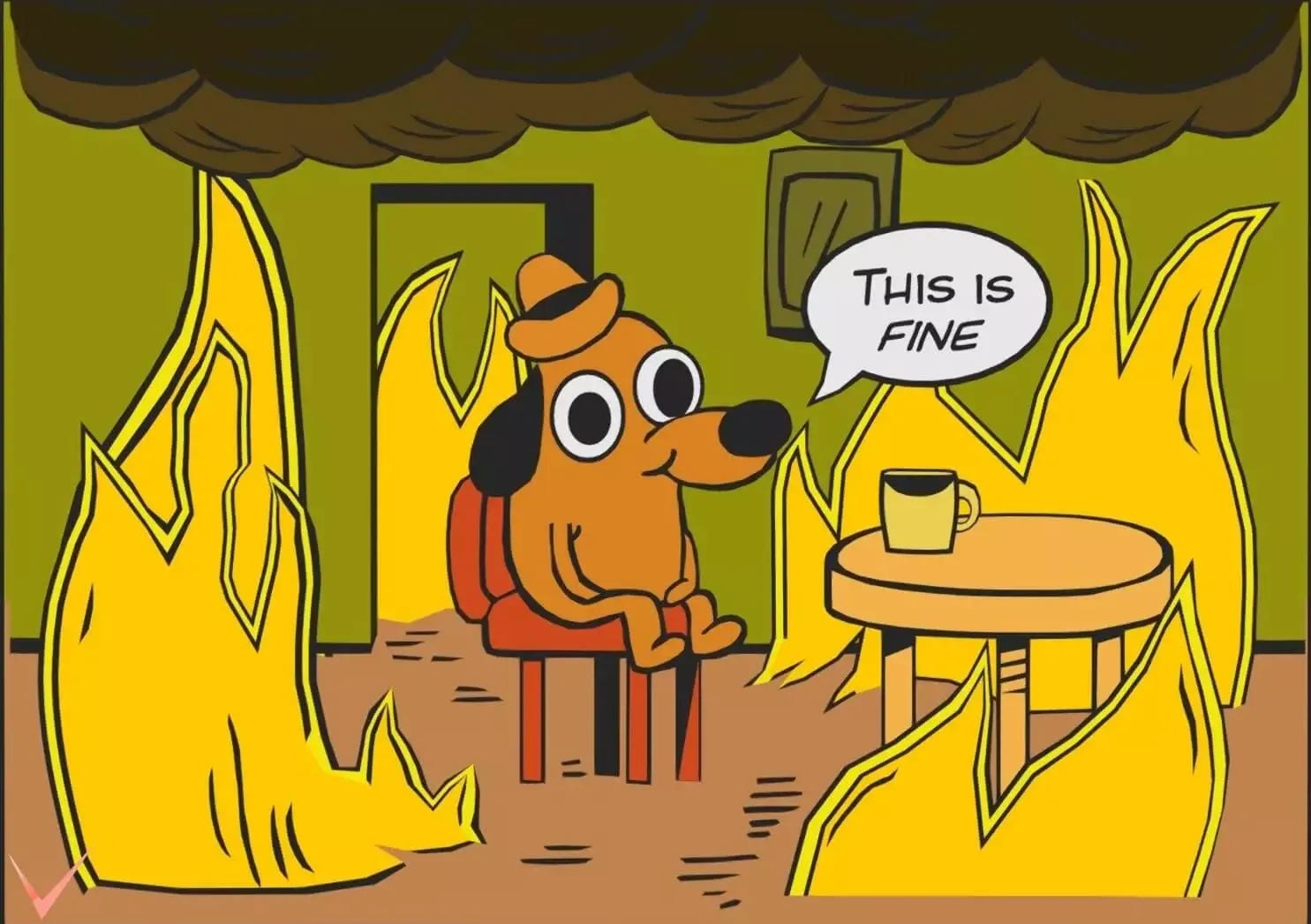
Photo credit: Reboot with further info on Normalcy bias
The normalcy bias reduces anxiety in the short term. Our brains prefer predictable stories and familiar routines. Accepting that something serious is happening requires significant cognitive effort, emotional adjustment, and often immediate action.
Our minds unconsciously lean toward minimizing threat, interpreting warning signs conservatively, and waiting for more confirmation that things are ok. Our brains prefer pleasure and avoid pain. This is why regulating behaviour around diet and exercise is so hard!
So, even with emergency or critical situations, our brains try to protect us from having to think and act. How is this an evolutionary advantage? Think primitively for a second with me, and see how much we were just like other animals.
Fight, flight, freeze: deer in headlights, ostrich head in sand, fainting goats…maybe if I stand really still this sabre-toothed tiger won’t see me and will just wander by and go after the next guy!
The normalcy bias has some similarities to optimism, and cognitive dissonance. “I hope it’s true that the tiger will just wander past,” and like when you try to ignore the sinking feeling in your stomach and try to convince your brain that something is not true (pretending that maybe it’s a trained tiger and just misplaced from its handler and it will never bite anyone, ever).
The normalcy bias is not simply “stupidity” or denial. In everyday life, assuming everything is normal is an adaptive behaviour because most signs of trouble don’t turn into catastrophe. Kitchen smoke alarms are usually due to burnt toast. If humans treated every warning as a major crisis, we would become overwhelmed and dysfunctional. We have to find a balance—but recognize our brain is trying to keep us safe and functional but may mislead us into making poor decisions.
Researchers in disaster psychology often point out that humans are generally built for gradual change better than sudden discontinuity.
The normalcy bias may be one of the best explanations for why modern society continues to cling so tightly to psychiatric medication even while confidence in the broader pathology-medication system quietly erodes. Once a particular story about human suffering becomes culturally “normal,” people tend to keep operating inside that story long after cracks begin to appear.
A dominant story of the past few decades has gone something like this: if you are anxious, sad, overwhelmed, unmotivated, grieving, stressed, lonely, burned out, or struggling to cope with modern life, then somewhere inside you is likely a disorder that can be managed chemically. This is the medical model.
So, people dutifully go to the doctor, describe the symptoms of being alive in the 21st century, possibly fill out some questionaries, receive a diagnosis from the DSM. Not to bash it here again but the DSM is a manual assembled by a committee of psychiatrists voting on categories that critics regularly point out are not based on objective biological tests (and often committee members are found to have financial ties to Big Pharma). Many leave with a prescription, including some who complete surveys that suggest no diagnosis or for some other human condition being pathologised—like unhappiness.
What makes the normalcy bias so fascinating is that people often continue following this script even after learning information that should, at minimum, make them pause. They discover that antidepressants tend to perform far better for some people than others and often only modestly outperform placebos in mild-to-moderate depression. They hear about studies suggesting exercise can rival medication for many people, with the inconvenient downside that jogging lacks the marketing budget of pharmaceutical companies and requires a change of clothes. They learn that therapy is usually supposed to accompany medication rather than be replaced by it, yet many patients end up with eight-minute prescription renewals instead of meaningful psychological support. They learn of previous corruption and felony behaviour of the same companies producing the meds they are taking. They discover that side effects can include weight gain, sexual dysfunction, emotional flattening, insomnia, agitation, and difficult withdrawal symptoms that somehow get rebranded as “proof you still need the medication.” And still, many stay on the pills for years.
As long as the dominant narrative and cultural zeitgeist holds up the medical model, our brains ignore all the other indications that maybe we shouldn’t be medicating so much. The normalcy bias keeps us from having to speak or act against the mainstream.
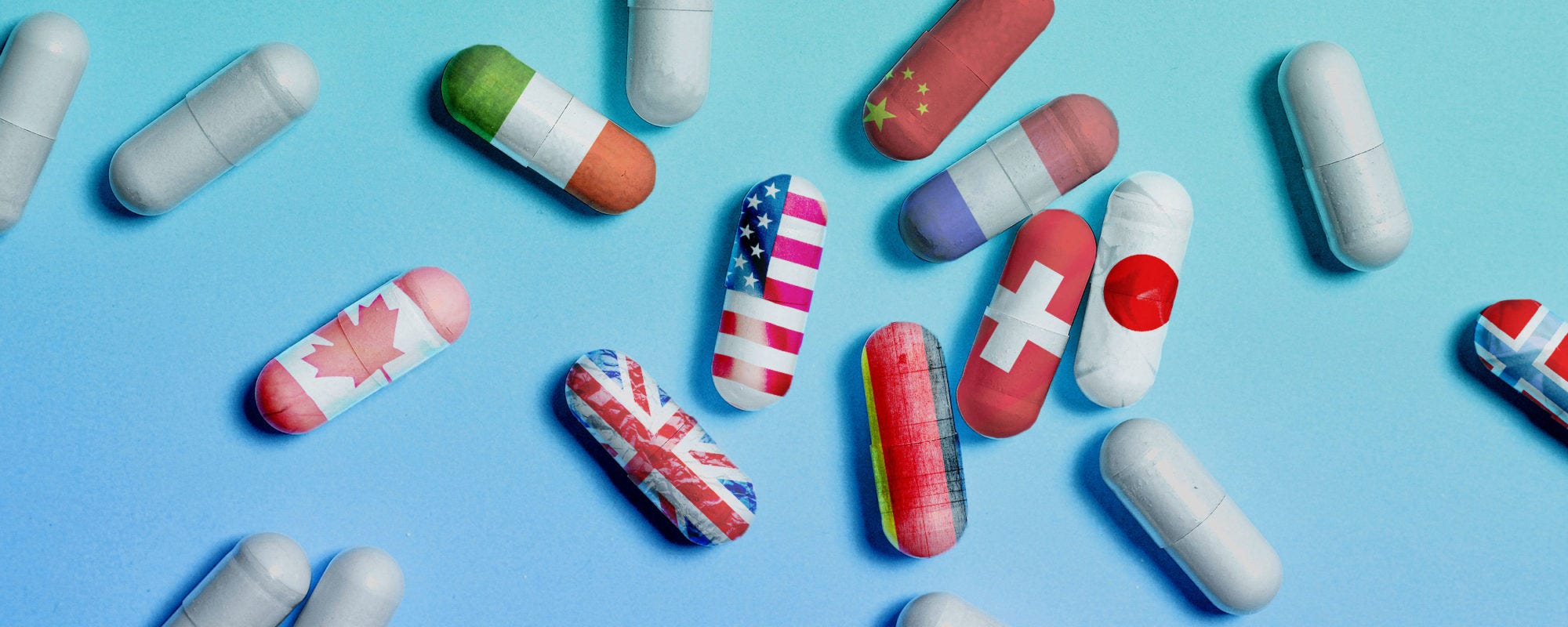
Photo Credit: Public Citizen
Part of this is understandable. Humans are creatures of habit, and once a medication becomes associated with safety or stability, changing course feels risky. If someone has managed to hold their life together while taking an SSRI, even imperfectly, the idea of stopping can feel like a risk. Doctors often reinforce this unintentionally. If a patient appears stable, there is little incentive to disrupt the arrangement. Prescriptions get renewed. Follow-ups become routine. This is also often the case when counselling is not accessed or unavailable, even though it is ideally prescribed alongside medication to support behavioural and emotional change, which may then reduce or eliminate the need for pharmaceuticals.
Five years pass. Then ten. Recent data have shown that a remarkably large proportion of antidepressant users remain on them long term, despite many guidelines originally envisioning shorter use for at least some patients. The “temporary support” quietly becomes the permanent reality.
The social side matters too. Diagnoses can provide meaning, identity, explanation, and even community. For some people, finally receiving a label feels profoundly validating. It transforms vague suffering into something recognizable and socially legible. But once a diagnosis becomes part of a person’s identity, questioning it can feel destabilizing. We share a few stories on this front in Kids these Days.
If you have spent years understanding yourself through the language of anxiety disorder, ADHD, depression, trauma, or mood dysregulation, it can become difficult to ask whether some portion of your suffering may also involve loneliness, purposelessness, overwork, poor sleep, social isolation, unresolved grief, or the simple existential exhaustion of trying to answer emails while civilization slowly collapses in the background. The diagnosis becomes not just a clinical category but a story about who you are. Your identity.
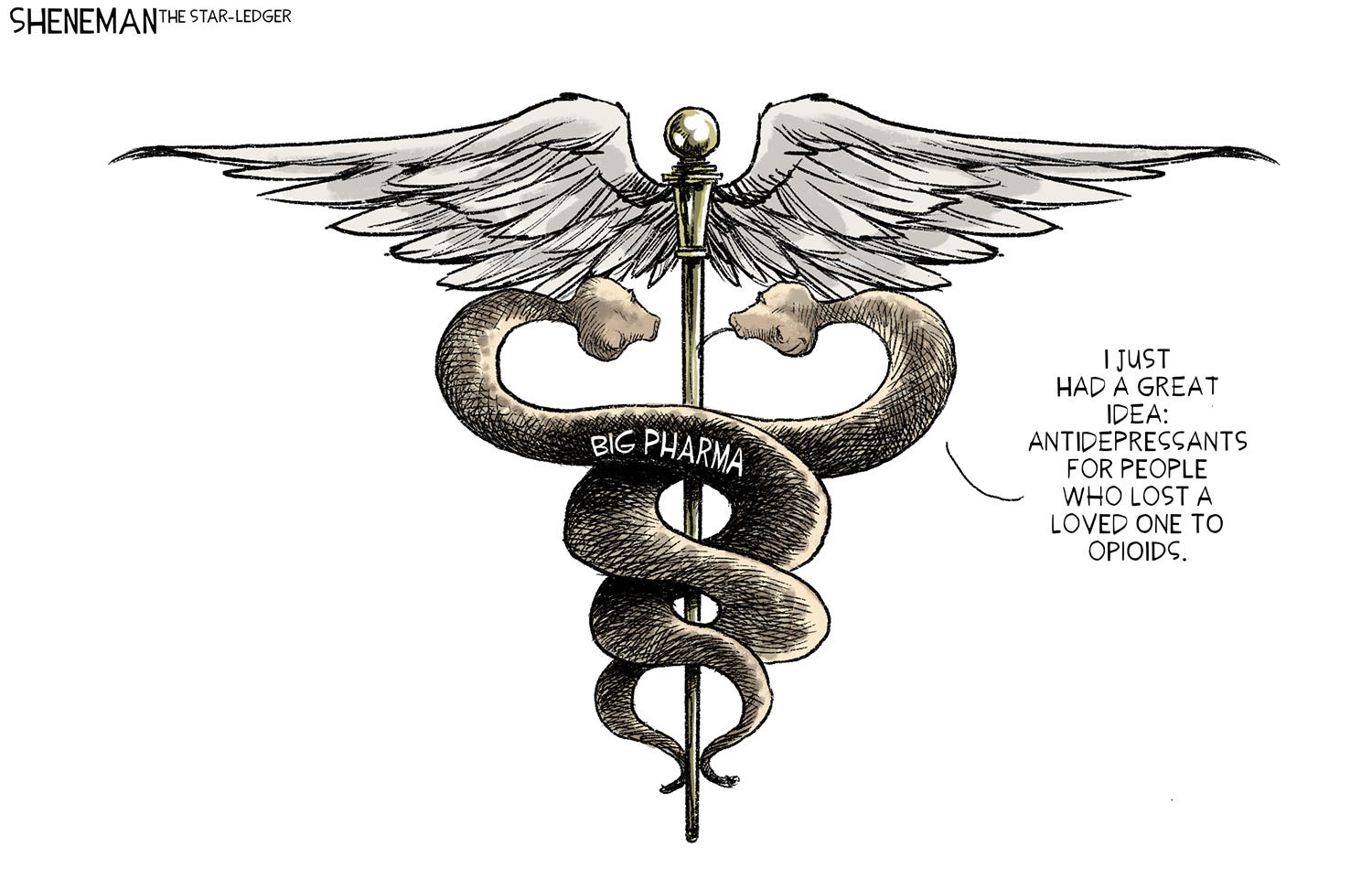
Photo Credit: Sheneman
And this is where the normalcy bias does its best work. People do not merely resist evidence. They resist disruptions to the systems that organize their lives. Medication culture persists because it is woven into medicine, insurance systems, schools, workplaces, social media, pharmaceutical advertising, and the comforting modern fantasy that complicated human suffering can be managed efficiently. A pill for every ill. This is the mental health industrial complex. By design, to maximize shareholder returns.
The sale of pharmaceutical pills is expected to reach 553 billion dollars in 2026.
A pill feels actionable. It feels quick. Therapy takes time. Exercise is hard. Rebuilding community is messy. Fixing social conditions is politically inconvenient. It is far easier for everyone if distress remains located neatly inside individual brains and we have quick-fix pills.
FUN FACTS - 2017-2020 CDC data
50% of Americans now use at least 1 prescription medications
25% use 3 or more prescription medications
2017-2020 1 Billion prescriptions written
72% of physician visits involving drug therapy
I don’t mean psychiatric medications are useless. For many people they are genuinely helpful, sometimes life-saving. But the normalcy bias helps explain why society struggles to have a balanced conversation about them. Once something becomes normal, especially something tied to authority (doctors and the medical system), identity (which can help normalize but become a trap), and the hope of relief, people will often continue with it long after they have begun questioning the narrative.
My bias is toward natural human ways of being. Working toward achieving a healthy diet, adequate exercise, quality sleep, functional social relationships, and finding meaning and purpose in life can resolve many if not most “mental health” issues. Asking yourself hard questions, finding resources and support structures to work through hard times…is not a quick-fix approach, but one to produce more personally rewarding outcomes. This extends to those dealing with a wide variety of trauma, attachment, substance use…issues. Our health is our foundation upon which we build from and yet the dominant approach in mental health treatment today is pharmaceutical.
Antidepressants affect sleep.
Disrupted sleep can worsen depression.
Improved sleep can help ameliorate depression.
Develop healthy habits to can improve sleep hygiene.
Mental health has been linked to metabolic disorders in the brain linked to diseases like obesity, diabetes, and cardio-vascular disease.
A healthy diet can produce positive biometric changes such as improvements in weight reduction and positive change in blood glucose.
Look better, perform better, feel better. None of this is cutting edge or new!
My question is whether we can see the forest for the trees in the realm of medicalized mental health promotion? Can we break from the normalcy bias and ask hard questions of heavily patterned acceptance and use of pharmaceuticals and move back toward more natural (and yes sometimes harder) approaches.
Be well, Nevin
No posts
Comments
Nothing yet. Say the first thing.
Sign in to join the conversation.