
About a decade ago, a silly idea took hold. Some people would suggest that when boys wanted to be muscular, they were rehearsing misogyny or exemplifying patriarchal colonialism. I sense these statements are less commonly repeated today, but it may be worth asking what impact this narrative has, or has had, on boys and young men.

Image Credit: BBC
This piece is the second in a series in which I am exploring young males, masculinity, and the changing health landscape they are living in. See Part one here on declining rates of testosterone. In this segment I am trying to make sense of a phenomena in which bicep curls and protein shakes are somehow argued as dangerous or a political statement. Strength itself was quietly recast as a moral problem by those who adopted this ideological stance.
A common term batted about in mainstream and social media over the last 10-year period is ‘toxic masculinity.’ I will briefly unpack this term before digging into some of its impacts. If you have been reading Adults in The Room, you can imagine I am talking about harms from this ideology, and not positives.
Toxic Masculinity
The concept of toxic masculinity was originally intended to name specific harmful norms experienced by modern men such as emotional repression, dominance, and the glorification of violence. These norms had historical social and cultural influences and were eventually addressed more openly as men talking about their feelings became more common. This openness emerged out of the men’s wellness movement in the 1980’s and was specific to men helping men.
One early user of the term toxic masculinity, Shepard Bliss, articulated the need for men to gather and learn from each other what masculinity meant to them. There was an articulated difference between a “deep” masculine and a “toxic” masculine. Deep masculinity, or a healthy masculinity, was inclusive of men sharing time together and dealing with their issues in whatever way they could. You can imagine that historically this may have be inclusive of activities and events now deemed hyper-masculine; it probably included rough housing, aggressive sports, drinking, and simply sharing time together, whether discussing personal issues or simply sitting with those with issues unspoken.
There was a push for increased sensitivity in men’s communication and behaviours in the 1970’s and 80’s. Some may remember the zeitgeist of the “sensitive new-age guy” or SNAG. This shift in demand on men’s ways of being came from both men and women: a men’s liberation movement and second wave feminism (with much focus on gender equality). Both initiatives sought to “free” men of old ways, those that prevented them from their full human development. The ask, for men, was to be more sensitive, emotionally available, and to be egalitarian and honour equality between the sexes. There are many fun reads and YouTube rabbit-holes on this subject if interested. The ‘movement’ was met with seriousness and mockery. I saw and felt this movement personally. I saw and felt what worked, and what didn’t.
Between 2005 and 2015, a small number of feminist scholars, women and men, altered the use of the term. Terry Kupers, whose work had a mental health focus, took the term down the path of conflation with misogyny. Kupers defined toxic masculinity as “the constellation of socially regressive male traits that serve to foster domination, the devaluation of women, homophobia, and wanton violence” and suggested these ways of being prevented men from success in psychotherapy. This is where the two terms and their definition’s part ways. Bliss may have suggested men gathering to say play rugby and then drink beer together—whilst bashing each other silly—would be a deep masculine activity. These sports may reflect the “traits” that Kupers described, as he and others may suggest rugby, or boxing, as practicing “domination.” As we know, to win at rugby or boxing, you do have to dominate your opponents.
Following these activities, men would also allow men to share their lives in ways they felt appropriate for the setting, whereas the SNAG was supposed to be able to sit in circle with other men, share deep emotions, and maybe even cry. In short, some saw this as men demonstrating more feminine traits. No judgement here as I know the value of…
Some scholars took it one step further to implicate strength training and aggressive sporting activity as hyper-masculine and dangerous. A similar term shows up in the literature, hegemonic masculinity, or male dominance. One author on this front, R.W. Connell, argued that commercial gyms and weight rooms are sites of misogyny.
Whether re-purposed to their needs and theories or meaningfully critiquing how societal influences had been harmful to men, and women, the use of the term toxic masculinity then expanded. In popular discourse and increasingly in educational and therapeutic spaces, masculinity itself—especially when it shows up in male physically—has become the ‘problem.’ Strength and psychical prowess was no longer seen as ‘capacity’ by these authors; it was read as a threat.
This would be merely strange, a passing trend, and possibly left to fade away, if it weren’t having real consequences for boys and men. Others have refuted the over-generalization and misuse of the term toxic masculinity and see it as counter-productive to helping boys and men develop emotionally. Some have expressed “toxic femininity” although I won’t say more on that herein, other than some consider it as internalised misogyny in women.
Boys and the “Problem” of Wanting to Be Strong
Across cultures and history, boys have been drawn to physical challenge. They wrestle, climb, race, lift, spar, and test themselves against resistance. This is not a mysterious social contagion. It is development, and it is not just a trait of boys. Healthy development for girls would include tests of strength and learning fundamental movement skills and knowing ones’ own power. This is often expressed through play, like rough and tumble play, which I have written about previously. Testosterone rises during puberty, muscle mass increases, and many boys become acutely interested in what their bodies can do (See Archer, 2006).
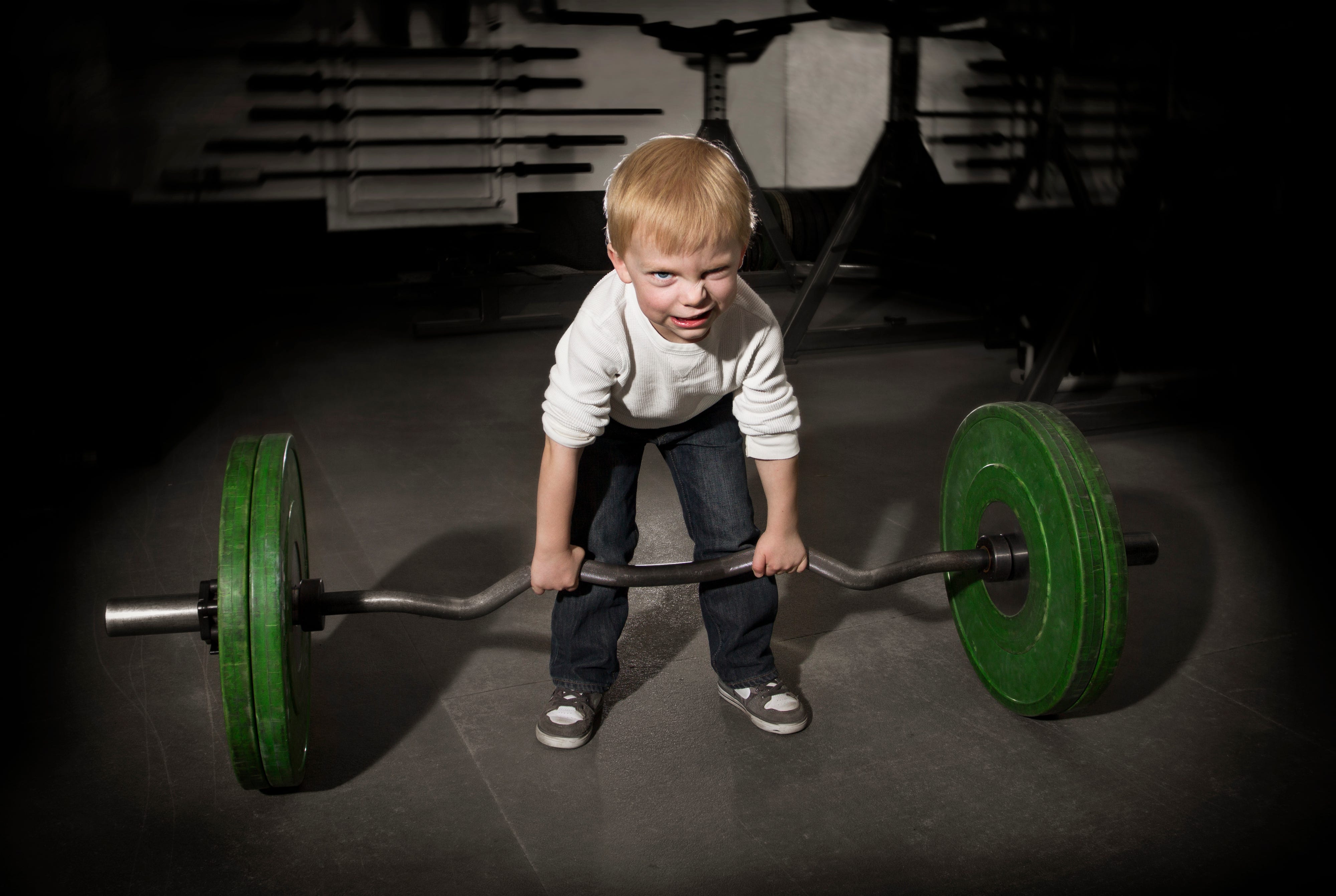
Photo Credit: Men’s Health
For most boys, this impulse has less to do with dominating others. It is about self-mastery, confidence, belonging, and competence. Strength training offers something increasingly rare in modern life: clear and unambiguous feedback. Effort leads to progress. Discipline produces results. The feedback loop is immediate and honest.
In a world where boys are falling behind academically, struggling with attention, or quietly disengaging from school and social institutions, the body often becomes one of the few places where growth still feels possible.
And yet, many boys have received a mixed message. Want to be strong? Interrogate that. Enjoy lifting? Maybe ask what you’re compensating for. Admire muscular role models? Red flag.
It’s a remarkable bit of cultural alchemy really. An ordinary and healthy developmental drive transformed into a moral liability.
Strength is Violent?
Why would strength become synonymous with domination. Size with threat. Physical presence with harm. Somewhere over the last decade a crucial distinction was lost. Why would being strong be equated with being violent or sexist? Strength is an admirable quality. You don’t need strength to be violent.
This is odd, because many of the environments that cultivate strength such as sports teams, gyms, martial arts schools, outdoor leadership programs are also where boys learn restraint, cooperation, and responsibility. These are not spaces of chaos. They are rule-bound environments precisely because power is involved. I have never experienced a sports arena where the coaches, sensei, or leaders taught or allowed anything less than respectful behavior. That is not to say those same sports don’t have their problems. And for some, the pugilistic sports are simply not acceptable. We can list the stories of when behaviors have gone wrong, but this is not limited to sports or physical training activities.
Strength without guidance can be dangerous. But strength with guidance is how boys learn not to misuse it. Removing or stigmatizing these pathways does not reduce risk but it removes one of the primary mechanisms by which boys can learn self-control. In that regard, training in these environments should reduce misogyny and negative behaviors toward women.
The Psychological Tax
When boys are repeatedly told, explicitly or implicitly, that their bodily aspirations are inappropriate or morally dubious, predictable things happen.
First, shame. Boys internalize the idea that something about them is fundamentally wrong. Second, confusion. They are encouraged to “be themselves,” but only if that self is emotionally expressive, physically non-threatening, and largely indifferent to traditional masculine markers. Third, disengagement. Further some boys have simply opted out: Out of school, of authority, of conversations about gender that seem to have already decided they are the problem. Again, I hope this issue is in the rear-view mirror now, but I do hear remnants of it surfacing on occasion. If nothing else, we need to speak up against any unqualified generalized claims linking physical strength, gym training, or martial arts with sexism and misogyny.
Research on male development consistently shows that boys benefit from embodied challenge, clear expectations, and opportunities to convert energy into competence and contribution from an early age. When those pathways are blocked or morally tainted, the result is not gentler men, but more anxious and disconnected ones.
The Biological Context
All of this is unfolding alongside biological trends that should give us pause. Part one of this series I looked at some of the troubling numbers regarding declines in male health.
Over the past half-century, sperm counts in Western countries have declined dramatically, with recent analyses showing the trend continuing into the 21st century. At the same time, average testosterone levels in men have fallen, even after controlling for age and health variables.
The causes are likely complex, another wicked problem. Environmental toxins, endocrine disruptors, sedentary lifestyles, chronic stress…but the direction is unmistakable: male physiological health is under pressure.
And yet, at precisely this moment, we have decided that encouraging boys to lift heavy things is socially dangerous. Resistance training is one of the most evidence-based ways to support testosterone, bone density, metabolic health, and mental well-being. If this has somehow become ideologically fraught. Then boys will also suffer another testosterone killer, anxiety and social stress.
It’s a bit like noticing literacy rates falling and responding by making books morally suspicious.
We Still Need Men Who Can Show Up
There is another truth that tends to hover just outside polite discourse: sometimes families, communities, and societies need defense. Emergencies happen. Violence happens. Disorder happens. When they do, we rely on people who are physically capable of stepping forward.
This is not an argument for aggression or dominance. It is an argument for capacity. Strength matters when someone needs to intervene, protect, carry, restrain, rescue, or endure. We want men who can show up when things go wrong. We do not want men paralyzed by shame about their own power.

Photo Credit: Pexels
Many women understand this intuitively. Research consistently shows that physical strength is associated with male attractiveness, not because it signals tyranny, but because it suggests competence, safety, and reliability. Strength paired with restraint and moral grounding is not a threat to equality. It is often a precondition for trust. The belief and expression of “provide and protect” is known hormonal health builder for men.
Toward a Healthier Frame
Perhaps the task is not to dismantle masculinity, but to integrate it. To teach boys the difference between strength and domination, assertiveness and aggression, power over others and power over oneself.
Boys do not need to be told that their instincts are wrong. They need guidance in how to shape them. Encouraging strength, discipline, and physical competence can be accomplished alongside empathy, accountability, and care. This is not some regression to some brutish past. It is about basic human developmental, and common sense.
And if we want men who can show up for their families, their communities, and one another, we might consider letting boys become capable in their own bodies without asking them to apologize for it.
Thanks for reading adults in the room.! This post is public so feel free to share it.
References
Archer, J. (2006). Testosterone and human aggression: An evaluation of the challenge hypothesis. Neuroscience & Biobehavioral Reviews, 30(3), 319–345. https://doi.org/10.1016/j.neubiorev.2004.12.007
Connell, R. W., & Messerschmidt, J. W. (2005). Hegemonic masculinity: Rethinking the concept. Gender & Society, 19(6), 829–859. https://doi.org/10.1177/0891243205278639
Kraemer, W. J., & Ratamess, N. A. (2005). Hormonal responses and adaptations to resistance exercise and training. Sports Medicine, 35(4), 339–361. https://doi.org/10.2165/00007256-200535040-00004
Levine, H., Jørgensen, N., Martino-Andrade, A., et al. (2017). Temporal trends in sperm count: A systematic review and meta-regression analysis. Human Reproduction Update, 23(6), 646–659. https://doi.org/10.1093/humupd/dmx022
Levine, H., Jørgensen, N., Martino-Andrade, A., et al. (2022). Sperm count decline continues in the 21st century. Human Reproduction Update, 28(4), 577–586. https://doi.org/10.1093/humupd/dmac035
Sandseter, E. B. H., & Kennair, L. E. O. (2011). Children’s risky play from an evolutionary perspective: The anti-phobic effects of thrilling experiences. Evolutionary Psychology, 9(2), 257–284. https://doi.org/10.1177/147470491100900212
Sell, A., Lukazsweski, A. W., & Townsley, M. (2017). Cues of upper body strength account for most of the variance in men’s bodily attractiveness. Proceedings of the Royal Society B, 284(1869), 20171819. https://doi.org/10.1098/rspb.2017.1819
Travison, T. G., Araujo, A. B., O’Donnell, A. B., Kupelian, V., & McKinlay, J. B. (2007). A population-level decline in serum testosterone levels in American men. The Journal of Clinical Endocrinology & Metabolism, 92(1), 196–202. https://doi.org/10.1210/jc.2006-1375
Westcott, W. L. (2012). Resistance training is medicine: Effects of strength training on health. Current Sports Medicine Reports, 11(4), 209–216. https://doi.org/10.1249/JSR.0b013e31825dabb8
No posts
Comments
Nothing yet. Say the first thing.
Sign in to join the conversation.