

Hey Friend!
The market is holding its breath with a bit of panic. We are seeing tensions rise as everything starts lining up the wrong way — oil creeping higher, the dollar catching a bid, and risk assets losing their footing.
Nothing’s broken in isolation.
But together it starts to look like the kind of setup that drags on longer than people expect.
Crypto held up better than it should have over the past few weeks. That part’s true.
Now it’s starting to feel the weight.
And if there’s one chart driving all of this right now — it’s not BTC, not ETH, not even equities.
It’s oil.
Let’s get into the broader picture and how to set up for the coming weeks:
️ ⚡ On today's Episode:
📈 Market Update – Oil squeezes global liquidity as the Iran conflict chokes supply, pushing markets into stagflation territory. Dollar strength rises, growth signals weaken, and risk assets — including crypto — stall under pressure. Whale distribution dominates (exchange ratio at 0.84), while institutions quietly accumulate via ETFs (+$2.8B over 3 weeks). Retail remains sidelined as BTC chops between $60K–$72K with heavy overhead supply.
🐂 Alpha Insights – XRP gets its institutional wrapper via a $1B SPAC, Aave faces execution risk after key contributors exit, and Hyperliquid emerges as a macro trading layer with oil driving 31% of open interest.

The current state of the market.
Weekly Crypto Bubbles
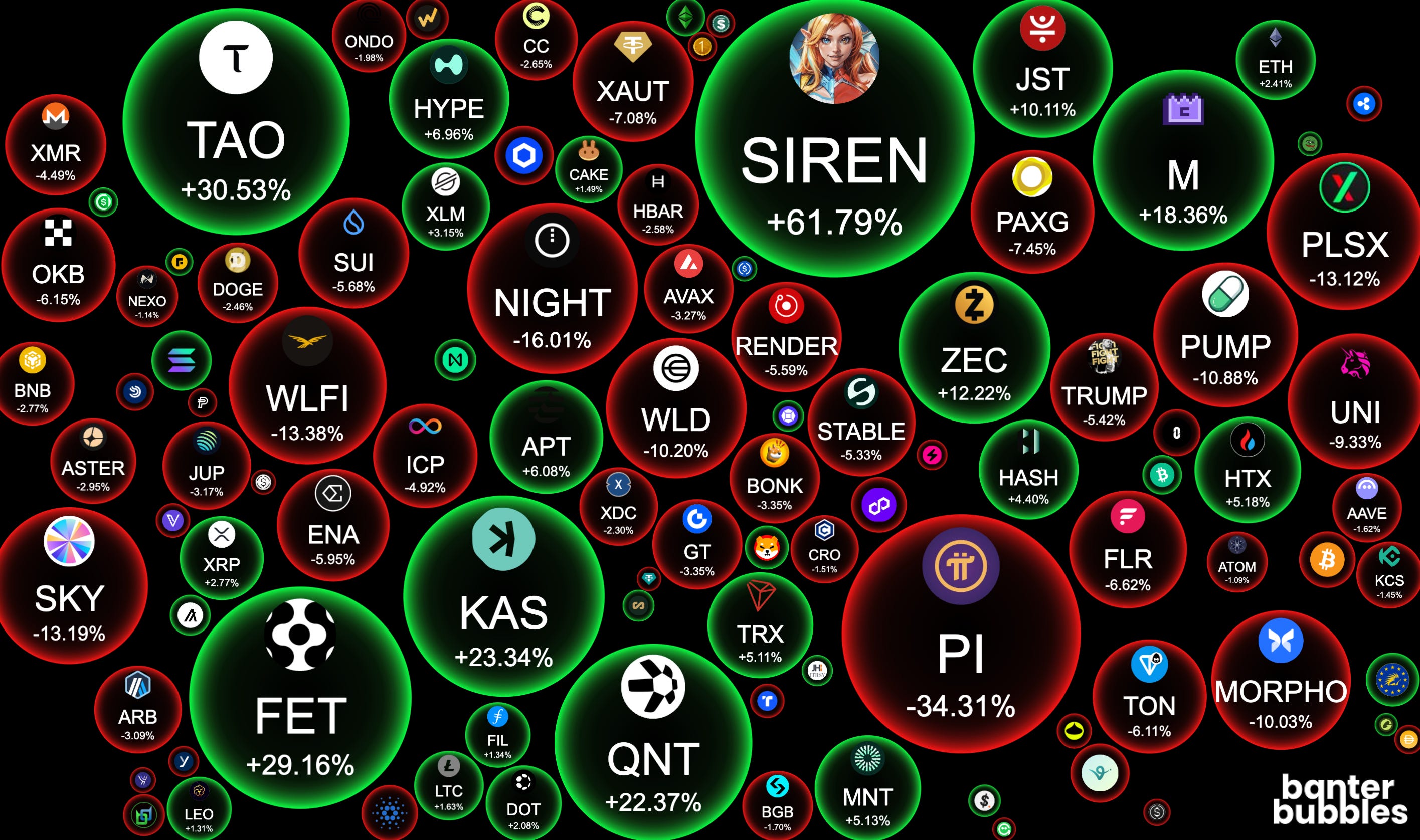
Market Overview
Macro
Let’s keep this simple.
Oil is driving the bus. And the bus is global markets.
Prices are grinding higher as the Iran conflict continues, with the Strait of Hormuz effectively choked. A meaningful portion of global supply is offline — not theoretically, but physically.
→ Less supply, same demand. Price only moves one way.
We’re now firmly in what macro desks call the “stagflation zone”, and drifting toward the “danger zone” above $120.
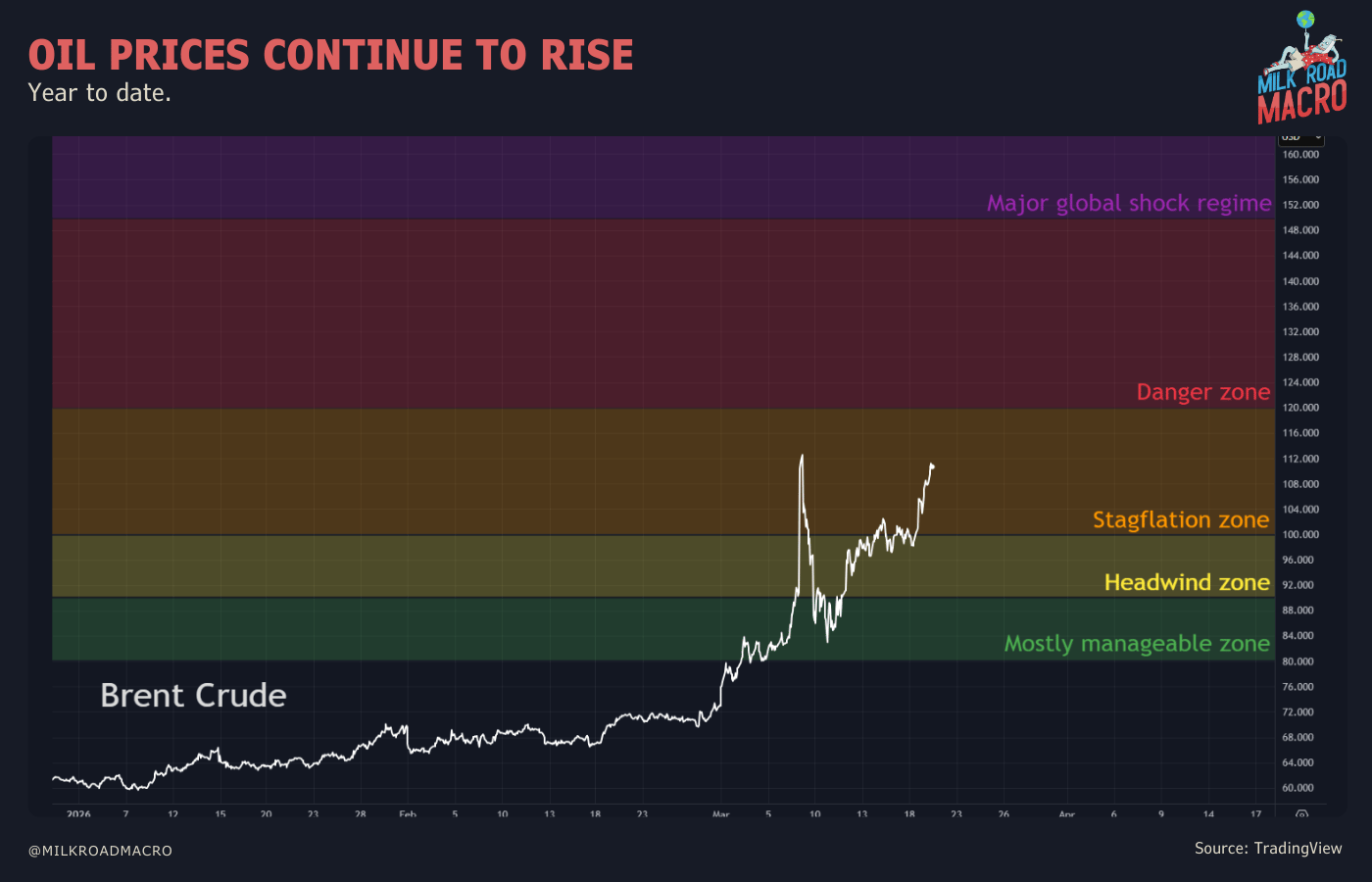
That’s the level where narratives shift from “macro headwind” to “global recession risk.”
And the second-order effects are already showing up.
One-year inflation expectations just jumped to 3.2%, up from 2.2% weeks ago — while current CPI sits at 2.4%.
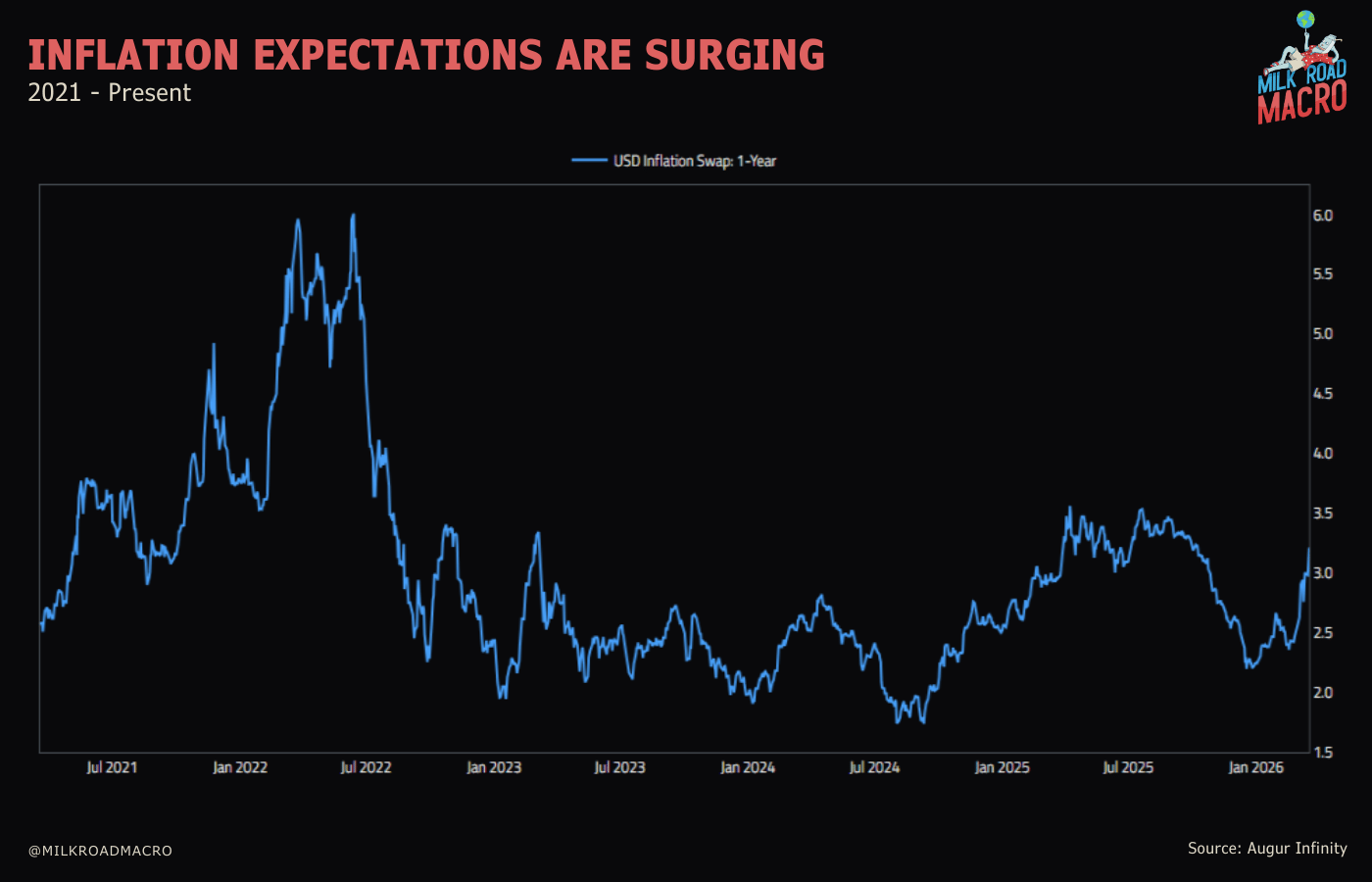
→ The market is pricing future inflation higher than today’s reality.
That’s not a good setup.
Now layer in correlations.
• Oil up = S&P 500 down
• Oil down = S&P 500 up
It’s been almost mechanically inverse.
Crypto held up for a while — even outperforming equities early in the conflict.
But as oil kept climbing, the pressure finally spread.
At the same time, the dollar (DXY) is rising.
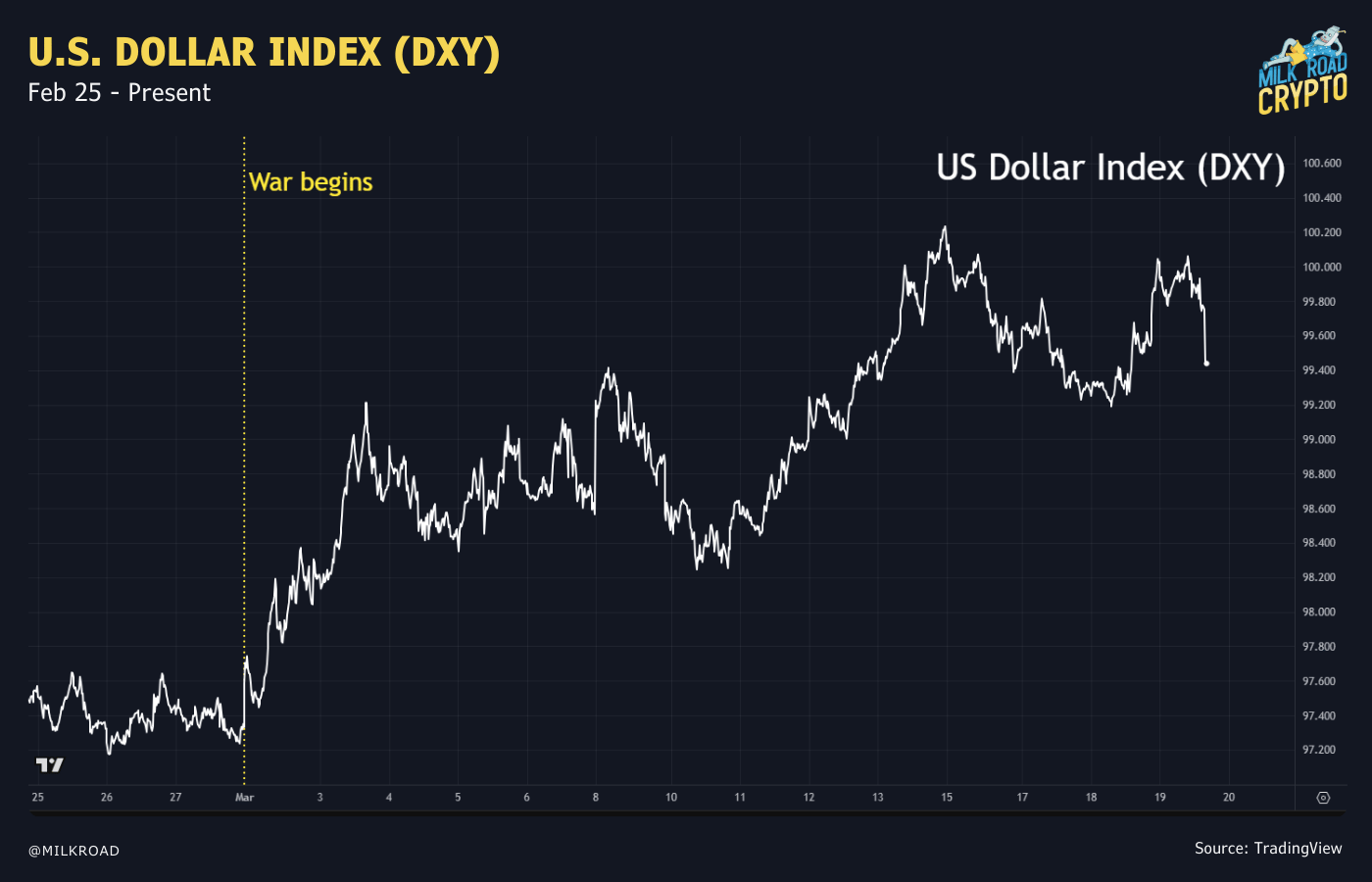
Classic risk-off behavior.
Capital rotates into safety, liquidity tightens, and anything speculative starts to feel heavier.
→ Strong dollar = weaker risk assets. Every time.
If DXY keeps trending up, it’s hard to build a sustained bid in crypto.
Then there’s copper quietly rolling over.
Not flashy, but important.
Copper is one of the cleanest real-time indicators of global economic activity — and it’s dropping.
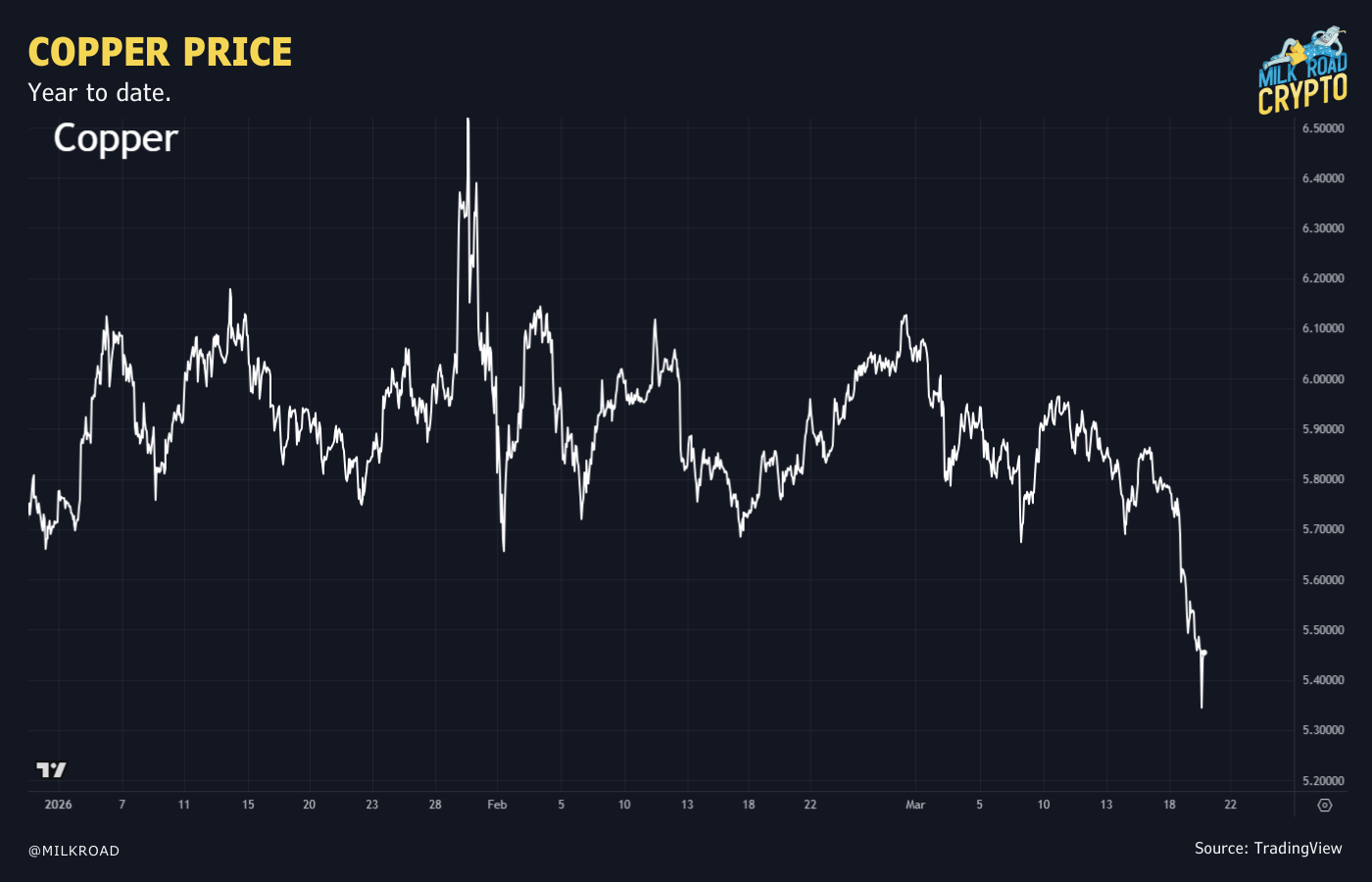
→ Growth expectations are slipping under the surface.
And now we get to the Fed.
Powell’s message this week was basically: “we don’t know.”
Not reassuring — but also honest.
Because this is the worst kind of macro setup for central banks:
• Oil spike = inflationary → should hike
• Economic slowdown = deflationary → should cut
You can’t do both.
→ That’s stagflation. And it traps policy.
Rate cut expectations have already flipped.
A few weeks ago: multiple cuts priced for 2026
Now: the market is leaning toward zero cuts — even pricing potential hikes globally
Europe and the UK are already drifting that direction.
→ Liquidity expectations are tightening again.
So zooming out:
• Oil rising
• Dollar rising
• Growth signals weakening
• Central banks boxed in
That combination doesn’t resolve quickly.
And it explains why risk assets feel stuck.
Equities
Meanwhile, equities are starting to show cracks where it matters most.
NVIDIA — the backbone of the AI trade — just delivered near-perfect earnings:
• Revenue: $68.1B (+73% YoY)
• Forward guidance: $78B
Stock initially pumped… then fully reversed and closed -5.5%.
→ When the strongest horse stumbles, you pay attention.
This wasn’t about NVIDIA.
It was about positioning.
The market is telling you that even perfect results aren’t enough anymore.
That matters for crypto more than people think.
Wintermute’s data shows retail treats stocks and crypto as substitutes.
By overlaying Wintermute’s proprietary crypto retail flow data with JP Morgan’s retail equity inflow data, we get a new angle to look at the relationship between retail equity and crypto activity.
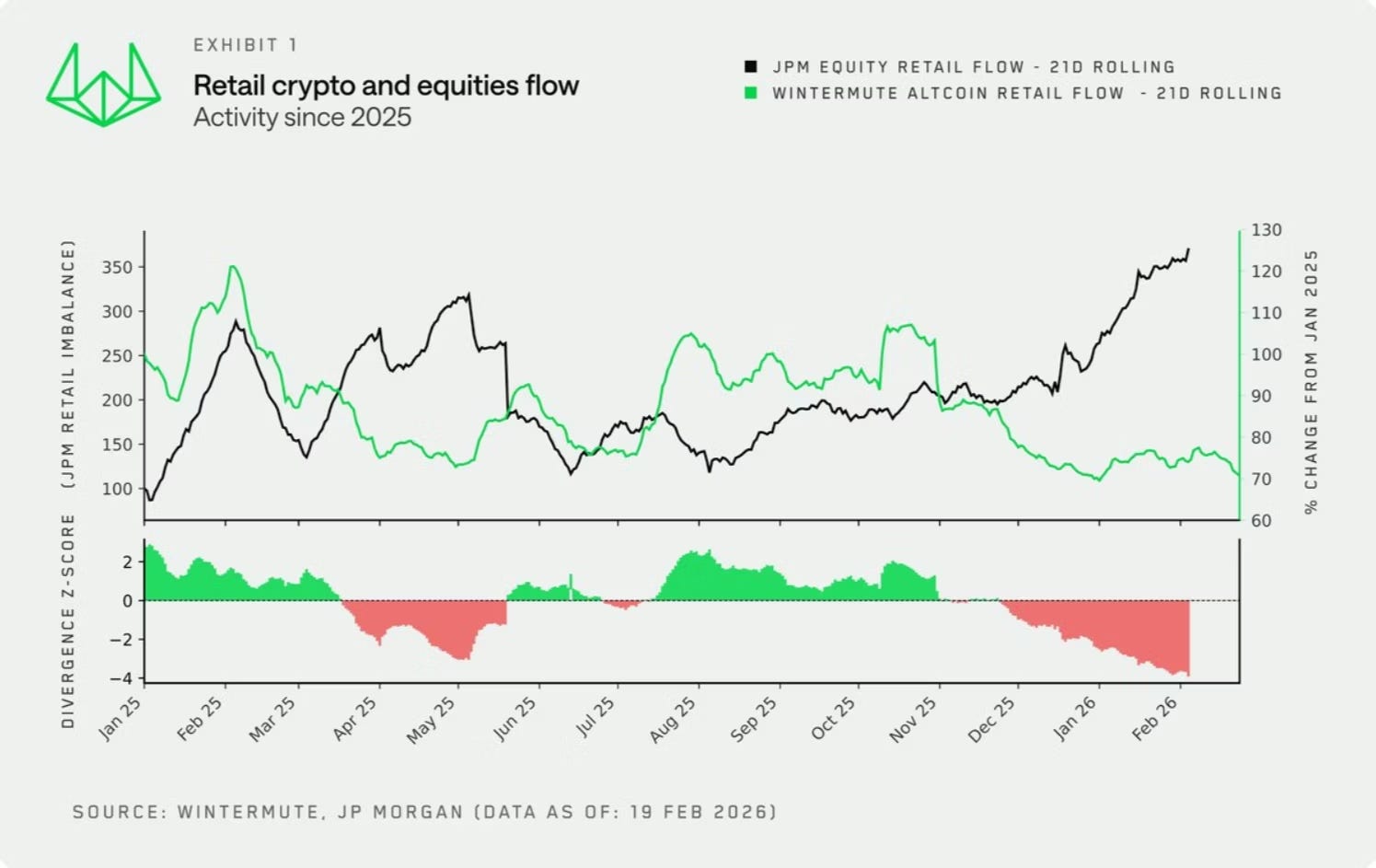
Historically, both moved together, until late 2024, risk-on sentiment meant buying activity in both, as both serve in a way as an escape valve for excess capital (see M2) and risk appetite. Since late 2024, that relationship has broken down, with the widest divergence in recent history happening today as retail piles into equities at a record pace while staying sidelined in crypto.
When equities run → crypto starves
When equities stall → crypto gets attention
But if we strip out AI stocks from the NASDAQ, and BTC’s underperformance mostly disappears.
→ The AI trade has been absorbing all speculative oxygen.
So paradoxically:
If AI equities slow down, it could eventually help crypto.
Not immediately — short term, everything sells together.
But medium term, it frees up capital.
There’s just one problem.
The IPO pipeline.
SpaceX ($1.5T), OpenAI ($1T), Anthropic (~$380B)
At 15–20% float, that’s $432B–$576B of new AI equity supply.
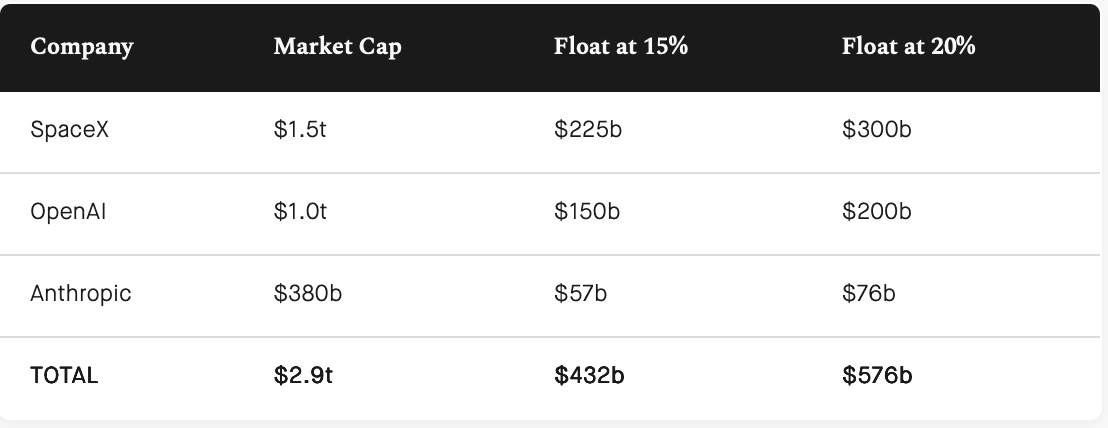
→ That’s 20–25% of crypto’s entire market cap.
Crypto doesn’t just need to compete it needs to outperform now and a catalyst is not on the table for this for now.
Onchain Metrics & Market Pulse
Now let’s bring it back on-chain.
The market structure is… fragile.
• Whale selling is dominant
• Exchange whale ratio was up to 0.84 (highest since 2015)
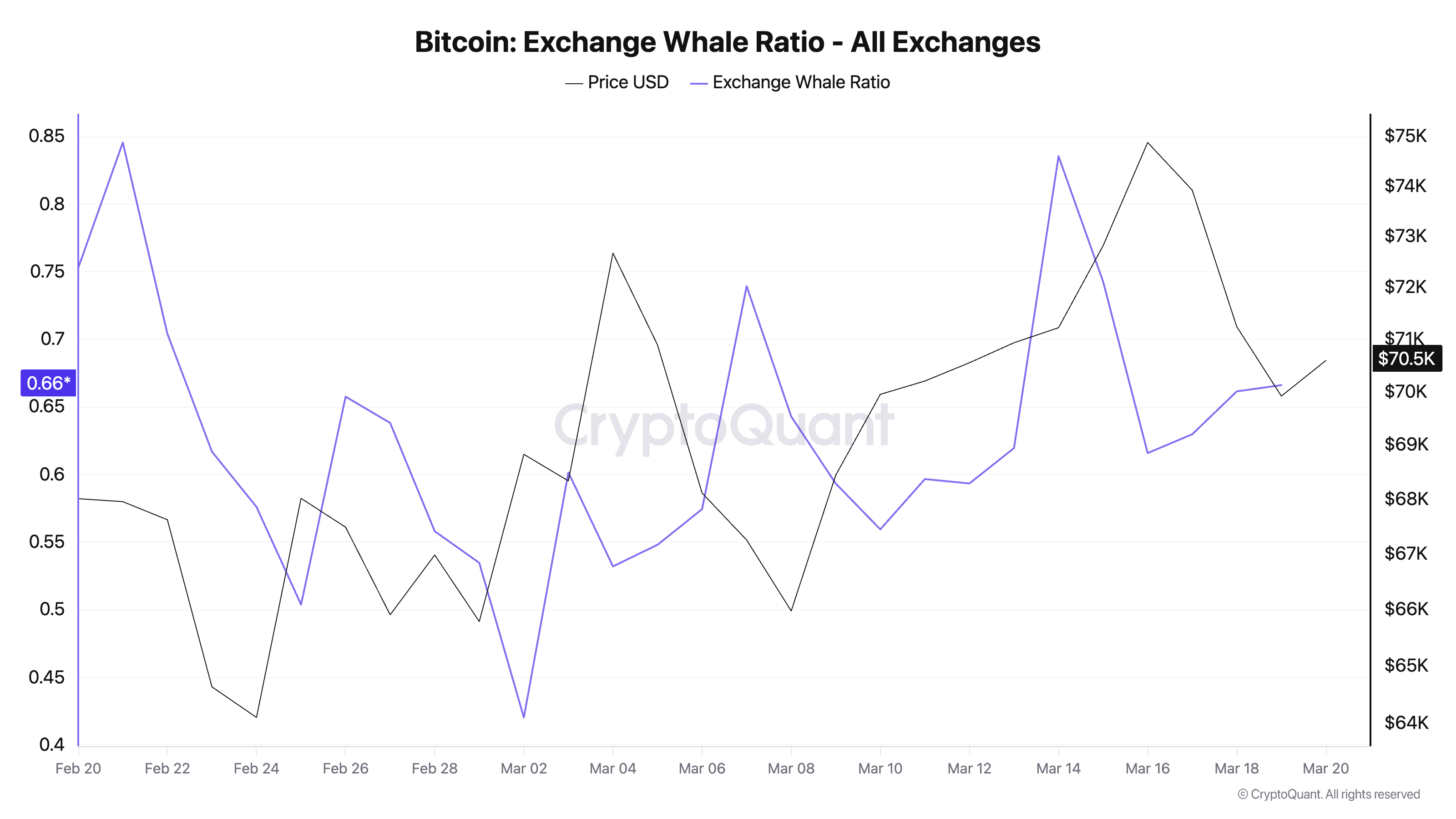
• Top 10 inflows = up to 84% of total deposits
→ Big players are distributing.
Why is the Exchange Whale Ratio important — super simple
It answers one question:
👉 Are big players dominating exchange activity right now?
Take all the BTC being sent into exchanges on a given day.
Then isolate the 10 biggest deposits.
Now compare those 10 deposits to the total.
Formula:
Whale Ratio = Top 10 biggest exchange deposits ÷ Total exchange inflows
So if 10,000 BTC hits exchanges in total, and the top 10 deposits account for 6,000 BTC, the whale ratio is 0.6.
→ That means a small number of very large players are driving most of the exchange flow.
Why that matters:
A high whale ratio usually tells you the market is being moved by whales, not by broad retail participation.
That often shows up during periods of:
• distribution
• heavy positioning
• rising fragility
• sharper volatility
It does not automatically mean price is about to dump.
It means you should pay attention to who is moving the market.
But it’s not all one-way.
ETF flows are luckily stabilizing.
• +$1.06B inflows last week
• 3 consecutive positive weeks
• $2.8B total inflows
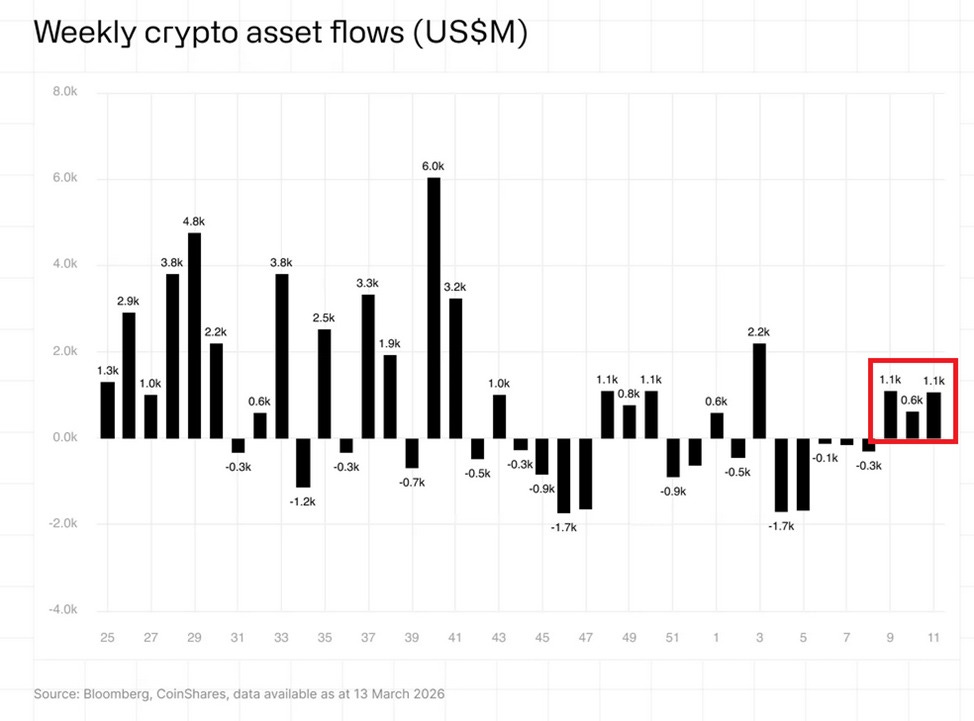
Bitcoin ETFs alone pulled $793M.
Since the war started, total crypto ETF AUM is up +$12B (+9.4%).
And here’s the part people are underestimating:
Institutional demand for Bitcoin is now back at its highest level since October 2025 — when BTC was printing all-time highs.
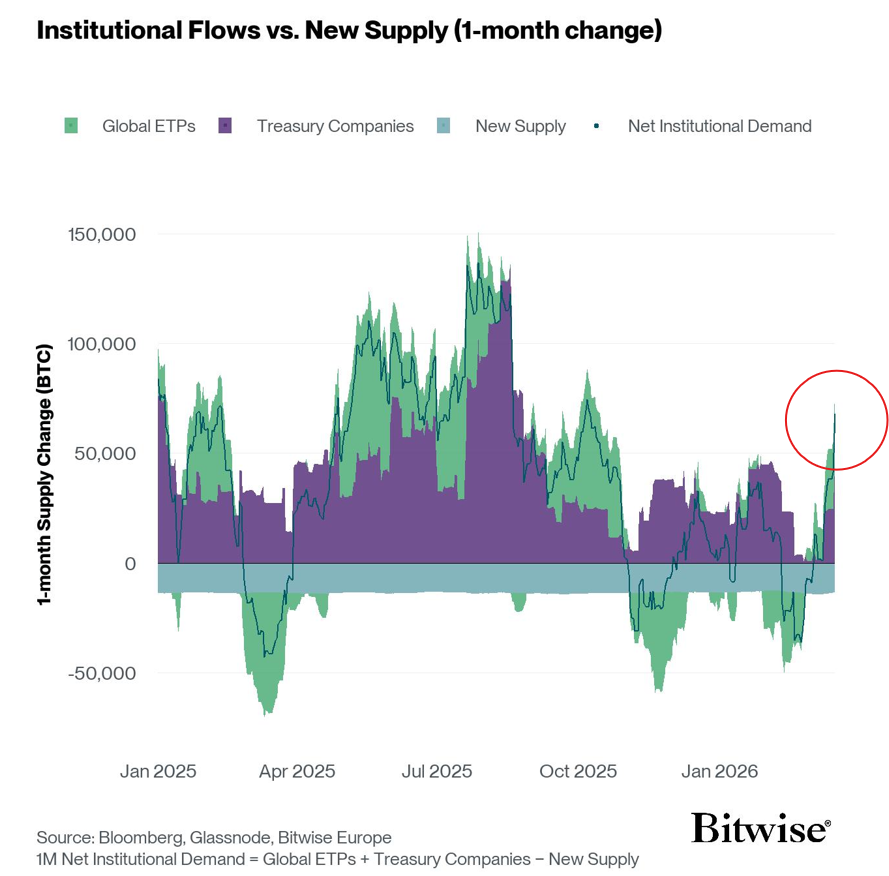
→ Same level of demand. Very different price.
That’s the divergence right now:
Retail + whales selling
Some Institutions slowly accumulating
So where does that leave us?
Probably range-bound.
BTC likely chops between $60K–$72K in the near term.
• $60K = key support
• Break below → mid $50Ks
• $85K–$90K = overhead supply from ETF holders
→ Every rally runs into sellers trying to get back to breakeven.
Short term, it’s a stalemate.
What’s missing now is a catalyst.
Right now, oil is preventing one from forming.
Thanks for reading Adrian DeFi! Subscribe for free to always receive the best DeFi investment opportunities.

Important updates and opportunities I discovered.
Alpha 1: XRP
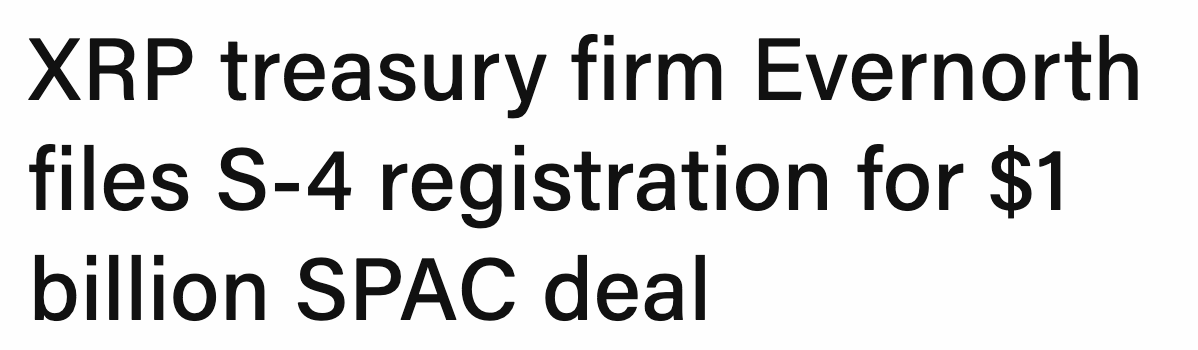
XRP is getting its “institutional wrapper” moment.
Evernorth just filed an S-4 to go public via a $1B SPAC, planning to list on Nasdaq under XRPN.
This isn’t just another treasury company.
They’re launching with:
• 473M XRP (~$678M) on balance sheet
• Backing from Ripple, SBI, Pantera, Kraken, GSR
• Strategy across lending, liquidity provision, and validator ops
→ This is effectively a MicroStrategy-style vehicle… but for XRP.
And that matters more than it seems.
Because what ETFs did for BTC wasn’t just price — it was legitimacy and accessibility.
This is a similar playbook:
Wrap the asset
Structure the exposure
Make it digestible for traditional capital
→ XRP is positioning itself to be investable, not just tradable.
Does it immediately pump price? No.
But structurally, it’s another step toward crypto assets being treated like balance sheet instruments.
And that trend will not reverse.
Alpha 2: Aave
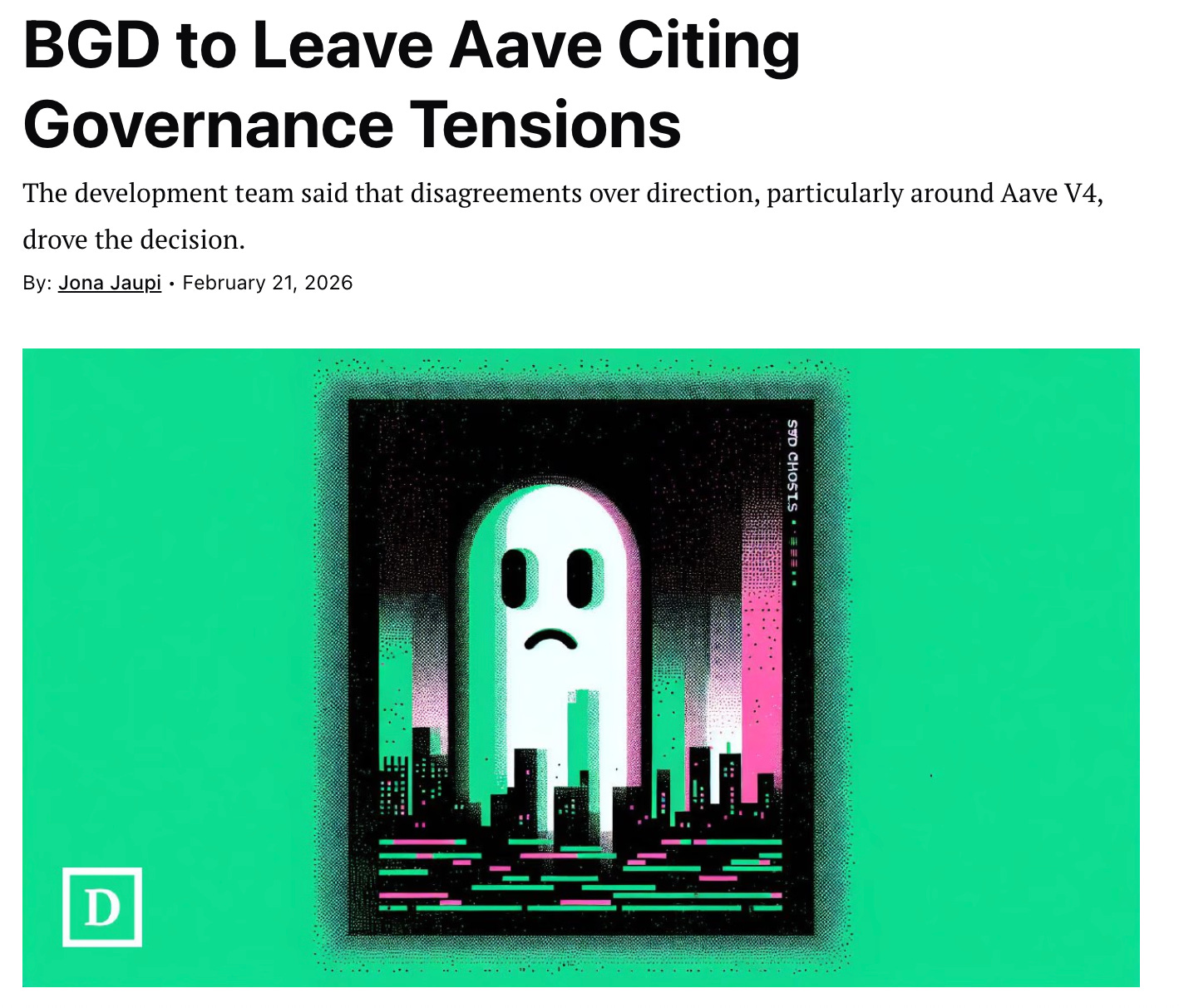
Now let’s talk about something more uncomfortable.
Aave.
I exited 50% of my position.
Not because it’s a bad protocol — but because the thesis changed.
And in this market, you don’t hold onto broken theses.
Here’s the issue.
BGD Labs — the team behind:
• Aave V3
• Core governance tooling
• Multi-chain deployments
• Security architecture
They’re leaving.
That’s not just “a contributor.”
That’s the brains behind the system.
At the same time:
ACI — effectively Aave’s growth engine — is also stepping away.
• Drove 61% of governance activity
• Responsible for ~48% of protocol revenue strategies
→ Both the builders and the growth layer are exiting.
What’s left is Aave Labs pushing V4 — largely in isolation.
And that introduces a different kind of risk:
Execution risk.
Now layer in the context:
• Aave still generates $100M+ revenue
• ~60% lending market share
Fundamentals? Strong.
But markets don’t price fundamentals in isolation.
They price forward confidence.
And right now, that confidence depends entirely on V4 landing perfectly.
There are also some uncomfortable questions around capital allocation:
• Labs raised ~$48.7M pre-DAO
• DAO contributed another $37.4M
• Now requesting an additional $51M
• No full transparency report
Meanwhile, ACI published detailed, onchain verified performance metrics.
→ One side is transparent. The other… less so.
In a bull market, this gets ignored.
In a bear market, this gets priced in.
And then there’s competition.
Morpho is gaining ground — and fast.
Cleaner model. Strong growth.
→ You’re no longer competing in a vacuum.
So the question becomes simple:
Would you buy Aave today?
If the answer is hesitation — that’s your signal.
Because in this environment, you don’t hold “maybes.”
Which brings us to where capital is actually flowing.
Alpha 3: Hyperliquid
This isn’t narrative-driven strength.
It’s performance-driven.
Let’s start with the obvious:
• $200B+ monthly volume
• Up from $169B during a market downturn
• ~70% of perp DEX market share
And price action:
• HYPE +23.9% YTD
• BTC -23.7%
• ETH -33%
→ It’s outperforming in a bear market.
That’s rare.
But the more interesting piece is underneath.
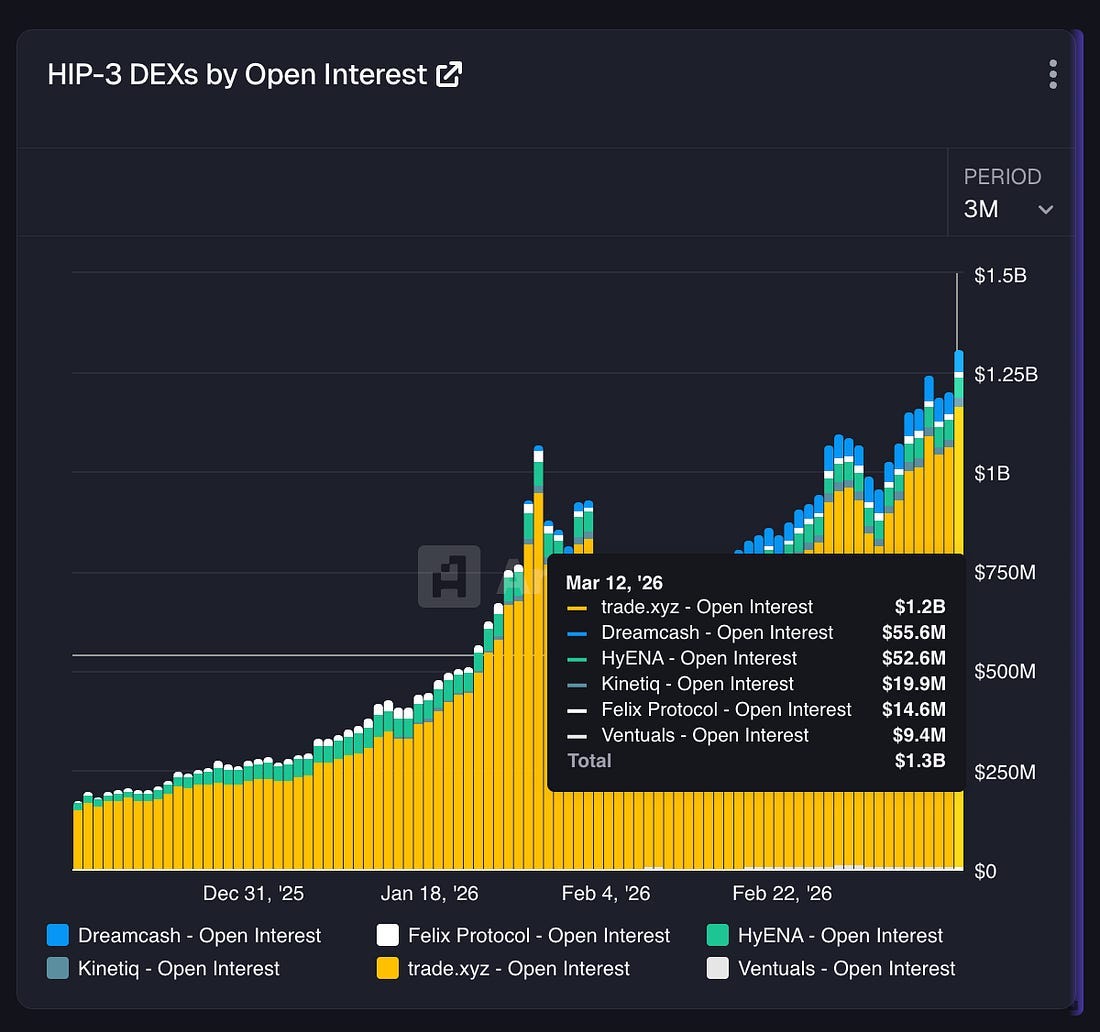
HIP-3.
Open interest just hit ~$1.3B.
And the driver?
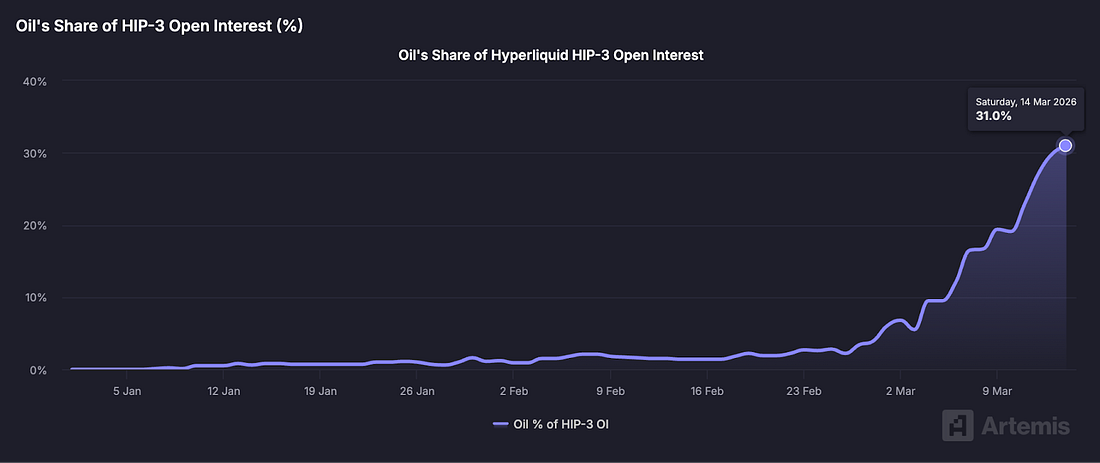
Oil.
In less than two weeks, oil went from irrelevant to 31% of total OI.
→ Let that sink in.
Traders aren’t just using Hyperliquid for crypto anymore.
They’re using it for macro exposure.
This is the shift.
From “crypto trading venue”
To:
Permissionless global derivatives layer.
When offshore capital wants:
• Oil exposure
• Index volatility
• Event-driven trades
It’s starting to show up onchain.
Not because it’s ideological.
Because it’s faster.
If this continues, Hyperliquid isn’t just competing with DEXs.
It’s competing with offshore exchanges.
And that’s a much bigger market.
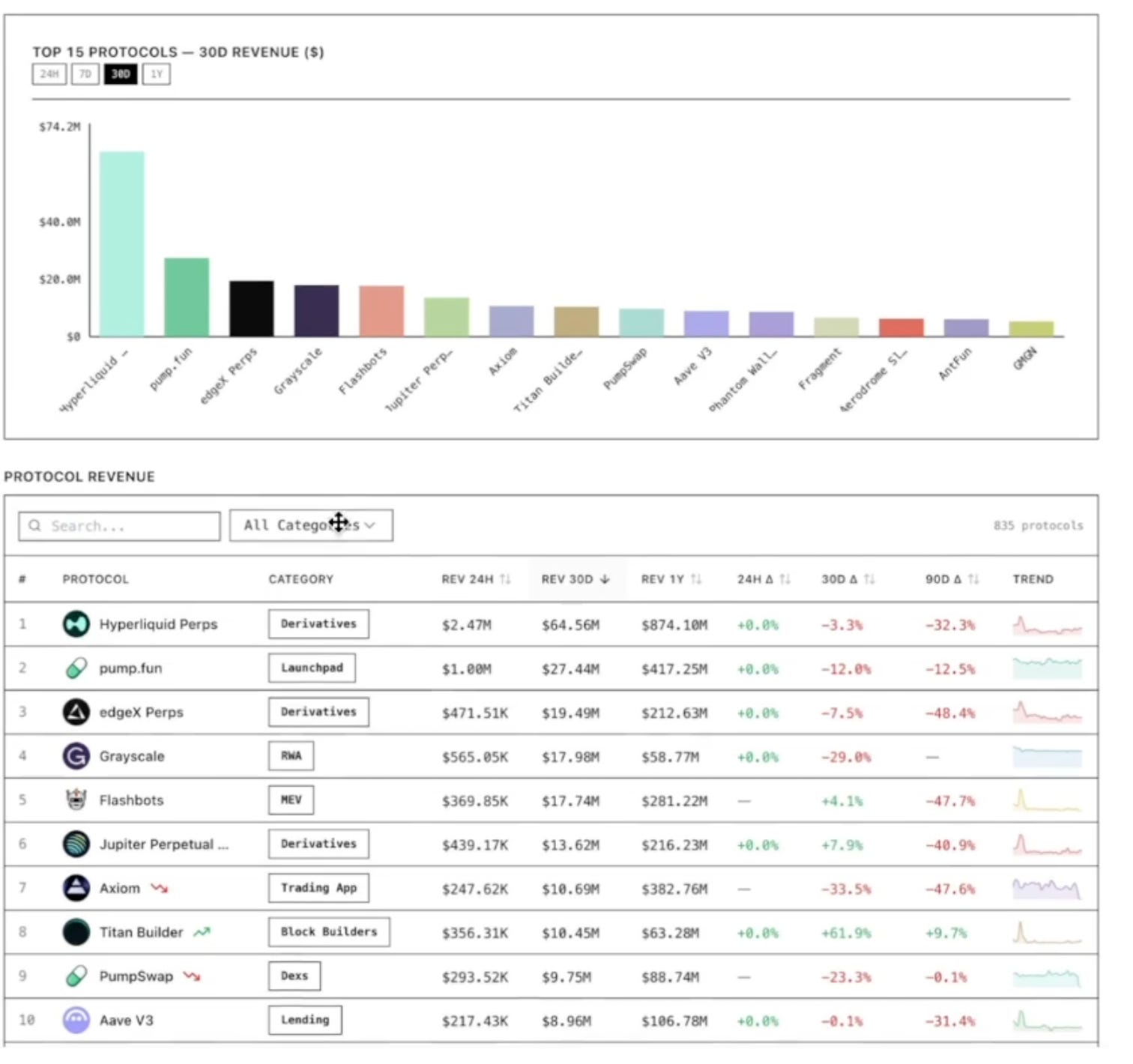
Now add the revenue angle.
Hyperliquid is already one of the highest revenue-generating protocols in the space.
And it’s doing that while:
• Surviving competitors (Aster, Lighter, etc.)
• Expanding during a downturn
→ That’s what real product-market fit looks like.
What’s Next?
Now let’s ground this.
Because none of this exists in a vacuum.
February reminded everyone what kind of market we’re actually in.
• $2.56B liquidation cascade
• $3.2B realized losses
• Geopolitical shocks hitting weekends
• AI trade unwinding
Crypto didn’t act as a hedge.
It traded like risk.
→ Because that’s what it is right now.
That forces some uncomfortable reflections.
My and maybe your mistakes:
• Overestimating DeFi resilience
• Underweighting macro
• Holding instead of reacting
The key realization:
Fundamentals don’t protect you in a liquidity unwind.
Liquidity does.
So what changes the game?
Not hope.
Catalysts.
The big ones:
Fed shift
A new chair in 2026 could front-run rate cuts regardless of inflation.
Actual rate cuts
Until liquidity expands, rallies struggle to sustain.
ETF flow expansion
Stabilization is step one. Acceleration is what matters.
Iran de-escalation
Oil cools → inflation cools → risk comes back.
A new narrative
RWAs, onchain commodities, AI x crypto — something will emerge.
Until then, the playbook is boring and all about capital preservation.
• BTC
• Stables
• High-revenue protocols (HYPE, Pendle, Sky)
Avoid forcing alt exposure.
Entries?
• DCA by default
• Add size near BTC $60K–$62K
And most importantly:
BTC bottoms first.
Alts bottom later.
That hasn’t changed.
This cycle won’t be different.
So zoom out.
The market looks weak.
But under the surface:
• Infrastructure is improving
• Institutions are still allocating
• New primitives are forming
→ This isn’t the end of crypto.
It’s the part where patience gets tested.
The only problem?
Oil is still in control.
And until that changes — everything else is secondary.
If you want a straight to the point newsletter full of calls, new projects, airdrop farms, memecoin and DeFi moonshots, then Hix0n’s Confidential is the place for you. I can really recommend his take (if you’re comfortable with high risk).

That’s it for today’s episode, thank you for being here!
Till next time, stay safe!
Comments
Nothing yet. Say the first thing.
Sign in to join the conversation.