
“…my servant Job shall pray for you, for I will accept his prayer not to deal with you according to your folly, for you have not spoken of me what is right, as my servant Job has done.”
Job 42:8
What grounds your belief system? Our worldviews, politics, and personal truths orient our lives in the way we should go. Many of these convictions are inherited, while some arrive to us from hard-earned experience. Knowing why we know something or believe anything is discerned through fields of study such as epistemology and sociology. Epistemology is the study of the nature of knowledge, belief, and justification. Sociology is similar but examines groups and societies’ belief structures. They both concern themselves with the individual and collective manner in which we develop our views and where they come from. These fields of study try to answer, “Why do we believe that?” Knowing where we sit theologically with our personal convictions as Christians speaks to our own spiritual maturity. This is not a matter of justifying why we believe something, but more in the manner of taking possession, ownership, of one’s faith and tradition.
One’s faith is made stronger when the answer being sought is not readily evident. Often in my past, if an epistemological question was presented to me—whether through a passing thought or a personal conversation— I could not just let sleeping dogs lie. Many times this was an academic exercise, but nevertheless, I had to find solid ground. It wasn’t until recently that I became more comfortable with mystery—the not knowing. Not to be mistaken for apathy or avoidance, but being able to sit comfortably with the question that was laid bare before me. I realized, in matters of faith, God was not found in my certainty— but in the wrestling.
The questioning became real when the impact of the answer was personal. Especially if the doubting descended from circumstances I found myself in, presenting me with the painful questioning of—why me? This is when wrestling with God stopped being a spectator sport. I had to come up with a reason and justification to settle in my mind what was going on. This was the state of affairs my wife and I found ourselves in earlier last year. After years of battling with infertility, we became pregnant in 2023. Entering 2024, we were singing a new song and hopeful for things to come. Sadly, our joy became sorrow, and our hope faded into despair. Our daughter, as beautiful and bright as I saw her, had no heartbeat.
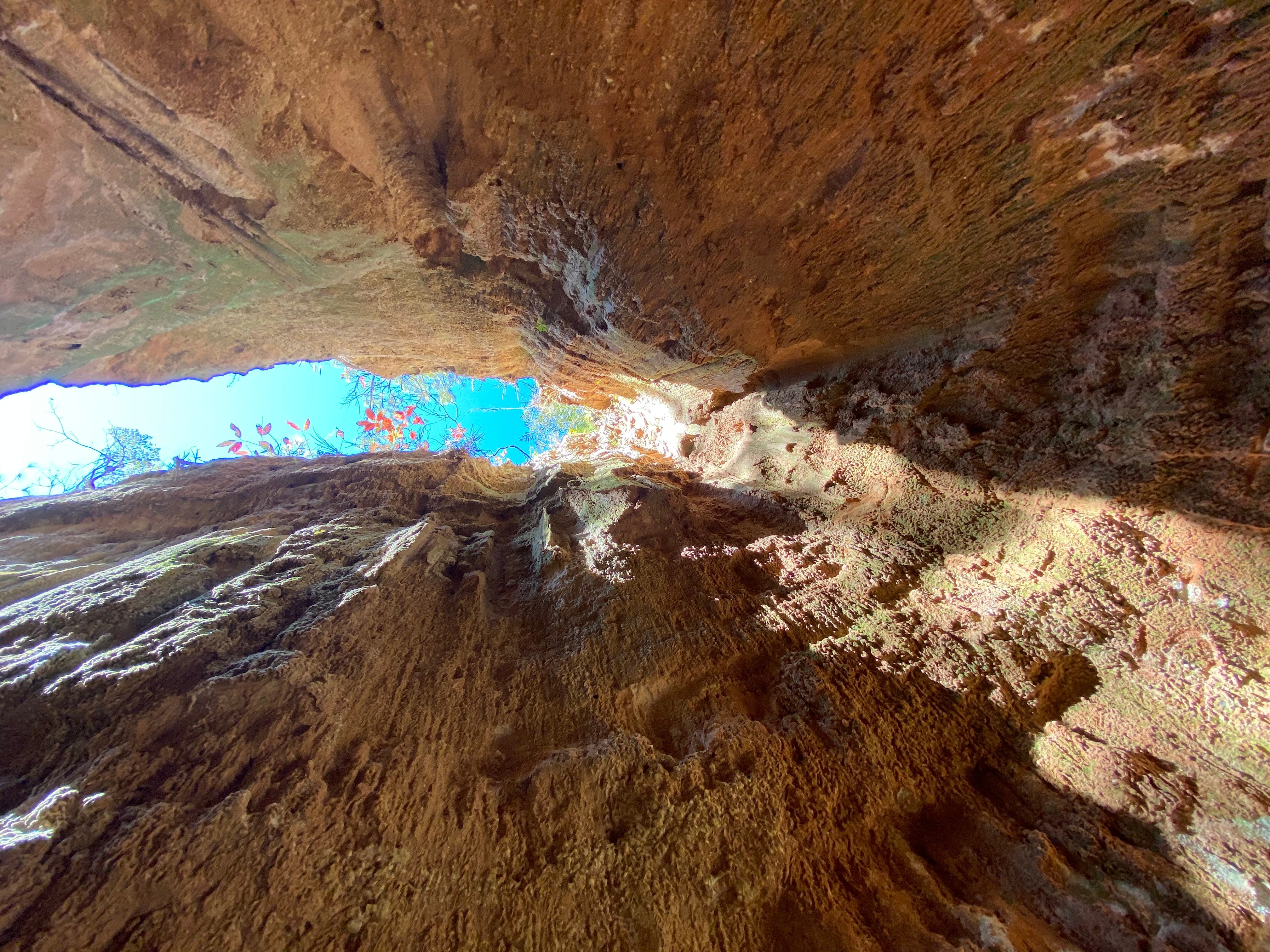
I found myself in a new room of life. These moments are referred to as liminal spaces— times of waiting or transition. A space where we exist between now and what’s next. Rooms of life when uncertainty and doubt arrive unannounced. For me, God’s providence came into question. How does a good God allow such heartache and such injustice? Does God allow it all? I will need to save this topic for another time, but these are the tangible questions one finds themselves with— when the ground shakes beneath their feet.
Our faith journey is earmarked with Aha moments. Eureka realizations come to us in many forms, but they often do not occur without tension. It is almost as if the faster we rush to conclusions, the more likely we are to settle for an answer that is not our own. There are many writers, theologians, and lay people who have wisdom to pass down, but if we do not take ownership of it in our minds, can we really have a solid rock to stand on? It all seems paradoxical, but we must leave room for mystery and uncertainty to find a solid foundation of faith. We hope for things that are unseen, uncertain, and not on the horizon.
“Now faith is the assurance of things hoped for, the conviction of things not seen.”
Hebrews 11:1
Faith rises in the absence of certainty. Our questioning, wrestling, lamenting, and doubt— this is what gives birth to faith. To understand what we truly hold close in our minds, we have to sit with the uncomfortable truth of— I don’t know. Why is it that for some of us, this lack of certainty, this doubt, causes us to double down and entrench ourselves where we sit? We refuse to step out, less we stumble and make a fool of ourselves.
“By faith Abraham obeyed when he was called to set out for a place that he was to receive as an inheritance, and he set out, not knowing where he was going.”
Hebrews 11:8
In our searching, we do not know the way we are going, but there is a “trusting” that we will meet on the road of discovery.
“By faith, with Sarah’s involvement, he received power of procreation, even though he was too old, because he considered him faithful who had promised. Therefore from one person, and this one as good as dead, descendants were born, “as many as the stars of heaven and as the innumerable grains of sand by the seashore.”
Hebrews 11:11-12
Our circumstances are not our own, but our minds, beliefs, and our faith must be. In my last post, A New Revelation, I mentioned liminal spaces being important for transformation. During times of suffering, transition, or doubt, we move into these liminal spaces that force us open, like opening a fresh wound, and in doing so, let the light and the dark in. These are the moments that wrestling with God can transform us. This liminal space is where heaven and earth, life and death, love and sorrow intersect. It’s a beautifully terrible image of God in the world. We should not shy away from these moments, as running from them is an easier path. Sitting with grief and suffering forces us to be present with ourselves in the most uncomfortable ways possible. One may come to hate themselves, God, or a close loved one. We are vulnerable to the fruits of shame, anger, and deep depression. All of these are valid emotions, but if left unchecked, lead us down a path where we are looking to only ourselves for answers. These spaces are full of paradoxes. This is the room decorated with both great love and deep sorrow, with death and new life, and is full of long nights of mourning and rejoicing. Following Jesus’s example in the Garden of Gethsemane, we petition to God, as our hearts break, and our minds race to wondering why this cup is ours to bear. Like Job, we say, "Who in your heavenly council is my accuser, my satan. What have I done to deserve this fate.” Tim Keller offers insight as to why petitioning God with brutal honesty is not something we should shy away from. Referring to Job 42 Tim says:
“They were prayers. You see, Job was being angry, and he was complaining, but he was being angry and complaining to God. He never walked away from God.[Job] He said, ‘I don’t understand you, God. I’m angry at You.’ But he never turned away. He stayed with God when he was getting nothing out of it, which means in the end, Satan was defeated. And what’s happening here is this man, even though he is not in any way praying the way you ought to pray. He’s still praying.” - Tim Keller
I find it curious God condemns Job’s friends in their certainty. They seemed so sure as to why Job was in his present circumstances. My petition to the reader is to recognize when you are in these liminal spaces. To be kind to yourself, and not look for the exit as soon as you enter. Uncertainty, doubt, and questioning are not there to keep you in the dark. Be honest with God in these moments. Everyone’s Dark Night of the Soul looks different; what it has to teach you, if you let it, can edify one’s faith. It allows you to capture it, and for it to become a part of you. That is a faith built on a rock, one that weathers storms.
Thanks for reading A Dim Mirror! If you enjoyed this post please feel free to share it.
Comments
Nothing yet. Say the first thing.
Sign in to join the conversation.