
There is a certain kind of food that belongs to a season the way light does. You don’t seek it out. It simply arrives, and suddenly it is everywhere: on kitchen tables, wrapped in cloth for picnics, sold by the slice at the bakery around the corner. In Liguria, that food is the torta pasqualina.
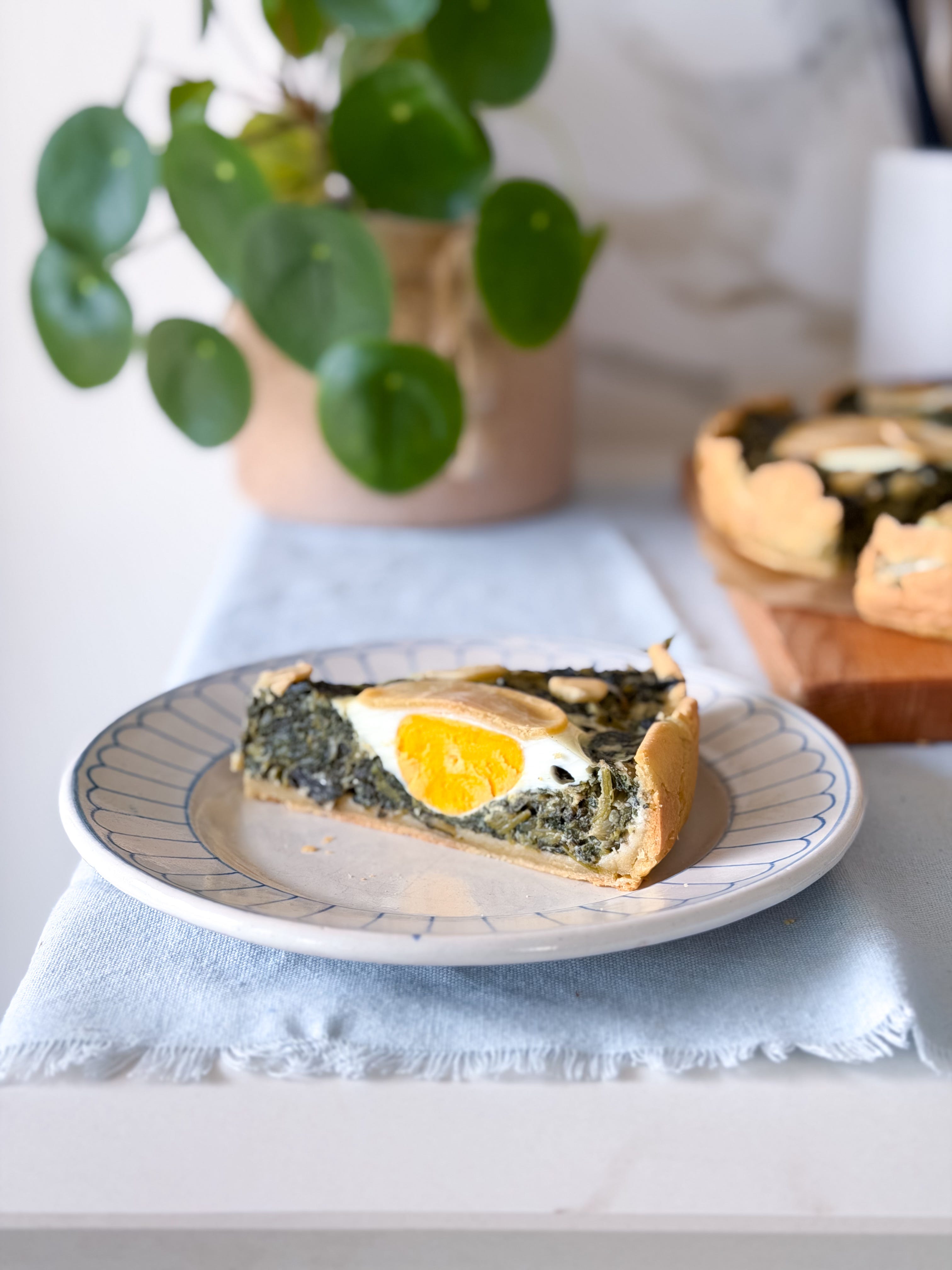
I first encountered it when I was a kid, as my mother made it every year for Easter. It arrived at the table in a baking dish, still warm, the crust blistered and golden. When she cut into it, the spinach filling held its shape cleanly, and nested inside: whole baked eggs. I remember that everytime I was so sad as soon as I finished my part, because I knew I had to wait another year to savour again that taste.
Pasqualina means Easter pie, and yes, technically it belongs to the Easter table. But Italians are practical and wise about the food they love. Once spring spinach arrives at the market, the pie appears. When summer chard takes over, the pie continues. The eggs are always there. The crust is always there. The rest shifts gently with what the season offers.
Now, the crust.
This is the part I want to talk about properly, because it took me a long time to get it right.
Traditional pasqualina dough is made with wheat flour and olive oil (no butter, no lard). A humble, honest dough. Adapting it to be gluten-free meant I couldn’t simply swap in an all-purpose blend and call it done. What I needed was a dough that could be rolled thin without cracking, that would bake crisp at the base and golden at the top, and that would hold together when you cut through it.
The answer came from two rice flours used together. Plain white rice flour gives the crust its structure and that slight crispness I was after. Glutinous rice flour (also called sweet rice flour) is the one that changes everything. It has a natural binding quality, a gentle elasticity that prevents the cracking and crumbling that can make gluten-free pastry feel like a compromise. Together, they behave more like a real dough than most blends I’ve worked with. The olive oil keeps it flexible. A small egg holds it all in place. A pinch of sugar balances the salt.
You rest it. You roll it between parchment. You work with it gently.
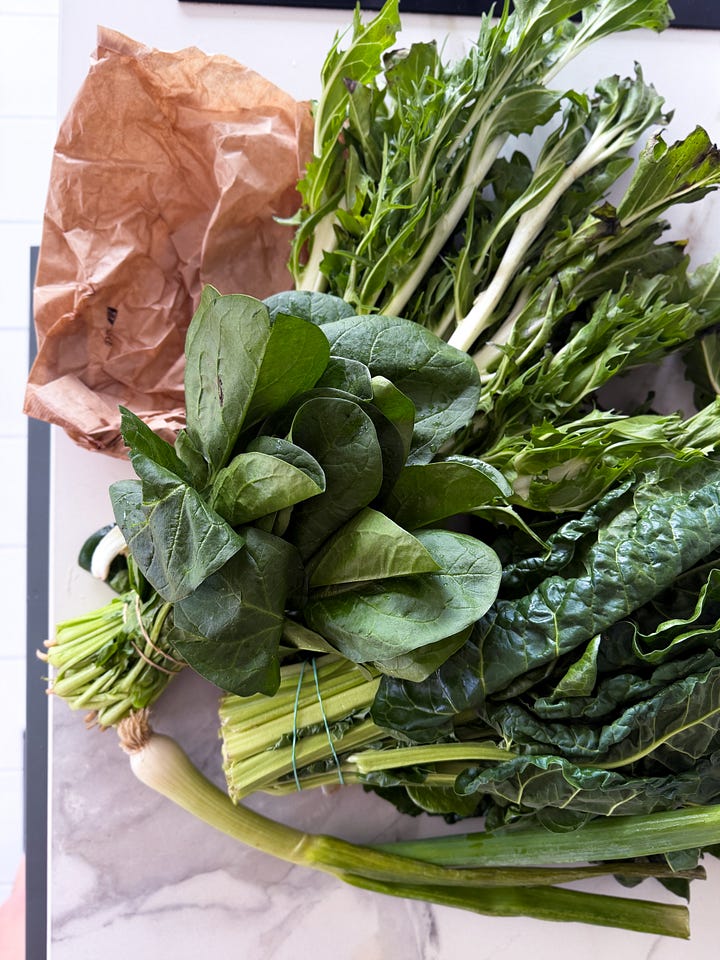
The filling I make for this newsletter version stays close to the original spirit of the pie while mixing green leaves: spinach, chard, and some leftover outer leaves of puntarelle. A blend of ricotta and Parmesan keeps everything together.
When you slice it (and you should always wait the full thirty minutes before you do) the eggs are revealed inside. Still whole. Still golden. That moment still gives me so much joy.
You can wait to make it next Easter if you like. Or make it this weekend, with whatever greens are at the market. Pack leftovers for lunch on Monday. This is a pie for the long season, and it is always a good idea.
The recipe follows below with ingredients in grams. I’ve tried to add also cups measures, but it’ would better to use a digital scale for this one.
100 grams white rice flour (¾ cup)
100 grams glutinous rice flour / sweet rice flour (¾ cup)
5 grams caster sugar (1 tsp)
5 grams fine salt (¾ tsp)
45 ml extra virgin olive oil (3 tbsp)
1 egg for dough
72 ml milk, plant based is ok (4 tbsp)
1-2 tablespoons of soft butter
Filling:
3 cups cooked green leaves (spinach, chards…)
1 spring onion
4 whole eggs
100 g firm ricotta or plant based alternative (3 oz)
25 g grated Parmesan cheese (¼ cup)
30 ml extra virgin olive oil (2 tbsp)
1 pinch nutmeg, freshly grated
1 pinch salt and black pepper
Make the pastry dough: In a large bowl, whisk together white rice flour, glutinous rice flour, caster sugar, fine salt (for dough). Make a well in the centre and add olive oil, 1 egg, and milk. Mix with a fork until it comes together, then knead briefly on a clean surface, until smooth and pliable. Wrap in cling film and rest in the fridge for at least 30 minutes.
The spinach: heat 2 tablespoon of olive oil in a large pan over medium heat. Add finely chopped spring onions, sauté 5 minutes. Add your fresh spinach in batches, turning with tongs until fully wilted. Season with 1 pinch salt and black pepper. Transfer to a colander and press firmly with the back of a spoon (or squeeze with your hands once cool) to remove as much liquid as possible. Excess moisture is the enemy of a crisp base. Roughly chop and set aside.
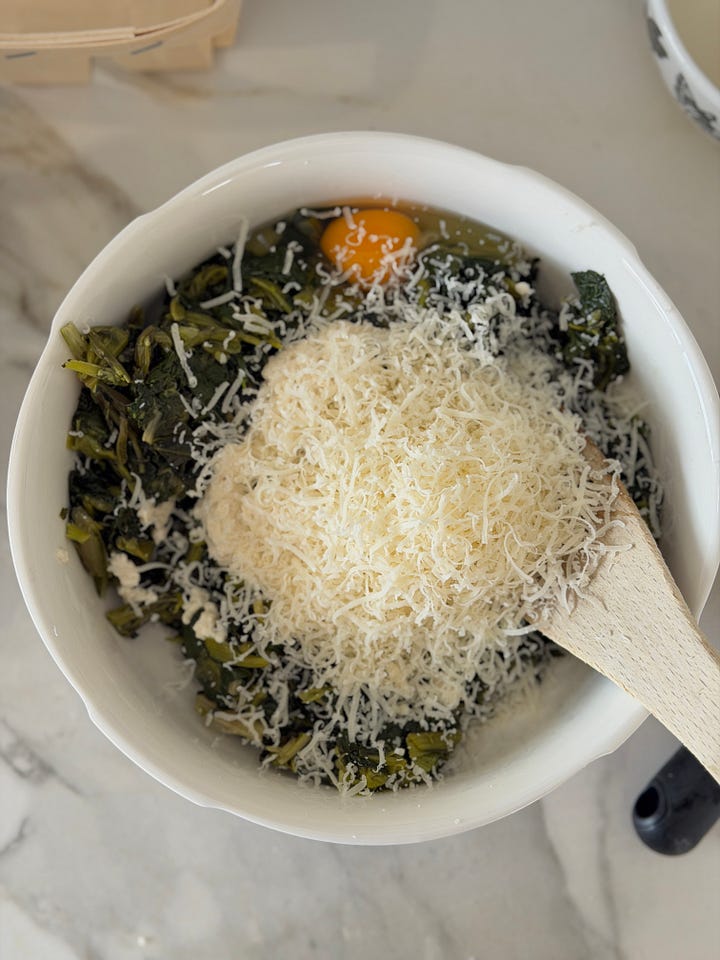
The filling: mix your ricotta with grated Parmesan cheese. Fold in the chopped spinach. The mixture should be thick enough to hold its shape.
Preheat your oven to 350 °F (180 °C). Lightly oil a 24 cm round loose-bottomed tart tin. Divide the rested dough into two pieces.
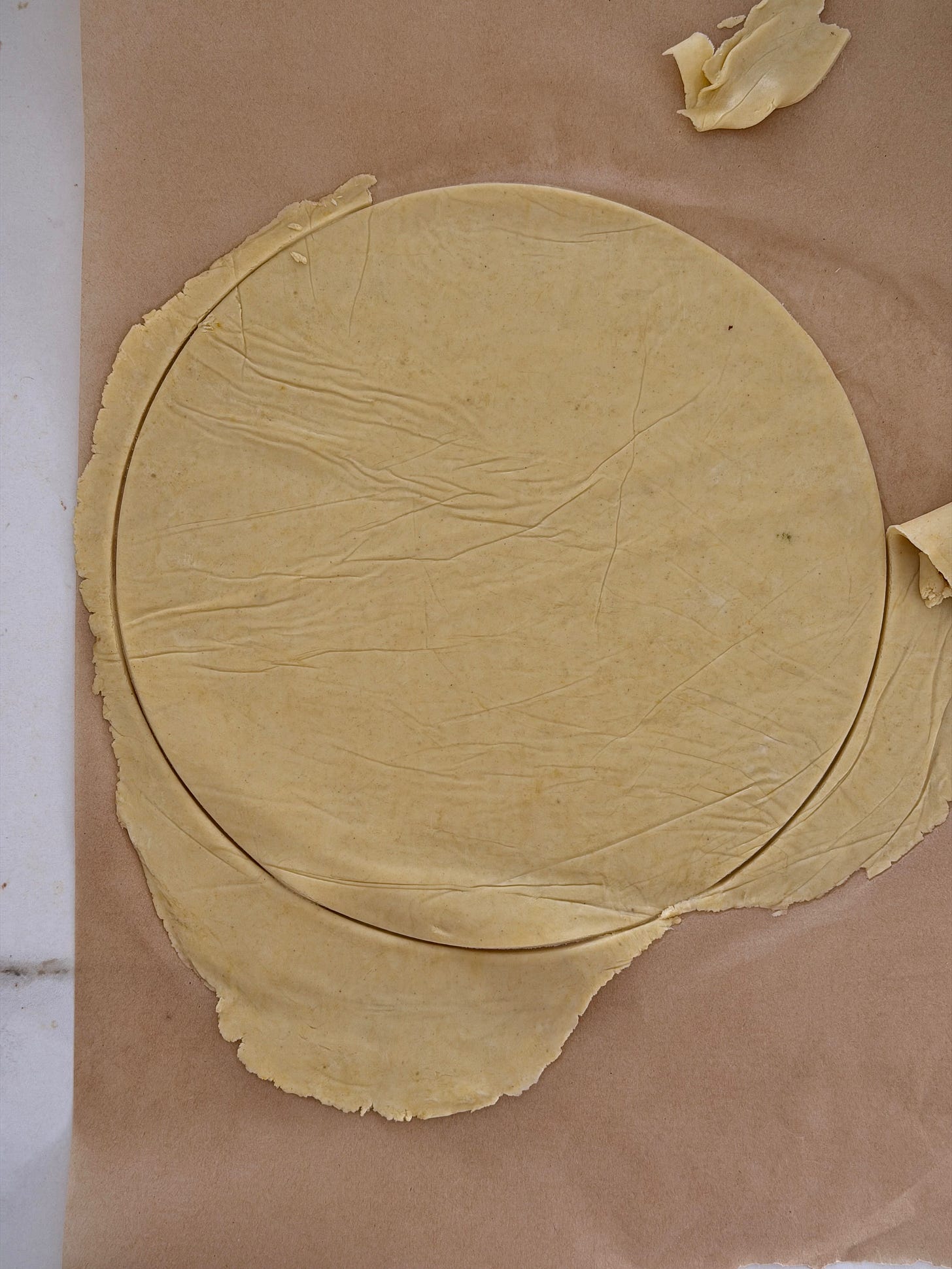
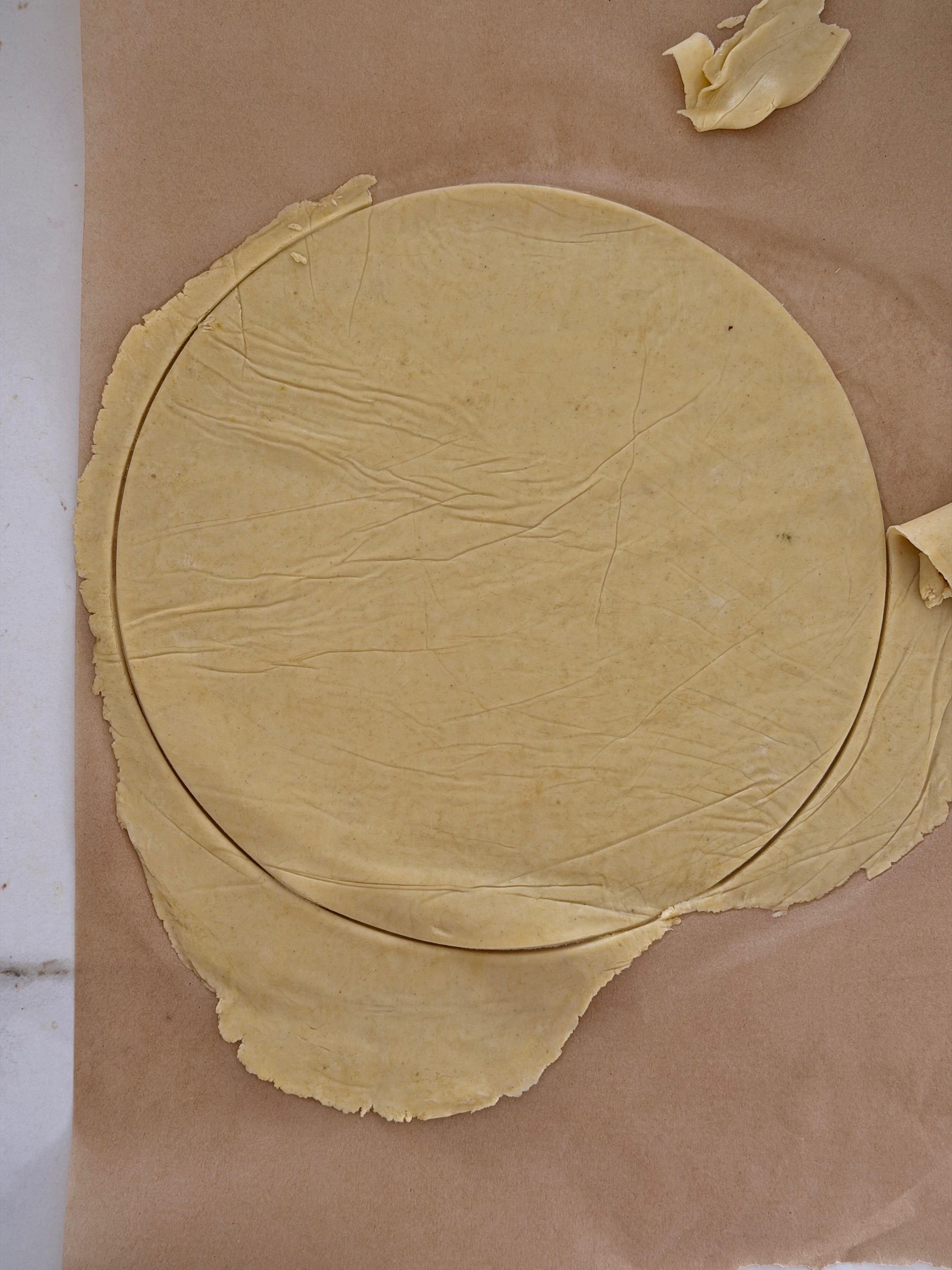
Place one piece of dough between two sheets of baking parchment and roll out to a circle about 2 mm thick and wide enough to cover the base and sides of the tin. Transfer carefully: this dough is more fragile than wheat pastry; the parchment itself helps. Press gently into the tin and trim the edges. Brush some soft butter on the first layer. Repeat the process with the second piece of dough and overlap it to the first one.
Spread the spinach mixture evenly over the base. Using the back of a large spoon, press 4 deep wells into the filling, spacing them evenly. Carefully crack one whole egg into each well. Season each yolk with a tiny pinch of salt and black pepper. The eggs will finish cooking in the oven, so they go in raw. If you have dough leftovers, use them to cover the eggs.
Bake until golden: Bake in the preheated oven until the crust is deep golden and firm to the touch. The filling should be set when you gently shake the tin. It should take around 45-55 minutes.
Rest before slicing: Allow the torta pasqualina to rest in the tin on a wire rack. This resting time allows the filling to fully set and makes clean slices possible. Serve at room temperature or just slightly warm. Leftovers keep in the fridge for up to 3 days and are arguably even better the next day.
No posts
Comments
Nothing yet. Say the first thing.
Sign in to join the conversation.