
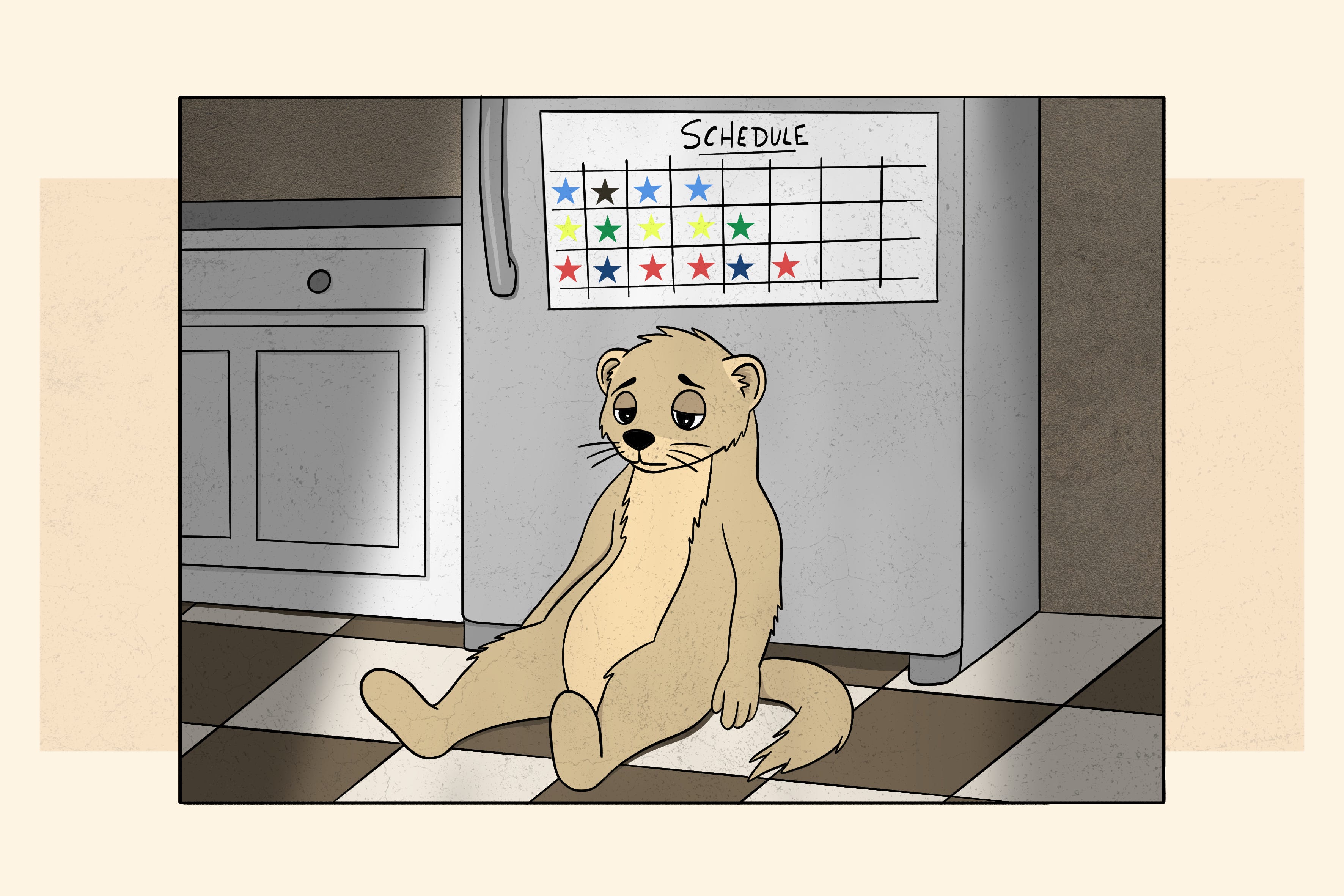
The star charts. The timers. The visual schedule you made on a Saturday and laminated with genuine hope. Some days they work. Most days, something falls apart before 8am and you’re sitting in the car after drop-off, exhausted, wondering what just happened.
Sharon Collon is an award-winning PCC Credentialed ADHD coach, parenting expert, and founder of The Functional Family, where she has supported over 40,000 families to move from daily chaos to connection, function, and fun. She hosts the ADHD Families Podcast and, as a mum of three boys with ADHD, she understands the gap between knowing what to do and being able to do it in the moment.

Inside this guest post, Sharon breaks down why ADHD families don’t need to try harder, they need to try differently, and shares the practical, real-life systems that actually work at home when traditional strategies keep falling apart.
I am a mother of three boys with ADHD. I have also spent years working alongside more than 40,000 families who are navigating exactly what you are navigating. I know this terrain from the inside.
And I know that voice. The one that says if you just tried harder, it would be different. That voice is wrong.
What I know, with absolute certainty, is that you do not have a trying hard enough problem.
You have a systems mismatch.
Most parenting strategies were never designed for ADHD brains. They assume children can hold instructions in working memory, regulate emotions on demand, and transition smoothly when asked. They assume the parent has capacity left to stay consistent.
That is a strategy designed for a different family. And you have been exhausting yourself trying to make it work in yours.
ADHD parents know what to do. The challenge is doing it in the moment.
It has nothing to do with laziness or inconsistency. ADHD affects executive function and emotional regulation in both children and parents. And those are the exact skills you need to apply what you know, in real time, under pressure, on a Tuesday morning when no one has eaten breakfast yet and you have conflict explosions going off like landmines.
So the gap looks like this. You know you should stay calm, but your nervous system is already flooded. You know you should be consistent, but you are running on broken sleep. You know you should follow through, but you have already repeated yourself five times and the patience is gone.
There is also a mean girl who lives in most of our heads. The one who narrates every hard moment: you are doing this wrong, you are too reactive, you should know better by now. She keeps us over-functioning, hypervigilant, and burning through the last of our reserves.
She is not helping. And she is not right.
You need to try differently. And that is what shifts you from exhaustion to change.
A free 60-minute live session for parents of kids with ADHD. You build one page together that maps your week, names what is really going on underneath the hard moments, and points to the one change that makes everything else easier. No cost, no catch, just bring a pen.
Save a free seat here: https://www.thefunctionalfamily.com/system
The families who see real, lasting change are not the ones who do more. They are the ones who shift the system around them to work for them.
Here is what that looks like in practice.
Move the thing the battle is about to where the action happens.
When a parent first comes to me, they almost always lead with behaviour. “He won’t listen.” “She melts down every afternoon.” “Nothing I try sticks.” And I understand why. Behaviour is what you see. But nine times out of ten, when I ask them to walk me through their mornings or afternoons in detail, what I find is an environment full of invisible friction points that nobody has ever addressed. The behaviour is the symptom. The environment is where the work starts.
Your home environment is never neutral. It is either making things easier or harder for your family. And the beautiful thing about environmental change is that it works before the moment even arrives. No one needs to be regulated for it to function.
Example: If your child cannot find their school shoes every morning and it turns into a daily battle, this is now a predictable friction point and we can start redesigning. It may be something as simple as changing the school shoes to live in the car so they are always there when you need them.
“You do not rise to the level of your goals. You fall to the level of your systems,” James Clear. So we are better trialling and discovering what systems work for us, rather than setting goals.
Bring the task to your child, not your child to the task.
When you want to encourage your child to do an action, remove every barrier between your child and doing it. You are designing the path of least resistance.
One pattern I see constantly in families is that the task itself is actually fine. It is the steps to get to the task that have broken down. A child who will not brush their teeth is often not refusing the teeth brushing. They are refusing the trip back upstairs, the interruption to what they were doing, the ambiguity of when it needs to happen. When we remove those barriers, the resistance almost always drops.
Example: The barrier is your child having to go back upstairs to brush their teeth. So you both decide the toothbrush now lives in the centre of the dining table to brush teeth straight after meals. Barrier removed by design.
Tell them exactly what “done” looks like before they start.
ADHD brains struggle with open-ended, ambiguous tasks. “When is this done?” is genuinely difficult to answer when your working memory and sense of time are variable.
Visuals help with this, but not for the reason most people think. A visual schedule is a contract. It defines what done looks like, which is the thing ADHD brains need most.
Do not stack the next task on the moment you see movement. One task, one end point, then the next.
Example: Ambiguous instruction of “clean room.” Place a hula hoop over some items (or better yet, ask your child to throw it). And say for example “put away the lego inside the hula hoop.” Definite end.
Pick the three battles that matter. Drop the rest.
One of the most common traps I see in families is holding too many battles at once, and I see it across the board, from exhausted first-timers to parents who have been doing this for years.
When everything is a boundary, nothing lands. Children become desensitised to constant correction, and parents exhaust the very reserves they need for the moments that actually matter.
Decide what truly matters in your home. Hold those things. Let the rest go without guilt.
Example: When my kids were young we used to battle about sitting at the dinner table when eating. When I actually broke this rule down, it is not even something I care about. Why was I letting this be a point of friction every day. It was not a hill I was prepared to die on. It was a boundary I was holding because it was important to other people but not actually to me. So we let that one go because we have more important boundaries to hold that are in line with my family’s values.
That is strategic parenting.
Build a repair phrase when you’re calm. Use it when you’re not.
Every family ruptures. Every parent loses patience, says the wrong thing, or misses what their child needed in a moment.
The measure of a healthy family is how reliably it repairs.
I have worked with so many parents who carry enormous guilt about their hard moments, and I always tell them the same thing. The repair is the work. A parent who repairs well is doing more for their child’s sense of security than a parent who never cracks but never comes back either.
Example: Practise a repair phrase with your child during a calm moment, not a crisis one. Something simple. In our house it might be: “Can we reset?” On a hard day when you have nothing left, you do not have to construct an apology from scratch. You just say the phrase. The repair ritual does the rest. You built it when you had capacity, so it works when you don’t.
Catch the moments that already work. Build them into the rhythm.
Pay attention to where your family already works. What time of day. What kind of activity. Inside or outside. Together or separately. Those moments are not accidents. They are data.
This is one of my favourite questions to ask in a first session: “Tell me about a time recently when things actually went well.” Most parents have to think hard. The moments are there, but we are wired to catalogue the hard ones first. When we start paying attention to what works, patterns emerge fast.
Example: You notice your child is always more regulated after time outside. So you make it structural. After school, the sequence is always: shoes off in the car, straight to the backyard for a snack. No decision required each afternoon. No one has to remember to suggest it. It is just what happens next. You followed the clue once, built it into the rhythm, and now the rhythm carries it.
You are working incredibly hard with strategies designed for a different kind of brain, a different kind of family, a different kind of morning.
The problem was never your effort.
When you shift the system, things change. Because you finally have something that actually fits.
I hope this post gave you some ideas to try in your own home. Even one shift in the right place can change the shape of a morning.
Name the boundary you keep holding because it matters to someone else, never to you.
Each week, one comment wins a $25 USD Amazon gift card.
If this read helped your brain feel a little less tangled, pass it on: a like, comment, restack, or share helps more ADHDers feel understood and less alone :)
Comments
Nothing yet. Say the first thing.
Sign in to join the conversation.