
Welcome to Tech Atypically 👋, your weekly blog for navigating the challenges of ADHD and being in the tech industry.
I am an ADHD and product management coach, helping you change one belief and take one action each week.
🐼Do you work in Tech and are tired of struggling? Get ADHD and job skill coaching with Tech Atypically.
Part 11 of the Things I Wished I Knew Sooner Series
🦋 The Takeaways
Belief: Without a drink, I can’t create.
Reality: It was never the alcohol — it was the calm I was chasing.
Action: Find your calm. Stop borrowing it.
⭐️ Introduction
Welcome back to Things I Wished I Knew Sooner, a series about being diagnosed with ADHD late in life.
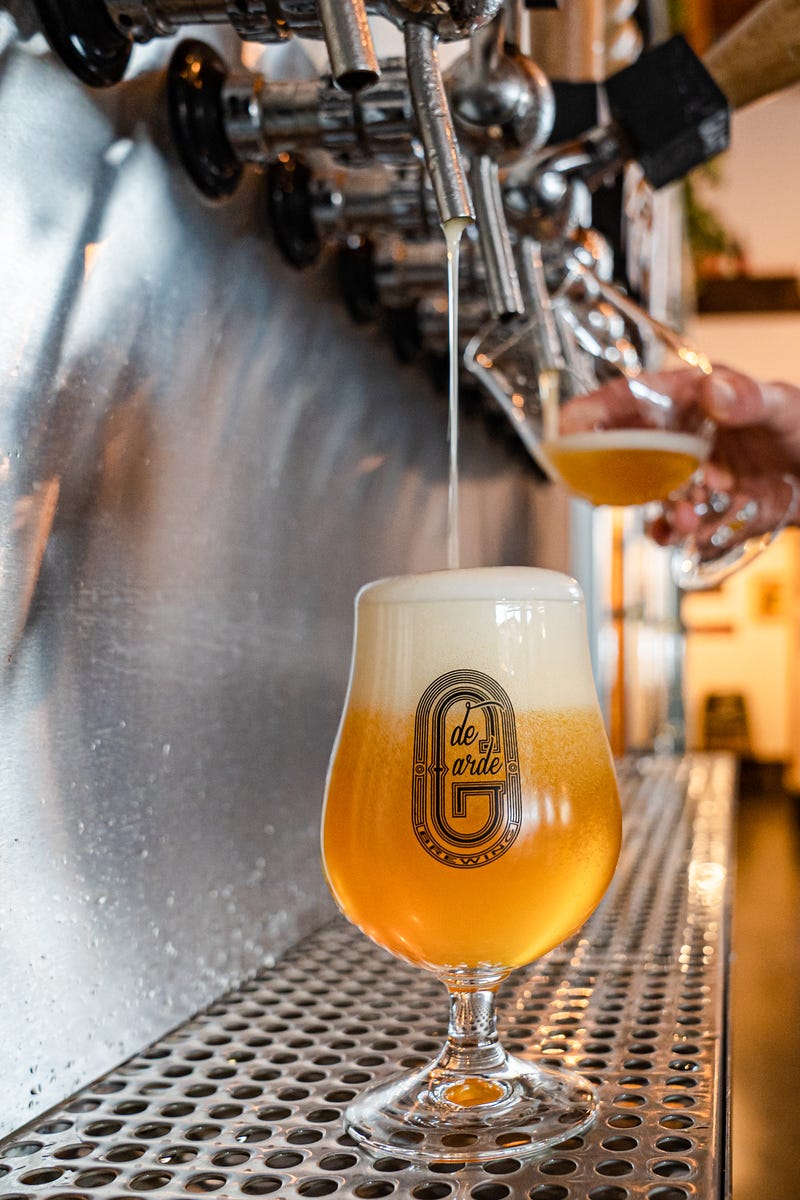
I’m a professional photographer who specializes in breweries. My work hangs as six-foot metal prints at Firestone Walker. I’ve shot for Goose Island and Stella Artois. On May 1st I’m heading to De Garde Brewing — one of the most respected wild ale producers in the country — to photograph their anniversary party.
For years, I couldn’t do any of this sober.
Not because I was an alcoholic. But because I had built a ritual I didn’t understand: shoot, panic, drink, create. It worked well enough that I kept doing it. And it wasn’t until I got diagnosed with ADHD that I finally understood what I was actually reaching for.
It wasn’t the alcohol. It was the quiet.
😵💫 The Belief — I Need It to Create
My editing process used to go like this.
I’d come home from a shoot, upload the photos, look at them on my screen — and immediately spiral. I got nothing. This client is going to hate me. Why did I ever think I was an artist?
Then I’d pour a drink. Get a buzz. Put on a TV show in the background. And start editing.
And at the end of it, I’d look at what I made and think: I can’t believe I did this. I saved myself again.
It happened so many times that I stopped questioning it. Alcohol made me more social on shoots. It quieted the self-doubt. It let me connect with people, lower my guard, and access something that felt like confidence. I built a belief around it: I need this to create. I need this to be an artist.
The fact that most men in my family have struggled with alcohol never escaped me. I was aware of what I was playing with. I got lucky — I’m not someone who struggles with alcohol addiction. I can go months without drinking. My relationship with alcohol has always been more about collecting it than consuming it. I have hundreds of bottles I call my Pokémon (the collecting is my addiction). But the belief was still there, quiet and stubborn: I need it to create.
Before co-founding my whiskey company (yep, did that too), I made a deliberate decision: I could build this business even if it meant one day I couldn’t drink at all. That was the line I drew for myself. And drawing it told me something important — the business was never really about the drink.
🤝 The Reality — You’re Not Chasing the Drink
The numbers on ADHD and alcohol are hard to ignore. Half of adults aged 20–39 with ADHD have had a substance use disorder in their lifetime — markedly higher than the 23.6% of young adults without ADHD.[1] Studies of adults with ADHD find that 17–45% have alcohol abuse or dependence.[2] The leading explanation across the research is self-medication: ADHD brains seek dopamine, and alcohol delivers it fast.[3]
But that framing — self-medication — always felt incomplete to me. I wasn’t trying to focus. I was trying to stop the noise.
My ADHD brain, undiagnosed and unmedicated, ran hot. Constant self-doubt. Constant second-guessing. The anxiety of looking at my own work and seeing failure before I’d even finished editing. Alcohol didn’t make me smarter or more creative. It turned the volume down on all of that — just enough to let the actual work through.
Once I understood that, the whole ritual made sense. I wasn’t addicted to alcohol. I was addicted to the feeling of being calm and confident in my own skin. Art wasn’t considered valuable in my family — washing dishes earned more respect than painting a picture. So every shoot carried this weight: prove it’s worth something. Alcohol helped me put that weight down for a few hours.
The problem is it was borrowed calm and it came with costs I was slow to add up.
🛠️ The Action — Find Your Actual Calm
Once I understood what I was actually after, I could start finding ways to get there without borrowing from my future self. If you’re in tech and alcohol has become part of how you cope, decompress, or connect — here’s where to start.
Understand what you’re actually chasing. Before you reach for a drink, ask what you’re trying to feel. Needing to unwind after a brutal sprint review, decompress after a layoff announcement, or lower the social barrier at a team offsite — those are real needs. They deserve real answers.
Find your non-negotiable anchors. What reliably brings you into your body and quiets the noise? A walk before a presentation, a no-screens lunch, a workout before a deadline, a playlist that shifts your state. It just has to be repeatable. Build it in before the spiral, not after.
Reframe the ritual, not just the substance. If your ritual is drinks with the team after a big launch, you don’t have to abandon it. Show up, order something non-alcoholic, and stay for the connection. The drink was never really the point.
I’ve reframed my photo-editing time as my space to tell my clients' stories. That’s a better high for me than whiskey.
If your use of alcohol or substances feels more like a necessity than a choice, talk to someone. You don’t have to struggle with this alone.
✨ Conclusion
Getting diagnosed changed the question. Instead of how do I get calm enough to create, I started asking what actually produces that feeling? The answer was never alcohol. It was always the state alcohol temporarily unlocked — present, grounded, quiet enough to work.
This isn’t about demonizing drinking. I still enjoy it. One of my best business relationships started because a colleague was wearing a whiskey shirt at a team meeting. I once helped raise enough money at a beer event to grant a Make-A-Wish for a child to see dolphins. For me, alcohol is about connection — not crutch. But I had to be honest about the difference.
On May 1st I’ll be at De Garde, camera in hand, photographing their anniversary party. I’ll have a beer and talk to strangers. I’ll enjoy it. But I’ll be showing up knowing what I actually need to do the work — and it was never in the glass.
That’s what I wish I’d known sooner.
📚 Sources
[1] Fuller-Thomson et al. (2021). Attention-Deficit/Hyperactivity Disorder and Alcohol and Other Substance Use Disorders in Young Adulthood. Alcohol and Alcoholism. https://www.eurekalert.org/news-releases/924775
[2] Wilens, T.E. (2006). Attention Deficit Hyperactivity Disorder and Substance Use Disorders. American Journal of Psychiatry. https://psychiatryonline.org/doi/10.1176/ajp.2006.163.12.2059
[3] van Emmerik-van Oortmerssen et al. (2012). Prevalence of Attention Deficit Hyperactivity Disorder in Substance Use Disorder Patients. PMC. https://pmc.ncbi.nlm.nih.gov/articles/PMC9859173/
🐼 Ready to navigate your own ADHD challenges with personalized support?
Get coaching that helps you find what works for your unique brain and situation.
⏭️ Next Week
alcohol.
Comments
Nothing yet. Say the first thing.
Sign in to join the conversation.