
How many photos of yourself are there on your phone? Not photos you are in, but photos of you. There may be hundreds. There may be thousands. Each one captures a face almost identical to the next, and yet never quite the same. A few years ago, storage limits would have made that impossible. Not long before that, the idea itself would have been absurd. Today, a new category of object exists: the continuous, unintentional, self-kept archive of one’s own face.

The word “selfie” first appeared in an Australian online forum in 2002, when a user apologised for a blurry photo of his injured lip. On January 16, 2011 the first image with #selfie was uploaded to Instagram by user Jennifer Lee. By 2013, Oxford Dictionaries had named it Word of the Year after its usage rose by a reported 17,000% in twelve months. What began as an apology for poor quality became the defining word for a new age of self-documentation.
The technology for the selfie existed long before the selfie became a culture. The Kyocera Visual Phone VP-210, released in Japan in 1999, was the first phone with a front-facing camera, but limited storage and poor image quality kept self-photography relatively clumsy and occasional in the following decade. That changed in 2010. The iPhone 4 made photographing yourself effortless. Instagram launched that same year and made sharing the result habitual. Together, they turned the self-portrait from a private image into a public form of communication.*
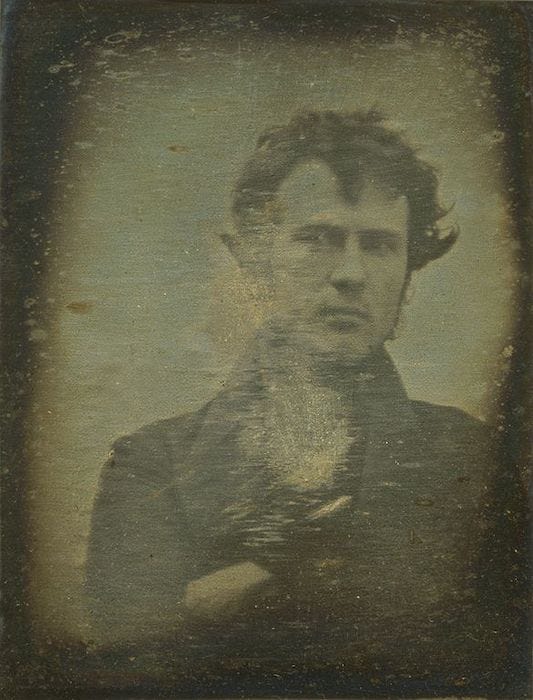
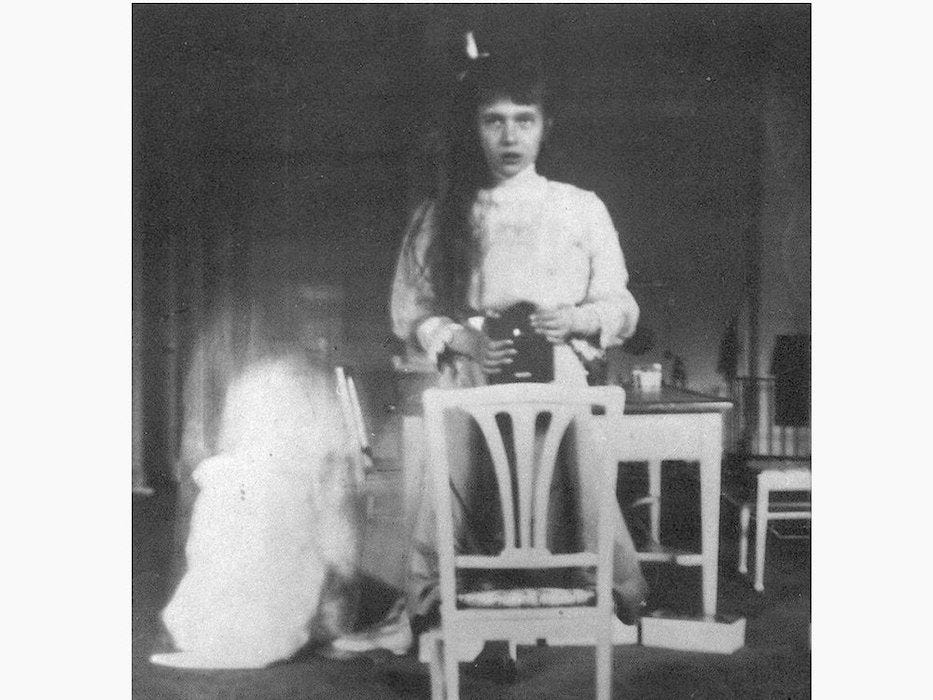
But the impulse to record one’s own face is much older than the platforms that made it public. One of the earliest famous examples is Jan van Eyck’s Portrait of a Man, painted in 1433 and widely believed to depict the artist himself. Photography produced its own version in 1839, when amateur chemist Robert Cornelius set up a camera in Philadelphia, removed the lens cap, ran into the frame and sat motionless for roughly ten to fifteen minutes. The arrival of the portable Kodak Brownie later made photography far more casual and accessible. By 1913, thirteen-year-old Grand Duchess Anastasia Nikolaevna of Russia had used one to take a mirror photograph of herself and send it to a friend, an early teenage selfie in everything but name.
Until very recently, most people had no real archive of their own face. Their younger selves blurred at the edges of memory or survived only in a few formal portraits and family photographs tucked into albums and left to gather dust in attics. It is bizarre, when you stop to consider it, that we now carry hundreds or thousands of versions of ourselves everywhere we go.
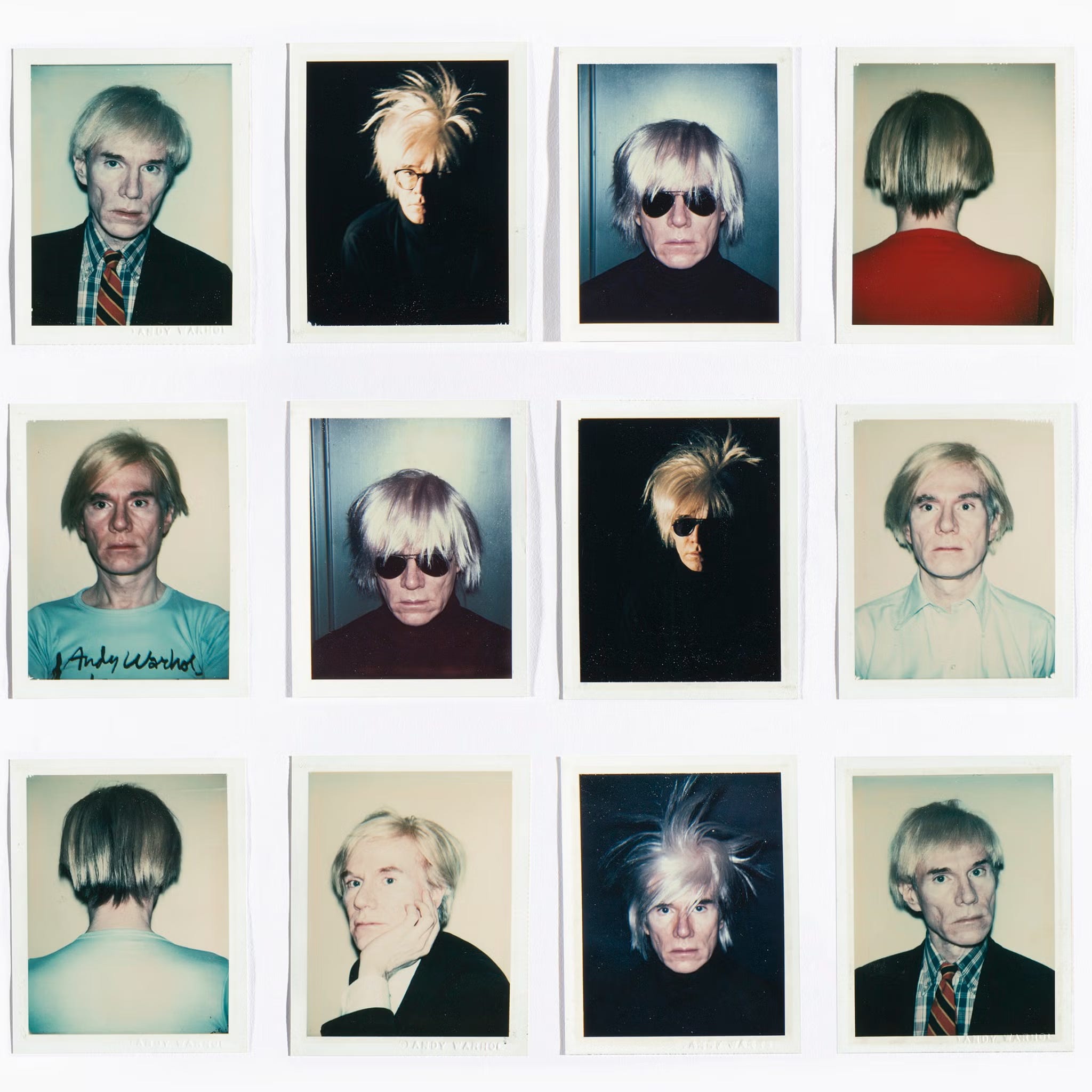
Historically, only a small number of artists documented their own appearance with anything resembling this continuity. Rembrandt painted himself more than eighty times over four decades, creating an extraordinary pre-photographic archive of his own face moving through time. Frida Kahlo produced fifty-five self-portraits among approximately 143 paintings. “I paint myself because I am so often alone and because I am the subject I know best.” Her work did more than preserve her appearance: it documented her body as it suffered, healed and changed, from her medical braces to her miscarriages. Andy Warhol approached the self differently, repeating and reproducing his face through Polaroids and screen prints in a highly mechanised process.
In 2000, Noah Kalina began taking a photograph of himself every day. When he published the resulting time-lapse as Everyday in 2006, it became an early internet phenomenon and was later parodied on The Simpsons. The project has now continued for more than twenty-five years. What once looked like an obsessive conceptual artwork now resembles the visual record most of us carry inside our pockets at all times.
Rembrandt, Kahlo, Warhol and Kalina built their archives deliberately. We accumulate ours accidentally, then mostly forget they exist. Technology has found ways to make forgetting impossible though, periodically resurfacing old photos and reintroducing us to people we once were through features like “On this Day”.
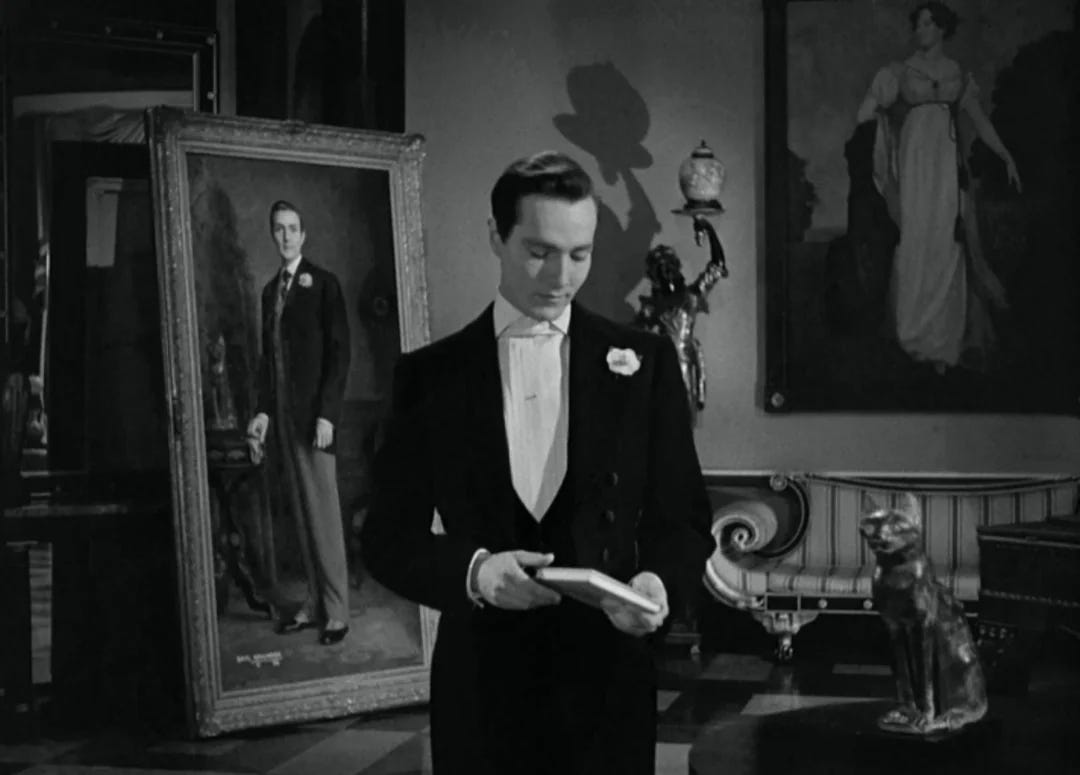
Dorian had one portrait that aged in his place. We have four thousand that remain perfectly still while, from one frame to the next, the face inside them changes almost too gradually to notice. Leave the house with only your phone and keys, and you have still brought an entire population of former selves along with you.
A photograph freezes the self in much the same way a collector pins a butterfly: the specimen is preserved at the precise moment it was captured, while the living thing moves on and continues to change. And somewhere above us (or below us, who really knows) sits the cloud, that strangely abstract repository holding billions of these preserved selves, the largest collection of human faces ever assembled, yet one that almost no one thinks about.
This archive behaves strangely as an archive. It has chronology, but almost no intention. It expands constantly, but with almost no curation. It is made from two-second photographs taken on buses, in bathrooms and while waiting for someone to arrive, images you barely noticed creating and may never have looked at again. Multiply that by a few thousand and they begin to form a strange autobiography. Who made it? You, though not exactly deliberately. Who reads it? Mostly the machine, and occasionally you, when it places an old face in front of you without warning. What does it record? Both continuity and change: the same face becoming different by increments too small to notice. What does it fail to capture? Whatever the self actually consists of and, strangely, even your appearance as others know it, since the mirrored face in the frame belongs only to you.
In the book, it is not Dorian’s face that changes but the portrait he keeps hidden in the attic. It becomes a record of everything his appearance has been allowed to escape. I don’t know whether the face is really a mirror of the soul, but I know that mine has changed, and I have the evidence. Through the peculiar magic of cloud storage, I can scroll through eleven years of it. The archive begins in 2015. Whatever came before was lost somewhere between bad settings and digital incompetence, but almost every photo of me since still exists, following me everywhere in my pocket. There is one year I don’t like looking at. Other self-portraits, meanwhile, have been granted permanent prominence within my library of sixty thousand images simply because, at some forgotten moment, I tapped the little heart beneath them.
When I began taking selfies around 2014, the aim was to create the most flattering version of myself I could. I rarely take them now, and when I do, it is usually for a different reason: to work out how I look and how I might have changed. I have placed new images beside old photos and studied them for signs of difference. If my teenage selfies were performative, the ones I take now are largely diagnostic: made not to be shared, but to be checked and compared. Eventually, I had to stop and consider why I was turning the camera towards myself with such scrutiny, making self-portraits not out of celebration or curiosity, but in search of evidence against my own face.
Wilde imagined a man who stayed unchanged while his portrait absorbed the years. We live inside the opposite arrangement: our faces alter while thousands of photographs remain exactly as they were. The camera roll is an attic full of Dorians, each one fixed in time while we continue beyond them. We may not have chosen to create these archives, but we can choose how we approach them. We can decide what we are looking for when we scroll backwards, what emotion we allow an old face to produce, and what intention lies behind the next one we add. If we are going to carry an archive of our own becoming everywhere with us, we may as well choose how we relate to it.
subscribe to in plain sight to see your own life more clearly and live it more deliberately. free subscribers get the essays. paid subscribers get the deeper layer: reflections, prompts, and ways to turn insight into action.
enjoy 20% off forever with this special offer. 💌
*I’ve written more about this in my essay on our movement between platforms if you’re interested.
Comments
Nothing yet. Say the first thing.
Sign in to join the conversation.