
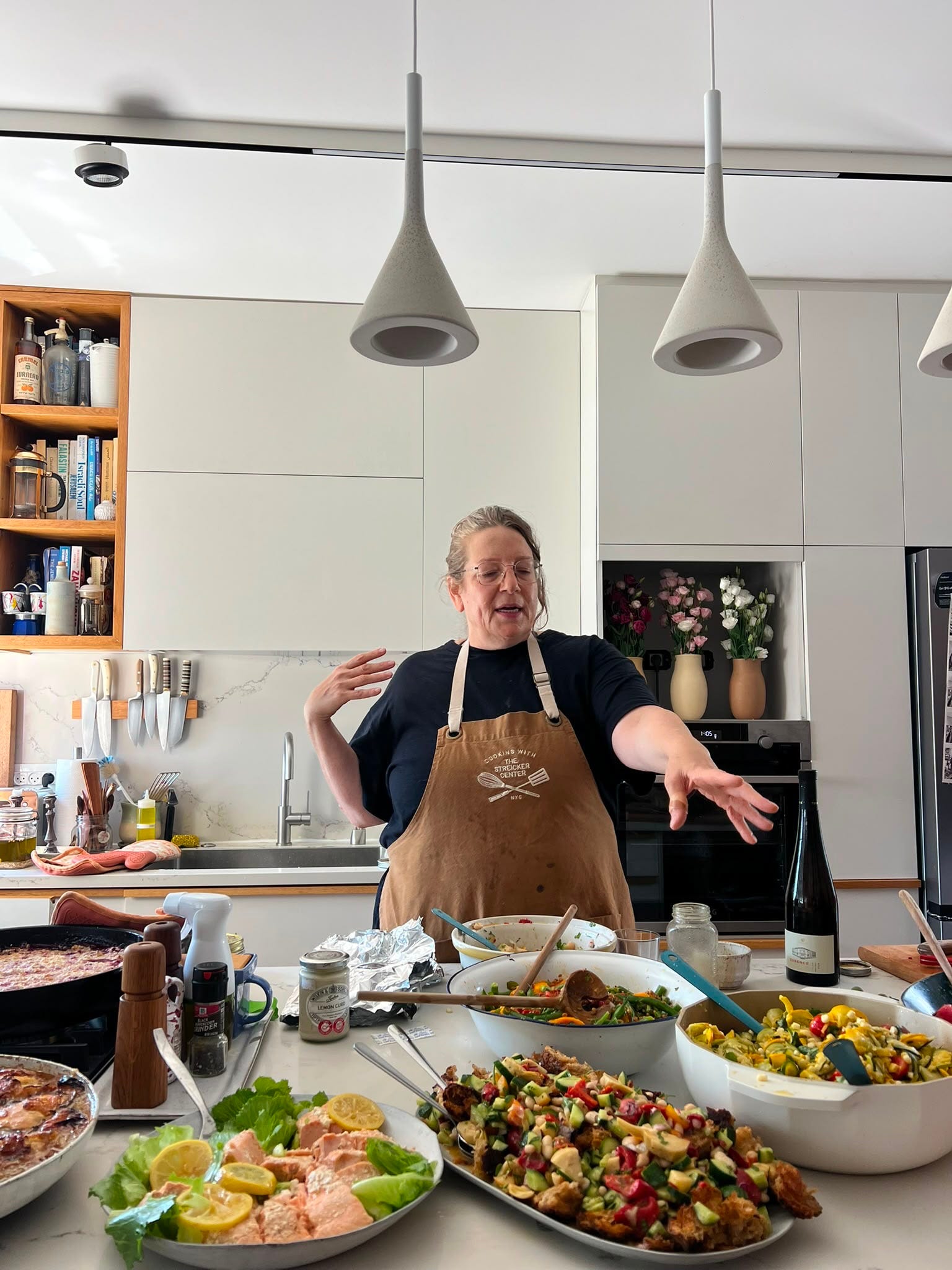
People always ask me if I cook from my own recipes, and the answer is, usually, no. I tell my readers that I view cookbooks more as suggestions than hard-and-fast rules, and I apply that rule to myself, too.
But when I saw that the ripe, lush Maya mangoes I love had finally landed in the shuk, my mind immediately went to a salad from Zariz with mangoes, lentils, green beans, mint, and a spicy harissa vinaigrette.
In the book I have you cook the lentils, but a shop in my neighborhood sells excellent-quality French legumes in tall jars, perfectly cooked and tender. I found a jar in my pantry, so I tossed the lentils with chunks of mango, green beans I’d blanched to tender-crisp the day before, a raft of shredded mint, and that vinaigrette—a smart (if I do say so myself) upgrade to humdrum dressings, with harissa adding a spicy edge and beautiful reddish color.
That dish was part of a Shabbat lunch I wasn’t even sure I wanted to make.
It had been a tough few weeks, between my back giving out, an upcoming surgery for my stepmom (she’s doing well), and practically every working appliance in the house—the oven, the air conditioning, the electric shades that keep out the heat, and half the electricity upstairs—going on the fritz within days.
I was tired. I was cranky. And I could have easily canceled; everyone would have understood.
But friends were in from out of town, and I was excited to gather locals and visitors in the comfort of our blessedly repaired, air-conditioned living room for a Shabbat afternoon meal that gave me a sense of purpose divorced from the life details that had been weighing me down.
I came back from the Zariz book tour exactly two months ago and hit the ground running (sprinting?). Most of the cooking I’d been doing was to fill out my Instagram feed or help another upcoming project (that we’ll tawk about later 😊) take shape.
My favorite kind of cooking—improvised, loose, with dishes built from some combination of what I had in the pantry and what I found in the shuk—had been elusive. I realized I missed cooking simply because I wanted to cook, and that I needed it to right the course.
It started with a schvitzy trip to the shuk, where I went looking for chives and was gently scolded by a vendor who reminded me that regular chives hadn’t been in season for a month, and that I should just take home the flat, garlic-forward ones that were brawny and hearty in that way in-season market herbs are here.
Then it was on to my favorite purveyor of baladi vegetables (baladi, loosely translated from the Arabic as “rustic” or “from the land”), a stately mustachioed gentleman from the northern city of Tira who pressed a few hot shatta peppers into my hand because he knows I love them.
Then it was time to go home and get cooking.
I made the Chacoli salad from my favorite Tel Aviv restaurant of the same name, which I learned last summer from chef Yarden Shay (recipe below). It combines watermelon, feta, fakous—an Armenian cucumber that is actually a type of melon and is beloved in Palestinian cooking—in an herby, almost green goddess-like dressing packed with herbs, garlic, and both lemon and lime juice.
I made homemade challahs that got torn open with abandon and shmeared with softened salted French butter.
There was wilted zucchini and corn salad topped with cherry tomatoes and feta, the liquid from the zucchini forming the basis of an almost vegetable stock-like sauce (the recipe is on my Instagram).
I tore up a stale loaf of good sourdough into craggy, oversized pieces, lavished them with really good olive oil, and toasted them to a golden crisp. While they toasted, I combined a jar of white beans with chopped roasted red peppers, marinated artichoke hearts, and Castelvetrano olives in a mustardy dressing. (I think I’ll save this one for another Stack!)
I took a hunk of center-cut skinless salmon and slow-poached it in olive oil with lemon slices, bay leaf, peppercorns, coriander seeds, and salt. It looks like the salmon your grandma poached and served with dill sauce, but it’s much silkier, more concentrated in flavor, and very lemony—no dressing required.
I just threw everything on the table on gorgeous platters and we ate, washing down the food with cold white wine.
The normalcy, the simplicity of the meal, the joy of gathering—all of it made the afternoon a respite from every kind of encroaching heat.
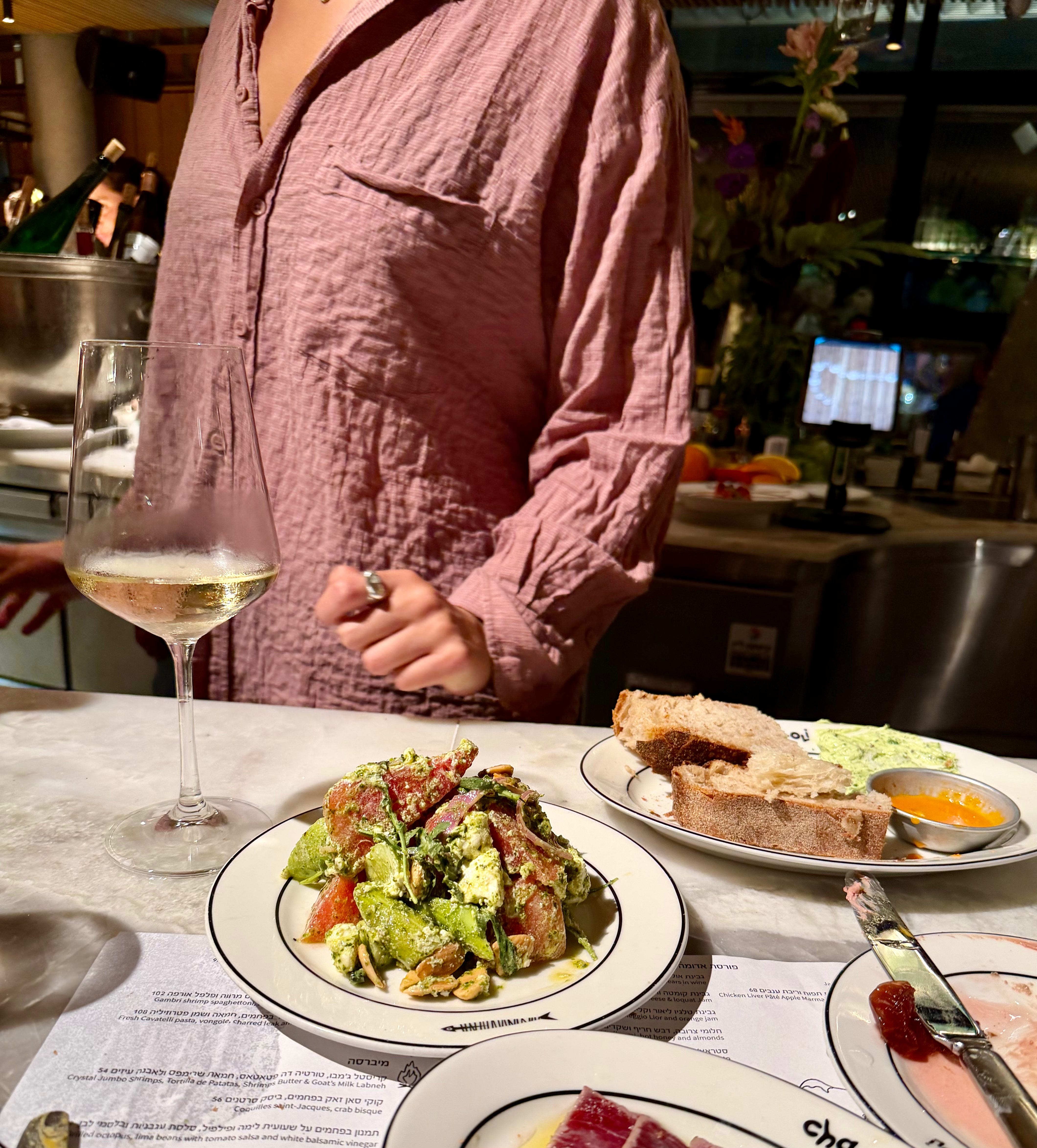
CHACOLI SALAD
Courtesy of Chef Yarden Shay of Chacoli Restaurant
Serves 4
Finely grated zest and juice of 1 lemon
Finely grated zest and juice of 1 lime
4 cloves garlic
1 cup tightly packed parsley leaves and tender stems
½ cup loosely packed mint leaves
½ cup tightly packed roughly chopped chives
1 cup olive oil
1 TB kosher salt
3 medium fakus (Armenian cucumber, or large Persian cucumbers) trimmed
¼ wedge from a medium watermelon, rind removed,
1 shallot, thinly sliced
15-20 fresh tarragon leaves (2-3 TB)
1 cup feta cheese, crumbled by hand, plus more for topping
½ cup toasted Marcona almonds or regular almonds, plus more for garnish
1 1/2 cups lightly packed arugula or watercress
Add the lemon and lime juice and zest, garlic, parsley, mint, chives, olive oil and salt to a blender. Blend on high until bright green and smooth, 30 to 45 seconds. (Dressing can be stored in the fridge for up to 3 days, shake to reincorporate.)
Remove the rind from the watermelon. Cut into 1-inch-thick planks. Cut the fakus/cucumber and watermelon into large, chunky, angled pieces. Add to a salad bowl with the shallot, tarragon, feta. and almonds. Pour ½ cup of the dressing on the salad, toss to coat, then add more dressing if desired. Right before serving, gently toss in the arugula. Transfer to a serving dish, mounding the salad as high as possible. Top with more feta and nuts if desired.
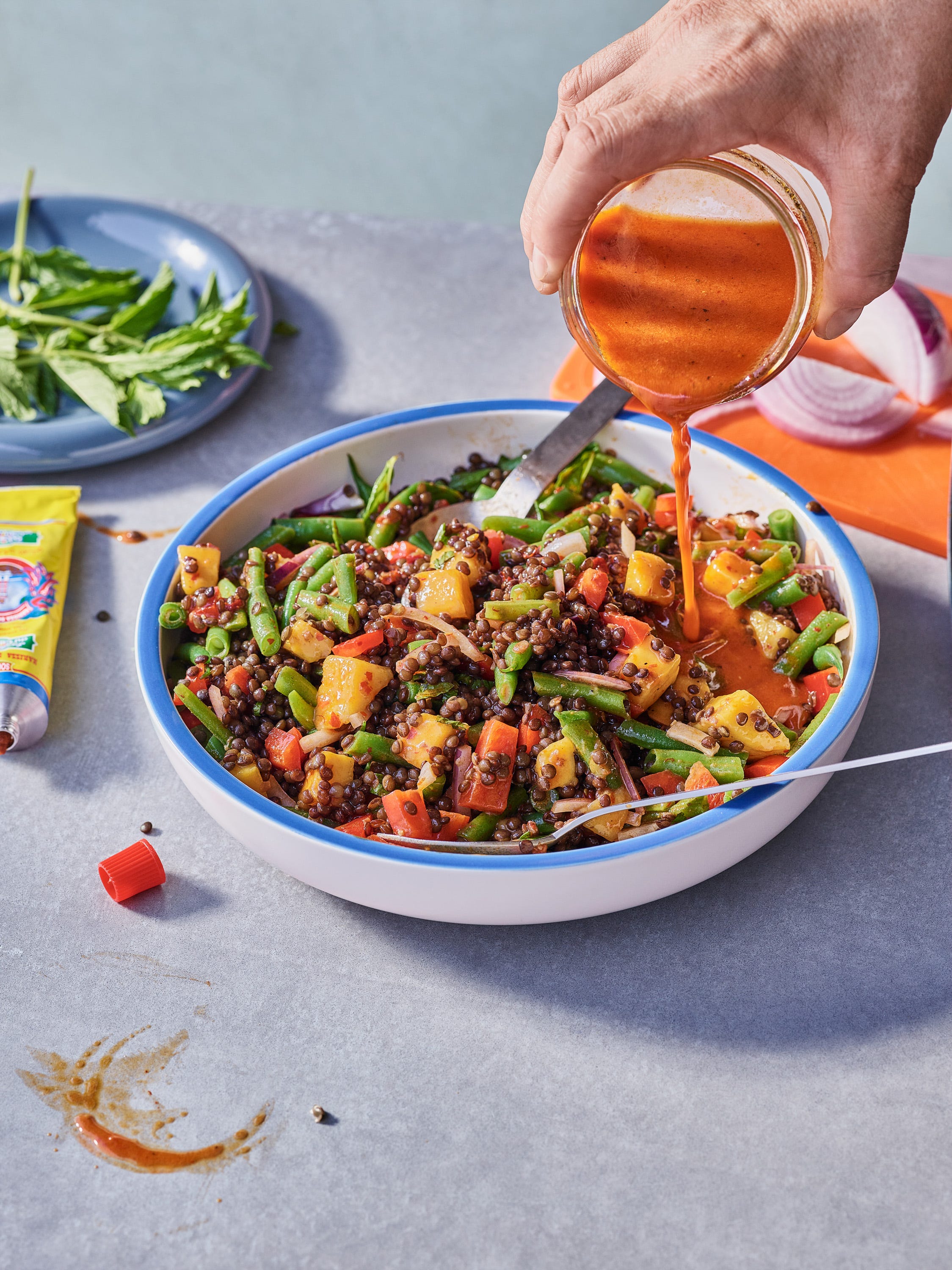
LENTIL, MANGO & GREEN BEAN SALAD WITH HARISSA DRESSING
From Zariz: 100 Easy, Breezy, Tel Aviv-y Recipes
Serves 6 to 8
1 ¼ cups (9 ounces) black lentils
¾ pound green beans, trimmed and cut into 1-inch pieces
6 tablespoons lemon juice
4 tablespoons olive oil
1 tablespoon honey
1 tablespoon Dijon mustard
1 tablespoon harissa paste, plus more to taste
1 teaspoon kosher salt
1/4 teaspoon freshly ground black pepper
1 pound mango, cubed into ½ inch cubes (1 ¼ cups cubed)
1 red bell pepper, seeded and diced
½ cup red onion, diced
1 cup lightly packed mint leaves, sliced
Fill a large pot halfway with water and bring to a boil over high heat. Add the lentils and cook until almost al dente, 15 minutes. Add the green beans, return to a boil and cook until tender-crisp and bright green. 1 additional minute. Drain and rinse under cold water for 1 minute; cool completely*.
In the bottom of a large salad bowl, whisk together the lemon juice, olive oil, honey, mustard, harissa, ¼ teaspoon of the salt and the pepper until creamy and lightened in color, 15 seconds. Add the lentils. green beans, mango, pepper, onion, mint and the remaining ¾ teaspoon of salt to the bowl and gently toss to coat.
*To cool and drain the lentils and green beans even faster, after first draining in the colander, line a rimmed baking sheet with a kitchen towel, and spread out the lentils and beans over the towel and let sit for 10 minutes.
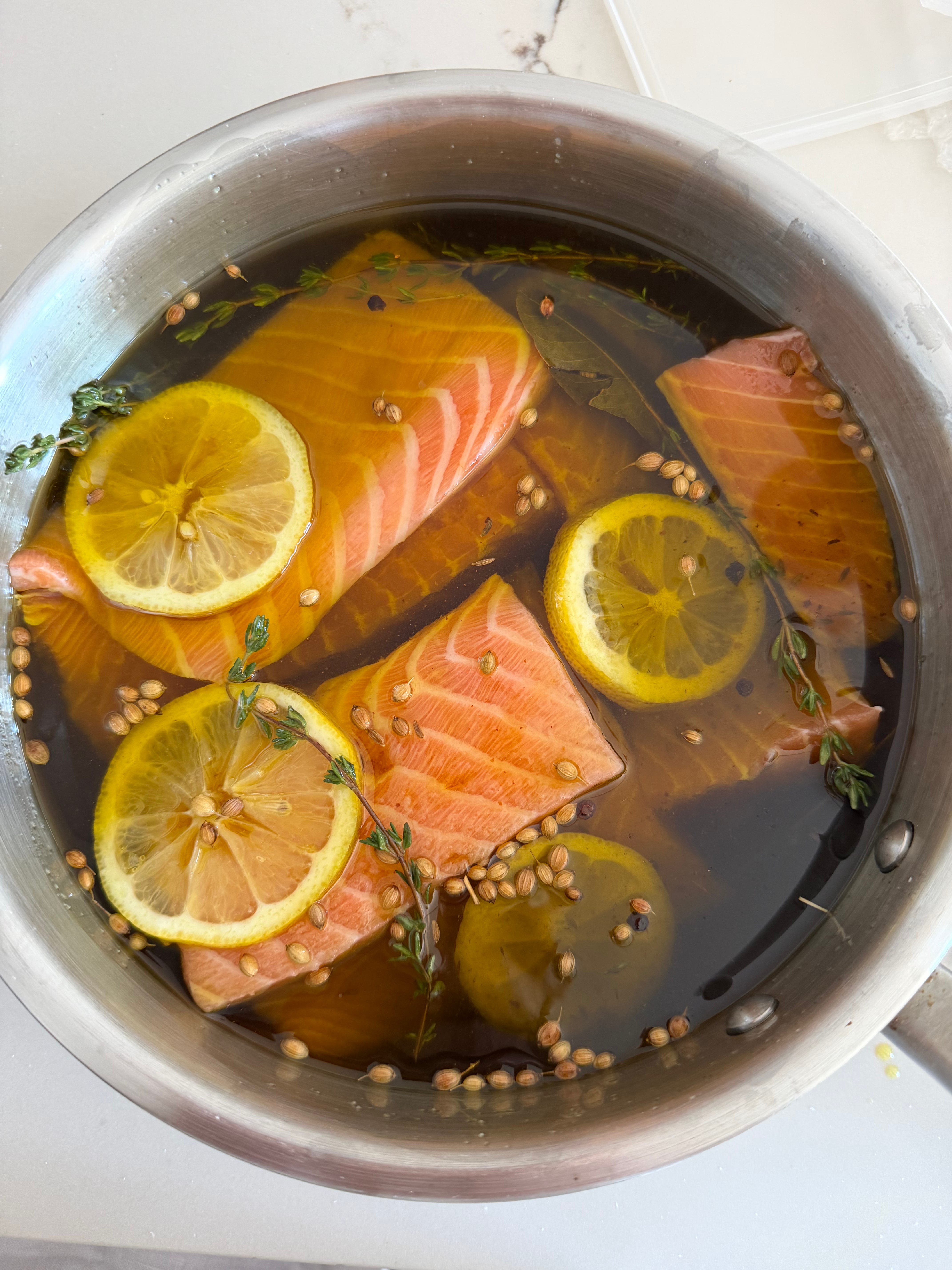
SALMON CONFIT
Serves 6
1 ¼ lbs skinless center-cut salmon filet
3 cups olive oil, or enough to just totally cover the salmon
Thick strips of zest, peeled from 1 lime
1 lemon, sliced into thin wheels
3 to 4 fresh za’atar or oregano sprigs
4 garlic cloves
2 bay leaves
1 tablespoons kosher salt
1 whole dried red chili
1/2 teaspoon coriander seeds
6 whole black peppercorns
Cut the salmon into 1 ½- to 2-inch cubes. Place the salmon in a pot that just fits the fish, with about ½ inch around on all sides (if the pot is too large, you’ll need more oil). Add olive oil, lime zest strips, lemon wheels, za’atar, garlic, bay leaves, kosher salt, red pepper flakes, and coriander. Set over very low heat and cook until you see tiny bubbles form on the surface of the oil and the salmon turns opaque and can be flaked into pieces, 20 to 25 minutes. Remove from heat and let salmon cool in the oil. (If not using right away, store fish in its poaching oil in an airtight container in fridge for up to 1 week. Oil can be strained, then refrigerated, for up to 3 months, then reused to poach more salmon.)
No posts
Comments
Nothing yet. Say the first thing.
Sign in to join the conversation.